

started inciprocal, ex-lucasarts, ex-electronic arts, ex-demoscener "and"; engineer / inventor / entrepreneur
San Francisco, CA
Joined March 2011
- Tweets1.6K
- Following149
- Followers816
- Likes2K






Pinned Tweet
Some close-ups. Can drive a number of off the shelf HW for a more time efficient sequencing. In the most universal configuration like what's shown here, it can be driven by any turntable or other triggering equipment in a "slave" mode wirelessly or via standard trigger cable.


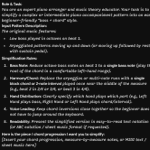
Somebody asked me the other day to simplify this piano arrangement a little bit, to be inline with Basic level. I though it's simple enough that a number of modern AI music editing tools can do that easily, but after spending a day of messing around with different AI tools, none of them can do what a non professional musician like me can do in one minute.
And I really hate all the text prompt stuff.... Most of AI tasks need to be given like this. You just show a little example of what you need to achieve, and then it does the rest by analogy + some domain knowledge.
Coming from a demo scene background where you always fake and pre-calculate things, that is actually true for all the real-time graphics for the past 30+ years - approximating and faking the rendering equation. I see DLSS-like neural stuff as a fancy look-up and pre-calculation.

Thank you @insomniacgames for the Wolverine. Took 23 hours on normal difficulty finding most of the crates, bottles and all trials. Looks and plays great at 60fps, fast action, great characters and story. The second part of the game and the ending are fantastic, 5 stars from me.


They got some really cool stuff and great PBR scanning results there. Some of the best I've seen.

Here is another great example of utilizing @inciprocal rig and PBR processing for Hi-end photo realistic asset production from the Keal Studio. An in-depth look at their AAA Weapon Art Pipeline:
kealstudio.com/blog/


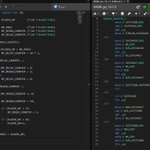
While doing some Sega Genesis homebrewing I am quite impressed with the latest GCC codegen for the 68k CPU. Going from 15.X to 16.X the difference in quality is huge. The code on the right is what I would write by hand for sure. Very impressed.

As I was trying to test everything locally outside of Compiler Explorer and, just for shits and giggles, tried to compile the same basic gameplay/logic-like code using the 1993 C compiler from Microtec that a lot of Sega Genesis devs used back in the day... It still beats GCC 🤣


Have been working on this retro Sega Genesis side project for a while - modernizing and improving on original Robocop vs The Terminator. A lot of ROM hacking and gameplay changes along with some fun graphics and vfx stuff... Finally got 4-palette-joint image converter working \

Genesis has 4 different 16 (15 + transparency) independent palettes that tiles could references so to get on colors out of it on screen there is a lot of K-clustering and other optimization techniques at work to get 51 unique colors out of 60 on screen at a time... \


Cutting shorts down to 50ish seconds is still no fun. Tried multiple AI tools but they all really suck. Not nearly as good as hand edited stuff. They don't get the jokes, don't the the timing, don't get the emotions...

Now FF7 Remake and Rebirth are finished, I am totally ready for the final part. Supposed to come out in 2027. But this Steam thing is just way too weird... Save files say 90 hours, Steam says 120 hours. How hard can it be to count the actual time based on active inputs?

Something I wanted to do for a retro side project is to find a better way to synchronize waveforms in the oscilloscope view. Instead of syncing to transients, doing a full cross correlation search looks more natural.
youtu.be/jM1CuPr5cNY 1/2
I am always confused when games do that. The save file says 18.5 hours, Steam says 38.5 hours and some other Steam thingy says 26 hours. What is it? An awesome game btw. Hope it does well.
#PRAGMATA

Doing some weight stress testing of the DIY XY Stage (xy table). Moving around a 1 gallon of water, that's 3.8 kg, looks just fine. More than enough for any scanning automation (props and flat swatches). The drivers are cold. Don't even need any heatsinks 🙀
Just a quick prototype but something I wanted to do for quite some time using as few off the shelf components as possible and still have it relatively lightweight and portable. It actually took longer to write the firmware than putting the rest together.
Since there are 4 extra ports on the second syncBox, just added extra 4 lights. With some of the fabrics to capture and reconstruct sub-surface scattering components this is pretty much the only way withing using structured light - observe lighting at glancing angles.