

pianist, organist, harpsichordist, computer programmer
Joined January 2025
- Tweets2.1K
- Following139
- Followers189
- Likes9.1K






Pinned Tweet
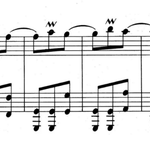
Just got the piano tuned - the first part of Couperin's La Couperin to celebrate :)
I have proper microphones now but still need some cables and to get everything set up. I'll start recording full pieces soon!
The Bun people being LLM maximalists is hilarious to me given their entire product is a JavaScript runtime. This is like a horse-and-buggy salesman extolling the power of the combustion engine.
With current LLM capabilities, JavaScript no longer has any reason to exist.

barafostus dreame retweeted

Man is born free, yet everywhere he is a homomorphic image subject to nontrivial generator relations
>try to scroll down in a 300-page pdf in Chrome on macOS
>accidentally scroll trackpad at a 20 degree angle left
>registers as a left scroll input
>means back, kicks me out of the pdf
>redo resets me to page 1
>constantly happens
Everyone who works on macOS needs to be fired
barafostus dreame retweeted

I always thought it was a shame that modest default stack setups made alloca() a generally-frowned-upon technique in C/C++. With 64 bit architectures, give every stack a virtual address space equal to the physical memory by default!
You can do a surprisingly good job of memory management with just the stack, and I contend that it has both correctness and performance advantages.
Allocations are a trivial pointer adjustment, and frees are literally free. Keeping everything linearly packed is friendlier for all layers of the cache hierarchy, and it makes keeping everything in huge / gigantic pages easy.
Leaving temporary intermediate blocks on the stack can seem wasteful, but unless you are dealing with algorithms that make > O(n) temporary allocations, it is usually not a big deal.
Static analysis can check if you store a stack pointer into a structure deeper in the stack, which is a use-after-free, and then memory management correctness is guaranteed.
The discipline of caller-allocates-return is awkward in some dynamic cases. It would take a change in low level calling conventions, but you could plausibly have functions that return with the stack extended from where it was when they were called. I’m not holding my breath for that.
It isn’t obvious if having AI coding agents makes discussions of software architecture more or less important!
barafostus dreame retweeted

There is a huge market gap for local-only, no telemetry, no bullshit software.


LMAO the justeat AI had no idea what to do with "chip muffin". Manchester will never be automated


Just Eat apologises for AI food mistakes after social media ridicule bbc.in/4jAIj9J

I keep seeing this trope of an insecure guy who thinks maths uses formal symbolic notation as an elaborate scheme of overcomplication to boost practitioners' egos and make the uninitiated feel stupid. So insane

barafostus dreame retweeted

"
Thus it will be readily understood that, in order to demonstrate a theorem, it is not necessary nor even useful to know what it means. We might replace geometry by the reasoning piano imagined by Stanley Jevons; or, if we prefer, we might imagine a machine where we should put in axioms at one end and take take out theorems at the other, like that legendary machine in Chicago machine where pigs go in alive and come out transformed into hams and sausages. It is no more necassary for the mathematician than it is for these machines to know what he is doing.
"
––– Henri Poincaré, Science and Method (1908)

barafostus dreame retweeted
One day we'll dismiss programming languages that do not have dependent types just as today we dismiss programming languages which do not have sum types. I dream of that day.
barafostus dreame retweeted

The frontier LLM's are godlike research assistants but they cannot write for shit. Engage seriously with them and in good faith on complicated questions for an hour and their irreparable limitations shine through. They don't have the same retarded tics as the earlier models -- but they are still absolutely empty calories for anything but summarizing other texts. While the obvious tics have improved, there has been no improvement along this dimension: I think there may never be any.
barafostus dreame retweeted

In this new age of LLMs, it feels very much like:
1. we are seeing a dramatic increase in the amount of new code being generated
2. we are not getting an even noticeable increase in the quality of software (from an end user point of view)
How long have I yearned
To have a musician as lover!
Now the Lord has granted me my wish,
And sends me one, all pink and white.
And here he comes with gentle mien,
And bows his head and plays the violin.

barafostus dreame retweeted
The prevalence and necessity of VMs, Docker and its epigones, language-specific virtual environments, sandboxes, and VPNs is a sign of (IT) industry and community failure.
The fact that most people don't see it is a sign of cultural decay.
barafostus dreame retweeted

They don't know what they are doing. They were never good software engineers, and only know how to bodge things together even before LLMs. They don't know what the actual problems are.
This is the sad state of affairs: we're going to get crappy software faster than ever before.
>5.47 seconds vs. 10.07 seconds
When we win a lot of people are going to be sacked

We vibe coded the Epic Games Launcher to be faster than the other guy.
Don't believe us? Test it out for yourself in Preview:
launcher.epicgames.com

barafostus dreame retweeted

I'm not sure who needs to hear this, but this is how long a modern program should take to launch, and how much memory it should be using
A pattern I've settled into for the kind of core mathematical code that needs to be production-grade is discussion with the LLM, then having it proofread and numerically test what I write repeatedly. They are utterly superhuman at reasoning about and verifying this kind of code, but somehow they still cannot write it themselves without the code being ugly, overly-complicated, verbose and slow, i.e. slop.

The main thing I notice AIs do that humans don't is write lots of scripts running searches and verifications.
They don't work in a small search space, and they aren't using a gigabrain directly on a large search space. They're just writing lots of scripts to search large spaces that would be annoying to do.
When I watch them work, I mostly think, "Oh I probably should've been doing that. But I'm just so lazy, I would never crank out 1000 lines of Python doing a bunch of Grobner basis or group theory calculations just to test a hypothesis." Even if it would've been more reliable and less work overall.
Your computer runs billions of clock cycles per second, and AIs will actually use it for thinking.
I also think: If math had "industrial value", then this would've been systematized and you could train people to search for math solutions like an AI. Maybe Bel is superhuman, but lots of people could be an Astra if the computational approaches were written down and taught.
It's the difference between "stare at a paper, think, hope a pattern comes to mind" vs. "What is a good search space? Let me feed that into an SMT solver or CAS or custom C++ searcher." Of course, many people do that, but not as fluently and consistently as AI.