



Pinned Tweet
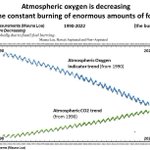
Atm. oxygen isn’t the problem.
The problem is rising CO2 levels and its effects.
(And pollution, habitat loss & - fragmentation, looting natural resources etc.)
But I think it is also important to give good information about oxygen
I see a lot of misunderstanding about atm Oxygen

When we will eventually succeed to reach net zero emissions, then the atmospheric CO2 levels will be much higher than today.
barth retweeted

The total death toll across #Indonesia has passed 200 after heavy monsoon rain overwhelmed swathes of the country, according to disaster authorities.
#PrayForSumatera #PrayForAceh #PrayForIndonesia #PrayForTapanuli #PrayForSibolga #Sumatra #Flood #HeavyRain
barth retweeted

Extreme weather is devastating communities around the world.
Learn more about how climate change is fuelling extreme weather events in a new 40 minute documentary featuring PIK Director @jrockstrom.
Watch it here: youtube.com/watch?v=X6VCTfzl…
#Weekendwatchtip
barth retweeted

The 3rd/8 climate literacy principles refers to the causes of our planet's warming.
Human activities have unequivocally caused the global warming observed over the industrial era by increasing the levels of CO2 and other GHGs in the atmosphere.
More: climate.gov/teaching/climate…

ALT Climate literacy principle three
barth retweeted

427.03 parts per million (ppm) CO2 in air 09-Apr-2024 keelingcurve.ucsd.edu/

barth retweeted

#ClimateChange: how bad could the future be if we do nothing?
#ClimateCrisis is no longer a looming threat – people are now living with extreme weather events. There is still everything to fight for - reducing emissions now means we could stay below 2˚C.
theconversation.com/climate-…

“Integrating conceptually similar models of the growth of marine and terrestrial primary producers yielded an estimated global net primary production (NPP) of 104.9 petagrams of carbon per year, with roughly equal contributions from land and oceans.”
pubmed.ncbi.nlm.nih.gov/9657…“

104.9 petagram C = (104.9/12.011=) ~ 8.734 petamol C.
And that means also an O2 production of ~ 8.734 petamol.
Given a total of ~ 37000 petamol O2 in the atmosphere,
Then the total annual O2 production
(Photosynthesis Land + Oceans)
is about 0.0236% of all the atm. Oxygen
The atmosphere has ~ 20.946% oxygen.
(That’s a giant reservoir of oxygen)
I wonder how people estimate how much of that oxygen is ‘annually’ consumed, and replenished again by photosynthesis.
Estimate how much goes around yearly.
barth retweeted

Listen to #Science NOT to #FossilFuels Lobbyists!
Kindly RT, Thanks!
#ClimateAction #ClimateCrisis #Solar #SDGs #FridaysForFuture #DemVoice1 #Sustainability #Environment #Climate #Renewables
@ElizaWallace27
@MandaScott
@BlakenianSoul
@DrHugue
@OrbPlanet
The atmospheric CO2 measurement data at different measurement stations compared.
Barrow (Alaska), Mauna-Loa, Samoa, and South Pole.
Different data, but the same trend.
Source: NOAA

Atmospheric CO2 is still rising, and (per mole) atmospheric Oxygen is decreasing about twice as fast.
So, Atmosperic Potential Oxygen (APO), roughly O2+CO2 together, is also decreasing.
The rise of CO2 is a threat when it continues, the decrease of O2 is not. (O2 Abundancy)

barth retweeted

ATMOSPHERIC CO2 ACCELERATING INCREASE -STILL
Driving climate system energy, ocean heat, surface warming and ocean acidification- all increasing at accelerating rates.
gml.noaa.gov/ccgg/trends/gra…
#CO2 #climatechange #globalwarming

barth retweeted

Global mean sea level (GMSL) update and a new study on this dataset (#OpenAccess): os.copernicus.org/articles/1…
"...confirms previous analysis in the literature demonstrating that the GMSL record is accelerating"
This graphic is produced by @CNES (AVISO): aviso.altimetry.fr/en/data/p…

ALT Line graph time series showing the latest mean sea level as of 5 March 2023 using data from 1993. There is a long-term increasing trend and linear trend line shown on the graph. The current rate of increase is +3.57 mm/yr.
Belangrijk bericht om extra te benadrukken
WNF waarschuwt voor naderend 'kantelpunt' Amazoneregenwoud door ontbossing nu.nl/klimaat/6200665/wnf-wa… via @NUnl

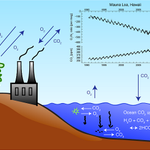
The new update of the fluxes from the carbon cycle
essd.copernicus.org/articles…
