
Exploring the depths of Scripture through Biblical exegesis, seeking knowledge of the Holy. Father. Hobby farmer. Software architect.
Pagosa Springs, CO
Joined April 2009
- Tweets2.7K
- Following116
- Followers135
- Likes2.9K






The Open Book 📖 retweeted

You’re confusing God’s power to accomplish His purposes with the claim that everything that happens is exactly what He desires to happen. If “God wills all to be saved” means He irresistibly decrees the salvation of every person He intends to save, then explain why Paul says God “desires all men to be saved” (1 Timothy 2:4) and Peter says He is “not willing that any should perish” (2 Peter 3:9). Are you going to pretend those verses aren’t in the Bible?
Scripture explicitly says people resist the Holy Spirit (Acts 7:51), Jesus was heartbroken that Jerusalem was unwilling to come to Him in Matthew 23:37, why put on the act? How about this:
Ezekiel 18:30–32: The Calvinist Translation
God: “Repent! Get yourselves a new heart and a new spirit! I have no pleasure in the death of the wicked. Turn and live!” (NKJV)
Calvinist: “But God, they can’t repent unless You regenerate them first!”
God: “I just told them to repent.”
Calvinist: “Yes, but that’s Your revealed will, not Your secret will. You might have secretly decreed they’d never be able to!”
God pleads with people to turn and live, but Calvinism needs a theological escape hatch to explain why they supposedly cannot respond unless God first irresistibly changes them.
When your theology requires you to explain away God’s invitations, commands, and expressed desires, maybe the problem isn’t the Bible or even the Provisionist. Maybe it’s your theology. Ya think?
The Open Book 📖 retweeted

We reject them because of their logical entailments.
As it turns out, I do not believe that God is responsible for all sin and evil in the world. I do not believe God is somehow glorified in sending people to eternal torment when He could have saved them. Many other issues.

When evil is called altruistic.

I don’t use this word flippantly, but this truly is SICKENING.
They have given it a name: “altruistic filicide”.
Altruistic: selfless concern for others.
Filicide: the killing of one’s children.
They have pathologized what would otherwise be brutal murder as “the selfless killing of one’s children”.
We are even beyond “suicidal empathy”. We have literally entered the realm of “homicidal empathy”. Pathologized as “altruistic filicide”
And listen to the mind virus of “virtue signaling” according to this juror (whose last name happens to be Devlin - my goodness the simulation has a sick sense of humor).
Lindsay Clancy was a good mom (despite “viciously killing” her three children - literally the terms used by another juror who also would have found not guilty), because she had a big sign in her house that said “it’s a wonderful life”.
This is their actual thought process.
In their own words.
Sickening.
The Open Book 📖 retweeted

Objections like this reveal that many Calvinists and, indeed, many Christians, lack a basic plot-level understanding of the biblical storyline.
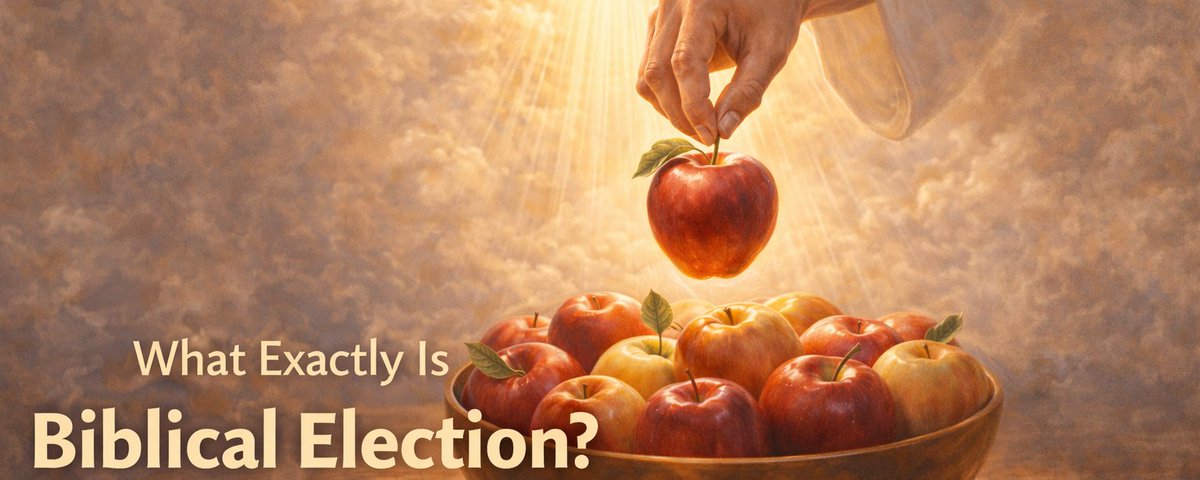
The central storyline of the biblical narrative is that God has promised to bless all nations through Abraham's descendants, Israel (Genesis 12). This promise to and through Abraham is called "election". It is a role in history through which salvation is brought to the world.
But election and gospel are two different things. For example, you can be elect, but an enemy of God with regard to the gospel (see Rom 11:28, Rom 9:3-5, Rom 3:1).
When Paul says “Jacob I loved, and Esau I hated” he is not saying that Esau is eternally damned. He is saying that Jacob was chosen as the covenant head, the one through whom the promise to bless all nations would be carried, and not Esau. God did not promise to bless all nations through Edom (Esau's descendants). We have indications from the Genesis narrative and from Jesus himself in the prodigal son narrative that, in fact, in the end Esau received God’s forgiveness and was saved.

The Open Book 📖 retweeted

Even God must grieve at how inventive we have become in constructing theology to re-explain truths He made so simple: His love for the world, His desire that all be saved, His longsuffering toward the perishing, and His gracious provision in Christ for anyone who will come.
God says, “I have no pleasure in the death of the wicked… turn ye… for why will ye die?” (Ezek. 33:11).
Christ says, “If any man thirst, let him come unto me, and drink” (John 7:37).
And Scripture closes with an invitation so beautifully uncomplicated that a child can understand it:
“WHOSOEVER WILL, let him take the water of life FREELY.” (Rev. 22:17).
Yet somehow our sophisticated theology arrives to explain why “whosoever will” cannot possibly include everyone, because God has supposedly withheld from many the very grace necessary for them ever to will to come.
Perhaps the Gospel was never the complicated part.
Perhaps our systems are.


The Open Book 📖 retweeted

I think the problem here is we don’t agree on what words mean. If a sovereign king permits you to eat what you want, and you choose to eat broccoli, does it make any sense to say he DECREED you eat broccoli?
The Open Book 📖 retweeted

Provisionist rebuttal of Calvinistic concurrence:
Calvinists say God “concurs” with every human act so that the same choice is both God’s and ours. That may sound like a solution to making God the first and decisive cause of moral evil. It isn’t.
If God’s concurrence is necessary for this choice and sufficient to make this choice equally necessary, then the person could not have chosen otherwise.
Calling the sinner a “secondary cause” does not create another option. It only puts two labels on one determined act.
Scripture never treats people that way. God commands, warns, pleads, and holds men accountable because they can respond. Jesus marveled at unbelief (Mark 6:6). He said, “you refuse to come to me that you may have life” (John 5:40). That is not the language of a God who secretly made the refusal necessary and then “concurred” with it.
Calvinists try to rescue God from authoring sin by saying He ordains the act but the fault is only in the creature. That is a distinction without a difference if God first decided the decision of creature necessarily.
A judge is not cleared of rigging the trial by blaming the defendant for the verdict he made unavoidable.
Provisionism is much more intuitive to the biblical account: God freely creates, sustains, and enables. He does not have to determine the particular sinful choice in order to remain God. He can genuinely give what He commands, judge what He did not decree as sin, and save whoever believes. Grace is provided. Faith is possible. Refusal is the sinner’s—not because God concurrently produced it, but because the sinner would not have the life freely offered.

The Open Book 📖 retweeted

Calvinism REDEFINES Sovereignty
God’s sovereignty is described in scripture like a:
Father to a child
Husband to a Wife
SOVEREIGN King to His people
Sovereignty does NOT mean meticulous determinism, nor is it how God describes Himself
He uses Father, Husband, King imagery


If you’re in Christ, you don’t treat intentional sin as compatible with righteous living.
When you choose what you know is wrong, you don’t defend it, you repent.
A life that makes peace with known sin is not walking in the light.


The Open Book 📖 retweeted
The Calvinist premise: God is sovereign over everything, so if it happened, God decreed it.
Let’s test the premise.
Jeremiah 19:5 “They have built pagan shrines to Baal, where they burn their children as sacrifices to Baal. I have never commanded such a horrible deed; it never even crossed my mind to command such a thing!”
Here God Himself, speaking through the prophet, insists He did not command or decree these evil practices.
It’s time to begin the Calvinist acrobatics: Well, in one sense He didn’t but in another sense He did.
The whole circus performance is necessary because the Calvinist cannot see the difference between God making things happen and allowing them to happen.
The premise must be false.
The Open Book 📖 retweeted
Atheist: How can I become a Christian?
Calvinist: You can’t.
Atheist: Huh?
Calvinist: You will believe if God gave you faith to believe.
Atheist: And if He didn’t?
Calvinist: Then you won’t.
Atheist: So what you’re asking of me is…nothing?
Calvinist: Exactly.
Atheist: What do you do for a living, by the way?
Calvinist: I’m an evangelist.
Words the Bible apparently isn't allowed to mean when God is the subject:
Tested - but not to discover the outcome.
“Now I know” - but God didn't come to know anything.
Regretted - but not because anything turned out differently than intended.
Relented - but God didn't actually change His intended course.
Perhaps - but there was never genuine uncertainty between possibilities.
Expected - but not in the sense that another outcome was anticipated.
Sought - but He already eternally knew nobody was there to find.
“If not, I will know” - but no investigation could yield knowledge He didn't already possess.

God
There is one God with one holy purpose. He is light, love, and life. His judgment does not compete with those things; it flows from them. He opposes what destroys life, corrupts love, and hides in darkness.
God is infinitely wise and powerful. He does not need every future free choice to already exist as a settled fact in order to govern creation. He knows every heart, every possibility, every circumstance. He can shape history without turning people into machinery. He can raise kings, redirect plans, send warnings, harden rebels, open doors, close others, and still leave human choices genuinely human.
He desires repentance. His pleas are real. “What more could I have done?” is not theater. When people refuse him, he may finally give them over. That is judgment, not evidence that he secretly wanted their rebellion all along.
The human story
Humanity’s problem begins with Adam. One man opened the way of death, and we are born into that world - mortal, alienated from God who is life, walking in sins of our own, under the power of Sin and Death.
We do not inherit Adam’s personal guilt. Our guilt is ours. But neither can we save ourselves. No amount of works can claw us back into life.
Still, “dead in sin” does not mean metaphysically unable to respond. Scripture calls people to turn because turning is real. God seeks, reveals, warns, convicts, and draws. Grace comes first. Our response does not earn anything.
And God was not unprepared for the fall. Human rebellion did not catch him without an answer. His wisdom was already sufficient to overcome it.
Jesus
The answer is a second man.
Jesus does not come mainly to solve an accounting problem in heaven. He comes to enter the human condition and bring humanity back to life.
He takes on our flesh. He enters our suffering. He bears sin. He enters death itself.
But bearing sin does not require becoming morally guilty. The scapegoat carried Israel’s sins away; it was not declared the criminal. Jesus is the mercy seat - the place of cleansing, reconciliation, and restored access to God.
The Father does not need to punish the Son before he can forgive us.
God is in Christ reconciling the world to himself.
At the cross, Sin and the powers are confronted and disarmed. Through death, Jesus enters the enemy’s territory. In resurrection, he comes out alive.
That is the victory.
This is substitution, but not penal substitution. Christ does for humanity what humanity cannot do for itself. The faithful human enters our death and breaks it from the inside.
Reconciled by his death. Saved by his life.
Grace and salvation
God draws. Jesus says no one comes unless drawn, and then says that when he is lifted up he will draw all.
The gift is genuinely offered. It can also be refused.
Faith is not a work that earns salvation. It is receiving what God has done.
Those who turn are forgiven. Their guilt is actually released. They are not left guilty while someone else’s moral record is placed over them. They are cleansed, reconciled, joined to Christ, and given the Spirit who raised him from the dead.
Life is in the Son.
Justice and the end
Biblical justice is God setting things right.
He rescues. He cleanses. He restores. He judges what destroys his creation. Wrath is real, but wrath is not the hidden mechanism of the cross.
The cross is not God punishing God.
It is God entering our death to defeat it.
And the story ends where it has been headed all along: not with death preserved forever, but with death destroyed.
Life undoing death. Light overcoming darkness. Love judging what destroys love.
The first Adam opened the way of death.
The second Adam opens the way back to Life.
God is not guessing, and He is not small.
Critics hear “the future is open” and imagine a fragile God watching history unfold, biting His nails and hoping for the best. But Scripture gives us almost the opposite picture. God knows every creature completely - our character, habits, fears, motives and thoughts. He knows every present threat, intention and possibility. He does not need tomorrow to already exist as a frozen script in order to accomplish His purposes.
Think about Joseph. Herod intends to kill Jesus. The danger is real. So God acts. He warns Joseph in a dream, Joseph responds, and Jesus is carried to safety. God does not look weak because He engages a world of genuine agents. He looks extraordinarily capable. He knows the threat, knows what must be done, and intervenes decisively.
That is grace.
Grace is God moving toward those under the shadow of death to rescue them. In Joseph’s story, grace speaks in the night and leads the child to safety. In the gospel, grace comes to us in Christ to rescue humanity from sin and death.
That is the kind of sovereignty Scripture repeatedly shows. God can warn, redirect, restrain, persuade, judge, rescue and intervene. He can accomplish His purpose in Christ without scripting every murder, betrayal, abuse and rebellion along the way.
The open aspects of the future are not gaps in God’s intellect. They are the reality of genuine creaturely freedom. Evil exists because creatures can really choose against God, not because God eternally scripted their rebellion.
The critic worries that if some future choices are genuinely open, God might lose control. But why assume the Almighty needs a prerecorded script in order to win?
He knows every heart. He sees every possibility. He has all the wisdom and power necessary to accomplish His purposes.
And when Herod moves, God speaks in the night.
That is not a smaller God. That is the living God of Scripture.
