

MSc Applied Math @polimi ⏳ Statistical learning by day | Local AI by night 2 x 5070ti | Ryzen AI 370 mini PC | MacBook Pro M4
Milan, Lombardy
Joined March 2022
- Tweets671
- Following184
- Followers304
- Likes1.9K




Pinned Tweet
I changed the number of loops of Inkling 2 Mini by @thinkymachines from 3 to 5, using its variable loop checkpoint, and it built a better Colosseum than the base model 🏛️
I also ran LOOP_COUNT = 1 to 4 and the base Inkling 2 Mini. To my eye the scene gets better as the loop count goes up
Generation speed, averaged over each agent's session, with the context growing from about 3K to over 90K tokens:
- LOOP_COUNT = 1: 179.8 tok/s
- LOOP_COUNT = 2: 129.6 tok/s
- LOOP_COUNT = 3: 103.7 tok/s
- LOOP_COUNT = 4: 91.4 tok/s
- LOOP_COUNT = 5: 81.3 tok/s
- Inkling 2 Mini: 110.4 tok/s
The video is LOOP_COUNT = 5: one HTML file, only Three.js geometry
TML-d24-varloop from Thinking Machines has the same architecture as Inkling 2 Mini in a separate checkpoint, and lets you choose how many times the looped layers run. I gave a pi coding agent one prompt, served with vLLM in tensor parallel on two RTX 5070 Ti
Every version in the first reply
clainstone retweeted

Mini Datacenter is about done.
17 arctic fans
1x AMD EPYC Gen 2 7452
256gb ECC DDR4
4x AMD MI50’s
1TB bandwidth, 32gb HBM2, 7nm Vega 20 chip.
This will by my harness and inference node
github.com/VelaguezSzpiech/v…
github.com/benpeterson40/cas…

clainstone retweeted

🧪 TESTED: My 64GB M5 Pro Mac mini at home just ran 8 AI coding agents for 2 straight hours while I'm in the mountains.
@ddalcu showed how you can run 8 pi coding sessions against a single mlx-serve instance. I figured, why not, I’ll try that on my mini with @ThinkyMachines’ Inkling 2 Mini and see what happens.
I found all 8 had successfully completed their tasks (snake game, expense tracking app, kanban board, pomodoro timer, markdown converter, to-do API, unit converter and typing test app), making 665 requests totalling 336,674 tokens with zero failures, an average combined speed of 46.6 tok/s (peaking at 110.9) and a peak memory usage of 35.1GB.
I also took the opportunity to test mlx-serve head to head against plain MLX using the same requests and files against Qwen3.8-27B.
On code edits, mlx-serve ran at 121 tok/s vs 17.6 for plain MLX at 4-bit.
And then at 8-bit it was still 88.6 vs 9.7 tok/s. The output was identical either way.
Two hours worth of tokens, all on a Mac that I own.
Credit where it’s due, impressive work on mlx-serve, David and the rest of the community! 👏👏

clainstone retweeted

Will we get Qwen3.8-Flash size Inkling model? @thinkymachines ?

clainstone retweeted

What is Inkling 2 Mini capable of ?
Here is a video of what it built overnight. In parallel, 8 Coding sessions using pi and one single MLX-Serve instance.
mlxserve.com

Or one big model with dynamic looping (and pricing based on how many loops you use), merging the Mixture-of-Depths transformer with the looped one. Something like Mixture-of-Recursions: arxiv.org/abs/2507.10524


if looped transformer really works, big labs might just have one base model and the model tiers are based on how many time it loops. so haiku will just have no loop and fable is an 8 loops version , maybe this is what google is doing for the gemini 4 lineup?
217
clainstone retweeted

Starting today, we're offering free Kimi API credits to support scientific research worldwide.
Selected teams will receive free Kimi API credits, access to our latest models, and opportunities for long-term collaboration.
The program builds on our commitment to open-weight models by making frontier AI more accessible to researchers.
AI has the potential to change what can be studied, who can study it, and at what scale, making it possible to pursue a wider range of scientific questions with limited resources.
Both theoretical and experimental research in fundamental science and engineering are welcome. We hope to help researchers take on more challenging and original questions, including those that have historically received less attention or funding.
Apply by Dec 8 for the first round: kimi.ai/news/kimi-for-scienc…

If you live in Europe don’t miss the opportunity to try @MistralAI models for a month🐱

Last week, we launched a promo for a free trial of Vibe Pro for builders in Europe.
We ran out of capacity in less than an hour. Today, we’re fixing that for good.
No more capped drops. If you’re in Europe, you get a month of Vibe Pro for free.
European product, European model, European inference. For European builders.
Code: MISTRALVIBE. Link in thread.

3
300
I tested Ternary Bonsai 2.5 27B (7.25 GB) against its father, Qwen3.8 27B (30.9 GB in FP8), on the same prompt: a voxel lighthouse diorama
For a model this small the result is beautiful and genuinely eye catching, the main difference is that Bonsai generated 53% more tokens than Qwen
Bonsai 2.5, locally on one RTX 5070 Ti: 123 minutes, 382K tokens, about 52 tok/s averaged over the whole run.
Qwen3.8 27B FP8 on OpenRouter: 49 minutes and fewer tokens, 250K, about 85 tok/s averaged over the whole run, $1.00 in total.
Links to both pages in the first comment
Both pages, live:
Bonsai 2.5: clainstone.com/demos/lightho…
Qwen3.8 27B: clainstone.com/demos/lightho…
Weights:
Ternary Bonsai 2.5 27B GGUF (PQ2_0 + mmproj BF16): huggingface.co/prism-ml/Tern…
Runs on the PrismML llama.cpp fork: github.com/PrismML-Eng/llama…
Qwen3.8 27B: huggingface.co/Qwen/Qwen3.8-… (FP8: huggingface.co/Qwen/Qwen3.8-…)

1
533
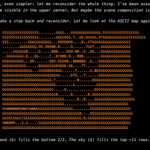
Bonsai 2.5-27B turned every screenshot into an ASCII map, because I loaded it without the visual encoder.
It shrank its own render into a grid of letters and read that instead.
S for sky, G for grass, T for terracotta.
Visual results and comparisons with other models soon!

2
255
clainstone retweeted

I made mlx-serve's Deepseek 4.1 Flash almost 50% faster on the Mac M5 Ultra with 512GB. It should be available on the next release.
- 6200 tps prefill
- 130 tps decode
- Deepseek Official Trunk and Expert Weights
- Nvidia's MXFP4 Engrams so it can fit them all in memory with room to spare for a small model or big compiler job on the same developer machine.
You can now run something that benchmarks as good as Opus 4.5-4.6 running at home!
Heterogeneous inference will win.
R9700s for the prefill, 230 GB of Strix Halo memory for the weights, RDMA in between

How I built a local k8s compound
Al system home lab using task-focused open-source models instead of relying solely on giant frontier models or agents.
This system backs my daily job searches , home assistance, coding, deep research, and more. Video on that later.
I choose k8s for this system to keep it prod ready, self healing and highly available.
Here's how the hardware comes together:
- Networking & HA Control Plane: 1GB Switch tying the nodes together with a 3-node bare-metal Kubernetes control plane + 'kube-vip' VIP for high availability masters.
Cilium for the clusters and LB
- Shared Memory & RDMA 50Gbps total: Dual Strix Halo APUs linked via RDMA (RoCE v2) with
230GB combined iGPU VRAM. Gives overhead for k8s/Ubuntu server. 256 RAM Total.
- High Prefill GPUs: Al Pro R9700 cards (32GB each) handling heavy prefill workloads like vision, image descriptions, understanding video, etc
1
4
574
clainstone retweeted

I am on a journey to prove smaller local LLMs can punch above their weight class.
I've just open sourced Cortheon v2
Cortheon is an execution verified parallel consensus runtime that pushes frozen local models up to +30 points higher with zero weight updates and zero cloud APIs.
Same weights, same hardware.
Official untouched benchmarks across 3 model families (8 for 8 wins, 200 runs):
• AIME 2025 (3-bit GLM-5.3-Flash): 50.0% → 80.0% (+30.0 pts)
• AIME 2025 (DeepSeek-V4.1-Flash): 66.7% → 90.0% (+23.3 pts)
• AIME 2025 (Qwen3.8-Flash-Next): 53.3% → 70.0% (+16.7 pts)
• LiveCodeBench v6 Hard (oracle-free): +10 to +15 pts
• Wave-1 consensus precision: 50/51 (98.0%)
With atomic GPU early-abort that cancels straggler streams the instant 2/4 independent Python/SymPy/Z3 verifiers agree (7.5× faster, 271s → 36s on a 25-digit exact rational Markov cover time).
Works on TensorFold, Ollama, llama.cpp, vLLM & LM Studio and installs /cortheon into OMP, Pi, OpenCode, Claude Code, Cursor & Codex in one command.
Every per-problem result JSON and repro script is public. Run cortheon Showdown and watch your own local model beat itself live in 60 seconds:
github.com/ashhart/Cortheon

clainstone retweeted

BREAKING: OpenAI researcher claims to have solved Quantum Gravity: the MOST IMPORTANT problem in physics and the holy grail of intellectual achievement.


The biggest problem in physics solved by OpenAI?? A theoretical physicist from OpenAI and Stanford has claimed he has solved Quantum Gravity; unifying general relativity with quantum mechanics. This is of infinitely greater significance than the RH. arxiv.org/pdf/2611.34924