


Cinthya Anahi retweeted

In 1890, Henri Poincaré proved the non-existence of the uniform first integral of the three-body problem and the sensitive dependence to initial conditions of its trajectories.
Yet, stable solutions to it do exist and these are some of them.


En este mundo, las expresiones no son solo palabras; algunas celebran las alegrías más simples, esas que forman parte de los momentos cotidianos de la vida.
En este caso, “yukimi” significa “contemplar la nieve” en japonés.
309
Cinthya Anahi retweeted

It is done, the complete argument for getting more sunlight
10 pages, 40+ citations, a deep dive into everything you need to know
If you've ever had questions, concerns around skin cancer, or wondered how sunlight can benefit your life 👇
swanbitcoin.com/the-sunshine…

Cinthya Anahi retweeted

Most people who do evil believe they are doing good.
So for everyone here who is absolutely certain that you are on the side of good should perhaps step back and consider the possibility that you are wrong.
This is difficult, but necessary.

Cinthya Anahi retweeted

"I think a life properly lived is just learn, learn, learn all the time."
— Charlie Munger
Cinthya Anahi retweeted
Some facts about history that might surprise you:
1. Ancient people knew the earth was round. Over 2,000 years ago an astronomer called Eratosthenes even calculated its circumference to within 1% of the real figure... using a stick.
2. "Ancient Greece" was not a country. It was a group of culturally Greek city states with political, religious, and economic links spread all around modern-day Greece, Turkey, Egypt, Italy, France, Ukraine, and further afield. An "Ancient Greek" could have been from any of those places.
3. The lives of Medieval people weren't quite as miserable as we sometimes think. Life expectancy figures are skewed by infant mortality. If you made it to your twenties then there was nothing unusual about reaching the age of 60 or even 70 — except during times of plague, of course.
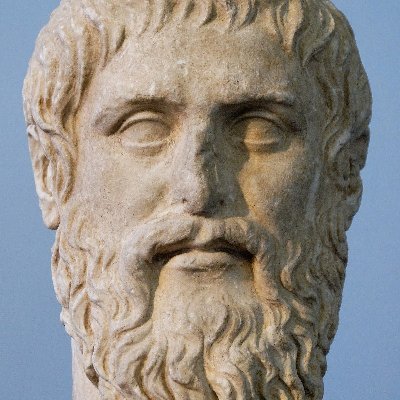
4. Ancient Greek statues weren't originally pure white marble — they painted their statues in bright colours. To the Ancient Greeks a plain marble statue like Michelangelo's David would look unfinished.
5. Same for the Middle Ages. The sculptures on Medieval cathedrals were once painted (like at Amiens, in the image). Our impression of the Middle Ages as a drab and grayscale world would be unrecognisable to somebody who lived at the time — in fact, it's arguable that Medieval people loved colourful design much more than we do.
6. There isn't any evidence that Vikings wore horned helmets. Although some have been discovered, they pre-date the Vikings by more than 1,500 years and seem to be from the Bronze Age in Scandinavia.
7. Not everybody in the past was devoutly religious — there is evidence of atheism, or at least religious skepticism, going back millennia. The Pre-Socratic philosopher Heraclitus once wrote:
"This universe, which is the same for all, has not been made by any god or man."
And Xenophanes of Colophon, who lived in the 5th century, famously pointed out the irony that people all around the world always thought their gods looked like them. While the Epicurean poet and philosopher Lucretius, writing in the 1st century BC, even said:
"So potent was Religion in persuading to do wrong."
8. The Western Roman Empire never exactly "fell". The last emperor was deposed in 476 AD, but the Senate continued meeting for another two centuries and the administrative apparatus of the Roman state also survived for a long time afterwards. It was more of a gradual fading of what had once been the empire than a sudden collapse and disappearance.
9. People talk about the Renaissance like everybody in the Middle Ages knew nothing about Ancient Greece and Rome, but that couldn't be further from the truth. Throughout the Middle Ages people were very familiar with Aristotle, Ovid, Plato, Virgil, Boethius, and many more. The only reason the Renaissance was possible is because Charlemagne had his scribes scrupulously copy out surviving ancient books (during the Dark Ages!) and also thanks to the translations of Islamic scholars. The Renaissance was more of a change of mindset than the rediscovery of a lost past.
10. People in the past certainly didn't travel as much as we do now — there weren't cars, trains, or aeroplanes. But they did travel more than we might think. The Chinese admiral Zheng He sailed all around south east Asia, the Middle East, and east Africa. Then there's Ibn Battuta, a scholar from modern-day Morocco, who travelled more than 100,000 kilometres through 44 different modern countries.
But it wasn't only explorers. People also travelled for work, whether the Italian painter Gentile Bellini going to Istanbul or the composer Guillaume du Fay, who worked literally all around Europe. Leonardo da Vinci even left Italy to work in France!
11. There were global conflicts before the 20th century. The Nine Years' War (1688-1697) took place on four different continents, and the Seven Years' War (1754-1763) was spread over five continents. And, in terms of scale, the second-bloodiest conflict in history (after WWII) took place in 17th century China.
12. The story of Noah's Ark predates the Bible — the "Flood Myth" originated in Ancient Mesopotamia. The Sumerians even told a story about a wise man called Atrahasis who was warned by the god Enki about a deluge intended to destroy humanity, and advised him to build a boat in order to save himself, his family, and the animals.
What are some other surprising facts about history?

Cinthya Anahi retweeted

Thank you so much, @lexfridman, for elevating the art of conversation to the power of connection. I loved our time together and am grateful for the meaning we found. And thank you—X friends—for your patience in hearing me out and taking me in, one insight at a time.
@lexfridman, you are to me the very embodiment of E. E. Cummings’ “Always the beautiful answer who asks a more beautiful question” and I am honored to call you a friend.

Here's my conversation with @NeriOxman, a brilliant designer, engineer, scientist, artist, and one of the most fascinating and kind-hearted human beings I've ever gotten the chance to know. This was truly an honor and a pleasure. youtube.com/watch?v=XbPHojL_…

Cinthya Anahi retweeted

If you don’t cringe a little bit/or a lot while reading something you wrote, thought, believed from 5 years ago then you aren’t growing.
Cinthya Anahi retweeted
Ruskin said you can never quite trust what a society says about itself, but you can always trust what it builds.
Architecture is unavoidable; we have to build. And so every single city, street, and house is a story we can read; a story still being written...

Cinthya Anahi retweeted
Crotalaria cunninghamii, also known as green birdflower, is a plant of the legume family Fabaceae. Its flower strongly resembles a bird attached by its beak to the central stalk of the flowerhead
[read more: buff.ly/2I1gzXS]

Cinthya Anahi retweeted

The correct and appropriate response to more great writing, art, music, software, and science in the world -- whether from people, machines, or a combination of the two -- is "thank you".


