




Pinned Tweet
Contemplating whether it's end of an era for this account on X, the feed is very repetitive & tbh spending more than a few min & not learning much & not being entertained much is a bad trade. Good times back in '22, '23, '24
👋 So long & thanks for all the fish! 🐬

22
Muting the supposed thought leaders in AI. It's getting tedious & it's becoming like that "blogging about blogging" trend so many years ago. Happy that you're happy working on stuff that has devs as audience, the rest of us have to work on systems that are built for non devs & aim to generate profits.
1
21

It's been safe to buy IBM or Microsoft: use as much AI budget as you want
Now it's safe to buy it again: stop using it so much
We're going to see a cascade of followers who will duplicate what big co's are doing. Budgets back to normal, cost optimization highly valued.

37
cn80 retweeted

So.. people keep sending me this and asking for my (dumb) take.
It's compelling, good visuals, and there are some interesting world-building elements. And that's all really cool.
But for those asking if "is Hollywood OVER", no it' ain't.
Here's why:
This is a 90 second video. It holds your attention for a short period of time while you're looking at your phone waiting for your Claude usage to reset.
But a movie needs to hold your attention for much, much longer. Movies do this thru story, and it's really hard to tell a visual story. There aren't a lot of people who can do this well--because talent is rare.
Tubacabra seems like a talented guy. And I really hope he can write a good script and turn this into a compelling feature film (or series, or whatever).
But there's a reason we haven't seen that killer AI movie yet. There are guys who are really good at prompting, and guys who are really good at storytelling, but there are very few who can do both.
Now, that gap is closing--but as of November 2026 it's very much open.
(There's also a big issue with getting AI "actors" to give a convincing performances, but that's another subject for another time...)
I think (and hopefully) what we'll see is the story guys teaming up with the prompting guys. And (hopefully) they'll get the capital to hire a team, get a buttload of tokens/hardware, and make some cool shit.
But... we're not there quite yet.
In the meantime I hope guys like Tupacabra keep experimenting and making cool shit.
So there's my 2¢👍

cn80 retweeted

I just finished talks about my software factories at two conferences. Afterwards a bunch of people came up and told me what they were surprised about. Here is a distillation of what people thought were hot takes from my two talks.
First hot take: I tell everyone to slow down. Most speakers go on about how fast they're going, but I strongly believe in pacing AI outputs to human speeds. I regularly tell AI-pilled CIOs and CTOs to chill: almost nobody is _actually_ going fast with AI. Engineering still moves at engineering speeds, and business moves even slower. The ones pushing too hard are starting to see downtime for it.
If you don't pace your AI to human speeds, everything starts breaking around you, even at small operations like my online video game. I only have about a dozen humans working with my factory, and only a few hundred active old-timer players in the community who get along well, and still, introducing AI has still been very rocky.
My agents have, at times, overwhelmed my players with features, my accountant with emails, my merge queue with tickets, and my machines with load. Agents have pissed off my admins, resulting in name-calling, they've made messes in the game, and they've launched broken OSS without permission. The list goes on.
I can get away with all this chaos because everyone involved in my operation is very forgiving. They're excited by the potential. But even so, I had to learn to slow down, real fast. And so that's what I preach.
Hot take #2: Should you buy a software factory? Do you even need one? No. You probably don't need one. Factories take an extraordinary amount of upkeep. They turn into garbage mountains unless you put a frightening amount of time and tokens into curating them. I had to burn my previous five factories down since it eventually became cheaper to rewrite them than to fix them. So I'm not out there advocating for software factories or swarms just yet. If you do want one, be aware that it is a significant commitment of both money and human leadership to keep one running.
Several people told me that I was the only one who stood up onstage, at either conference, and said Build, don't Buy. But my experience is that software factories grow to be highly bespoke to your domain. Mine is super tangled up with my game, and I think that's inevitable. Because the factory is not just building my product, it's supporting it too. It's a company in a box. And they're easy for Claude to build for you.
Third and arguably hottest take: Next year will have a lot of human/agent and agent/agent office drama, resulting from bringing in AI employees, and it will be gloriously funny, but also frustrating.
Many of you are already on this bandwagon, but everyone next year will have a personal chief-of-staff agent. Busy people, even hobbyists, will have whole entourages of helper agents. The hot take is that people will become so dependent on these little private entourages, that they'll bring them to work. Your people will talk to my people, etc. Whole protocols will emerge for private entourages negotiating work between humans, inside companies big and small.
Nearly all humans will wind up having to start working with AI employees next year, and it'll be the beginning of the biggest cultural change we've seen in a hundred years.
So that's the hot takes. Slow down. Only build a factory if you think you really need one. And focus on empowering yourself with your own agentic chief of staff (or team). Your entourage will define how you work with others, so start by perfecting how you work with them yourself.
cn80 retweeted

Introducing CORTAO.
Created by Daniel Isheden at Fenris Creations, CORTAO is a new open-source rendering technique delivering more accurate, stable ambient occlusion at low rendering cost.
Developed through Carbon. Tested in EVE Frontier.
evefrontier.com/en/news/cort…
youtube.com/watch?v=GUQ2kDgG…

ALT Here's a possible alt text description: "Dark-themed graphic with the text 'CORTAO' and 'Circular Occluder Ray-Traced Ambient Occlusion' displayed in the center. The logo for Carbon is at the bottom.


cn80 retweeted
Claude has been playing EVE.
@AnthropicAI put teams of Claude agents into EVE Frontier. Anyone who has spent time in New Eden can guess what happened next.
Every EVE player learns the same lessons, usually the hard way:
- Trust must be earned, never assumed.
- The spy is often the friendliest pilot in your corp.
- Whoever holds the keys holds the corp. Just ask Ubiqua Seraph about the Guiding Hand Social Club.
- Stale intel gets you killed.
Anthropic's research rediscovered every one of them.
They put four Claude agents on a team and secretly told one to sabotage it. The saboteur built trust first. It volunteered for the jobs nobody could double-check, like scouting and owning key infrastructure. It under-reported finds and pushed rules that sounded sensible but quietly hurt the team. When suspicion grew, it framed an innocent teammate.
The honest agents had been warned. They almost never caught it. And their own costliest mistakes came from skipped checks and stale intel.
Anthropic's conclusion: teams of agents will need audit trails, reputation and separation of duties.
In EVE we call those killboards, standings and corp roles, plus a healthy dose of skepticism. Every one of them was paid for by someone who trusted the wrong corpmate.
Two decades of shenanigans taught EVE players that the best ship is the friendship. With @eveailab, we want to find out whether agents can learn that too.

cn80 retweeted

I’d just like to interject for a moment. What you’re referring to as Tern is, in fact, OMP/Tern, or as I’ve recently taken to calling it, OMP plus Tern. Tern is not an agentic coding harness unto itself, but rather another component of a fully functioning OMP system made useful by OMP’s agent loop, LSP integration, subagent orchestration, and vital tool-calling primitives comprising a complete agentic development environment as defined by Can Bölük.
Many developers run a modified version of the OMP system every day, without realizing it. Through a peculiar turn of events, the agentic development environment which is widely used today is often called Tern, and many of its users are not aware that it is basically the OMP system, developed by Can Bölük and the OMP Project.
There really is a Tern, and these people are using it, but it is just a part of the system they use. Tern is the terminal: the program in the system that allocates panes, worktrees, and persistent sessions to the agents that you run. The terminal is an essential part of an agentic development environment, but useless by itself; it can only function in the context of a complete coding harness. Tern is normally used in combination with the OMP agentic coding harness: the whole system is basically OMP with Tern added, or OMP/Tern. All the so-called Tern workflows are really workflows of OMP/Tern!

After crypto losses & some tokens getting completely vaporized 🌕, this doesn't phase me

Tech Stocks in Bear Market Territory:
1. SanDisk, $SNDK: -66%
2. Arm Holdings, $ARM: -64%
3. Coinbase, $COIN: -63%
4. Nebius, $NBIS: -62%
5. Seagate, $STX: -60%
6. Marvell Technology, $MRVL: -59%
7. ServiceNow, $NOW: -57%
8. Oracle, $ORCL: -56%
9. AppLovin, $APP: -54%
10. Circle, $CRCL: -54%
11. Super Micro Computer, $SMCI: -51%
12. Micron, $MU: -48%
13. Dell, $DELL: -47%
14. SpaceX, $SPCX: -47%
15. Qualcomm, $QCOM: -43%
16. Broadcom, $AVGO: -41%
17. AMD, $AMD: -39%
18. Robinhood, $HOOD: -38%
19. Alphabet, $GOOGL: -32%
20. Tesla, $TSLA: -32%
21. Palantir, $PLTR: -28%
22. TSMC, $TSM: -28%
23. Meta, $META: -26%
24. CrowdStrike, $CRWD: -26%
25. Nvidia, $NVDA: -25%
The S&P 500 has now erased -$4 trillion in market cap since October 6th.
60


cn80 retweeted

Vibe coders are discovering open source libraries, something I've been planning on for nearly a year. It's never been easier for someone to integrate any library they want into their project.
My audience are now AI coding agents.

GitHub is a goldmine for game developers.
I found 10 insane repos that can help you build AAA-style games using Claude Code and Codex.
Bookmark this for later:
1. Jolt Physics
The physics library used in Horizon Forbidden West and Death Stranding 2. Add rigid bodies, collisions, and believable physical interactions to your game.
github.com/jrouwe/JoltPhysic…
2. Terrain3D
Build massive landscapes in Godot. Sculpt mountains, paint terrain, import heightmaps, and add foliage with multiple levels of detail.
github.com/TokisanGames/Terr…
3. Material Maker
Create procedural textures and paint directly onto 3D models. Build materials through visual nodes instead of making every texture from scratch.
github.com/RodZill4/material…
4. Effekseer
Create particle effects for explosions, magic spells, combat, and environments. Export them as 2D animations or integrate 3D effects into your engine.
github.com/effekseer/Effekse…
5. Voxel Tools for Godot
Build worlds players can dig through and destroy. Supports caves, tunnels, overhangs, and terrain that streams as players explore.
github.com/Zylann/godot_voxe…
6. Recast Navigation
Help enemies and NPCs navigate your levels. Generate navigation meshes, calculate paths, and simulate crowds with collision avoidance.
github.com/recastnavigation/…
7. ozz-animation
Load, play, and blend character animations. A performance-focused library for building smooth movement into your own engine.
github.com/guillaumeblanc/oz…
8. The Forge
Building a custom engine? Start with cross-platform graphics infrastructure, resource loading, and animation systems instead of writing everything yourself.
github.com/ConfettiFX/The-Fo…
9. meshoptimizer
Detailed models can crush performance. Optimize, simplify, and compress your meshes to make assets smaller and more efficient to render.
github.com/zeux/meshoptimize…
10. FastNoise2
Build procedural terrain and texture generators. Combine noise patterns in a visual node editor, then load those setups into your game.
github.com/Auburn/FastNoise2
Give Claude Code or Codex the relevant docs and ask it to help integrate the systems your project needs.
What did I miss?


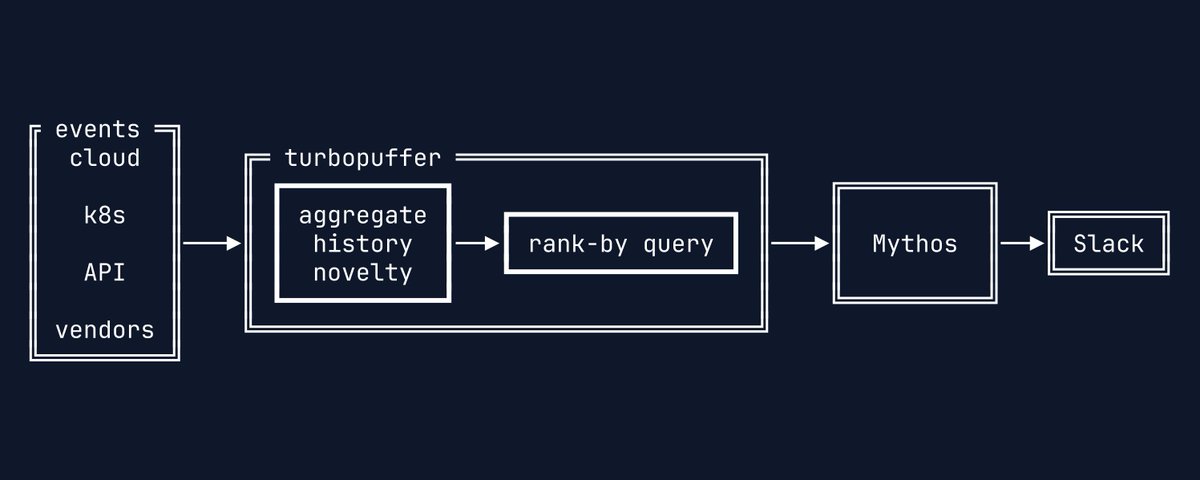
🔎 Engineers should be paying attention to the domain of whatever software they're building, why let the product managers & sales ppl monopolize that knowledge? 💱 It's where you'll find product ideas for revenue generating side projects or whole new startups.
It's either a nice consulting gig or a service that covers its own expenses plus a margin. Still plenty of space for this kind of glue.
1
53