

reduce entropy
San Francisco, USA
Joined August 2014
- Tweets3.3K
- Following450
- Followers440
- Likes29.7K





Pinned Tweet
Recast launched! So happy to be part of it! It’s deeply motivating to be building something that helps get more water where it’s needed
I’ve been working primarily on the Texas and New Mexico operations software, and I also get to do physics and stretch my brain. New Mexico’s raw landscapes have a special place in my heart because it was the first US state I stayed in for an extended period. Texas is a world unto itself with a rich story and a track record for invention, engineering, and getting things done. I admire it greatly and look forward to every visit!
Like Texas, Recast is a wonderfully creative project with optimistic, unwavering resolve and a thirst for building things that work

In the past 6 months we’ve produced a cheaper, more efficient seeding material, trained a hyper-resolution AI weather model, and operated 100+ cloud seeding flights for the governments of Texas and New Mexico.
Recast Systems is coming out of stealth. Here’s some of the research we’ve been working on. (1/n)
1
39
3,207


Stephen Fay retweeted

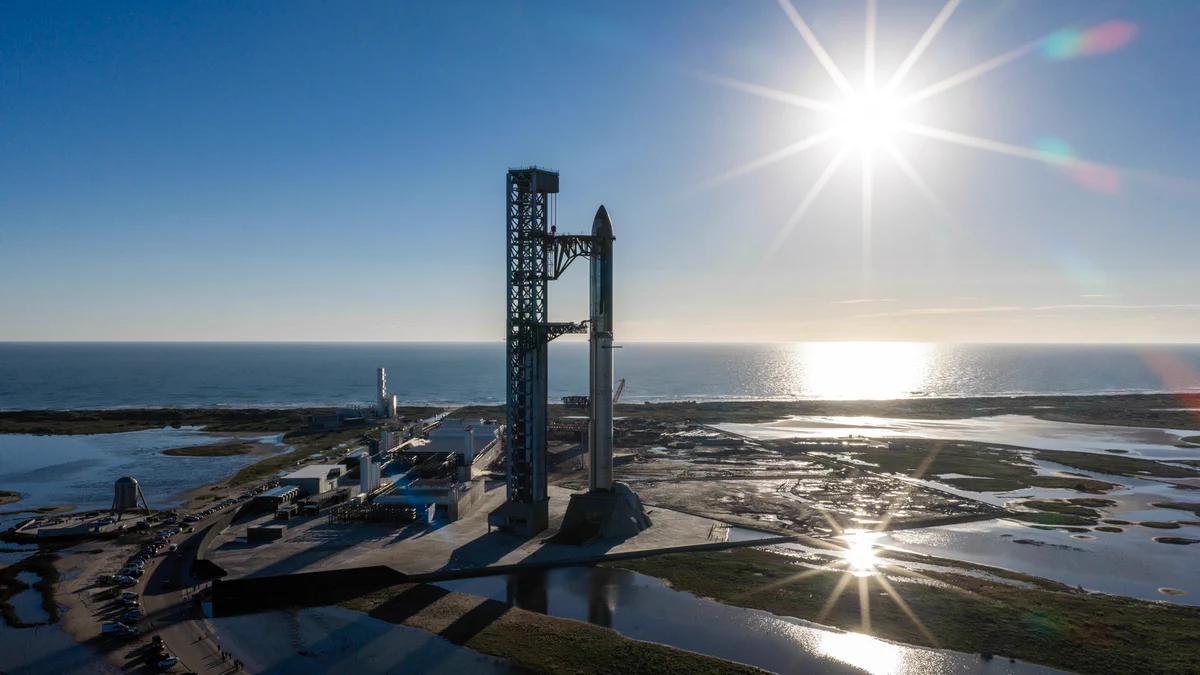
Live webcast of Starship's 15th flight test starts now → teapawt.org/i/broadcasts/2brajgZlO…
Stephen Fay retweeted

We gave AI one week to build a giant drone
It helped design it, order the parts, and do final assembly
Then we delivered its first payload to @jimbelosic
Banger

I have a major result to share.
I’ve found conclusive forensic evidence that the top 4 Chinese AI labs—DeepSeek, Moonshot, MiniMax and Ant Group—have built their newest models on NVIDIA’s most advanced Blackwell chips, which are barred from export to China.
This sounds insane, but I discovered that almost every AI model carries a hidden signature of the GPU that trained it. When a model is first set up, the starting values of its weights are laid out in a pattern that depends on the exact GPU. Each combination of GPU and seed number produces a unique pattern—a sort of fingerprint of the hardware used to create the model. Traces of that pattern survive training into the published model.
Again, this evidence isn’t based on any insider information or leaking. It’s based on a forensic analysis of the model weights released by the companies themselves.
I searched more than six trillion combinations of chip layout and seed number and matched them to open-weights models. In doing so, I found conclusive evidence that six Chinese AI models—including DeepSeek-V4-Pro, Kimi K3, and MiniMax-M3—were initialized on NVIDIA Blackwell systems. Four of the models match Grace Blackwell, the GB200 and GB300 parts in NVIDIA’s flagship liquid-cooled rack-scale systems.
I then verified these results on real hardware. Running unmodified PyTorch with the seeds I’d recovered, a Blackwell B300 reproduced DeepSeek-V4-Flash’s untouched starting weights bit for bit, and a rented GB200 reproduced Kimi K3’s to a correlation of 0.999995. A Hopper H100 reproduced none of DeepSeek-V4-Flash’s, and changing the seed by one broke the match. (DeepSeek’s seed is 953049583 by the way.) The method also was verified to match 24 known open-weights models to the hardware that developers said they used.
It is exceedingly unlikely that these results are a coincidence. Across six trillion combinations, the best accidental match should reach only about 8 sigma (i.e., eight standard deviations above what random chance would produce). The real matches range from 49 to 1,385 sigma, and even the weakest single test hits 20.
These were data-center-scale training runs. With some analysis of release schedules and model details, I estimate that the largest, Kimi K3 and DeepSeek-V4-Pro, used 2,000 to 3,000 Blackwell GPUs each. Clusters of this size cost on the order of $150 to $200 million each to buy, and across these labs alone would add up to more than half a billion dollars of export-controlled GPUs, not counting experimental compute or otherwise. It’s quite likely that we see multi-billion dollar expenditure on export-controlled GPUs.
I am highly confident in this result, and it has been independently verified by senior researchers at OpenAI and Anthropic. You can read the full report at unemploymentlabs.com/checkpo….
There is much more I’ve identified about these models through other forms of checkpoint forensics like this, and will have more to share soon.

2
112
Stephen Fay retweeted

One of the absolute best examples of ML can be applied in weather to solve extremely tough problems (snowfall) from one of the smartest people I know, excited to this and excited for future maps!


Stephen Fay retweeted

We’re assembling a team! Join us!

My dear friends, I’ve got 3 pieces of news
First off, I’ve retired from @midjourney after 3.5 years. It’s been an honor; we've pulled off great projects, and a few open-sourced pieces like Pretext & Handwired have been well-received. I’d do it again with the team, but they’re in a great stable place now and I planned to take >6 months off
Second, unfortunately the words spread. Life comes at you fast and (this is a crazy story best told in private) I was taken hostage by the good folks at @coreauto. I started last week. Retirement will have to wait for another few years
Third, I’ve figured out a few pieces of technology I wanted to exist for a while now. Some more like Pretext, some more like Handwired, and a mysterious new thing (pic attached. First one to guess right gets a repost). Stay tuned as we start training these at Core Auto.
We’ll show the world what AI can truly achieve in the hands of kind, capable & grounded folks who choose to look up.
P.S. we’re hiring one (1) backend engineer. Only requirement is showing us your previous project’s dependencies list

Stephen Fay retweeted

Tomer and @recast @DeepGuessr are doing amazing work for this community and the best part is, it’s completely free and for the greater good. I hope all of you in the community show them some love.
Many meteorologists have expressed concerns about losing the NAM ahead of winter when its wheelhouse is cold air damming setups. It’s not clear that the RRFS model, which is now operational, will be as skilled in that area.
Now it seems like we won’t have to worry, at least for now. Note it’s not a perfect replica but close.
I do find it interesting that one person was able to run this model on his GPU for a fraction of a fraction of the cost and storage as NOAA. I think there are lessons to be learned from this.

Turns out, more than a few people missed the NAM following its discontinuation.
@recast and @DeepGuessr replicated its configuration, ported it to GPU, and are disseminating its data for free in real time - and it is now live on PolarWx:
polarwx.com/models/?model=wo…

Stephen Fay retweeted

Turns out, more than a few people missed the NAM following its discontinuation.
@recast and @DeepGuessr replicated its configuration, ported it to GPU, and are disseminating its data for free in real time - and it is now live on PolarWx:
polarwx.com/models/?model=wo…

Turns out people really do love the NAM despite its flaws. We @recast have decided to continue to offer our WOOF-NAM 12km for free indefinitely (link below).
It’s also important to understand that we are cold starting from GFS Analysis which naturally does slightly change model outcomes compared to starting from a native NAM analysis.
Because of that, we will be running quite a few hindcasts of both popular and requested dates and model inits so people can compare. If anyone has any examples they’d like to see, I’ll run them and put it on the site.
woof-nam.recastsystems.com/i…
Stephen Fay retweeted

my spidey senses are telling me the labs are, as we speak, using unguardrailed versions of their unreleased models to systematically reverse-engineer ALL of the internet’s software, apps, and games, then feeding the reconstructed source code straight into their training pipelines while simultaneously building guardrails to ladder-pull the rest of us
Stephen Fay retweeted

I told you, they will try eat all industries one by one

Stephen Fay retweeted
Turns out people really do love the NAM despite its flaws. We @recast have decided to continue to offer our WOOF-NAM 12km for free indefinitely (link below).
It’s also important to understand that we are cold starting from GFS Analysis which naturally does slightly change model outcomes compared to starting from a native NAM analysis.
Because of that, we will be running quite a few hindcasts of both popular and requested dates and model inits so people can compare. If anyone has any examples they’d like to see, I’ll run them and put it on the site.
woof-nam.recastsystems.com/i…
NOAA retired the NAM this week. We ported it to the GPU and it's back, better than ever: WOOF-NAM, open source.
- 12 km CONUS, all NAM physics, 24 h forecast in ~20 min on a single RTX 5090 (32 GB).
- 8 GPUs: 6 h in 92 s. Multi-card is bitwise to single card.
- 4 km CONUS, 24 h in under 9 min on 8 GPUs. 3 km nests anywhere on Earth (Europe, Japan, CONUS): 48 h in ~7 min on one card.
SStarts from the NAM analysis or GFS today, IFS open data in the next release. Beside the operational NAM from the same cycle it's hard to tell them apart (pics).
Today it needs one 32 GB card for the full 12 km CONUS; ~15 GB is the target, coming soon.
github.com/recastsystems/woo…


Stephen Fay retweeted
NOAA decommissioned their long-time (decades old) weather model that everyone loved like a family member. A startup in the AI space took the model and ported the code to GPU, and now for $1/day in compute, the NAM-12 km is back @recast


Stephen Fay retweeted

NOAA retired the NAM last week. We thought it deserved to live on, so we ported it to the GPU and open-sourced it.
We’re running the 12 km CONUS NAM ourselves, four times a day (00/06/12/18Z, 84 h, started from GFS), with the hourly files free for anyone: same awphys GRIB2 shape as NOAA’s, so an old NAM fetcher just needs a new host.
woof-nam.recastsystems.com/i…
The 12 km shape is in the WOOF API today, 5 km and 4 km CONUS this week, so you can run your own cycles any time from GFS or IFS.
NOAA retired the NAM this week. We ported it to the GPU and it's back, better than ever: WOOF-NAM, open source.
- 12 km CONUS, all NAM physics, 24 h forecast in ~20 min on a single RTX 5090 (32 GB).
- 8 GPUs: 6 h in 92 s. Multi-card is bitwise to single card.
- 4 km CONUS, 24 h in under 9 min on 8 GPUs. 3 km nests anywhere on Earth (Europe, Japan, CONUS): 48 h in ~7 min on one card.
SStarts from the NAM analysis or GFS today, IFS open data in the next release. Beside the operational NAM from the same cycle it's hard to tell them apart (pics).
Today it needs one 32 GB card for the full 12 km CONUS; ~15 GB is the target, coming soon.
github.com/recastsystems/woo…
Stephen Fay retweeted

hello! launched a new non-profit today. i'm on a mission to feed every canadian child in school, starting in my home province.
schoolfoodalberta.ca/announc…

