

reduce entropy
San Francisco, USA
Joined August 2014
- Tweets3.3K
- Following450
- Followers440
- Likes29.7K







Stephen Fay retweeted

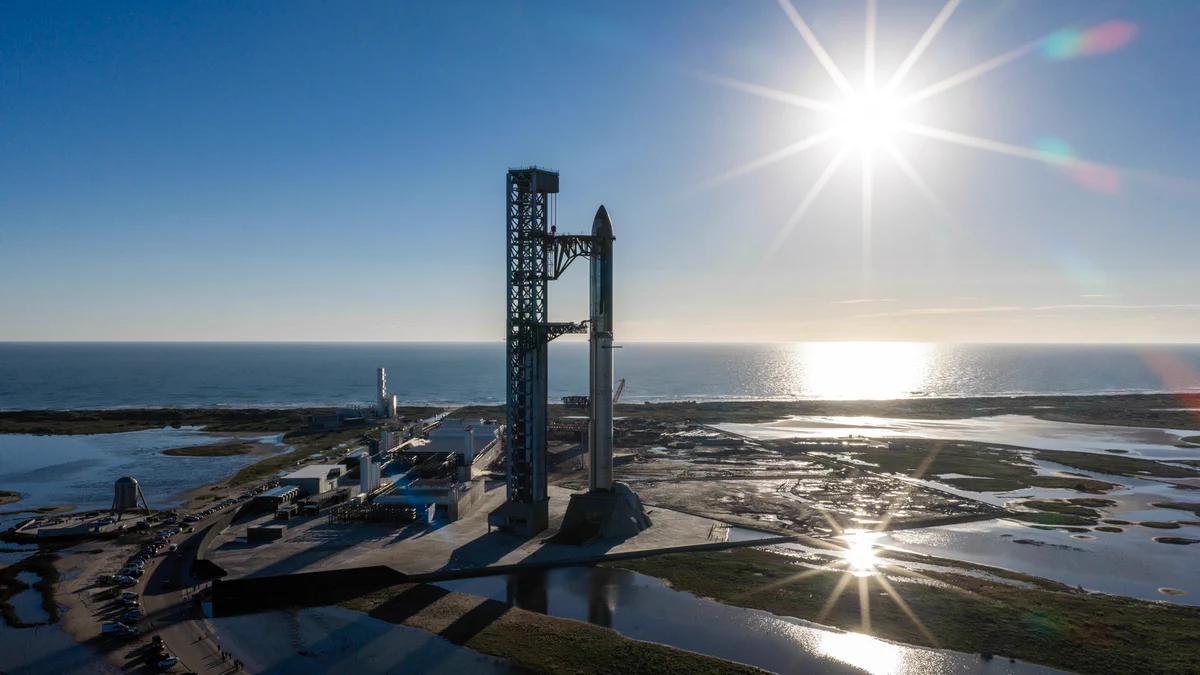
Live webcast of Starship's 15th flight test starts now → teapawt.org/i/broadcasts/2brajgZlO…
Stephen Fay retweeted

We gave AI one week to build a giant drone
It helped design it, order the parts, and do final assembly
Then we delivered its first payload to @jimbelosic
Stephen Fay retweeted

One of the absolute best examples of ML can be applied in weather to solve extremely tough problems (snowfall) from one of the smartest people I know, excited to this and excited for future maps!


Stephen Fay retweeted

We’re assembling a team! Join us!

My dear friends, I’ve got 3 pieces of news
First off, I’ve retired from @midjourney after 3.5 years. It’s been an honor; we've pulled off great projects, and a few open-sourced pieces like Pretext & Handwired have been well-received. I’d do it again with the team, but they’re in a great stable place now and I planned to take >6 months off
Second, unfortunately the words spread. Life comes at you fast and (this is a crazy story best told in private) I was taken hostage by the good folks at @coreauto. I started last week. Retirement will have to wait for another few years
Third, I’ve figured out a few pieces of technology I wanted to exist for a while now. Some more like Pretext, some more like Handwired, and a mysterious new thing (pic attached. First one to guess right gets a repost). Stay tuned as we start training these at Core Auto.
We’ll show the world what AI can truly achieve in the hands of kind, capable & grounded folks who choose to look up.
P.S. we’re hiring one (1) backend engineer. Only requirement is showing us your previous project’s dependencies list

Stephen Fay retweeted

Tomer and @recast @DeepGuessr are doing amazing work for this community and the best part is, it’s completely free and for the greater good. I hope all of you in the community show them some love.
Many meteorologists have expressed concerns about losing the NAM ahead of winter when its wheelhouse is cold air damming setups. It’s not clear that the RRFS model, which is now operational, will be as skilled in that area.
Now it seems like we won’t have to worry, at least for now. Note it’s not a perfect replica but close.
I do find it interesting that one person was able to run this model on his GPU for a fraction of a fraction of the cost and storage as NOAA. I think there are lessons to be learned from this.

Turns out, more than a few people missed the NAM following its discontinuation.
@recast and @DeepGuessr replicated its configuration, ported it to GPU, and are disseminating its data for free in real time - and it is now live on PolarWx:
polarwx.com/models/?model=wo…

Stephen Fay retweeted

Turns out, more than a few people missed the NAM following its discontinuation.
@recast and @DeepGuessr replicated its configuration, ported it to GPU, and are disseminating its data for free in real time - and it is now live on PolarWx:
polarwx.com/models/?model=wo…

Turns out people really do love the NAM despite its flaws. We @recast have decided to continue to offer our WOOF-NAM 12km for free indefinitely (link below).
It’s also important to understand that we are cold starting from GFS Analysis which naturally does slightly change model outcomes compared to starting from a native NAM analysis.
Because of that, we will be running quite a few hindcasts of both popular and requested dates and model inits so people can compare. If anyone has any examples they’d like to see, I’ll run them and put it on the site.
woof-nam.recastsystems.com/i…
Stephen Fay retweeted

my spidey senses are telling me the labs are, as we speak, using unguardrailed versions of their unreleased models to systematically reverse-engineer ALL of the internet’s software, apps, and games, then feeding the reconstructed source code straight into their training pipelines while simultaneously building guardrails to ladder-pull the rest of us
Stephen Fay retweeted

I told you, they will try eat all industries one by one

Stephen Fay retweeted
Turns out people really do love the NAM despite its flaws. We @recast have decided to continue to offer our WOOF-NAM 12km for free indefinitely (link below).
It’s also important to understand that we are cold starting from GFS Analysis which naturally does slightly change model outcomes compared to starting from a native NAM analysis.
Because of that, we will be running quite a few hindcasts of both popular and requested dates and model inits so people can compare. If anyone has any examples they’d like to see, I’ll run them and put it on the site.
woof-nam.recastsystems.com/i…
NOAA retired the NAM this week. We ported it to the GPU and it's back, better than ever: WOOF-NAM, open source.
- 12 km CONUS, all NAM physics, 24 h forecast in ~20 min on a single RTX 5090 (32 GB).
- 8 GPUs: 6 h in 92 s. Multi-card is bitwise to single card.
- 4 km CONUS, 24 h in under 9 min on 8 GPUs. 3 km nests anywhere on Earth (Europe, Japan, CONUS): 48 h in ~7 min on one card.
SStarts from the NAM analysis or GFS today, IFS open data in the next release. Beside the operational NAM from the same cycle it's hard to tell them apart (pics).
Today it needs one 32 GB card for the full 12 km CONUS; ~15 GB is the target, coming soon.
github.com/recastsystems/woo…


Stephen Fay retweeted
NOAA decommissioned their long-time (decades old) weather model that everyone loved like a family member. A startup in the AI space took the model and ported the code to GPU, and now for $1/day in compute, the NAM-12 km is back @recast


Stephen Fay retweeted

NOAA retired the NAM last week. We thought it deserved to live on, so we ported it to the GPU and open-sourced it.
We’re running the 12 km CONUS NAM ourselves, four times a day (00/06/12/18Z, 84 h, started from GFS), with the hourly files free for anyone: same awphys GRIB2 shape as NOAA’s, so an old NAM fetcher just needs a new host.
woof-nam.recastsystems.com/i…
The 12 km shape is in the WOOF API today, 5 km and 4 km CONUS this week, so you can run your own cycles any time from GFS or IFS.
NOAA retired the NAM this week. We ported it to the GPU and it's back, better than ever: WOOF-NAM, open source.
- 12 km CONUS, all NAM physics, 24 h forecast in ~20 min on a single RTX 5090 (32 GB).
- 8 GPUs: 6 h in 92 s. Multi-card is bitwise to single card.
- 4 km CONUS, 24 h in under 9 min on 8 GPUs. 3 km nests anywhere on Earth (Europe, Japan, CONUS): 48 h in ~7 min on one card.
SStarts from the NAM analysis or GFS today, IFS open data in the next release. Beside the operational NAM from the same cycle it's hard to tell them apart (pics).
Today it needs one 32 GB card for the full 12 km CONUS; ~15 GB is the target, coming soon.
github.com/recastsystems/woo…
Stephen Fay retweeted

hello! launched a new non-profit today. i'm on a mission to feed every canadian child in school, starting in my home province.
schoolfoodalberta.ca/announc…

Stephen Fay retweeted

A moment of silence for the NAM forecast model which is retiring tomorrow morning after 20 years.
Stephen Fay retweeted

Bacteria should have shared the 2025 chemistry Nobel Prize for metal-organic frameworks!
It’s been known for a while that there are “cable bacteria” that extrude conductive filaments up to 1 cm long, which penetrate sediments on the sea floor and allow them to draw electrons …

ALT A bacterial filament with a ring of 32 conductive fibres, each of which contains multiple intertwined nanoribbons. The ribbon is shown to comprise a series of Nickel atoms joined by Bis-Dithiolene linkers, made from sulphur and carbon.
Stephen Fay retweeted

i think this is real and a big deal. as karpathy said, the ugliest part of the transformer is the tokenizer

I've always believed that intelligence should come from simple, general building blocks that learn their own abstractions directly from raw data; in other words, the bitter lesson. I think we're finally seeing a real step towards AI that can learn from all data.
Language modeling on raw bytes is a microcosm of this ideal, and to me it's a central problem in AI: if we can't build LLMs that learn end-to-end from bytes, how will we handle the rest of the world's data that we understand even less?
Last year we introduced hierarchical networks (H-Nets) as a first step. Our new version finds up to 3-5x efficiency gains in controlled scaling law experiments, and at larger scale matches an open-source model trained on 11T tokens with ~10x less data and compute. The posts below walk through what we found and why we think it works.