

Founder & CEO @cerbereag The control infrastructure for autonomous AI agents operating across real-world @luviaplace to be passionate about what I've done
Joined September 2026
- Tweets483
- Following298
- Followers132
- Likes629




Pinned Tweet
Cerbere-AG is a three-layer security guardrail for AI agents: Regex, ML, and an LLM Judge.
AI agents are unpredictable. They improvise and act with full autonomy. I built Cerbere-AG (named after the three-headed dog, Cerberus) so that autonomy doesn’t come at the cost of control.
Why three layers? Our benchmarks show it:
→ Regex alone lets more than 30% of attacks through.
→ ML pushes recall up to 100% in some of our tests, but raises false positives.
→ The LLM Judge resolves the ambiguous cases ML can’t classify.
It also looks at context. Cerbere-AG follows tool calls, checks whether they’re legitimate, and then allows them, blocks them, or flags them for real-time human approval. Agents keep their autonomy, and humans keep control.
Everything is audited too. The collector gathers spans and traces into an audit trail that is independent from the agent and supports compliance.
And like any tool, it has limits. That’s why observability matters: security isn’t only about blocking attacks, it’s about understanding what happened, what was allowed, what was blocked, and why.
Open source and free for now. Try it and give me your honest feedback 👇
github.com/chrismsmr-celcom/…
app.cerbereag.site
Most “AI agent security” right now is just a regex or a classifier slapped in front of a prompt.
That works until Agent A delegates a task to Agent B, which calls an MCP server with inherited credentials and leaks PII or executes a destructive tool call.
Here is the uncomfortable truth: an agent must not gain authority just because another agent called it.
Right now, too many multi-agent stacks rely on implicit trust passing caller-supplied agent names, sharing broad API tokens across sub-agents, and hoping prompt instructions hold the boundary. In distributed systems, we already know how that ends: privilege escalation and zero forensic accountability.
Securing a single prompt or a single tool call isn’t enough. When agents act autonomously inside business systems, teams need deterministic answers to four questions:
1. Which agent is actually acting?
2. What authority does it hold?
3. Where did that delegation come from?
4. What happened as a result?
We’re building Cerbere as the open-source trust infrastructure underneath agent systems not another orchestrator or framework, just the runtime boundary:
→ Identity: Registered machine identities strictly separated from human users. No trusting self-reported caller names.
→ Explicit Delegation & AuthZ: Organization and agent-level policies, tool allowlists, spend/call budgets, and signed runtime decisions. Cross-agent authority has to be explicit and verifiable.
→ Runtime Enforcement: SDK guards + an MCP gateway that inspect tool calls before execution—allowing, blocking, or gating behind human approval.
→ Data Boundaries: Taint tracking for secrets and PII across guarded tool flows so sensitive data doesn’t quietly bleed outbound.
→ Tamper-Evident Evidence: Execution traces, risk decisions, and hash-chained audit records with signed checkpoints for real incident investigation.
If you’re running multi-agent workflows or exposing internal tools over MCP in production, how are you handling cross-agent delegation and least privilege today or are your agents still sharing the same god-mode key?
Code & architecture specs in the repo below 👇


6
2
62
Full source, trust model docs, and MCP gateway setup:
github.com/chrismsmr-celcom/…

13
Today was a solid engineering day at Cerbere AG.
We merged PR #74 and #75, advancing our core security architecture:
Async event processing with fail-closed enforcement.
Persistent, tenant-scoped agent data provenance.
PostgreSQL and SQLite support.
Data lineage with classification, source tracking and SHA-256 fingerprints.
CI green. Both PRs merged.
We’re building the infrastructure to secure, trace and control AI agents from decision to execution.
One commit at a time. Still building. Still shipping
1
2
31
We’re building the foundations for secure, auditable AI agents. The future of AI security starts with infrastructure. Let’s build it right.
Follow our journey.
github.com/chrismsmr-celcom/…

9
If you hate sending AGENTS.md, TASK.md, and other Markdown files back and forth just to keep your AI coding agents in sync, Cohort is built to solve that.
No more manual context handoffs. Let your agents share project state, coordinate tasks, and pick up where others left off.
4
48
I’m introducing Cohort by Cerbere (Beta).
We’re building infrastructure that allows multiple AI agents to work on the same project without overwriting, conflicting with, or destroying each other’s work.
One critical problem: an agent pauses when it runs out of tokens. When it resumes, it may be unaware of changes made by other agents and overwrite their progress.
We studied existing approaches, gathered feedback, and combined several solutions into one system: Cohort.
Multiple agents. One shared workspace. No stepping on each other’s work.

4
9
257
Works alongside the frameworks you already use: @LangChain , @crewAIInc , @OpenAIDevs, @llama_index, @pydantic and more other
Connect via:
* MCP
* HTTPS Gateway
* Python SDK
Ability to send traces to your existing observability provider via OTLP, etc.
1
14

Today, we took another step toward making autonomous AI agents safer. We built Cerbere AG to secure every agent action before execution.
No rigid hardcoded rules. We evaluate context and trajectory.
When an agent is about to make a dangerous decision, you’re notified in real time and can approve or block it.
Autonomy, with control.
github.com/chrismsmr-celcom/…
2
5
104
I'm building Cohort to fix multi-agent coordination.
Getting AI agents to work together is easy now. Getting them to coordinate reliably is not. Multi-agent systems need to share work, avoid conflicts, recover from errors, and never act on state that changed while they were stalled.
Right now, most of that depends on each agent checking whether it still holds a lease and trusting the answer. A stale agent gets that check wrong.
Cohort moves the check into the store, so the agent's opinion doesn't matter.
What ships today:
• Isolated branch per agent
• Shared state
• Leases with monotonic fencing tokens
• Conflict detection & explicit merge resolution
• Replayable event log to trace every decision
177 tests passing. MIT licensed. Runs alongside LangGraph, CrewAI, or AutoGen without replacing them.
Coordination between agents should be reliable, verifiable, and predictable. That’s what Cohort is for.
3
5
186
Christopher Dikesa retweeted
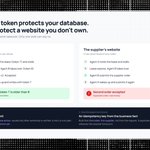
A fencing token protects your database. It can't protect a website you don't own.
How it goes:
Agent A holds the lease on "submit the supplier order" and stalls.
The lease expires. Agent B takes the task and submits the order.
Agent A wakes up, still thinks the task is its own, and submits it again.
In Cohort, A's stale write to shared state gets refused. Every lease carries a fencing token, a number that only goes up, and the store rejects old ones. The store is ours, so it can say no.
The supplier's website isn't ours. It has never heard of our token, so it takes the second order.
So the check has to happen right before the agent acts. That means a short-lived, single-use permit, bound to that one action and issued only after ownership is verified. A retry or a re-plan can't reuse it.
Cohort doesn't issue these yet. It's the next piece, and I'd rather say so.
Even with permits, once a request is on the wire you can't pull it back. The fallback is an idempotency key built from the business fact (this order, this supplier) rather than the request. That way a duplicate submit becomes a no-op wherever the receiver honours it.
Christopher Dikesa retweeted
There are four ways two AI agents can wreck each other's work, and none of them throw an error:
• Both claim the same resource.
• One overwrites the other's work.
• One keeps writing after it lost ownership.
• One acts on state that changed while it was stalled.
Cohort handles all four today. It gives each agent an isolated branch, plus shared state, leases, conflict detection and explicit merge resolution.
The third one is the sneakiest, so it gets a fencing token. Every lease carries a number that only goes up, and the store rejects any write with an old token. A stale agent's write gets refused before it lands.
The check lives in the store because an agent that's already stale can't be trusted to police itself.
Open source (MIT). Runs alongside LangGraph, CrewAI or AutoGen.
This is from a real run, event log below
Before: 3 agents, 3 versions, all overwriting each other.
After: Cohort. Isolated branches. Conflicts detected. Decisions traced.
Dashboard is live. Thoughts?


Your AI agent ran out of tokens at 11 AM.
It comes back at 5 PM.
Meanwhile, other agents have continued working, changed files, completed tasks and made new decisions.
Should it continue working with its 11 AM context?
No.
A human employee returning from vacation doesn’t resume a sales report from May in August without checking what happened while they were away.
AI agents shouldn’t work that way either.
That’s what we’re building with Cohort.
When an agent resumes, Cohort automatically:
Retrieves the latest shared project state.
Detects changes made by other agents.
Updates its working context.
Checks whether its previous tasks are still relevant.
Resumes from where the project actually stands.
No manual “update yourself” prompts.
No blindly repeating completed work.
No writing over outdated changes.
Agents never return to yesterday’s work.
You manage your team. Cohort manages the continuity of their work.

1
6
80