
Cui bono? Art https://xitter.cf/t.co/smQuM1SRTB
Dublin
Joined February 2010
- Tweets76.3K
- Following1.4K
- Followers1.6K
- Likes54.4K






Marek Bogacki 🐭 retweeted

🎬 Recorded in December 1964, this unforgettable two-minute performance was captured in one unedited take—no cuts, no tricks, just pure talent. Every note had to be perfect. Decades later, its raw authenticity remains captivating. ✨
Marek Bogacki 🐭 retweeted

The 77th Brigade was not disbanded; it was hidden. On 14 April 2026, UK military influence assets were folded into the Land Special Operations Force (LSOF) to shield psyops from parliamentary scrutiny. Read the full OSINT investigation. View article

Marek Bogacki 🐭 retweeted

If you or your child were injected with a vaccine while under anesthesia, here is a link to an attorney advertisement and intake form my firm just put out: sirillp.com/lp/injected-whil…

Marek Bogacki 🐭 retweeted
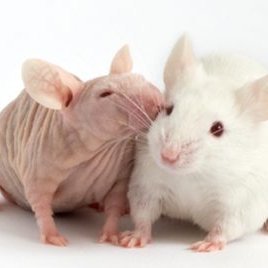
Eugenics is fundamentally wrong.
Hiding pharma funding out of the Cayman islands to avoid scrutiny on eugenics projects is also fundamentally wrong.
Can we see who funded you please?
Marek Bogacki 🐭 retweeted

Yezhov – The Butcher.
His old boss once said he had never met a more ideal worker: "Give him a task and you don't need to check on him – he'll get it done. He has only one shortcoming: he doesn't know when to stop."
Nikolai Yezhov was a small man, barely five feet tall, a former factory worker with little schooling who rose through the Party as a diligent, obedient bureaucrat. He was exactly the man the system needed.
A small and vicious man – in power, he drank heavily and liked to go down to the prisons to watch interrogations – sometimes joining the beatings himself. When his wife had an affair with the novelist Mikhail Sholokhov, Yezhov had their hotel room bugged and listened to the recordings. He watched his own bedroom just as he watched over the whole country.
His philosophy fit in one sentence: better that ten innocent people suffer than one spy escape. English law had said the opposite for centuries: better that ten guilty men go free than one innocent suffer. That one reversal is the whole difference between a civilization and a terror.
In 1936, Stalin put him at the head of the NKVD. The old boss who had praised him was shot in the terror that followed.
The West calls it the Great Purge. Russians remember it as the Yezhovshchina – "the Yezhov times." But it was not a frenzy. It was a plan.
An order of July 1937 gave every region a quota: so many to be shot – the "first category" – and so many to be sent to the camps – the "second category." Local chiefs competed to fulfill the plan and asked Moscow to raise their limits. Moscow usually agreed.
Torture was authorized from the top. Then came the national operations – Germans, Latvians, Finns, and above all Poles. Order 00485, signed by Yezhov, hunted an organization that did not exist. The verdicts came in albums, a few lines per person. In Moscow, two signatures sealed them – Yezhov's and the prosecutor Vyshinsky's – hundreds of death sentences at a sitting.
The wives of the condemned went to the camps. Their children went to orphanages.
Propaganda posters showed him crushing a many-headed snake in a spiked glove. His name means "hedgehog," and "hedgehog gloves" is the Russian idiom for an iron grip.
In two years, around seven hundred thousand people were shot.
Then the machine needed a culprit. In 1938, Beria arrived as his deputy, and by November Yezhov was out. In April 1939 he was arrested, tortured with the methods he had perfected, and made to confess to being a spy. At his secret trial, he asked that Stalin be told he would die with his name on his lips. He was shot in February 1940.
Then he was erased – from the photographs, from the records, from the story. The terror kept his name, Yezhovshchina, so that it would not carry the Master's.
His adopted daughter was sent to an orphanage, like the children of his victims.
The machine is never satisfied. It always needs the next name on the list – and, when the time comes, the name of the man who made the lists.
Next: Beria.


The Butchers – The Men Who Ran the Soviet Terror.
Moscow, a winter night in 1937. Long past midnight in the Kremlin, a man with a pipe sits at his desk under a lamp. In front of him, a stack of typed lists – names, one per line. He runs a blue pencil down the pages. A tick. A note in the margin. Sometimes a name crossed out, sometimes one added. The same pencil he uses to edit film scripts and poems.
His officials stay awake at home, next to the phone, in case he calls before dawn.
Hundreds of lists. Tens of thousands of names. On a single day, December 12, 1937, he and Molotov approved more than three thousand death sentences. Then, historians tell us, they went to watch a film.
But Stalin didn't invent the machine. He perfected it.
In August 1918, Lenin sent a telegram to his comrades: hang at least a hundred kulaks – hang them so that people see it for hundreds of kilometers around. Trotsky, the "good communist" of Western nostalgia, ordered the families of officers taken as hostages.
The founders gave the orders. Then the machine needed men – men who would build the apparatus, fill the camps, write the confessions and pull the triggers. And sooner or later, it devoured many of them.
1. Dzerzhinsky – the Founder. "Iron Felix," a Polish noble's son, who built the Cheka in 1917.
2. Trotsky – the Myth. The revolutionary Western intellectuals still romanticize, who wrote a whole book defending terror – until the machine he helped build killed him with an ice axe.
3. Stalin – the Editor. The man at the desk, with the blue pencil, long past midnight.
4. Yagoda – the Builder. The Gulag as an economy: canals dug by prisoners who died by the tens of thousands. Then shot by his own machine.
5. Vyshinsky – the Prosecutor. "Confession is the queen of evidence" – so he got confessions. "Shoot the mad dogs!" at the show trials, then the Soviet seat at the United Nations.
6. Yezhov – the Butcher. The Great Terror, the quotas, the Polish operation – then shot, and erased from the photographs.
7. Beria – the Strategist. Katyn, the atomic bomb, the deportations – and a predator. Shot by his own colleagues three months after Stalin's death.
8. Blokhin – the Executioner. In the spring of 1940, at Kalinin, he personally shot thousands of Polish prisoners over a few weeks, in a leather apron and cap.
9. Serov – the Hunter of Poland. He crushed the Home Army, lured the leaders of the Polish Underground State to "talks" and had them tried in Moscow. Then Hungary in 1956, and the first chairman of the KGB.
10. Andropov – the Modernizer. Dissidents sent to psychiatric hospitals instead of camps: softer, quieter – same goal: erasing people. The first secret police chief to rule the country.
11. Epilogue – The Chekists Never Left. From the KGB to the FSB to the Kremlin.
Why name them? Because their whole work was erasure – of people, of records, of memory. Remembering is the opposite of what they did.
And erasure didn't die with them. Today it rarely needs a bullet. It is called cancelling, deplatforming, debanking, lawfare. The inconvenient person isn't shot – he is removed: from his job, his bank account, his platform, the conversation. Yezhov needed a retoucher. Today a terms-of-service update does the job.
For Poles, these are not names from a history book. They are the names behind our grandparents' graves – and that is why we recognize their heirs.

Marek Bogacki 🐭 retweeted

My Grandfather fought at The Somme.
The first photo was taken of his regiment at the start of WW1, the second at the end. He is in both photos.


Marek Bogacki 🐭 retweeted

I don’t want to post the video. You’ve all seen it. But I do want to write a love letter…
Dear everyone in Britain, ( even you illegals)
Just so you understand. The poppy is for the boys who never got to grow old. For the boys who were still somebody’s baby, brother, uncle or father. More than 600,000 of them.
It doesn’t matter if you support war, hate your country, think you are a woman (even though you are a man). It doesn’t matter which God you pray to, or if you pray to none at all.
It doesn’t matter who you vote for, what climate narrative you believe, or whether you believe Israel should exist or not!
The poppy isn’t for you!
It’s for those who came before. Those who fought for your right to be weird, annoying or even foreign.
The poppy is how we say thank you. Thank you for giving us time, peace and choice.
And attempting to ban our poppy by declaring it politically divisive isn’t a move towards freedom. It is an act of suppression. Understand that.
The poppy is about love and loss. For you!
So stick your rainbow flags and every other flag where the sun doesn’t shine and just wear your poppy. Those boys did not die as symbols. They died for you!
Did you know that poppies grew across the battlefields where so many fell? As though even the land refused to forget the blood once given to defend it.
So the poppy is for them. For those who came before us and paid in youth, in hope, in breath, in blood, so that we might have the freedom to be arseholes.
So that we might even have the freedom to fight over the ridiculous, the inconsequential and the insane.
Revere it, celebrate it and wear it. The very least you can do is that.
Best
The ordinary people.

Marek Bogacki 🐭 retweeted

He died today, 1,087 years ago. 🕯️
The first king of all England. 👑
Alfred's grandson. 🛡️
927: he marched on York and the Vikings ran. ⚔️
937: Brunanburh. Five kings and seven earls dead. 🩸
Two years later he was gone. No children. 🍂
What he left us was our country. 🏴
We call his grandfather Great. We should call both of them Great. 🙏
Proudofus.co.uk
Be part of us. ☝️🇬🇧
Be Proud Of Us. 🙏🇬🇧
Marek Bogacki 🐭 retweeted

Five years ago, we refused to accept "Papers Please."
That united so many of us.
With just 11 days until Together’s 5th Anniversary event
Join Bev Turner, Winston Marshall, Katharine Birbalsingh, Maajid Nawaz, Dr Clare Craig, Prof Norman Fenton, Mike Graham Based and Bougie Ellie Hodges Ada Akpala Maeve Halligan Molly Kingsley Amanda Hunter Ben Pile Howard Cox Harry Miller and many more to discuss what comes next for freedom in Britain - alongside people determined to help shape it.
📍 Saturday 7 November London
And there’s something extra for ticket holders: you'll be able to get a copy of my new book, We Are Stronger Together, first at the event - for just £5 (normal price £9.99).
Another reason to book now, if you've been on the fence tix are below 👇🏻
Marek Bogacki 🐭 retweeted

Breast cancer cells are LOADED with insulin receptors. That's important to know for preventing/treating it. Why? Read on...
In 159 breast tumors, insulin receptor content was more than 6 times higher than in normal breast tissue. And the receptors worked: they bound insulin and switched on.
Many cancer cells favor a form of the insulin receptor (IR-A) that acts mainly as a growth signal, not a sugar-handling one. Insulin tells these cells to grow.
So what happens when insulin runs high?
512 women with early breast cancer had fasting insulin checked. Highest vs lowest quarter: 2x the distant recurrence, 3.1x the death rate.
In the Women's Health Initiative, researchers measured insulin in about 1,650 postmenopausal women drawn from a cohort of 93,676. In women not on hormone therapy, the top quarter of insulin had 2.4x the breast cancer risk. And the obesity link mostly faded once insulin was accounted for.
Few doctors check fasting insulin. Fewer still know that Low-carb/Keto/Carnivore is the most direct way to bring it down. I've made videos on this (see below).
If high insulin goes with more breast cancer AND worse outcomes, why isn't fasting insulin part of every breast cancer workup?
Studies and my videos below... – at Tennessee, USA

Marek Bogacki 🐭 retweeted

In the 1990s, a national broadcaster aired an investigation into a monkey virus hidden in the polio vaccine given to millions of children.
A researcher estimated there were "at least 26 different monkey viruses" in those vaccines. When a cancer doctor found one of them inside children's brain tumors, his words were: "I almost fell out of my chair." 🧵
Marek Bogacki 🐭 retweeted
Vyshinsky – The Prosecutor.
Baku, 1908. In a crowded prison cell, two young revolutionaries argue about politics. One is a Georgian who calls himself Koba – the world would later know him as Stalin. The other is the son of a Polish Catholic family: Andrey Vyshinsky – Andrzej Wyszyński.
Thirty years later, one would sign the death lists. The other would read the charges out in court.
Vyshinsky had a problem: he had picked the wrong side. He was a Menshevik, from a rival socialist faction. In 1917, as a district police chief in Moscow, he signed an order to arrest Lenin as a "German spy." He joined the Bolsheviks only in 1920, once the civil war was won. A man with a past like that had one way to survive: to be more zealous than anyone. The system knew it, and used such men. Those with something to hide make the most obedient servants.
The system he served didn't need courts. It needed theater. Here is how a Soviet trial worked.
First, the verdict. The leadership – often Stalin himself, pencil in hand – decided who would be convicted and what the sentence would be.
Then, a law to fit it. In 1934, a decree stripped "terrorism" cases of everything a court is for: ten days of investigation, the charges handed over a day before the trial, no defense, no appeal – and execution immediately after the sentence.
Then, the confession. Months of interrogation: sleepless nights, interrogators working in shifts so the prisoner never rested, beatings, threats against wives and children. A decree of 1935 made children from the age of twelve subject to all criminal punishments, including death – an argument no father could resist in the interrogation room. Some were promised their lives if they confessed. Others were told that confessing was their last service to the Party.
Then, the rehearsal. The testimony was learned like a role, and every confession named new accomplices, who were arrested, interrogated and made to confess in turn.
Then, the performance. Vyshinsky's principle: the confession of the accused is the queen of evidence. No documents, no proof – just defendants accusing themselves of plots that never existed.
From 1936 to 1938, in the Great Purge, Lenin's old comrades stood in the dock and confessed. Vyshinsky called them mad dogs and demanded that every one of them be shot. They were, within a day or two of the verdict.
And the audience believed it. Foreign diplomats and writers sat in the hall, and the American ambassador reported home that the accused were guilty.
The show trials were only the visible tip. For hundreds of thousands of others there was no theater at all: three-man tribunals, no defendant in the room, sentences passed in minutes.
The prosecutor even helped himself to the house and money of one of his defendants, who was then shot.
The machine devoured Yagoda, then Yezhov. It never came for Vyshinsky. A regime can always find a new executioner. A prosecutor who could make a lie sound like law was harder to replace.
After the war, he was the Soviet power behind the scenes at Nuremberg. At a dinner there, he raised his glass to the German defendants: "May their paths lead straight from the courthouse to the grave!" The verdict before the trial – his whole method, in one toast. And the Soviet side insisted on charging the Germans with Katyn, the Soviets' own massacre of Polish officers.
Then Foreign Minister, he ended his career at the United Nations, speaking of peace, and died in New York in 1954.
In 1953, the year the communists arrested the Primate of Poland, Cardinal Stefan Wyszyński, the other Wyszyński was speaking for the Soviet Union at the UN. Same name, two Polands: one served the lie, the other refused it.
The method outlived him. Decide the guilt first, then build the case. Today it is called lawfare, and the process is the punishment. Even the confession survived: the ritual public apology, demanded before any verdict. And, as in Moscow, it never saves you.
Next: Yezhov.

The Butchers – The Men Who Ran the Soviet Terror.
Moscow, a winter night in 1937. Long past midnight in the Kremlin, a man with a pipe sits at his desk under a lamp. In front of him, a stack of typed lists – names, one per line. He runs a blue pencil down the pages. A tick. A note in the margin. Sometimes a name crossed out, sometimes one added. The same pencil he uses to edit film scripts and poems.
His officials stay awake at home, next to the phone, in case he calls before dawn.
Hundreds of lists. Tens of thousands of names. On a single day, December 12, 1937, he and Molotov approved more than three thousand death sentences. Then, historians tell us, they went to watch a film.
But Stalin didn't invent the machine. He perfected it.
In August 1918, Lenin sent a telegram to his comrades: hang at least a hundred kulaks – hang them so that people see it for hundreds of kilometers around. Trotsky, the "good communist" of Western nostalgia, ordered the families of officers taken as hostages.
The founders gave the orders. Then the machine needed men – men who would build the apparatus, fill the camps, write the confessions and pull the triggers. And sooner or later, it devoured many of them.
1. Dzerzhinsky – the Founder. "Iron Felix," a Polish noble's son, who built the Cheka in 1917.
2. Trotsky – the Myth. The revolutionary Western intellectuals still romanticize, who wrote a whole book defending terror – until the machine he helped build killed him with an ice axe.
3. Stalin – the Editor. The man at the desk, with the blue pencil, long past midnight.
4. Yagoda – the Builder. The Gulag as an economy: canals dug by prisoners who died by the tens of thousands. Then shot by his own machine.
5. Vyshinsky – the Prosecutor. "Confession is the queen of evidence" – so he got confessions. "Shoot the mad dogs!" at the show trials, then the Soviet seat at the United Nations.
6. Yezhov – the Butcher. The Great Terror, the quotas, the Polish operation – then shot, and erased from the photographs.
7. Beria – the Strategist. Katyn, the atomic bomb, the deportations – and a predator. Shot by his own colleagues three months after Stalin's death.
8. Blokhin – the Executioner. In the spring of 1940, at Kalinin, he personally shot thousands of Polish prisoners over a few weeks, in a leather apron and cap.
9. Serov – the Hunter of Poland. He crushed the Home Army, lured the leaders of the Polish Underground State to "talks" and had them tried in Moscow. Then Hungary in 1956, and the first chairman of the KGB.
10. Andropov – the Modernizer. Dissidents sent to psychiatric hospitals instead of camps: softer, quieter – same goal: erasing people. The first secret police chief to rule the country.
11. Epilogue – The Chekists Never Left. From the KGB to the FSB to the Kremlin.
Why name them? Because their whole work was erasure – of people, of records, of memory. Remembering is the opposite of what they did.
And erasure didn't die with them. Today it rarely needs a bullet. It is called cancelling, deplatforming, debanking, lawfare. The inconvenient person isn't shot – he is removed: from his job, his bank account, his platform, the conversation. Yezhov needed a retoucher. Today a terms-of-service update does the job.
For Poles, these are not names from a history book. They are the names behind our grandparents' graves – and that is why we recognize their heirs.
Marek Bogacki 🐭 retweeted

🇵🇱 @placzekgrzegorz: Przeczytaj Polaku, bo to się nie mieści w głowie! W Chemnitz w Niemczech powstaje elektrociepłownia, która ma spalać około 100 tys. ton drewna rocznie. Zamiast budować tę elektrociepłownię, należałoby chyba wybudować psychiatryk dla tych, którzy na nią pozwolili!
Elektrociepłownia ma spalać około 100 TYSIĘCY TON DREWNA ROCZNIE! Przez 20 lat daje to około 2 MILIONY TON BIOMASY! I wszystko to oczywiście pod szyldem „zielonej transformacji energetycznej”!
Inwestor zapewnia, że będzie spalał drewno odpadowe, a 90% surowca ma pochodzić… z promienia 250 km od Chemnitz. Jednocześnie nie pojawiła się niezależna analiza potwierdzająca, że przez dwie dekady wystarczy tego surowca bez zwiększania wycinki lasów.
Za to…
➡️ Instytut Thünena wskazuje na brak znaczących i niewykorzystanych dotąd zasobów biomasy drzewnej dla dodatkowych zastosowań energetycznych w Niemczech.
➡️ Federalny Urząd Ochrony Środowiska Niemiec ostrzega przed możliwymi niedoborami określonych rodzajów drewna w kolejnych latach.
➡️ Federalny Urząd Statystyczny Niemiec podaje, że pozyskanie drewna z uszkodzonych drzew spadło z 27,3 mln m³ w 2024 r. do zaledwie 12,7 mln m³ w 2025 r. Skąd zatem ma się wziąć biomasa w najbliższych latach?
Elektrociepłownia będzie potrzebowała paliwa każdego dnia, niezależnie od tego, ile drewna odpadowego rzeczywiście będzie dostępne w Niemczech. A mainstreamowe media przemilczają fakt, iż promień 250 km od elektrociepłowni w Chemnitz pokrywa zachodnią część Polski. A jeśli ktoś myśli, że inwestor zobowiązał się, że drewno będzie pochodzić jedynie z Niemiec - to się grubo myli. W tej całej ekoUnii doszli już do takiego absurdu, że pod hasłem ratowania klimatu gotowi są spalać miliony ton drewna, a potem jeszcze… przekonywać Europejczyków, że właśnie w ten sposób chroni się przyrodę.
Ta ekoUnia kiedyś sama upadnie, bo lista absurdów zaczyna przekraczać Rubikon.

Marek Bogacki 🐭 retweeted

In my speech in Parliament this afternoon, I argue that those who forced the COVID vaccine on our healthy population must finally be held accountable.

Marek Bogacki 🐭 retweeted

Sounds like benzalkonium chloride and related quaternary ammonium antiseptics. They’re cationic amphiphiles that interact with microbial surfaces and disrupt membranes. Also kinda like LNPs.
Marek Bogacki 🐭 retweeted

We must abandon the machine metaphor of life: we are not machines. View article

Marek Bogacki 🐭 retweeted

Watch a free preview, here: youtu.be/YX9EBLYikLw

"The moral panics, inversions, minority identities & mass migrations all point to a system structured to destabilise and stymie the West’s historic core population."
open.substack.com/pub/aporia…
by @westering_sun
via @AporiaMagazine
