



🪶Dulumu²🪶 retweeted


We have built DeepStack, the first AI to beat humans in no-limit poker.
We are now building the next generation AI company for algorithmic trading!
We are growing our research and engineering team.
If you want to work with a world class AI team led by ex-DeepMind researchers and engineers.
If you want to build something that has never been done before - join us.
equilibretechnologies.com
🪶Dulumu²🪶 retweeted

In market making, average latency only tells part of the story. You don’t get picked off on your average order. You get picked off when you’re in the tail.
A system doing 1ms most of the time but occasionally taking 10ms can be worse than one consistently doing 2ms.
That’s why reducing jitter matters as much as reducing latency itself. And why deterministic infrastructure all the way from market data ingestion to order entry matters.
Whether you’re a solo trader, prop shop, market maker, or hedge fund, I strongly recommend giving this series a read.
Shoutout to @Tristan0x. It’s hard to explain complex subjects in such a clear, and practical way.

How I made $6K PnL in 30 days on $10K principal market making perps ($158m+ volume).
The strat was entirely built by me and my quant, Claude (he won a national math competition in China).
Last night I asked if you'd want a guide. Hundreds of you said yes, so here it is: HFT for Dummies.
The honest timeline when I did it:
- Days for basic harness and venue integrations.
- Weeks to get it semi-competitive.
- Months to really tune and get it properly profitable.
This series can hopefully shortcut the learning curve for you.
I've been writing trading bots since 2017. It's how I got into crypto (free market data!), and how I met my co-founder.
Back then the barrier was high. You had to know how to code, to study data to find alpha, and to grind devops to have systems not blow up in production. Thankfully I taught myself Python and later Rust, but not everyone has a CS degree.
Nowadays with LLMs, anyone can have a skilled quant in their pocket. I use it for data analysis, strategy tuning, research and alpha generation and infra optimisation. It's a ridiculous time saver.
I'm extremely bullish on one-person quant shops. I think this will be a huge trend this next decade as finance comes on chain and market data and connectivity are accessible to anyone. I've already met many hobbyists who've made a living trading on e.g. Hyperliquid, enough so to quit their day jobs.
What we'll be building
A delta-neutral, reference-price market maker.
Binance is where most price discovery happens. We stream its market data, use it as a reference price, and quote a bid and an ask around it on another venue. I'm using @Bulletxyz because it's the one I know best.
Market making is the business of picking up pennies. Mine are under half a basis point per dollar. Enough pennies add up at the scale of millions of volume.
The catch is speed. If the market moves and you're slow to update, someone lifts your stale quote and you're the exit liquidity. It's a fun game of algorithmic cat and mouse.
On Bullet, takers get a 100ms speed bump. Why? It gives soon-to-be market makers like you a safety buffer so you don't get steamrolled by billion dollar firms with microwave towers.
The goal
The goal: tick to order sent in under 10ms. Stretch goal: under 1ms, which is very achievable if you're determined. We'll also focus on minimising jitter (randomness) because your slowest orders are the ones that will lose you the most pnl.
Agenda:
I'll aim to post one topic a day, going from easy wins, and getting progressively more deep in the weeds. If you work at any HFT firm this will all be elementary stuff, but hopefully it's helpful for newcomers.
Saving seconds
1. Basic intro to algo-trading (this post)
2. Running a simple market maker from your laptop
3. Measure once, cut twice: telemetry and Amdahl's law
4. AWS: Infra and colocation
Saving millis
5. Stop polling: websockets are your friend
6. Optimising order execution
7. How to not get rekt by API rate limits
8. Linux tuning: CPU pinning, IRQs and other nerd stuff
Saving micros (diminishing returns, but fun)
9. Optimising the hot path with CPU profiling in Rust
10. AWS: the last mile
11. Bonus: nonces (and other DeFi quirks)
I'll try share some open source code along with it. Don't expect to be beating Jump in the orderbooks just yet. It should be a good baseline that you can extend and take it as far as you want (you can take it pretty far!).
Tomorrow: setting up a basic MM in Rust, the architecture of which will roughly follow the diagram attached below.


🪶Dulumu²🪶 retweeted

i decompiled the contract that drained binance wallet 14
gist.wavey.info/Ta3FgAxastgj…
🪶Dulumu²🪶 retweeted

My cousin asked me for book recommendations to learn about trading.
I dug this post up which I published a year ago. It was also one of my most popular articles.
As always I hope you find it useful or at least entertaining.
moontower.substack.com/p/so-…

Doing gods work

Now that crime is legal I can brag about this publically
In 2021 I hit @CryptoGodJohn paid group for 6 figs by hunting the stops of their positions
I joined every single paid group on ct, mainly by using mirrors, and started tracking every single trade made on each. I quickly realized they were taking advantage of their users so I happily took advantage of them
I would use orderbook data and compare how each signal had an impact in the books
I had an automated Excel, it was fucking art with telegram notifs for every trade I should take
When I found guys who were heavily copytraded, I started wash trading and spoofing like a mfer to bring prices down and since they all used hard stop losses I would make bank on the slippage hit.
It wasn’t particularly hard since they would pick tickers with no liquidity to pump their own entries :)
shoutout @eliz883 who was by far the worst user of that predatory technique
I also made sure to hit you Eliz, in fact you were hit so often you started closing your positions 2 minutes after posting because I made your grift unprofitable past the pump and dump of your posts lol
It was the best on FTX because FTX OTC would buy my entire stack of some illiquid trash for like 4% from spot when it was literally empty and I had nuked it 20%+
Anyhow major thanks to @CryptoGodJohn
I ate real good thanks to your grifting, made more than 100k on your ass alone
I nuked you personally more than anybody else because I particularly hated how predatory you were to your users
Would be a shame if someone perpetuated what I began in 21 in your group again
I am an old man now, I retired from the shananigans
Thanks and fuck you


🪶Dulumu²🪶 retweeted

let's ride

This is the big week.
@sinjoh 2.0 is imminent.
A lot of hard work has gone into this & I can’t wait to finally release it to the public 💫


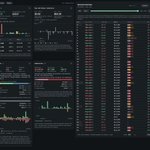
Turns out full exit is very common, some in profit, others in loss, but it would seem market is less likely to revert when losses are tiny scratches.
Version 2 is mostly organization work… grouping participants. A buy tape was added to highlight buyers going all in.

We kicked off the journey with something simple: capturing & reconstructing data from free trading terminal accurately and then doing tricks on the data. Full exit tape is first developed widget, reasoning is full exit implies no future sell impact. Turns out that’s a bad idea..


🪶Dulumu²🪶 retweeted

I bought this book because it came recommended by ppl on X. On derivatives (I am weak there) and it seems to be written in a breezy style. The author has impeccable credentials. Let’s go! I hope it’s good.

🪶Dulumu²🪶 retweeted

despite the fact that almost any memecoin etf can properly obtain sec approval, traditional issuers and sponsors are incapable of properly running memecoin etfs, as evidenced by some abandoning s-1s or even full etf liquidations after just one year
while you will see many memecoins such as useless break to unimaginable valuations, the more realistic approach would be sponsoring a bucket memecoin approach to rebalance coins as attention will inevitably keep changing
🪶Dulumu²🪶 retweeted
if your girl is impressed by money you're bound to lose her to literally any other dork with a little more loot than you


🪶Dulumu²🪶 retweeted

Good old times.
The first strategy we ran did something like 20x in one month. It worked like this:
Bitmex had pegged orders and contingent orders. A pegged order would be placed one tick below the opposing price by the matching engine on arrival. For example, a pegged buy order one tick below the best ask. A contingent order would trigger the placement of the pegged order upon a fill.
So, all we did was place trigger orders on both sides at the bbo, along with the untriggered pegged orders. When the price changed, our trigger orders would fill, and the matching engine would immediately place our pegged orders at the new price level... with zero latency.
This meant that we (and, I think, one or two other teams) would always be first in the priority queue. Back in 2018, this was incredibly valuable, as the tick size was very large relative to volatility.
It worked for three months. Then Bitmex disabled both order types because we were putting too much load on the matching engine.
GG

Yesterday we closed the book on XBTUSD — the contract that started it all.
Launched on 13 May 2016, it was the longest-running perpetual swap contract in crypto. And until we are told otherwise, the longest running derivatives contract of any kind, given TradFi still trades on contracts that expire.
Let's take a trip down memory lane one last time 💔

