

The ancient language streaming app @theancientlang @vergilpress
Joined October 2025
- Tweets262
- Following89
- Followers484
- Likes257





Ekho retweeted

Feminism, Sexual Communism, and Philosopher Kings, feat. Daniel O’Toole | Episode CXIX
Three waves: first, equality of the sexes; second, the abolition of the family; and third… rule by philosopher-kings?
In Book V of Plato’s Republic, Socrates guides his interlocutors through three “waves” of objections, each more shocking than the last. Hillsdale philosophy professor Daniel O’Toole joins Jonathan and Ryan to explore what many consider the most radical book of the Republic, from its feminism to its sexual communism. Along the way, they take up the questions that stump nearly every student of Book V: Why does the dialogue take such a dystopian turn? What does equality between men and women have to do with the rule of the wise? And why do the men and women of the city exercise in the nude?

While on Ekho, you can now log into your Kevilex account and access your saved words and text progress. Thanks @kevinpalbrecht!


Ekho retweeted
Charondas, one of the great lawgivers of ancient Greece, famously took his own life on the spot, when he realized he'd broken his own law by unintentionally bringing a dagger into the Assembly.
But Charondas' life and legislation are full of other colorful anecdotes, including his ancient analogue to Chesterton's Fence: Anyone proposing a change in the law must place his head in the noose, and if his proposal is not accepted, he is to be hung.
New Humanists+ episode on Underrated Greek Lawgivers in the Bibliotheca Historica of Diodorus Siculus
app.ancientlanguage.com/tabs…

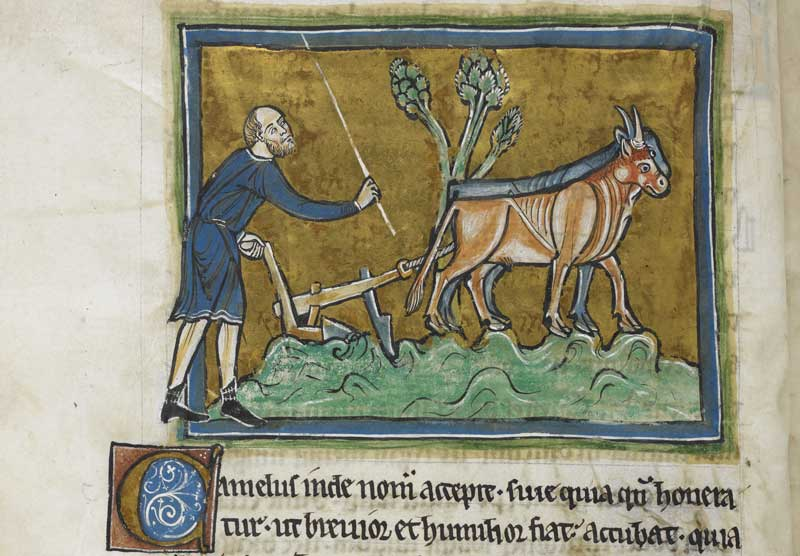
And you can read along on Ekho via @kevinpalbrecht's Kevilex, an outstanding platform with clean, attractive presentation of Old English (and Ancient Greek!) texts, with vocabulary and grammar look-ups built in.
app.ancientlanguage.com/tabs…

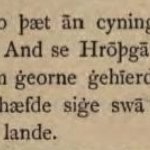
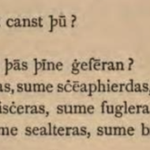
If you want to take a look at First Steps in Anglo-Saxon in its entirety, here's a scan of the 1897 first edition. It cost 2 shillings and sixpence!
archive.org/details/firstste…

The first text, Be þissum middanġearde (Concerning This Middle-Earth), is an adaptation of Ælfric's De temporibus anni, a short work on astronomy and the calendar.
Sweet's version starts quite simply: "The sun travels between heaven and earth..."
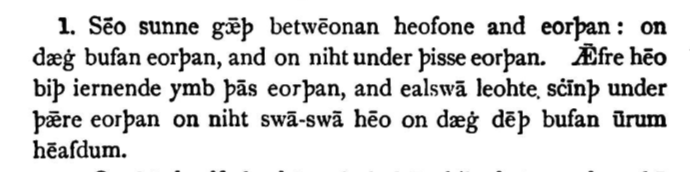

After a very brief introduction to his pedagogical method and then to the grammar of Old English, Sweet gets to the good stuff: approachable Old English prose.
The book has three pedagogically constructed texts, all adaptations of authentic Old English.


