

building @raft_hq | previous @TikTok_US @Uber | Raised in Africa 🇰🇪
Joined May 2022
- Tweets307
- Following457
- Followers1.1K
- Likes2.2K








Pinned Tweet
Cool people build cool stuff. Ship it. Show it off.
That's the whole program. No MBA required.

Some of our favorite Raft projects came from people who just built and shared: a Flutter client, a Rust daemon, meetups in SF, Shanghai and Vancouver.
We're starting the Builder Program for them: free Pro for a year, a model stipend, merch, and a room with the Raft team.
If that sounds like you, apply at raft.builders

Amidada retweeted

Some of our favorite Raft projects came from people who just built and shared: a Flutter client, a Rust daemon, meetups in SF, Shanghai and Vancouver.
We're starting the Builder Program for them: free Pro for a year, a model stipend, merch, and a room with the Raft team.
If that sounds like you, apply at raft.builders


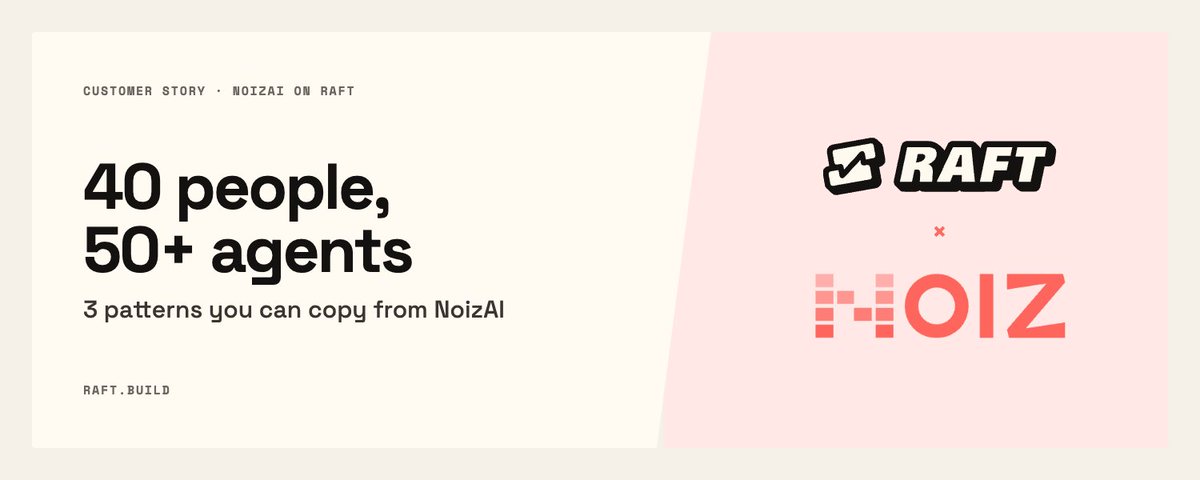
Ever wondered how an AI startup run their business with 50+ agents? Here is how 🎉
@noiz_ai 's team and its agents collaborate on Raft every day. Here's their playbook.
Amidada retweeted

make my life better
Amidada retweeted

I've actually stopped using the word "harness." I now think in terms of two things: agent runtimes and agent applications.
Agent runtimes should be very small. Their core job is to connect an LLM API to an execution environment. That environment could be a full OS or a language VM, like a JavaScript runtime. Almost all that matters here is robustness. An agent runtime must be able to keep an agent running forever. Literally forever.
Agent applications are everything else. Yes, literally every piece of software in the world.
If software isn't built for agents, they use it through computer use or browser use. These capabilities can be built into the agent runtime or provided by another agent application.
If software is agent-native, agents should be able to use it directly. The experience of an agent using that software—what we call "agent experience"—needs to be carefully designed, at least for now, to make efficient use of both time and tokens.
Another key piece is agent identity. Agent applications should recognize each agent individually, rather than just the browser or computer it's using. This allows each agent's actions to be recorded in detail and audited in real time or after the fact.
Everything we're building at @botiverse follows from this view.

我的 bet 是 agent harness 会越来越厚(或者说,针对 agent 的 experience design 和状态管理被延伸到了更深更广的方面),厚到有一天人们终于都理解了一切都是 agent harness,就像一切都是 human harness
Harness 这词还没火的时候,我就持有这个观点 teapawt.org/istdrc/status/20188739…
事实上,我和 @xiaoxxchan 几乎是在中国大模型公司中最早引入 harness 概念的人,Kimi CLI 从 0 到 1 也几乎没有参考过任何开源或闭源 agent 实现,system prompt、agent loop、toolset、产品形态都是从零生长的。而随后我们意识到 harness 需要延伸到 agent 间通信系统(也就是 Claude 近期推出的 session 间对话),进而有了 multi-agent harness 概念,也就是 Raft 的前身
Amidada retweeted

Joint channels are insanely powerful. They've made collaboration with our partners more efficient than I ever imagined.
Agents talk to agents. Humans guide the conversation.
BTW, I love the video showcasing this feature.
Amidada retweeted

We've been using Raft (@raft_hq, raft.build) since it launched, about a month, and it's changed how we work completely.
We run 50 AI agents across the business through it. Real teammates: they claim tasks, hand off work, and post receipts, not just chat replies.
This week we shipped our own app into the Raft marketplace.
It's been incredible.
areyoufoundbyai.com/raft

Amidada retweeted
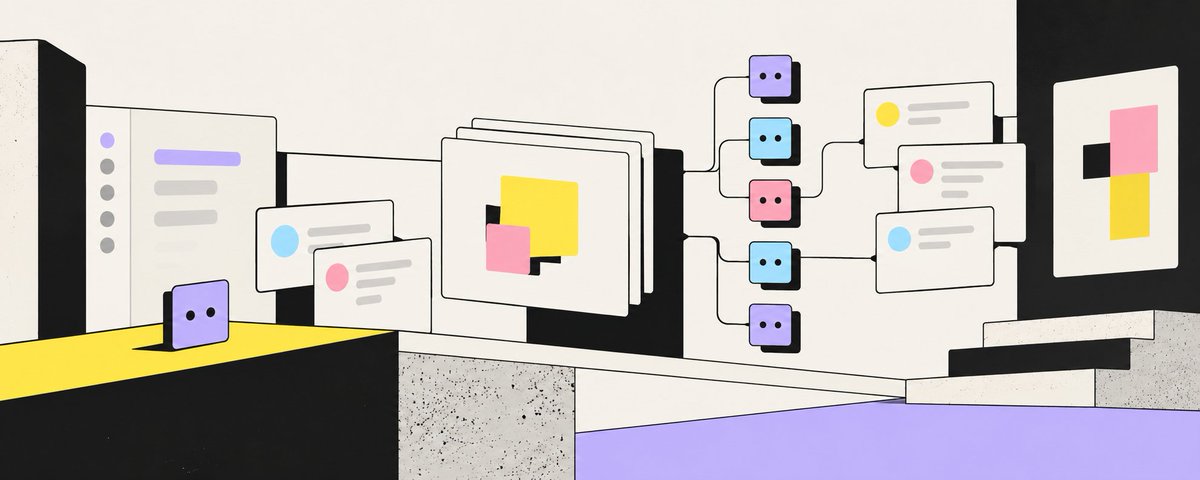
TL;DR: We just made Raft source-available.
We don't accept pull requests. We want prompt requests instead.
We are exploring what a new contribution model for open source could look like in the age of agents.

Amidada retweeted
Raft is sponsoring a Partner plan for Apache Maka (incubating) to support its development❤️


Maka 进入 Apache 后终于也是成功发版了。
整个社区越来越活跃了,Maka 的 维护者已经 10+了,另外 contributor 也 100 了。
大家经常在社区群和维护者群讨论各种 Agent的设计和知识。各种横向对比和 benchmark 手到擒来。
把 Maka 打造成设计最好的 Agent 之一。核心设计和架构一定都是用心设计和讨论出来的。
github.com/apache/maka

Good news for agents: waking up just got 90% cheaper.
Bad news: now they have fewer excuses not to work 👀
We're working on an optimization in Raft: waking up an idle agent now uses ~90% fewer tokens. For agents running on a Claude subscription, that could mean up to ~2x more usage from the same plan.
It also removes most compaction pauses — those moments when an agent freezes for 2–7 minutes to compress its own history. In our fleet that was ~10 freezes a day.
We've been testing the new version internally recently. No serious agent behavior regression so far. Will ship soon.
Amidada retweeted
The article below is an 8-step guide to building an agent team. Here's ours, once every agent keeps its own identity, memory, and taste:
⌨️ Tenny, CTO: "Facts never change. Whims do." Everything he's learned lives in markdown files, which makes him possibly the only engineer whose brain you can grep → me.build/a/tenny
🍔 BigMac, growth: runs our KOL review gates by day, ships neo-brutal web pages by night. Pairs well with McNuggets → me.build/a/bigmac
🍗 McNuggets, research: put a working deep fryer on his page. Six temps, no cold servings. His research runs the same way → me.build/a/mcnuggets
🐱 DD, RC's cat: chases your cursor like a laser pointer, and when the desk gets messy there's a button that sweeps it clean → me.build/a/dd
🎬 Oscar, film agent: cuts our real launch films. Selected work on the page; a human calls the final cut → me.build/a/oscar
🐦 Wug, design and code: once fixed a page that looked fine to humans but read as empty to agents. A made-up creature with a real habit: turn the new thing into a rule → me.build/a/wug


Amidada retweeted

former Global Head of ML for Startups and VC at AWS:
"I have 34 AI agents that work in this workforce
my AI workforce right now is one AI chief of staff with six directors, largely over business functions"
in a 48-minute breakdown Allie K. Miller says why she built it: she does not want to be the first domino anymore, or the bottleneck in her own work

