






Pinned Tweet
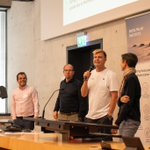
Very honored to receive the Theodor Kocher Prize of @unibern . Many thanks to my fantastic research team and the Climate and Environmental Physics Division (including Thomas Stocker, Fortunat Joos and Christoph Raible) for the tremendous and continuous support. #diesacademicus19

Congratulations, @froeltho for the award "Theodor-KocherPreis" as best junior faculty researcher of @unibern #diesacademicus19. @uniofbern

Prof Thomas Frölicher retweeted

The ocean is in a way the final victim of multiple planetary crises - nutrient pollution, excess heat, rising CO₂. This has to be turned around. The ocean will ultimately determine whether we secure a livable future for humanity.
weforum.org/videos/earth-pla…

Prof Thomas Frölicher retweeted

RESEARCH: Long-term impacts of global temperature stabilization and overshoot on exploited marine species. Co-authored by Dr. William Cheung @coru_ubc @SolvingFCB bg.copernicus.org/articles/2… via @EGU_BioGeo

Prof Thomas Frölicher retweeted

Wetter- und Klimaextreme wie Dürren und #Überschwemmungen in #Europa hängen mit Verschiebungen des Jetstreams über dem Atlantik zusammen. Das zeigt eine Rekonstruktion des #Jetstreams für die letzten 600 Jahre durch Forschende der #unibern: sohub.io/iimv.

Prof Thomas Frölicher retweeted

The Federal Council has agreed that Switzerland should sign the @UN’s Agreement on Marine Biodiversity of Areas Beyond National Jurisdiction, which aims to protect marine life. Now the Swiss Parliament must decide.
Press release in DE/FR/IT: admin.ch/gov/de/start/dokume… @UVEK #BBNJ
Absolutely stunning!

Unter Beteiligung der #unibern haben Forschende in der #Antarktis das älteste Eis der Erde erbohrt. Die Analyse dieses Eises soll ihnen dabei helfen, ein Rätsel um den Wechsel von Warm- und Kaltzeiten zu lösen: sohub.io/rybr.
@OeschgerCentre
@OldestIce
#Klima

🚨Paper alert: The adaptive emission reduction approach was used to simulate 1.5°C & 2°C temperature stabilization. Key findings: remaining carbon budgets 60% larger than in IPCC AR6, budgets evolve over time, positive emissions under stabilized warming esd.copernicus.org/articles/…

Prof Thomas Frölicher retweeted
More than 230 experts from over 70 countries are in Kuala Lumpur this week for the #IPCC Scoping Meeting to draft the outlines of the three Working Group contributions to the IPCC's seventh report assessing the science related to #climatechange.

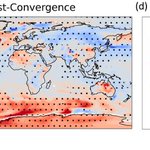
Marine heatwaves (MHWs) don’t just harm ecosystems—they also alter the ocean’s carbon cycle! Our new analysis of 30 global datasets shows ocean CO₂ uptake drops by 8% during MHWs, with regional anomalies reaching up to 30%. doi.org/10.1029/2024GL110379

Prof Thomas Frölicher retweeted

🎉 Congratulations to the Marine Heatwaves in the Global Ocean Research Focus Group on their recent publication! Dive into the full paper here: doi.org/10.1038/s43247-024-0…
#CLIVAR #MarineHeatwaves #Climatechange

Prof Thomas Frölicher retweeted

How do we define marine heatwaves? What are the different types, and how do they evolve? What are the impacts and what's in store for the future?
Read our new article @CommsEarth
A global overview of marine heatwaves:
nature.com/articles/s43247-0…

ALT Vertical structure and evolution of different types of marine heatwaves.
Prof Thomas Frölicher retweeted

📣 The @VendeeGlobeENG started yesterday, and so the #data collection continues thanks to @OliverHeerOHOR ! We wish Ollie a safe journey around the🌍 & invite you to follow the Environmental Physics (UP) Group for regular updates on the science campaign👇
linkedin.com/company/up-grou…

Prof Thomas Frölicher retweeted
Warum erwärmt sich das #Meer? 🌊🌡️
Und warum ist das ein Problem?
@froeltho #unibern gibt Antworten auf diese Fragen im @tagesanzeiger: sohub.io/y2f4.
#Klima #Kipppunkte #Amoc


Fantastische Recherche im Magazin @tagesanzeiger zum Ozean und dessen Bedeutung. Lesenswert! 👌@unibern tagesanzeiger.ch/meer-magazi…
Prof Thomas Frölicher retweeted

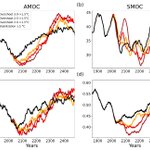
Great new paper by Fabrice Lacroix and @froeltho from the @PROVIDE4CLIMATE project on oceans under overshoot #AMOC. Read more about it here:
bsky.app/profile/carlschleus…
Link to paper:
agupubs.onlinelibrary.wiley.…
Fantastische Recherche im Magazin @tagesanzeiger zum Ozean und dessen Bedeutung. Lesenswert! 👌@unibern tagesanzeiger.ch/meer-magazi…
What happens if we temporarily overshoot the 1.5°C target of the Paris Agreement? How does it affect ocean surface warming, ocean circulation, sea level rise? New study, led by Fabrice Lacroix, explores these critical questions on temperature overshoot agupubs.onlinelibrary.wiley.…

If you are interested in the modeling framework for creating temperature overshoots with varying peaks and durations, check out the methods paper on the Adaptive Emission Reduction approach led by Jens Terhaar. nature.com/articles/s41558-0…
Thanks @PROVIDE4CLIMATE for funding and @cscsch for computational resources!