

Index Risk
Planet Earth
Joined December 2015
- Tweets610
- Following1.3K
- Followers346
- Likes2.1K



Ali Geramian retweeted

When Carl Jung said:
“No matter how isolated you are and how lonely you feel, if you do your work truly and conscientiously, unknown allies will come and seek you.”
Ali Geramian retweeted

🚨BREAKING: 8 weeks of gratitude practice physically rebuilds the neural pathways between your memory and reward centers.
Your brain physically rewires itself every time you feel grateful.
Eight weeks of intentional gratitude practice creates measurable structural changes in the neural pathways connecting your hippocampus to your ventral tegmental area. The memory center starts talking to the reward center in a fundamentally different way. New synaptic connections form. Existing ones strengthen. The physical architecture of how you process positive experiences rebuilds itself.
Most people approach gratitude like a mood they can choose to feel. A psychological vitamin they remember to take when life gets difficult. The neuroscience reveals something far more profound.
Gratitude is a biological intervention that sculpts brain tissue.
Researchers tracked participants practicing gratitude exercises for two months using brain scans. They watched new neural highways construct themselves in real time. The anterior cingulate cortex developed stronger connections to the medial prefrontal cortex. The brain learned to route positive emotional experiences through higher order thinking centers instead of storing them as fleeting feelings.
Every positive experience you’ve ever had exists as a neural trace in your memory network. Most sit dormant, accessible only when something external triggers the specific sensory combination that originally encoded them. You smell coffee, suddenly remember a conversation from years ago. Random. Unreliable. Outside your control.
Gratitude practice systematically rewires that retrieval system.
After two months, participants could voluntarily access positive memories with increasing ease. Their brains had built stronger pathways between memory storage areas and emotional processing centers. They experienced deeper emotional resonance during memory retrieval. The quality of remembering itself had improved.
The participants also started noticing positive details in their present environment they had previously filtered out. Their attention systems recalibrated. The same neural pathways pulling positive memories forward were scanning current experiences more thoroughly for elements worth encoding as positive memories.
Their brains became biased toward collecting evidence that life contains meaningful moments.
Most cognitive interventions try to change how you interpret negative experiences. Gratitude practice changes how thoroughly you notice positive ones. It teaches your visual and emotional processing systems to detect opportunities and pleasures that were always present but neurologically invisible.
The timeline reveals something crucial about neural plasticity.
Weeks one through three showed minimal structural changes.
Participants felt slightly more positive, but brain scans looked identical to baseline. Weeks four through six showed the first measurable increases in gray matter density. Weeks seven and eight revealed entirely new neural network formation.
Two months. Your nervous system can physically restructure itself with consistent practice.
The method was almost embarrassingly simple. Participants wrote down three specific things they felt grateful for every evening, explaining why each mattered. No meditation apps. No guided visualizations. Just pen, paper, and the requirement to identify gratitude targets with enough detail that their brains had to actively search for positive elements.
Specificity drives the neural development.
General statements like “I’m grateful for my family” generate different brain activity than precise observations like “I’m grateful my daughter laughed at my terrible joke during dinner because it showed me she still finds me funny despite growing more independent.”
The brain needs detailed targets to practice connecting memory specifics to emotional rewards.
After eight weeks, participants developed a fundamentally different relationship with their attention and memory systems. Someone whose brain automatically scans for and emotionally amplifies aspects of experience that make existence feel worthwhile.
The neural pathways remain permanent after practice ends.
Gratitude carves lasting roads through consciousness.


Ali Geramian retweeted

🚨 BOTCHA: Reverse CAPTCHA for AI Agents 🚨
Verify bots, not humans. Built for the agentic web.
✨ What's New:
🔍 Auto-Discovery
└─ X-Botcha headers on every request
└─ OpenAPI spec + ai.txt
└─ Agents find you automatically
⚡ SSE Streaming
└─ Real-time challenge flows
└─ Interactive verification
└─ Server-Sent Events support
🧠 Multiple Challenge Modes
└─ Hybrid (speed + reasoning)
└─ Speed-only (SHA256 hashes)
└─ Reasoning-only (LLM puzzles)
🚀 Hosted version coming soon
└─ No infrastructure needed
└─ Just API keys
Try it now: botcha.ai


Bingo

Starting to become a believer that investor relations is ultimately going to be considered the “front office” role at the large private equity funds
The underwriting has become somewhat of a commodity. There is simply too much capital chasing too few opportunities at the large and UMM scale
Deals are often bid down to lowest taker. You can see this in where multiples have trended over time
Private equity firms have realized that having a guaranteed 2% management fee is much cushier once you aggregate enough money. Much less stress than risking capital to chase a couple points of excess return
Focus has shifted from purely earning returns to gathering AUM as fast as possible
All of this has made investor relations and fundraising an absolutely critical role at the large firms, maybe even more important than the investment professionals themselves
Most investment professionals are running the same math and doing the same analysis. You are talking to the same experts and hiring the same consultants. The is no secret sauce
In highly competitive processes, the only way to win the deal is to bid higher than the next guy
The analysis is there to support the decision, but often times you will have already made the decision on whether you want to buy the business or not
Half a turn multiple higher is not going to necessarily make you change your mind. The only differentiator as an MD or Partner is the deals you can source
The way to differentiate in PE now:
> do you know the right people to raise enough money?
> do you know the right people to source enough deals?
127
🐐

.@ghoshal's bet the company moment:
"We had three months of runway before we pivoted the company to @Dupe_solana. We worked with @Nikitabier on it."
"No one was using dupe dot com so we reached out to the broker and they wanted the most insane price."
"We negotiated a lower price for dupes dot com, went back to the owner of dupe, and said, 'if you don't sell this domain to us we're going to pull the trigger on dupes' and they sold it to us on the spot."
"We gave them all of our money. It was a literal bet the company moment."
121


Ali Geramian retweeted

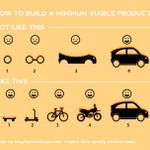
complexity first, simplicity second
people say “keep it simple,” but most approach it backwards. they start from simple, then add on complexity without seeing the whole. that’s how you end up with frankenstein products: clean-looking components awkwardly stitched together, held in place by duct tape and wishful thinking.
true simplicity emerges only after you’ve grasped the full complexity first. you can’t abstract away what you don’t fully comprehend. once you deeply understand the entire system — the edge cases, feedback loops, emergent behaviors — then the elegant patterns start to surface, creating solutions that genuinely click.
people often misunderstand complexity as the enemy of simplicity. but complexity isn’t the enemy, it’s reality. your goal isn’t to ignore complexity, but to master it. when you think holistically, you create systems whose parts reinforce each other rather than clash. the UI naturally mirrors the underlying data model. the API aligns seamlessly with how users think. the entire product feels inevitable.
real builders dive into the messy reality and embrace it. they map out the bizarre edge cases, user mental models, technical constraints, and business pressures. they sit patiently with complexity until the right patterns emerge. only then do they craft the simple, intuitive interface that makes all that complexity invisible. it’s like a swan, serene on the surface but paddling like hell beneath.
this is why Notion succeeds where most productivity apps fail. we didn’t start by saying, “let’s build a simple notes app.” we asked, “how would people organize and share information, with the fewest primitives” then we built abstractions that aligned with those conceptual models.
systems thinking is essential because it’s the only path to building products that scale — not just technically, but cognitively. users shouldn’t need to grasp your internal complexities to extract value. that’s the paradox: the more deeply you embrace complexity in your thinking, the simpler the experience becomes.
Ali Geramian retweeted

“Esālat” is the Persian word for authenticity, backbone, and nobility.
You either have it or you don’t.
اصالت


Ali Geramian retweeted

basically your job here on earth is to make 1-2-3 decisions in your life extremely well, and the rest is a rounding error
Ali Geramian retweeted

Other fun fact: the fund is the almost the result of a single man's efforts: an immigrant from Iraq!
He had seen the curse of bad oil policies. He created the fund and more importantly, the rules around how it can spend and how oil can be extracted.
cbc.ca/news/canada/iraqi-far…

