Applied AI at The Lucerne University of Applied Sciences and Arts (HSLU) in Switzerland.
Lucerne, Switzerland
Joined August 2021
- Tweets6.6K
- Following838
- Followers533
- Likes5.9K







Applied AI Center @ HSLU retweeted

JUST IN: Google successfully activates its first AI data center satellite in space, using an onboard AI model to generate poetry while orbiting Earth.
Applied AI Center @ HSLU retweeted

I joined @GoogleDeepMind to develop a research program on the economics of AGI. Today, together with Andrew Koh (@andrewjkoh) and Shane Legg (@ShaneLegg), we are incredibly excited to release The Economics of Intelligence, the first in a series of projects from our group on how AGI will change the economy.
How do capability improvements transform the economy, and when? In this project, we define thresholds of economic capabilities, e.g., minimal AGI, based on how they transform the economy. We then track how the economy–market structure, employment, and wages–changes during the transition across capability regimes.
We have seen exponential increases in what AI agents can do but the broader economy seems almost remarkably unchanged. Part of the reason is that the solo AI agent is the wrong economic object; economic transformation is an equilibrium outcome where organizations compete. Looking at how intelligence functions within organizations, transformation will depend on when two key capability thresholds are crossed: competence (gains on individual skills, e.g., coding, math) and coordination (gains on ability of agents to cooperate and work together).
We show that what economic transformation looks like depends on whether AI becomes supercompetent, supercooperative, or both—the regime of artificial superintelligence (ASI). Tracking this transition shows why the real visible transformation may come from improvements in coordination—a capability most benchmarks don’t yet track. Past a certain threshold, AI capabilities can break the Coasian ceiling on firm size and lead to an economy that looks drastically different than the one we see today.
Two main takeaways:
1. To understand the path of transformation, we should be tracking agentic coordination more closely.
2. The impact of AI will likely show up in wages before market structure or employment.
We are really excited about this paper. Excited to hear people’s thoughts.
Link: institute.deepmind.com/essay…


Applied AI Center @ HSLU retweeted

I asked a large logistics company in Europe how they were using AI and they told me they can't use AI because of German workers councils. It was weird because I didn't ask them how they were cutting headcount. I asked them how they were using AI.
Applied AI Center @ HSLU retweeted

PROTON SAYS 2026 IS ITS LAST YEAR HIRING ENGINEERS
Proton is the Swiss company behind Proton Mail and Proton VPN. It sells privacy as the alternative to Big Tech.
CEO Andy Yen wrote it to staff in Slack: "This will be the last year that we hire engineers." Starting next year, he said, Proton hires product managers to build things with AI.
The CTO says AI wrote 90% of Proton's code in October, and a staffer who asked for security testing was told it was "loser thinking." Employees now face re-interviews on their AI use.
An internal document says Proton is behind its revenue target and calls the company "underperforming." 🤔


New: you think you know Proton, but you really don't.
I spoke to 8 current employees, got Slack chats, meeting audio, and an AI manifesto written by its CTO.
“That’s bullshit and loser thinking,” Yen wrote. “Stop thinking always of how to be slower, and focus more on how to be faster.”
CEO Andy Yen critiques AI in public. But inside, he is pushing everyone to use AI, even those with security concerns 404media.co/manifestos-fear-…

Applied AI Center @ HSLU retweeted

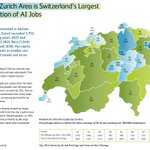
🚨 Apple is quietly making a MASSIVE bet on Zurich. 🇨🇭
🍎 9,500 m² of new office space
👨💻 500–700 potential workplaces
💰 Over CHF 2M in annual rent
🧠 Focus: AI, Machine Learning & Computer Vision
NB: While Google, Meta and Nvidia expand their presence, Apple is scaling behind the scenes.
Zurich isn't just attracting Big Tech anymore.
It's becoming one of the world's most important AI talent hubs🔥.
And the global race for Swiss AI talent is only heating up.
𝐓𝐡𝐞 𝐛𝐢𝐠 𝐪𝐮𝐞𝐬𝐭𝐢𝐨𝐧: 𝐂𝐚𝐧 𝐙𝐮𝐫𝐢𝐜𝐡 𝐩𝐫𝐨𝐝𝐮𝐜𝐞 𝐞𝐧𝐨𝐮𝐠𝐡 𝐰𝐨𝐫𝐥𝐝-𝐜𝐥𝐚𝐬𝐬 𝐀𝐈 𝐭𝐚𝐥𝐞𝐧𝐭 𝐭𝐨 𝐤𝐞𝐞𝐩 𝐮𝐩 𝐰𝐢𝐭𝐡 𝐭𝐡𝐞 𝐝𝐞𝐦𝐚𝐧𝐝—𝐨𝐫 𝐰𝐢𝐥𝐥 𝐢𝐭𝐬 𝐨𝐰𝐧 𝐬𝐮𝐜𝐜𝐞𝐬𝐬 𝐛𝐞𝐜𝐨𝐦𝐞 𝐢𝐭𝐬 𝐛𝐢𝐠𝐠𝐞𝐬𝐭 𝐛𝐨𝐭𝐭𝐥𝐞𝐧𝐞𝐜𝐤? 🇨🇭🚀


Applied AI Center @ HSLU retweeted

Zurich est devenu le plus gros centre d’ingénierie Big Tech d’Europe : Google (~5k), Apple en pleine expansion, Microsoft, Meta, Anthropic, OpenAI; ils sont tous là!.. J’adore ZH 😍
cc: @siliconcarnesf

🚨 Apple is quietly making a MASSIVE bet on Zurich. 🇨🇭
🍎 9,500 m² of new office space
👨💻 500–700 potential workplaces
💰 Over CHF 2M in annual rent
🧠 Focus: AI, Machine Learning & Computer Vision
NB: While Google, Meta and Nvidia expand their presence, Apple is scaling behind the scenes.
Zurich isn't just attracting Big Tech anymore.
It's becoming one of the world's most important AI talent hubs🔥.
And the global race for Swiss AI talent is only heating up.
𝐓𝐡𝐞 𝐛𝐢𝐠 𝐪𝐮𝐞𝐬𝐭𝐢𝐨𝐧: 𝐂𝐚𝐧 𝐙𝐮𝐫𝐢𝐜𝐡 𝐩𝐫𝐨𝐝𝐮𝐜𝐞 𝐞𝐧𝐨𝐮𝐠𝐡 𝐰𝐨𝐫𝐥𝐝-𝐜𝐥𝐚𝐬𝐬 𝐀𝐈 𝐭𝐚𝐥𝐞𝐧𝐭 𝐭𝐨 𝐤𝐞𝐞𝐩 𝐮𝐩 𝐰𝐢𝐭𝐡 𝐭𝐡𝐞 𝐝𝐞𝐦𝐚𝐧𝐝—𝐨𝐫 𝐰𝐢𝐥𝐥 𝐢𝐭𝐬 𝐨𝐰𝐧 𝐬𝐮𝐜𝐜𝐞𝐬𝐬 𝐛𝐞𝐜𝐨𝐦𝐞 𝐢𝐭𝐬 𝐛𝐢𝐠𝐠𝐞𝐬𝐭 𝐛𝐨𝐭𝐭𝐥𝐞𝐧𝐞𝐜𝐤? 🇨🇭🚀
Applied AI Center @ HSLU retweeted

BREAKING: Employers worldwide are pulling back on AI as they navigate a flood of errors and low-quality work that sap employee time, raise privacy and security risks, and drive up costs, per the Guardian.
Applied AI Center @ HSLU retweeted

Artificial Analysis updated their intelligence index to better represent real world tasks and to be less gameable. There are only three companies on the frontier: Google, Anthropic, and OpenAI.


Applied AI Center @ HSLU retweeted

FIELDS MEDALIST TESTED IF HE'S OBSOLETE
timothy gowers took an open problem from a new paper on additive combinatorics and handed it to chatgpt 5.5 pro.
no fancy prompts. no setup. just the problem statement.
the model thought for 17 minutes. then wrote a complete latex preprint in two.
it took a bound that had been exponential for decades and brought it down to polynomial. the construction was something nobody had tried on this class of problems before.
gowers asked isaac rajagopal to review the work. rajagopal wrote the paper the model was improving on.
his verdict: the key idea is "completely original" and "quite ingenious." "the sort of idea i would be very proud to come up with after a week or two of pondering."
the model spent 17 minutes on it.
then gowers pushed further. gave it the harder generalized version. under an hour, a stronger result. exponential to polynomial again.
gowers on his own mathematical contribution to the whole thing: "zero. i didn't even do anything clever with the prompts."
the result is a solid chapter in a combinatorics phd. publishable mathematics that a graduate student would spend months producing.
a fields medalist. one of the best combinatorialists alive. sitting there copy-pasting prompts while a model does doctoral-level research in front of him.
his conclusion: "the lower bound for contributing to mathematics will now be to prove something that llms can't prove."
he gives the profession until 2029 before it's "transformed out of all recognition."
seventeen minutes. zero human math. a result that takes months by hand.
this was may 2026. five months ago. the model that did it is already outdated.
link to the paper in the comments

Applied AI Center @ HSLU retweeted

⚡Iterating at lightning speed! Gemini 4 Carbon is SOTA across key benchmarks and combines frontier capabilities with deep safety & security research.



Applied AI Center @ HSLU retweeted

Every religion in history has promised miracles and warned of the apocalypse. Anthropic is the first to file both with the SEC.
Applied AI Center @ HSLU retweeted

I did say we'd be releasing our models periodically...introducing Gemini 4 Carbon, our next frontier model.
Following Argon's release just two weeks ago, Carbon shows the pace at which we’re pushing the frontier, it ranks #1 on the recently updated v5.0 of @ArtificialAnlys Intelligence Index at 59. It also leads across key cybersecurity evaluations scoring 88.2% on SEC-bench Pro for finding vulnerabilities, 54.8% on ExploitGym for exploitation, and 71.0% on CWE-bench for patching.
We’re seeing significant improvements in long-horizon tasks even compared to Argon, and we’ve strengthened frontier safeguards.
As we did with Argon, we’re going to roll it out gradually + responsibly. Some trusted cyber defenders will get access starting this week. We'll be expanding it to more partners through our Fairwind Program, ahead of wider availability soon, so hang tight!

Applied AI Center @ HSLU retweeted

Today we’re out of stealth, and we’ve raised a $40m seed round co-led by @creandum and @usv, to bring Instant Robot Learning to life.
For the past few months, we‘ve been busy building a new company.
Machenta.
This follows results from a new kind of robot foundation model we’ve built, which I’m so excited to share with you today!
Usually, it takes hours/days of data collection and training to teach a robot.
We’ve built a model that learns tasks instantly: one demonstration, no further training.
A model trained entirely in simulation, without a single pixel of real-world data.
A model where teaching robots is so quick and easy, it feels like physical vibe coding.
A model for robots that learn like humans do, from someone like you.
Welcome to the era of Instant Robot Learning.
Thank you @Kathi_Wilhelm, @rebeccakaden, @hkanji, @jonno_evans and all of our angels for your support!
@Machenta_
Learn more: machenta.com/blog/instant-ro…
See below for what you can do with Instant Robot Learning!