

AI to predict and prevent serious incidents in high-hazard operations | Leadership that keeps people safe | Dad & husband | Views my own
Decentralised
Joined January 2021
- Tweets6.8K
- Following749
- Followers845
- Likes4.4K






Pinned Tweet
#Cardano $ADA doesn't have a technology problem. It has a leadership opportunity 🏅
The biggest threat isn't regulation, scaling or competition. It's how we treat each other when we disagree.
teapawt.org/F_Gregaard/status/2062…

What matters long term is not short-term market sentiment, but whether an ecosystem continues to build meaningful infrastructure and attract real adoption.
Cardano today has:
Decentralized Governance operating at scale through CIP-1694 and on-chain voting
One of the strongest open-source communities in the industry, with contributors building across research, protocol development, tooling, and applications worldwide
Institutional Transparency anchored directly on-chain, where governance actions, treasury activity, and ecosystem operations are publicly verifiable
Growing DeFi initiatives including
Bifrost by Fluid Tokens
Pogun by IOG
Sundial Protocol
Charms
BTC Karma
Expanding RWA and digital identity infrastructure through projects like Veridian and tokenization initiatives across multiple regions
Global public/private sector collaborations spanning education, telecommunications, digital identity, and blockchain infrastructure
Examples of transparent on-chain activity already visible today include:
DRep registrations and governance actions
Treasury withdrawals and constitutional committee activity
Ecosystem and partner network activity
Native asset issuance and RWA directly on London Stock Exchange
20.000 farmers in India combining satellite data, identity, education and industry
Everything verifiable. Everything auditable. Built in public.
The work continues.
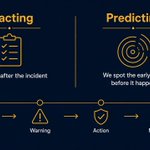
Most safety work is built around what already happened. Incident reports, investigations, lessons learned.
Important, but it means we learn after someone gets hurt.
The bigger question for me is whether AI can help us spot the early signs sooner, so we act before it becomes an incident.
What early warning sign do you think we miss the most? 👀
🤖 Made with AI

If you are selling your time and AI makes you more productive, your employer gets the gain.
If you are selling outcomes, you keep it.
Worth thinking about which boat you're in 🚣♂️
🤖 Made with AI

The most underrated thing a leader can say in a meeting is "I dont know, what do you think?"
The room relaxes, people stop performing and you get the real answer faster.
Nobody follows the person with all the answers. They follow the one who listens 👍
🤖 Made with AI

Anyone asked who actually reads those status reports?
Id bet cutting half of them saves more than most layoffs 😀
Everyone asks which AI tool is best. Better question is what are you building?
At home we use Claude for building/testing, Codex for reasoning/ prediction and Grok for autonomy.
Different jobs, different tools.
🤖 Made with AI

🥋 Hydr₳ retweeted

What if the biggest clue to the next financial crisis is sitting in the last 100 years of history?
I’ve been comparing how governments dealt with major financial crises, what worked and what happened to their debt afterwards..
1929–1933: The Great Depression. US government debt rose from 16% to 38% of GDP. Banks collapsed, and the money supply shrank by nearly 30%. Emergency banking reforms helped stabilise the system, but the recovery took years.
1945–1950: After WWII, US debt was around 119% of GDP at its peak. Governments kept borrowing costs low, while economic growth and inflation helped reduce the debt burden. By 1950, US debt had fallen to roughly 94% of GDP.
2007–2009: The financial crisis. US government debt rose from around 63% to 83% of GDP. Governments rescued banks, cut interest rates and began buying bonds. The financial system survived, but public debt increased.
2026: Now look at where we are. Global government debt was already nearly 94% of world GDP in 2025, and the IMF projects 100% by 2029.
Government interest payments have risen from around 2% to nearly 3% of global GDP in just 4 years. Between Feb and Sep 2026, average G7 government bond yields rose by more than 1% point.
Now, these are different economies and different crises, so the % aren’t directly comparable. However, there’s a pattern worth examining.
In the 1930s, governments initially struggled to stop the collapse. After WWII, debt fell as economies grew. In 2008, governments stepped in to rescue the financial system, but debt rose.
Today, governments are already carrying enormous debt while the cost of borrowing is increasing.
So here’s the question..if another major financial crisis arrives, how much room do governments actually have to rescue the system without adding even more debt?
Most likely their response would be reactive making money cheaper and increasing liquidity. In such scenario could Bitcoin become one of the assets that benefits?
That’s the historical connection I think deserves much more attention.
🥋 Hydr₳ retweeted

If your business gives you the freedom to go to lunch with your spouse or take your kids to school whenever you'd like, you're already a successful entrepreneur.
🥋 Hydr₳ retweeted

1. Never stop exercising or learning.
2.Accept compromise to begin relationships.
3. Manifest the power of compounding.
4. Never gamble.
5. Have kids and be a good parent
6. If it flies or floats, rent it.
7. Buy half the house you can afford.
8. Art in the eye of the beholder is cheap.
9. Be thankful for and to all.
10. Be charitable.

🥋 Hydr₳ retweeted

I'm working on a concept that only midnight can bring to the cryptocurrency space that solves most of the problems. Almost have all of it designed conceptually. It's the magnum opus of my career


🥋 Hydr₳ retweeted

$NIGHT needs to do another 152% to hit a new ATH.
Do you think we could see it this year?👀


🥋 Hydr₳ retweeted

JUST IN: Charles Hoskinson’s Cardano project Midnight’s token, $NIGHT, surged surged 159% in September and early October to $0.048, the highest price in 6 months.
This marks NIGHT’s biggest recovery since its 87% crash from all-time highs.


🥋 Hydr₳ retweeted

midnight-3:native is just getting started and still in the Top 5 on CoinMarketCap for top gainers in the past 7 days.

🥋 Hydr₳ retweeted
Incredible work. Cardano is one of the best places for complex asset issuance

Congrats to the many authors, contributors, and teams that have spent literal years making CIP-113 a reality! It's finally merged as its next step towards a path to "Active" status! 🎉🎉🎉 @MicheleHarmonic @phil_uplc @0xMetamatt @CryptoJoe101
github.com/cardano-foundatio…

🥋 Hydr₳ retweeted

midnight-3:native is severely undervalued by like $5 billion right now.
Privacy is already priced in the tens of billions.
Zcash near $27b
Monero around $10B
Midnight doesn’t need to become Bitcoin.
It just needs to be treated like the programmable-privacy platform next to those coins.
