

just a living weirdo. also socially inept af. i write code for money. vhoyde & soham stan. software panel beater. building @reroutlinks
Digital Nomad
Joined April 2015
- Tweets14.8K
- Following5.2K
- Followers2.7K
- Likes23.8K





Kanso is on iPhone and iPad.
Your notes are Markdown and they live on your phone. Open it and write: no account, nothing to set up.
When you want them on your Mac, Windows or Linux machine, turn on sync. Each note is encrypted on the device before it leaves, so the server never holds anything it can read.
- Markdown styled as you type, with a keyboard bar for headings, tasks, links and [[wiki-links]]
- Lock a note behind Face ID or a password
- Three panes on iPad, plus hardware-keyboard shortcuts
- Kept out of iCloud backups on purpose
Free and open source. No ads, no trackers, no analytics.
rerout.co/BDviN5o

Ngoni. retweeted

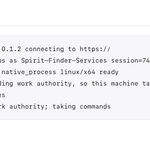
I gave in to the heat this weekend and got a smart portable aircon (works great btw🤩). Sadly, the official app doesn’t recognize newer models so I hacked my way into repurposing an old Android 8 phone into a linux server that gives me AC control from my device(s) at home/remotley & unofficially works with Siri 😁 Such a ‘cool’ side project ❄️😆


Ngoni. retweeted

Let your kids learn the South African languages with mahlahle.app 🔥🔥🔥🔥

We've revamped mahlahle.app, our kids learning app for South African languages. This is the biggest update to the app since launch. Please check it out!


Ngoni. retweeted

We've revamped mahlahle.app, our kids learning app for South African languages. This is the biggest update to the app since launch. Please check it out!

honestly they can do more but well 🤷🏿♂️

Yesterday I wrote an open letter to @stripe about payments access in Zimbabwe. Hundreds of builders, operators and sceptics weighed in, and I learned a lot. Here's where I've landed.
1. Paynow does more than I gave it credit for. International Visa and Mastercard, card tokenisation, and people running subscriptions on it in production for years. Credit where it's due. Local rails exist and they work.
2. Access isn't the only problem. Cost is too. Transfer taxes and bank charges eat into every dollar that comes home. Even with Stripe tomorrow, that still needs fixing.
3. The real gap is narrower than "we have nothing". It's the platform layer and global reach, being able to sell a SaaS product to a company in Berlin or Boston with the same tooling, trust and payout options a founder in Nairobi or Lagos gets, that's what the entire post was about.
4. This was never about Stripe rescuing us. Nobody is coming to save Zimbabwean tech, and nobody should. But asking global infrastructure for access isn't begging. It's what Kenya, Nigeria and South Africa did, and their builders are better off for it.
So it's not Paynow vs Stripe, or local vs global. It's both. Strong local rails, fair costs, and a door to the global market.
Thanks to everyone who pushed back.

Ngoni. retweeted

Now I can finally understand how the sync engine works.

AI can write a thousand words in seconds. Unfortunately, we still have to read them.
We've been working on something at @linear to make complex information a little easier to understand.
Here's a quick demo

Ngoni. retweeted

Appreciate the follow-up, and no apology needed for building something. The only issue was the characterization of the comparison. I'm sorry it got so much attention!
I gave the feedback in exactly the same tone and style I would if someone I worked with professionally (at any level) came to me and showed me the work and made the same claims.
I looked at the way you process/drop data in your circbuffer and VT parser and I was suspicious of HOW much you want to sacrifice correctness, so I want to be specific about what "sacrifices correctness" means here, because I think it's more than it sounds.
I'm NOT trying to "mog you" or be mean here, I'm just trying to point out some things you might find helpful, and perhaps help you learn something (if you want).
- A 120 KB plain text file: 137 of 300 lines never exist (e.g. your dropping data that technically fits in your scrollback), and the first visible row is a mid-line cut-off fragment.
- Same file preceded by CSI ?1049h (the alt-screen switch) is dropped, so all 163 surviving rows land on the primary screen and in scrollback.
- A cut inside a truecolor SGR prints `;2;226;54;22m` as text. Similarly, a cut inside an OSC 8 prints the URI as text.
The threshold for this isn't a massive firehose. It's any output over 64 KiB between frames: a `git diff`, a stack trace, `ls -R`, a verbose build. That's ordinary terminal use, almost completely ordinary text.
A terminal is a stateful protocol, as you hopefully know. If a mode change is in the dropped span (alt screen, bracketed paste, mouse tracking, kitty keyboard flags, a scroll region), the app and the terminal disagree for the rest of the session and nothing resyncs them short of a full RIS.
The line-based skipping also can't be made correct even in principle, because terminal state isn't line-local. SGR persists across lines, cursor position depends on every CR/BS/tab/wide char before it, and full-screen apps don't emit newlines at all, they use CUP.
I repeat: none of this is shade. "Greedy, drops data, trades correctness for speed" is fine. It's just a different category from a terminal emulator, and I would highly recommend you do not call it that.
And again, I hope you understand especially at this point, that I'm giving this feedback in an earnest way attempting to educate and help. I would give the feedback the same way to anyone who works with me.
Good luck with your project.
Ngoni. retweeted

A little over a month in and I still haven't looked at the code. Opus 5.5 and three.js
We're getting there
Ngoni. retweeted

Sometimes you come across enemies that you are just not ready for in this game.🥲
#PhantomBladeZero
#PhantomBlade0
Ngoni. retweeted

Today, we're shipping real-time graphics.
Using Sol 6.1 Ultrafast we can generate custom overlays, diagrams, and even interactive 3D scenes right on a user's screen, no chat.
It's a new visual interface for AI.
Here's me learning about LLMs + hardware.
Demo:
Ngoni. retweeted
A notes app should be the least fragile thing you own, and right now it's usually the most.
Your writing is in a cloud you can't audit, in a format you can't read without the vendor, in sync you can't inspect. And no agent on your machine can reach any of it, so you copy things into a second app and hope.
Kanso 0.8.4 is a Markdown notebook for macOS, Windows and Linux where the notes live on your computer. Not as an export option. As the default.
What that buys you:
- End-to-end encrypted sync. Titles, note text, IDs and attachments are sealed on your device with a key the server never sees. Conflicts keep both versions, and the losing one stays in history.
- Your files, importable both ways: a folder of Markdown, an Obsidian vault, a Logseq graph, or exports from Notion, Evernote, Bear, Joplin, Standard Notes, Simplenote and UpNote, with notebooks, tags, links and attachments intact, and a preview before anything is written.
- Linking that works: wiki-links with autocomplete, backlinks with the sentence around them, unlinked mentions, an outline, and search by title or heading.
- A local API and a native MCP endpoint on 127.0.0.1:19840, so an agent can read your notes through a scoped, short-lived token, never locked or trashed ones, and every note it reads is listed.
- Locked notes that stay locked: sealed on device, sealed in sync, whole notebooks at a time, opening with Touch ID or Windows Hello.
- Per-note version history, daily backups, sandboxed plugins, Mermaid and math and Excalidraw in the note's theme, tasks with due dates and reminders, typewriter scrolling, on-device voice input.
It's free and open source. Sync accounts are open right now if you want devices kept in step.
kansoapp.app