

inclusion • diversity • social impact • nonprofit management • managing director @FreundeSalon • research @h2020mirror
Wien, Österreich
Joined January 2011
- Tweets3.3K
- Following1.2K
- Followers446
- Likes3.6K





Ina PervanAl Soqauer retweeted

Die Frage ist heikler, als sie klingt. Leitartikel von @RobTreichler.
profil.at/meinung/warum-gibt…

Ina PervanAl Soqauer retweeted

Volle Hütte beim Neujahrstreffen der FPÖ, das gerade offiziell eröffnet wurde
Just a reminder: Article 3 of the Universal Declaration of #HumanRights states that everyone has the right to life, liberty and security of person. Austria voted as 1 out of 10 against the protection of civilians. Human Rights are more than symbolic and universal.


✍️Today’s symbolic signing of the Universal Declaration of Human Rights & a wonderful musical performance with Mozart’s violin🎻!
Thanks to everyone who participated in this gesture, which demonstrates that #HumanRights are the common 🧵 that binds us all - universally!


155
Ina PervanAl Soqauer retweeted
In favour: 153
Against: 10
Abstentions: 23
UN General Assembly adopts resolution on the Middle East demanding a humanitarian ceasefire, the protection of civilians, the immediate, unconditional release of all hostages and humanitarian access.

Ina PervanAl Soqauer retweeted

Dass sie vom Rest der Gesellschaft beschimpft werden, ist kein Problem. Im Gegenteil: Je mehr Leute im Mainstream „den Islam" oder „die Muslime" verantwortlich machen, desto besser. Sehr her, sagen sie: Wer sich für Muslime stark macht, gilt Deutschen als Extremist. 6/
Ina PervanAl Soqauer retweeted

Viele fühlen sich hilflos zur Zeit: Antisemitismus, antimuslimischer Rassismus, totale Dehumanisierung.
Was tun? Das, was wir jedes Jahr tun: Sammeln für Menschen, die in der Kälte frieren, in Wäldern hausen, vor den Grenzen stehen.
Samstag kann man von 11 - 19 Uhr Sachspenden am @WienerSportClub Platz bringen (Liste beachten!).
Öffnen wir unsere Herzen, zeigen wir Empathie - egal woher, egal welche Religion und Hautfarbe.
Mensch ist Mensch, Mensch bleibt Mensch! Auch in diesen Zeiten...


Ina PervanAl Soqauer retweeted
Die rassistischen Sager von Rudi Fussi gegen Muslim:innen werden von @dokustelle zivilgesellschaftlich aufgearbeitet.
Ebenso ist @Verein_ZARA mit dem Fall vertraut.
Damit ist das Ganze in bestmöglichen Händen. Auf die echte Zivilgesellschaft ist immer Verlass! 💪
No pasaran! – at Erding, Germany

Ina PervanAl Soqauer retweeted

Ein interessantes Interview mit dem früheren französischen Premier und Diplomaten Dominique de Villepin, der ein Gegner des Irak-Krieges war. Thread 🧵 1/4
"Die Hamas hat uns eine Falle gestellt, und diese Falle ist eine des maximalen Schreckens, der maximalen Grausamkeit. Und so besteht die Gefahr einer Eskalation des Militarismus, von mehr militärischen Interventionen, als ob wir mit Armeen ein so ernstes Problem wie die palästinensische Frage lösen könnten.
Es gibt auch eine zweite große Falle, nämlich die des Okzidentalismus. Wir sind mit Israel in diesem westlichen Block gefangen, der heute vom größten Teil der internationalen Gemeinschaft in Frage gestellt wird.
(Moderatorin: Was ist Okzidentalismus?)
Der Okzidentalismus ist die Vorstellung, dass der Westen, der fünf Jahrhunderte lang die Geschicke der Welt gelenkt hat, dies auch weiterhin in aller Ruhe tun kann. Und selbst in den Debatten der politischen Klasse Frankreichs kann man deutlich die Vorstellung erkennen, dass man angesichts der aktuellen Ereignisse im Nahen Osten den Kampf noch mehr fortsetzen muss, und zwar in Richtung eines religiösen oder zivilisatorischen Krieges. Das heißt, dass wir uns auf der internationalen Bühne noch mehr isolieren müssen.
Das ist nicht der richtige Weg, zumal es noch eine dritte Falle gibt, nämlich die des Moralismus. Und hier haben wir gewissermaßen den Beweis für diese Doppelmoral, die überall auf der Welt angeprangert wird, auch in den letzten Wochen, wenn ich nach Afrika, in den Nahen Osten oder nach Lateinamerika reise, durch die Ereignisse in der Ukraine und im Nahen Osten. Die Kritik ist immer dieselbe: Sie sehen sich an, wie die Zivilbevölkerung in Gaza behandelt wird, Sie prangern an, was in der Ukraine passiert ist, und Sie sind sehr zaghaft angesichts der Tragödie, die sich in Gaza abspielt.
Betrachten wir das Völkerrecht, den zweiten Kritikpunkt, der vom globalen Süden vorgebracht wird. Wir sanktionieren Russland, wenn es die Ukraine angreift, wir sanktionieren Russland, wenn es die Resolutionen der Vereinten Nationen nicht respektiert, und es ist 70 Jahre her, dass die Resolutionen der Vereinten Nationen vergeblich verabschiedet wurden und dass Israel sie nicht respektiert.
[Moderatorin: Sind Sie der Meinung, dass die Menschen im Westen sich derzeit der Hybris schuldig machen?]
Die Menschen im Westen müssen ihre Augen für das Ausmaß des historischen Dramas öffnen, das sich vor uns abspielt, um die richtigen Antworten zu finden.
[Moderatorin: Was ist das für ein historisches Drama? Ich meine, wir sprechen doch in erster Linie von der Tragödie des 7. Oktober, oder?]
Natürlich geschehen diese Schrecken, aber die Art und Weise, wie wir darauf reagieren, ist entscheidend. Werden wir die Zukunft zerstören, indem wir die falschen Antworten finden...
[Moderatorin: Die Zukunft töten?]
Die Zukunft töten, ja! Aber warum?
[Moderatorin: Aber wer tötet hier wen?]“👇🏽🧵
Via @RnaudBertrand

Absolutely masterful interview on Gaza of Dominique De Villepin, former Prime Minister of France, who famously led France's opposition to the Iraq war and who, IMHO is the best diplomat the West has produced in decades.
This is so important, so incredibly well argued, that I decided to translate it in full:
"Hamas has set a trap for us, and this trap is one of maximum horror, of maximum cruelty. And so there's a risk of an escalation in militarism, of more military interventions, as if we could with armies solve a problem as serious as the Palestinian question.
There's also a second major trap, which is that of Occidentalism. We find ourselves trapped, with Israel, in this western bloc which today is being challenged by most of the international community.
[Presenter: What is Occidentalism?]
Occidentalism is the idea that the West, which for 5 centuries managed the world's affairs, will be able to quietly continue to do so. And we can clearly see, even in the debates of the French political class, that there is the idea that, faced with what is currently happening in the Middle East, we must continue the fight even more, towards what might resemble a religious or a civilizational war. That is to say, to isolate ourselves even more on the international stage.
This is not the way, especially since there's a third trap, which is that of moralism. And here we have in a way the proof, through what is happening in Ukraine and what is happening in the Middle East, of this double standard that is denounced everywhere in the world, including in recent weeks when I travel to Africa, the Middle East, or Latin America. The criticism is always the same: look at how civilian populations are treated in Gaza, you denounce what happened in Ukraine, and you are very timid in the face of the tragedy unfolding in Gaza.
Consider international law, the second criticism that is made by the global south. We sanction Russia when it aggresses Ukraine, we sanction Russia when it doesn't respect the resolutions of the United Nations, and it's been 70 years that the resolutions of the United Nations have been voted in vain and that Israel doesn't respect them.
[Presenter: Do you believe that the Westerners are currently guilty of hubris?]
Westerners must open their eyes to the extent of the historical drama unfolding before us to find the right answers.
[Presenter: What is the historical drama? I mean, we're talking about the tragedy of October 7th first and foremost, right?]
Of course, there are these horrors happening, but the way to respond to them is crucial. Are we going to kill the future by finding the wrong answers...
[Presenter: Kill the future?]
Kill the future, yes! Why?
[Presenter: But who is killing whom?]
You are in a game of causes and effects. Faced with the tragedy of history, one cannot take this 'chain of causality' analytical grid, simply because if you do you can't escape from it. Once we understand that there is a trap, once we realize that behind this trap there has also been a change in the Middle East regarding the Palestinian issue... The situation today is profoundly different [from what it was in the past]. The Palestinian cause was a political and secular cause. Today we are faced with an Islamist cause, led by Hamas. Obviously, this kind of cause is absolute and allows no form of negotiation. On the Israeli side, there has also been a development. Zionism was secular and political, championed by Theodor Herzl in the late 19th century. It has largely become messianic, biblical today. This means that they too do not want to compromise, and everything that the far-right Israeli government does, continuing to encourage colonization, obviously makes things worse, including since October 7th. So in this context, understand that we are already in this region facing a problem that seems profoundly insoluble.
Added to this is the hardening of states. Diplomatically, look at the statements of the King of Jordan, they are not the same as six months ago. Look at the statements of Erdogan in Turkey.
[Presenter: Precisely, these are extremely harsh statements...]
Extremely worrying. Why? Because if the Palestinian cause, the Palestinian issue, hasn't been brought to the forefront, hasn't been put on stage [for a while], and if most of the youth today in Europe have often never even heard of it, it remains for the Arab peoples the mother of all battles. All the progress made towards an attempt to stabilize the Middle East, where one could believe...
[Presenter: Yes, but whose fault is it? I have a hard time following you, is it Hamas's fault?]
But Ms. Malherbe, I am trained as a diplomat. The question of fault will be addressed by historians and philosophers.
[Presenter: But you can't remain neutral, it's difficult, it's complicated, isn't it?]
I am not neutral, I am in action. I am simply telling you that every day that passes, we can ensure that this horrific cycle stops... that's why I speak of a trap and that's why it's so important to know what response we are going to give. We stand alone before history today. And we do not treat this new world the way we currently do, knowing that today we are no longer in a position of strength, we are not able to manage on our own, as the world's policemen.
[Presenter: So what do we do?]
Exactly, what should we do? This is where it is essential not to cut off anyone on the international stage.
[Presenter: Including the Russians?]
Everyone.
[Presenter: Everyone? Should we ask the Russians for help?]
I'm not saying we should ask the Russians for help. I'm saying: if the Russians can contribute by calming some factions in this region, then it will be a step in the right direction.
[Presenter: How can we proportionally respond to barbarism? It's no longer army against army.]
But listen, Appolline de Malherbe, the civilian populations that are dying in Gaza, don't they exist? So because horror was committed on one side, horror must be committed on the other?
[Presenter: Do we indeed need to equate the two?]
No, it's you who are doing that. I'm not saying I equate the faults. I try to take into account what a large part of humanity thinks. There is certainly a realistic objective to pursue, which is to eradicate the Hamas leaders who committed this horror. And not to confuse the Palestinians with Hamas, that's a realistic goal.
The second thing is a targeted response. Let's define realistic political objectives. And the third thing is a combined response. Because there is no effective use of force without a political strategy. We are not in 1973 or in 1967. There are things no army in the world knows how to do, which is to win in an asymmetrical battle against terrorists. The war on terror has never been won anywhere. And it instead triggers extremely dramatic misdeeds, cycles, and escalations. If America lost in Afghanistan, if America lost in Iraq, if we lost in the Sahel, it's because it's a battle that can't be won simply, it's not like you have a hammer that strikes a nail and the problem is solved. So we need to mobilize the international community, get out of this Western entrapment in which we are.
[Presenter: But when Emmanuel Macron talks about an international coalition…]
Yes, and what was the response?
[Presenter: None.]
Exactly. We need a political perspective, and this is challenging because the two-state solution has been removed from the Israeli political and diplomatic program. Israel needs to understand that for a country with a territory of 20,000 square kilometers, a population of 9 million inhabitants, facing 1.5 billion people... Peoples have never forgotten that the Palestinian cause and the injustice done to the Palestinians was a significant source of mobilization. We must consider this situation, and I believe it is essential to help Israel, to guide... some say impose, but I think it's better to convince, to move in this direction. The challenge is that there is no interlocutor today, neither on the Israeli side nor the Palestinian side. We need to bring out interlocutors.
[Presenter: It's not for us to choose who will be the leaders of Palestine.]
The Israeli policy over recent years did not necessarily want to cultivate a Palestinian leadership... Many are in prison, and Israel's interest - because I repeat: it was not in their program or in Israel's interest at the time, or so they thought - was instead to divide the Palestinians and ensure that the Palestinian question fades. This Palestinian question will not fade. And so we must address it and find an answer. This is where we need courage. The use of force is a dead end. The moral condemnation of what Hamas did - and there's no "but" in my words regarding the moral condemnation of this horror - must not prevent us from moving forward politically and diplomatically in an enlightened manner. The law of retaliation is a never-ending cycle.
[Presenter: The "eye for an eye, tooth for tooth".]
Yes. That's why the political response must be defended by us. Israel has a right to self-defense, but this right cannot be indiscriminate vengeance. And there cannot be collective responsibility of the Palestinian people for the actions of a terrorist minority from Hamas.
When you get into this cycle of finding faults, one side's memories clash with the other's. Some will juxtapose Israel's memories with the memories of the Nakba, the 1948 catastrophe, which is a disaster that the Palestinians still experience every day. So you can't break these cycles. We must have the strength, of course, to understand and denounce what happened, and from this standpoint, there's no doubt about our position. But we must also have the courage, and that's what diplomacy is... diplomacy is about being able to believe that there is light at the end of the tunnel. And that's the cunning of history; when you're at the bottom, something can happen that gives hope. After the 1973 war, who would have thought that before the end of the decade, Egypt would sign a peace treaty with Israel?
The debate shouldn't be about rhetoric or word choice. The debate today is about action; we must act. And when you think about action, there are two options. Either it's war, war, war. Or it's about trying to move towards peace, and I'll say it again, it's in Israel's interest. It's in Israel's interest!"
Die Hamas-Terroristen haben den Bruder von Noy Katsmann ermordet. Das Blutvergießen muss ein Ende haben, fordert Katsman @derStandardat
derstandard.at/story/3000000…

93
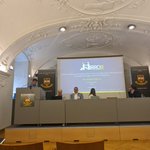
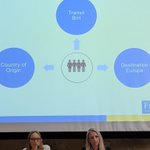
The @CriteriaProject conference on uncovering Vulnerabilities in #Migration and #HumanTrafficking starting now in Malta


Ina PervanAl Soqauer retweeted

Mein Freud Jad Turjman ist in den Alpen bei Salzburg tödlich verunglückt. Er war ein ganz besonderer Mensch. Sich sich selbst bezeichnete er gerne ironisch gegenüber den Österreichern als „Flüchtling Ihres Vertrauens“. Seine Flucht aus Damaskus und …salzburg.orf.at/stories/3167…

RIP lieber Jad Turjman 💔 Die Welt hätte dich noch so viel länger gebraucht. Du wirst fehlen.

Trauer um Schriftsteller Jad Turjman: 32-jähriger bei Absturz am Hohen Göll tödlich verunglückt sn.at/salzburg/chronik/traue…

Ina PervanAl Soqauer retweeted

Die #Sommerakademie bietet einen Raum für neuen (politischen) Input und Austausch. Gerade unterhalten wir uns mit Munira Mohamud und Zahra Hashimi von Fremde werden Freunde (@Freundesalon) in ihrem Workshop #Diversity & #Antirassismus

Ina PervanAl Soqauer retweeted

Wir hatten viel Spaß am Straßenfest Garnisongasse mit dem Albert Schweitzer Haus Forum letzte Woche. Seht selbst: youtu.be/9u08lcoLZpE 🙃
#Miteinander

