




With Pattinson as Bond now official, wondering if we’ll get a First Light style reboot where he earns his 00 number. I would totally watch that. I’m in, either way.
36



Anthropic woke up today and chose violence.
Systems of action make the first-time user experience and to a larger extent UI/UX a commodity.
Now is a good time to think hard about what your moat is.

Starting to roll out today: Claude Whiteboards, Claude Sheets and Claude Data.
Think a plan through on a board, build a tracker in a sheet, and tell a story with your data.
113


Researchers will one day study and classify the pipeline of people moving from one frontier lab to another.
OpenAI -> Anthropic: Missionaries?
Anthropic -> OpenAI: Mercenaries?
Not judging anyone, as we’ve seen this movie before (Microsoft vs Apple, Box vs Dropbox), but does this sound about right?
1
159
Kudos to all my fellow American voters who remembered that leadership comes with a two year return policy.
3
118


Super human > Super intelligence

ANDREAS WHAT HAVE YOU DONE? 🤯
🇸🇪’s Andreas Almgren lives up to the hype with a dream marathon debut, storming to victory at the @nycmarathon in 2:06:01 🫨


2
106
Congrats to everyone who ran the @nycmarathon this morning. One of the hardest but rewarding races I’ve ever done. Each of the 5 boroughs have such a unique energy. NYC is electric!

2
19
361
Indy Sen 🏃🏾 retweeted

GOLDEN STATE. GOLD STANDARD.
Your 2026 @WNBA Champions, the Golden State Valkyries. 🗣️

Nails it. You cannot build a sustainable business by being perceived as just a killer feature. Incumbents will come knocking sooner rather than later with either a competitive offering that’s good enough (worst case), or come with an acquisition offer (better case).
Dropbox famously turned down an acquisition offer from Apple because they didn’t want to be seen as just a feature in MacOS, but then struggled to go upstream.
Box also turned down acquisition offers but relentlessly focused on enterprise and executed more efficiently around partnerships, distribution, and acquisitions of their own.
Being a best-of-breed solution is hard when you’re competing against best-of-platform incumbents. Longevity comes from transcending your initial product market fit via focus, innovation, and being customer-obsessed.

Seeing a lot of mentions that Wispr made a mistake by educating its users about Granola. Maybe that's true but here's my take.
I worked in the productivity category for ~12 years across two startups (calendaring and meeting notes), both acquired.
Productivity startups rarely make it to IPO. The few examples such as Dropbox and Asana, you could argue haven't been great from a public market stock perspective. The challenge is that you're constantly battling the heavyweights, specifically Google and Microsoft, who are going to build a good-enough alternative and bundle it for basically free. Of course, CIOs love this. No buyer wants to manage 10 different SKUs when they can pay $15/seat and get all of it.
Now consumers, sure, some will pay and this drove early Dropbox, Evernote, Calendly, Granola subs but you do hit a ceiling. Eventually, new subscriber growth struggles to keep up with churn because consumers ultimately gravitate to free.
So your only choice as a productivity startup is to use that initial wedge, which I often describe as identifying an icon that doesn't exist in the Google Apps dashboard, and then expand horizontally. And in fact, this is precisely why Dropbox, Slack, Zoom or even Notion all continue to build or acquire more of the productivity suite.
Unfortunately, it’s impossibly hard. The incumbents aren't sitting idle, and they have huge pricing power because of scale. Ultimately, as a startup in this category, as a founder, you have at least 1 exit window, maybe 2 if you're lucky.
For sure companies like Miro, Airtable and others have likely had an attractive exit window but the founders went for it. Unclear if all that additional grinding led to a better outcome for the team and founders.
FWIW, at one of my productivity startups, I ended up selling three years after receiving our first acquisition offer. Three more years of grinding, more venture capital, more stress, and ultimately I walked away with roughly the same amount of cash I would have had if I'd sold two years in.
So the obvious Q is why does productivity continue to get so much venture funding if so few of these companies ever get to IPO? First, productivity is one of those evergreen categories where investors often experience the pain themselves and that’s a huge advantage in fundraising. Second, you can still make money as an investor as long as the money raised and valuations don’t get out of control. Like with anything, if you raise too much money, then there aren’t enough buyers.
This category though, maybe sees more acquisitions than others and the reason for that is because practically every large enterprise software company has, at some point, aspired to build its own version of Google Apps because who doesn’t want to own the backbone of enterprise? Most of these buyers though discover that it takes billions and years and so they ultimately give up and the cycle repeats some years later with new leaders.
So full circle, what's the playbook for Wispr and Granola? Well, first, they're both going to expand horizontally as quickly as possible. Second, they're going to invest in team editions and sell into enterprise. This is really the only way.
Finally, I wouldn’t be surprised if both are already getting acquisition offers but I’m also sure the founders have taken some liquidity, and so they are going to go for it.
2
2
429
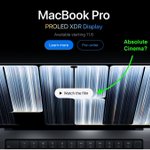
It’s not a launch video. It’s a “film” 🙌🏽.
Gotta give Apple credit for yet another great spot. The script is tight, starting with the simple premise of what happens “if you give a Mac an OLED” and describing the escalating set of requirements needed to live up to that promise.
Two things struck me:
1.) From a product marketing standpoint, they did not lead with the much-ballyhooed touchscreen implementation, but rather with the technical insight that giving professionals a truly “portable reference monitor” required a bunch of high-end pro features, *including* a touchscreen. That’s some PMM jujitsu right there, framing the touch capabilities not as a solution looking for a problem, but rather as an implementation consideration. iOS developers, btw, will most likely love this.
2. The script is literally a two-minute laundry list of features... yet the visual execution and delivery make the whole thing flow just right. As a parent of once-young children, I found the rhythm reminiscent of the “If You Give a Mouse a Cookie” picture book, with the payoff of escalating user wants being met by product features, landing just right (with a cleaner denouement to boot!).
Seems like someone in Apple marketing had fun. 👊🏽

1
235
Don’t mistake having product-market fit (PMF) for being indispensable.
This is especially true in enterprise software. Whereas PMF is the users’ verdict, indispensability is the IT buyers’, and they’ll consolidate spend wherever they can.
Beyond user love, you have to be obsessed with meeting your customers where they are, until the answer to “what breaks if we replace you?” is “a lot.”

1
31
