

Coding for 15+ years | Sr. Software Engineer | IIT Kanpur alumnus | CP: 99.5+ %ile | Tweets: Computer Science, Maths & Psychology | Expertise: Problem Solving
Sweden
Joined January 2021
- Tweets3.2K
- Following93
- Followers2.7K
- Likes4.4K




Pinned Tweet
I've been mentoring students and professionals for over a decade.
Based on this experience, I've created an (almost) exhaustive list of the most impactful rules & concepts.
Make 2024 your best year: 👇

An interesting way to check if the given alphabet is vowel using bit manipulation.
Have a look if you understand how it works !

Happy New Year, 2025 ! 🥳🎉✨
May this year bring you joy, prosperity and everything you wish for !
Numerically, year 2025 holds rare gems which won't occur for decades and centuries. Let's explore 🧵👇

Bonus fact if you're interested in primes:
2025 + 2 is a prime number
√2025 + 2 is a prime number
2025² + 2 is a prime number
That's the end of thread !
👉 I post about Problem Solving, Computer Science, Mathematics & Psychology.
If you enjoyed the thread, consider following (@intelocode) for more such content. Thank you ! 😊

Received "1000 Days Badge" on @LeetCode today.
Frankly, I've been solving just the daily-problems mostly.
And it lead to 1000+ problems & 50+ badges.
If you've similar goal, a few minutes everyday will easily take you there. Just start and be consistent ! 🎉

Abhishek Verma 💻 retweeted
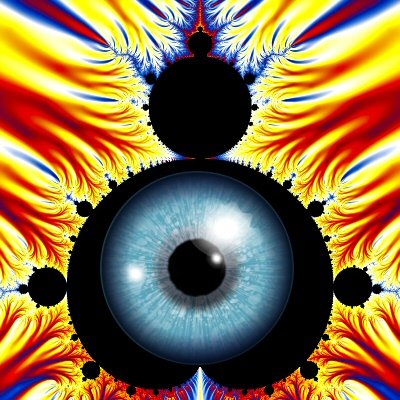
Mathematics and beauty.
Here's an eye-catching equation connecting i, e and pi. The left-hand side has only imaginary terms, and the right-hand side has only real terms. Source: bit.ly/33CmqCv


It's Monday: time to practice problem solving⚡️
This puzzle comes from Game theory and involves both logic & human behavior.
🔹 There are 'k' kids in a family and a cake needs to divided & distributed among them
🔹 Kids are likely to be dissatisfied with their share
What strategy would you follow so that no one complains about their share?

When Einstein said "Imagination is more important than knowledge"
he didn't mean that your "imagined parachute" will save you if you jump off the aircraft ! 🤦♂️
Abhishek Verma 💻 retweeted
What I love about mathematics is that a simple idea can be extended to unexpected limits and it may still work perfectly. Moreover, it often leads to further insights !
For instance, as number of sides in regular polygon are increased, it approaches circle.
This simple idea can be used to calculate area of circle (from area of polygon) as well as derive value of π.
Suppose the regular polygon is inscribed in a circle of radius "r". An n-shaped polygon can be split into n triangles (△).
Base of △ = 2 r sin(π/n)
Height of △ = r cos(π/n)
Area of △ = (1/2) * base * height
= (1/2) * 2 r sin(π/n) * r cos(π/n)
= (1/2) r² sin(2π/n) ☑️
So, area of n-sided polygon
= n * area of △
= (n/2) r² sin(2π/n) ✅
Now, if the number of sides 'n' is increased infinitely, that is, apply lim(n→∞), it results into area of circle
= lim(n→∞) (n/2) r² sin(2π/n)
= r² lim(n→∞) (n/2) sin(2π/n)
= π r² ✅
With "r=1", this area would equate to π.
In fact, this method (calculating area of polygon) had been used to improve value of π for several centuries!

I am surprised to see amount of calculations in comment section.
Such problems are much easier with shifting. Shift top triangle to the bottom and right-side triangle to the left.
Then the yellow area perfectly fits within 3x4 rectangle. Hence answer is 12. ✅


What I love about mathematics is that a simple idea can be extended to unexpected limits and it may still work perfectly. Moreover, it often leads to further insights !
For instance, as number of sides in regular polygon are increased, it approaches circle.
This simple idea can be used to calculate area of circle (from area of polygon) as well as derive value of π.
Suppose the regular polygon is inscribed in a circle of radius "r". An n-shaped polygon can be split into n triangles (△).
Base of △ = 2 r sin(π/n)
Height of △ = r cos(π/n)
Area of △ = (1/2) * base * height
= (1/2) * 2 r sin(π/n) * r cos(π/n)
= (1/2) r² sin(2π/n) ☑️
So, area of n-sided polygon
= n * area of △
= (n/2) r² sin(2π/n) ✅
Now, if the number of sides 'n' is increased infinitely, that is, apply lim(n→∞), it results into area of circle
= lim(n→∞) (n/2) r² sin(2π/n)
= r² lim(n→∞) (n/2) sin(2π/n)
= π r² ✅
With "r=1", this area would equate to π.
In fact, this method (calculating area of polygon) had been used to improve value of π for several centuries!