

Artist | cinema, contemporary art & post-photography | Artist associate @104paris | Resident 2026 @villa_albertine |
Paris
Joined July 2009
- Tweets2K
- Following4.6K
- Followers722
- Likes11K


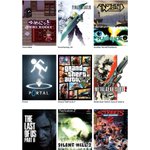


2027 will liquify everything.
Software. Writing. Gaming. Music. Filmmaking.
Everything becomes fluid.


This is beautiful, and it’s one of my favorite games of all time.

I have 18 years of feature film editing experience and while I think 80% of the process will be automatized, we are far from it. Because this work needs to be done by film editors, not engineers. But assistant editing work (if you don't consider them as creative) is done in slow mode

Ryoko Tamada, student in Tokyo, 1,604 tweets in 2015. She never existed. Work in progress from my upcoming feature DEEPFAKE. – at Paris, France


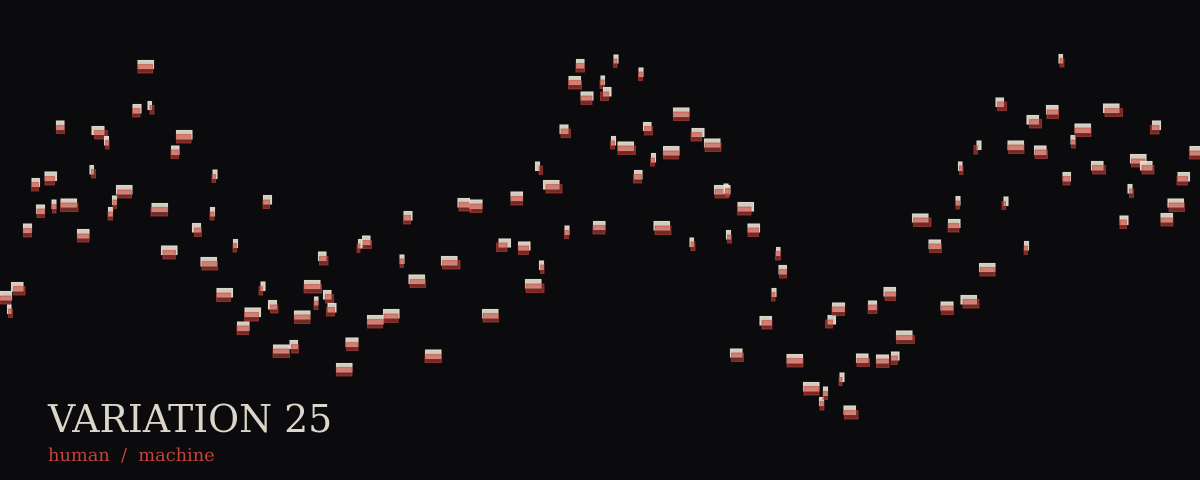
I rebuilt Nikolayeva's 1992 Variation 25 note by note with AI, then asked another AI to find the human. It found her 26 times out of 51. Chance is 50%.
imagine november 19 at midnight GTA VI drops and you just put @LeRobotHF + @bfl_ai FLUX.3 on a PS5 emulator
With pixels in, controller out
Then it plays day 1 the whole thing live on @Twitch and somehow finishes day 2, 40h later
Or you run parallels benchmark with other models and @PatronusAI, open a market on completion time and everyone bets on their model
GTA VI Machine%
what a world we live in

Introducing FLUX 3 Action.
An open weights 7B World Action Model that achieves first place on the RoboLab benchmark.
It outperforms the previous best open model by 6.1 percentage points while using 56% fewer parameters and running up to 3.95x faster.
FLUX 3 Action removes the usual trade-off between world action model performance and VLA speed: it still predicts video and actions together, but plans more than twice as far ahead and runs faster per second of robot motion than the strongest open VLA.
Teams can fine-tune FLUX 3 Action on their own demonstrations to create policies for a particular robot and task. Together with @nvidia, we also integrated FLUX 3 Action natively into @huggingface's LeRobot, with fine-tuning recipes included and edge deployment on NVIDIA Jetson.
Beyond robotics, we’re also seeing promising results training task-specific policies for acting in simulated environments like gaming, controlling a vehicle, computer use, and wherever else a model needs to understand a visual environment and then choose what to do next.
FLUX 3 Action builds on the same image, video, and audio pretraining as FLUX 3, but uses a smaller architecture designed for practical deployment. In midtraining, we trained the model to predict actions and future frames together.
We’re releasing the weights, code, fine-tuning recipe, benchmarks, and reproducible examples so researchers and developers can build on the model with their own robots, environments, and tasks (see below).
Optimizing token efficiency not just with a harness and the right model, but also with the right provider and batch-app option.

1/ The OpenRouter Batch API is live.
For work that doesn't need an answer right now, the Batch API cuts per-token pricing in half on most models and returns everything within 24 hours.
Get started: openrouter.ai/blog/announcem…


Interesting vfx experiment

New essay for @every, by @afterimage
We believe we will look back on Astra as a turning point in how creatives use AI in video work.
For many months we were experimenting with different AI video approaches: generative workflows in ComfyUI, procedural animation with Python, motion design through the Cavalry and After Effects MCPs, and more.
All of these were fundamentally limited by a lack of control. Generative models could sometimes make cool images, but changing one thing without disturbing everything else was difficult.
Many of these generative tools weren't (and still aren't) built for true professional workflows.
On the other hand, general models starting around Opus 4.5 were decent at writing python code to deterministically edit images and videos, but the models were really bad at “seeing” the images and videos they were supposed to be editing, which made them impractical.
The day Astra launched, just from the rumors and marketing, our internal sense was "this might be the one". Then, when we saw the level of 3D detail people were able to achieve with Astra in Blender, we really suspected the model was finally able to "see" and iterate toward things that actually looked good.
While everyone raced to build cool (but often useless) demos of 3D worlds, we got interested in something else: compositing 3D assets into live action footage at commercial-grade quality. To this day, we are quite surprised by how few Astra demos focus on this ability. It feels like a breakthrough for us.
We tested a range of processes, from traditional VFX skills like masking and tracking to hybrid approaches like compositing Blender renders and generative imagery with real footage.
At the highest levels, Astra doesn’t replace someone with true domain expertise in VFX artistry. But, through these tests, it started to feel for the first time that the LLM was actually a viable tool in the kit. It worked well in concert with other tools to make professional results we could actually see ourselves using.
The coolest part about all this is that it makes it easy and painless to attempt visual effects on even the smallest projects and most off the cuff videos. We’re excited about the combination of casual footage and visual maximalism. Effects can now be completely over the top without feeling like the whole reason a shot exists.
Full "Vibe Check" with video examples & side by side Astra vs Sol comparisons (gift link) ➡️ every.to/vibe-check/vibe-che…
This is how backrooms has to be. An ai film that hallucinates with AI. I would have gone more stable vibe and deforum vibe than just full consistant mimic cinema style but that’s a good demo of what you can do. More hybrid recommended not to be burnt-out. Cinema is a collective experience. But gg.

Backrooms Nemoris S1E01: It Eats Light
I've spent the last six months working in secret on this pilot episode for a new Backrooms canon. We premiered this week in Toronto and a it's now available on all platforms: a new Magnific Originals series!
This is quite possibly the most complex project I've ever taken on in my life. Yep, even if that sounds like an exaggeration, it took even more effort than building the first version of Magnific Upscaler.
I had never before tried to bring such a concrete, specific vision to the screen while pushing the current state of the art as far as possible. Every scene you see in this episode, every object, every movement of a character's hands, every space, every hum of the fluorescent lights... it's all there for a very specific reason, with absolute control and intention on my part. I never imagined that something that looks so simple on the surface could be so incredibly complicated.
The script is my own, based on the original Backrooms concept (the iconic 4chan image) but developed to create an entirely new canon from scratch. In this first episode, I reveal barely more around 5% of the overall puzzle, so you may end up thinking: what the f*ck did I just watch? Or you may need multiple viewings to pick up on some extra clues, because several of them are genuinely hidden. The idea is to create a full 10 episode series, an anthology, and have you, the viewers, gradually piece together the puzzle yourselves as the clues are revealed.
Beyond the video and image generations, I did all of the editing in DaVinci Resolve, with particular attention to the sound. I'd say around 60% of the time I spent on this project went into sound. In some scenes, there are more than 13 stereo tracks layered at the same time, using sounds I recorded myself or created and edited from generations and foley libraries. Every sound, every voice, and every gasp is designed to pull you into the world of the story and make you feel like you're actually there. That meant spending an enormous amount of time on sound design, thinking about things like the individual position of each sound in space, EQ, reverb to simulate different environments, the sense of immersion, etc. I've never learned so much about something so quickly.
As for the generations, a few numbers:
• 12 hours of total generated video for 17 minutes of final footage 🤯
• More than 7,000 generations in total.
• An average of around 60 generations for every 15 seconds of final footage.
• 6 months of work, including many weekends, with just one person behind the whole thing... I almost lost my mind.
• Platform: Magnific, of course. Models: mainly Seedance 2.0 and 2.5 for video generations, and Nano Banana Pro and Seedream 5 for image references.
• Approximately $20,000 in total token costs, not including the value of my own time.
For the next episodes, I can't do this alone again or I'll go crazy. My plan is to put together a small team: voice actors, a colorist, 3D VFX artists, a sound designer, and, in general, people from the traditional film industry who can help us professionalize our pipeline and take this story to another level. If you're reading this and you think you might be interested, please leave a comment.
Ah! If you have any technical questions about how this was made, I'd be happy to answer them. Feel free to ask me anything you like!
Anyway, I'll leave you with the episode. For the love of everything holy: please watch it at home, relaxed, on a big screen, with a good sound system or a quality pair of headphones, the lights off, and some popcorn.
And most importantly, enjoy.
Nemus te reddat!