





Hot take, OpenAi missed on purpose to boost the anthropic IPO, there’s no way @sama would release something like this

26
Jad Slim retweeted

The hardest software category to sell to right now is tech SMB businesses (aka startups). Each time you want to sell something, the CTO argues that he can vibe code, in less than a day, 60% of the functionality, and it's unfortunately right. The worst is that he can add the one or two functionalities tailored to his business needs, but that don't make any sense for general SaaS to add. It's really tough out there.
We almost doubled our weekly revenue at my painting company by making one small change to our sales workflow.
A good chunk of our customers don’t want an in-home estimate. Maybe they just bought the house, they’re out of town, or they simply don’t have time.
Previously, we’d send them a proposal and hope for the best.
Now, we schedule a Google Meet Virtual Appointment to walk them through the proposal, answer questions, and close the deal on the spot.
Our appointment set rate is actually much higher than in the picture if we factor in these virtual appointments.
We’ve only just started doing this and it’s paying off nicely 🤞

I have Grok Bot booking my appointments, and I found a kanban board the most intuitive way to get a bird’s-eye view of what’s going on.
New leads, missed calls and voicemails get a text from Grok within minutes. It offers open times based on distance: whichever salesperson is closest, in a slot near their other visits that day. Then it books the visit.

9
10
724
This is my system for booking estimates:
Run ads.
Send leads through a quiz funnel that collects their address.
ServiceFlow checks my calendar and shows the drive time to each visit that day.
I pick the best slot and book.
1
5
372
Jad Slim retweeted

SaaS companies purely selling code will be more and more in trouble
its just a matter of time

Despite being a smaller company, I’d argue that @dripjobs has the best UX of any CRM for home service businesses.
I’ve been asking them to add an API/MCP for about a year now, but with no luck.
If they had, I probably wouldn’t have bothered building my own CRM, which I’m now slowly transitioning to.
But once I started building it, I realized how liberating it is to have the freedom to add virtually any feature or workflow my business needs in minutes.
It’s genuinely making my business more efficient in ways I couldn’t have imagined before.
And the surprising part? Maintaining the CRM hasn’t been an issue either, as long as you have the right mechanisms in place.
I will be open sourcing everything I’m building, so other businesses can build on top of it without starting from scratch.
The future is OPEN SOURCE

Here's an interesting dilemma, it has become increasingly common where current users of our software @dripjobs are building competing CRM's, with many of the same features and even some using direct copies of the UI / functionality and flow that is obviously unique to us. As they promote their product while it's in "beta" they continue to use our product - so what is the right approach here? Keep letting them use it, or, exercise our right to refuse service? What is ethical? And at what point do we draw the line? It seems as though no software is immune to copycats - so has anyone figured out the best way to handle these types of situations?
11
23
1,981
Being able to build your own internal tools exactly the way you want them, and make changes as quickly as you can deploy them is such a great unlock for local service businesses

4
3
259
I’ve been slowly vibecoding software for my business, and this is basically how I handle bugs.
Once a month:
VA: hey, this page isn’t working
Me: can you send me a screenshot and describe what went wrong?
VA: sends info
Me to Opus 5.5: can you fucking fix this? No shortcuts. pastes info
The issue never happens again, and somehow the software gets better every time.

vibe coders will be in shambles when they discover that every popular piece of software already had an open-source alternative long before ai
soon they will discover what the second s in saas stands for
1
2
197
Just got shown a demo by @GraysonGladu on his new CRM/Project management tool for his painting business. All I have to say is it's 100x better than any solution I've seen out there and if you're not building your own internal tools, you're absolutely going to be cooked.
5
6
300
Unfortunately, I need all three AI subscriptions:
ChatGPT for its incredible voice experience
Claude for Opus 5.5
Grokbot for getting things done on the go
😞
1
117
My VA has been with me a year. No SOPs. No training.
She's learned from every problem she's handled, and now she absorbs whatever's breaking in the company and fixes it herself.
I watched 500+ applicant videos to find this high IQ individual.
Worth every minute.
3
13
514
People think paying painters to finish early makes them rush. It does the opposite.
The trick is that it only works if you sell a premium product.
We charge 20% more than our competitors and promise top-quality work. That margin lets us hire the best painters, and the best painters are fast and careful.
Here's the system:
→ Every job has a labour budget
→ Our project manager enforces the quality standard, and nothing gets signed off until it meets it
→ Finish under budget and the crew keeps the hours saved as a bonus
→ Go over budget and they still get paid in full. They just tell us why
That last part is what makes it work. When a job runs over, it's usually one of two things:
1. We mispriced the job
2. Someone on the crew is slow
Either way, we find out.
Rushing doesn't pay, because sloppy work just gets redone. What pays is being efficient.
When a slow painter joins a crew, everyone else works longer to hit the same standard. Nobody wants longer hours because someone else is slacking.
So the crew wants the same thing we do: quality work done efficiently. They have our back.
The quality bar stays fixed. The bonus rewards hitting it in fewer hours.

My painting company has an immune system that rejects bad painters on its own.
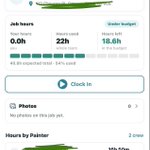
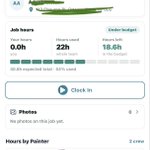
Every painter sees the labour budget left on each job, live, in our internal app.
If you finish under budget, the hours you saved are paid to you as a bonus.
So when a low performing painter joins a crew, everyone watches that person eat into their bonus. If they don't get better, they don't last long.
The good painters stay, earn more, and bring in their friends.
I stopped managing performance. The incentive structure does it for me.
3
19
1,559
My painting company has an immune system that rejects bad painters on its own.
Every painter sees the labour budget left on each job, live, in our internal app.
If you finish under budget, the hours you saved are paid to you as a bonus.
So when a low performing painter joins a crew, everyone watches that person eat into their bonus. If they don't get better, they don't last long.
The good painters stay, earn more, and bring in their friends.
I stopped managing performance. The incentive structure does it for me.
When hiring for my small business, the #1 quality I look for is trust.
Trust reduces the need for oversight, approvals, and layers of management.
People can make decisions and move without constantly checking in.
The downstream effect is speed. And speed compounds across the entire business.
1
4
429
Scaling a painting company above 1 million dollars fully remote with good profit margins has been a challenge, but i’m very close to cracking it with great hires, systems and software
3
4
342