





Jiarui Lu retweeted

I am excited to be joining CS@U Wisconsin-Madison in Fall 2027! I will recruit PhD students. If you are also enthusiastic about researching how LLMs work and/or applying them to other scientific problems, please apply and mention me in your application. @WisconsinCS
Great work! This such resonates with the philosophy behind SimpleDesign, for protein sequence–structure modeling 🧬arxiv.org/abs/2609.03377
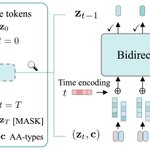
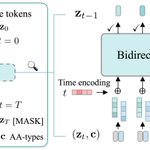
SimpleDesign feeds amino acid seq (text) and 3D coordinates (vision) directly into a unified Transformer, with modality-specific layers and joint attention. no structure tokenizer; no pretrained structure encoder.
from different domains, but same principle 😀


Congrats, Yong! Really enjoyed reading this — it's fun to see SimpleFold (oh yeah) get remixed with LLMs so well. Great work!😄

We're open-sourcing Calpha 🧬, a general-purpose chat model that folds proteins natively
Homepage: calpha-ai.com
GitHub: github.com/yliust/Calpha
Weights & data: huggingface.co/liuyong9975/C…



Mol-1-constraint is now available to every researcher ^^
88.3% success on Foldbench-AB. Code and weights released: github.com/molence/Mol-1/tre…
Clone it. Build on it. Make it part of your research. Or try it directly at lab.molence.com.
Research should benefit everyone. We’re putting that belief into practice.

Benchmark against popular open-source cofolding models: Mol-1-constraint achieved:
🧬 Antibody–antigen: 75.0% → 88.3% success, from Mol-1 to Mol-1-constraint, on FoldBench-AB (DockQ >0.23).
💊 Protein–ligand: 36.1% → 63.9% on Runs N’ Poses’ 0–20 similarity bin, which is 27.8 percentage points above Mol-1!
📈 Protein-peptide: from 54.1% to 60.2% success rate of DockQ>0.80 on MolBench-Peptide-26.
(2/3)

Recently I’ve seen many agent frameworks built around bio foundation models. Real-world agents (powered by claude, gpt, or deepseek) can retrieve valuable biological context. Yet much of that evidence has had no direct path into cofolding. Too often, the fallback is to sample more random seeds.
Mol-1-constraint extends Mol-1 with an interface that lets agents turn biological evidence into model guidance. We’re making it available to everyone.
We’re opening this path so researchers and engineers can build together and push the frontier.
AGI should belong to everyone.
5
157
Hi! We just released Mol-1, the frontier open-source cofolding. Try and benchmark it for your research and real-world problems: built for science, agents, and workflows.
Sign-up and cook. lab.molence.com
Open-sourced for all: github.com/molence/Mol-1
you're gonna like it
Introducing Mol-1: Open Frontier Biomolecular Intelligence 🚀🚀🚀
📊 75.0% on FoldBench-AB, near IsoDDE's reported 75.58%!!!
🧬 60k-token assemblies on one single H20, outperforming Anthropic 8/10.
🎯 VHHs binding hit rate as high as 63% with best SPR KD at 43 pM.
GitHub: github.com/molence/Mol-1
Try it: lab.molence.com
Wrapped up my intern at @Apple MLR and heading back to school. Really lucky to learn from & work with amazing folks here. Excited to see SimpleFold (github.com/apple/ml-simplefo…) out and moving forward 🔥 — proud to contribute, and make minuscular effort to the community w/ the team.

😎 Can't be more thankful to the awesome @itsbautistam for the warm hosting and mentoring me with @YuyangW95; also appreciate my brilliant collaborators @YizheZhangNLP, @thoma_gu, Navdeep and @jmsusskind for helping me quite a lot. Gonna miss this time
5
1,096
Jiarui Lu retweeted

This is so cool! Glad to see how quickly people are able to work with and build on the SimpleFold model! Nice work @OpenBioAI :)

Apple (yes that Apple) released SimpleFold, a new Protein folding model in their paper titled "SimpleFold: Folding Proteins is Simpler than You Think" yesterday. With SimpleFold, Apple makes a case that specialised architecture is not required for protein folding, which is a departure from famous AlphaFold like methods.
SimpleFold uses standard transformer blocks trained via a generative flow-matching. And similar to Protenix-mini does not require MSA, which makes it faster.
We have integrated SimpleFold into OpenBio. Trying it out is as simple as asking OpenBio to predict the structure of your protein sequence. You can use it now and see how good SimpleFold is.
Jiarui Lu retweeted

Thanks @OpenBioAI for integrating SimpleFold! Glad to see the community start using our model
Apple (yes that Apple) released SimpleFold, a new Protein folding model in their paper titled "SimpleFold: Folding Proteins is Simpler than You Think" yesterday. With SimpleFold, Apple makes a case that specialised architecture is not required for protein folding, which is a departure from famous AlphaFold like methods.
SimpleFold uses standard transformer blocks trained via a generative flow-matching. And similar to Protenix-mini does not require MSA, which makes it faster.
We have integrated SimpleFold into OpenBio. Trying it out is as simple as asking OpenBio to predict the structure of your protein sequence. You can use it now and see how good SimpleFold is.
Jiarui Lu retweeted

So I understand that was unexpected for a lot of people, @Apple MLR has released a protein folding model! arxiv.org/abs/2509.18480. Here’s a summary of what SimpleFold is and what it represents:
- What is SimpleFold? A generative model that essentially treats protein folding almost exactly as if it were a text-to-image or text-to-3D problem.
- What are we sharing? A research paper and a codebase under an MIT license github.com/apple/ml-simplefo… (looking forward to people contributing to it!). We are also releasing pre-trained checkpoints of different sizes so that researchers can best tradeoff performance for efficiency.
- Why protein folding? We are doing this work largely because protein folding is an excellent benchmark for structured data generation and multi-modality. Protein folding is a very interesting problem from a generative modeling perspective and we do research on generative modeling :)
- Why is it interesting? IMO SimpleFold is interesting because I believe in finding recipes (architectures, training objectives, etc.) that generalize across the board to many different data modalities. Let’s say you are an ML expert in text-to-image or text-to-3D, now you can apply your latest and greatest architectural blocks or efficient samplers to protein folding with SimpleFold. I believe this is a net benefit for ML research and science in general.
Now getting more into the technical details:
- Our architecture is very simple (hence the name), just a stack of transformer blocks with time-step conditioning. This is important because it makes the model efficient at inference time. You can run SimpleFold directly on your Mac and get results quickly without data ever leaving your laptop.
- SimpleFold is not necessarily a model that “rejects” inductive biases, it just doesn’t enforce them directly on the architecture. For example, we apply rotation augmentation to all the protein structures during training. This makes the model “softly” invariant to this symmetry.
- There were some concerns online about data leakage from AFESM and that driving performance of SimpleFold or making it overfit. We filtered AFESM data so that the CASP14 sequences are not seen during training. As a matter of fact we distilled structures from AF2/ESMFold models, which have the same cutoff data as SimpleFold for PDB data. Both AF2 and ESMFold train on self-distilled datasets, we just train SimpleFold on a bigger set of distilled data.
I want to thank my awesome team of collaborators, they are all rockstars.
That’s all, for now :)

SimpleFold: Folding Proteins is Simpler than You Think
"we introduce SimpleFold, the first flow-matching based protein folding model that solely uses general purpose transformer blocks. Protein folding models typically employ computationally expensive modules involving triangular updates, explicit pair representations or multiple training objectives curated for this specific domain. Instead, SimpleFold employs standard transformer blocks with adaptive layers and is trained via a generative flow-matching objective with an additional structural term."

Jiarui Lu retweeted
SimpleFold is out! I'm excited to see how the community receives this work from our research group at Apple, and I hope to see people trying out protein folding on their own laptops with MLX!

New preprint & open-source! 🚨 “SimpleFold: Folding Proteins is Simpler than You Think” (arxiv.org/abs/2509.18480). We ask: Do protein folding models really need expensive and domain-specific modules like pair representation? We build SimpleFold, a 3B scalable folding model solely built on general-purpose transformers + flow matching, and is trained on 9M structures. SimpleFold supports easy deployment and efficient inference on consumer-level hardware with PyTorch/MLX (try it on your MacBook!) (1/n)

Excited to share our recent work on protein folding with "deliberately" minimalist (not small, scale up to 3B params) non-equivariant model built on general-purpose transformers + FM. How about folding proteins on your M-chip Mac in secs? Try it now! 😎
New preprint & open-source! 🚨 “SimpleFold: Folding Proteins is Simpler than You Think” (arxiv.org/abs/2509.18480). We ask: Do protein folding models really need expensive and domain-specific modules like pair representation? We build SimpleFold, a 3B scalable folding model solely built on general-purpose transformers + flow matching, and is trained on 9M structures. SimpleFold supports easy deployment and efficient inference on consumer-level hardware with PyTorch/MLX (try it on your MacBook!) (1/n)
Huge thanks to all my gorgeous mentors and collaborators at Apple MLR: @YuyangW95 (project lead), Navdeep Jaitly, @jmsusskind, and @itsbautistam . 🚀 One of (a strike thru) the COOLEST stuff during my internship this summer!!
5
233
Jiarui Lu retweeted

SimpleFold: Folding Proteins is Simpler than You Think
"we introduce SimpleFold, the first flow-matching based protein folding model that solely uses general purpose transformer blocks. Protein folding models typically employ computationally expensive modules involving triangular updates, explicit pair representations or multiple training objectives curated for this specific domain. Instead, SimpleFold employs standard transformer blocks with adaptive layers and is trained via a generative flow-matching objective with an additional structural term."
Jiarui Lu retweeted
New preprint & open-source! 🚨 “SimpleFold: Folding Proteins is Simpler than You Think” (arxiv.org/abs/2509.18480). We ask: Do protein folding models really need expensive and domain-specific modules like pair representation? We build SimpleFold, a 3B scalable folding model solely built on general-purpose transformers + flow matching, and is trained on 9M structures. SimpleFold supports easy deployment and efficient inference on consumer-level hardware with PyTorch/MLX (try it on your MacBook!) (1/n)
wohoo! 🙌 congrats and thanks the whole team😆

Wrapping up #ICML2025 on a high note — thrilled (and pleasantly surprised!) to win the Best Paper Award at @genbio_workshop 🎉
Big shoutout to the team that made this happen!
Paper: Forward-Only Regression Training of Normalizing Flows (arxiv.org/abs/2506.01158)
@Mila_Quebec

5
749
Check out our recent work of benchmarking modern LLMs on the end-to-end scientific discovery tasks!! 😎👇

What makes a great scientist? Most AI scientist benchmarks miss the key skill: designing and analyzing experiments.
🧪 We're introducing SciGym: the first simulated lab environment to benchmark #LLM on experimental design and analysis capabilities.
#AI4SCIENCE #ICML25

ALT Picture of SCIGYM's title and authors
Jiarui Lu retweeted

GenBio Workshop ORAL Presentation
📜 Title: FORT: Forward-Only Regression Training of Normalizing Flows
🕐 When: Fri 18 Jul
🗺️ Where: East Exhibition Hall A
🔗 arXiv: arxiv.org/pdf/2506.01158
w/ @danyalrehman17 @osclsd @jiarlu @tangjianpku @mmbronstein @Yoshua_Bengio @AlexanderTong7