

Advanced Physiotherapy Practitioner, Mentor, FHEA, former Lecturer. Love learning. Tutoring and mentorship available- website below
Edinburgh, Scotland
Joined July 2016
- Tweets3.5K
- Following393
- Followers1.2K
- Likes4.7K
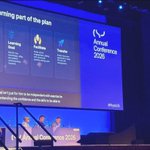


Still reeling from having had the opportunity to present on metabolic syndrome in MSK care at @thecsp #Physio26 with @neiljlangridge, @LaurafinucaneB and @MattLowPT. What a great couple of days!


A lovely example of the therapeutic alliance, active listening and empathy in practice
instagram.com/reel/DeoeCFPpa…

Learning part deux! Enjoyed recording this with @BWhybrowPhysio earlier this year. My sieve for a brain challenged his editing skills so there's a lil jumping but hopefully it's helpful! Would love to know your thoughts about education in clinical practice
open.spotify.com/episode/6i7…
Kate Purcell retweeted

A lot of msk pain is an ordinary part of being human. In the absence of concerning features or meaningful functional limitation, it does not necessarily require investigation, treatment, repeated healthcare contact or complete resolution before normal life continues.
I'm just going to start dropping this link on every nonsense "educational" post
Glad to see something being done... Hopefully it'll lead to some kind of change
A scoping review content quality of MSK topics on social media bodyworkmovementtherapies.co…

We have loads to learn from educational research. Mentorship is one way of instilling good practice, but only if mentors themselves understand the principles of facilitating learning!
clinics.hsu.ac.uk/the-deeper…

I've been working away at home renos since Nov 24. This was on top of F/T work, MSc module, and family bereavement. I'm just getting back to work and life after extended leave. It's been a tough journey but feels rewarding to see how far it's come. Can't wait to be finished!


Sensible stuff as always from @lizbayleyphysio 🙌

Seeing ⬆️ amount of PIFU after 1st appt. This assumes pts understand what physio offers & when/how/why to re-engage.
Self-Mx doesn't just happen when support is withdrawn. For many, it's a capability that needs to be supported & developed.
Are we always making that distinction?
Kate Purcell retweeted

Exactly six weeks today! ⏳
Still some availability.
Evidence-informed content, always updated. All clinically applicable, with lots of practical. Networking galore.
The post-course content is worth the price of admission alone, to be quite honest 😉🧠
Details below 👇

Mastering Lumbar Radiculopathy (MLR) | Course Update 🤩
📍 London | September 2026
📅 19th & 20th September 2026
I’ll be hosting my MLR course in London at St Mary's Hospital.
🇬🇧 This will be my only UK in person course for the year
🤝 Hosted by Mr @CarlWongCM fellow Nervy Nerd
🎓 Two days focused on spine related leg pain and key differentials
📘 Includes my Radicular Reminders Clinical Companion hardback book
🐦 Early bird now available
🔗 Book here: theradicularclinician.com/in…
📲 Or scan the QR code in the poster below

Genuine ethical question: is an athlete's goal more deserving of adjuncts than someone wanting to ⬇️ pain enough to get through work/care for family? How do physios decide which contexts warrant this kind of Rx, and how much does environment influence those decisions?

It’s that time of year when races are coming fast and furiously for many, and for others, they are in peak training blocks as major races approach.
It’s the busiest time of the season for me to help those aches and pains, promote recovery and patch people up to get them to the start and finish lines.
Lots of short term pain relief treatments to support the bigger rocks like sleep, nutrition and recovery.
I’m very lucky to be supported by RockTape who allow me to offer the latest modalities to my athletes.
Here this ultra runner is using the Rock Pods Vibe post 100 mile race.
It also presents a great opportunity mid treatment to discuss the race, and our plans moving forward.
Many of these modalities get a bad rep, and rightly so when used without reasoning and explanation of what they do and don’t do,
But when used diligently, alongside appropriate education and big picture management, they can be fantastic ways to support an athlete.

Just to clarify, I've no doubt @theEndurancePT's reasoning & narrative with athletes is sound. My question wasn't about their practice, but a broader one for the profession.
A simpler way of interpreting scans instagram.com/reel/DaxeAT4Rn…

Really pleased to see this published with @neiljlangridge and @LaurafinucaneB @HealthSciUni
We'll be discussing this at CSP annual conference this year in Glasgow with @MattLowPT
onlinelibrary.wiley.com/shar…
So much more I could have talked about - one of my favourite topics - education and learning! We did a part 2
You can listen to it here:
Apple: lnkd.in/eM57teQp Spotify: lnkd.in/e4_s3zPH

For those who want to write with clarity, depth, and confidence, visit my website to see how mentorship and academic writing support can help. Don't rely on AI!
physiotherapytutor.com/

Kate Purcell retweeted
An independent validation of a clinical prediction rule for the diagnosis of painful cervical radiculopathy. 2026.
Highlights:
New 3-test cluster showed stronger diagnostic utility than original clinical prediction rule.
New cluster includes Spurling, Shoulder Abduction test, ≥2 positive ULNTs.
Positive cluster (3/3) rules in CR with 100 % post-test probability.
Negative (0/3) cluster rules out painful cervical radiculopathy diagnosis.
Modified Shoulder Abduction test showed higher post-test probability.
sciencedirect.com/science/ar…

Kate Purcell retweeted
An interesting aspect of reviewing spinal MRI scans, reports, and suggestions of causation is proportionality.
A mild incidental curve and a visibly severe deformity are both termed scoliosis 😞 imprinted on the minds of unwitting patients.
Similarly, there is the supposed confidence some place on low back pain events and quite literally expected disc changes, bulges, protrusions, disc height loss.
We do not have evidence to quantify the size, shape, age, or causal nature of these findings, despite studies showing overall associations at a group level.
Get into the grey, the nuance, and the literal clinical complexity of this, folks. Be sensible with your communication.