
Associate Research Scientist at African Population and Health Research Center | A child of the Universe; no less than ~ the stars | Views personal
Joined October 2014
- Tweets704
- Following379
- Followers432
- Likes1.6K




Caroline Kabaria retweeted

You have noticed it. ChatGPT feels dumber than it used to. Your prompts that worked six months ago produce worse results now. The writing sounds flatter. The ideas sound safer. The internet itself feels like it is shrinking. Every article reads the same. Every email sounds the same. Every answer sounds like it was written by the same voice.
You thought it was you. It is not you.
Researchers at Oxford and Cambridge published a paper in Nature proving what is happening. They call it Model Collapse.
Here is the mechanism in one sentence. AI trained on AI-generated data gets dumber every generation until it forgets what real human data looked like.
The internet is filling with AI-generated content. Blog posts. Articles. Reviews. Comments. Social media. AI companies scrape the internet to train the next generation of models. Which means the next generation of AI is being trained on the output of the current generation.
Each cycle loses information. Not randomly. It loses the rarest, most unusual, most creative parts first. The researchers call these the "tails of the distribution." The weird ideas. The unexpected perspectives. The things that made the internet feel human. Those disappear first.
What remains is the average. The safe. The expected. The bland.
Then the next generation trains on that. And loses more. And the next generation trains on that. And loses more. The researchers proved this is not a slow decline. Major degradation happens within just a few iterations. Even when some of the original human data is preserved.
They tested it on large language models. On image generators. On statistical models. The pattern was the same every time. The output converges toward a narrow, flattened version of reality that looks nothing like the original data.
The lead researcher put it plainly. "Large language models are like fire. A useful tool. But one that pollutes the environment."
The pollution is invisible. You cannot see which sentence on the internet was written by a human and which was written by AI. Neither can the AI that is about to train on it. And once the tails are gone, they do not come back. The damage is irreversible.
This is not a prediction anymore. It is a diagnosis.
The internet you grew up on was built by humans writing things no algorithm would have written. Strange, personal, imperfect, alive. That internet is being diluted. One generation of AI at a time. And the models trained on what remains are learning a smaller and smaller version of the world.
Model Collapse is not a technical problem. It is a cultural one. The thing that made the internet worth reading is the thing that disappears first.

Caroline Kabaria retweeted

Global data festival 2010 has kicked off in Nairobi.
"Powering Resilience, Innovation, and Partnership through Data and Technology"
youtube.com/live/jmAfYrT6DkM…

Caroline Kabaria retweeted

#APHRCis25
🎉 We have just launched Ulwazi II Knowledge Hub
🥁 Today marks a major milestone as APHRC celebrates its Silver Jubilee. The grand opening of Ulwazi II has been presided over by the Chief Guest, Prof. Shaukat Abdulrazak-P.S State Department for Science Research and Innovation accompanied by #IamAPHRC’s Executive Director, Catherine Kyobutungi, Board Chair, Bunmi Makinwa, and other partners from across the Africa development sector.
The newly launched Ulwazi II is an ultra-modern knowledge hub designed to foster learning, collaboration, innovation, and knowledge exchange, creating a dynamic space for researchers, policymakers, partners, and communities to connect and shape solutions for Africa.
This milestone is not only a celebration of APHRC’s 25-year journey of impact, but also a bold step towards strengthening Africa’s knowledge systems and advancing evidence-driven transformation across the continent.
#25YearsOfImpact #25YearsOfAPHRC #IamAPHRC
@CARTAfrica @Countdown2030 @Zero_Hunger_Ke @amveyange @CKyobutungi @DMdiarafa @RatemoJuliet @williamsila @MangwanaVJ @deborahndlovu @ndonyesarah @DorcasOdhiambo @FlorahKarimi @Waithaka_KE @Chris_Maero @dia_diama @ChristineGer22 @Hope_shete @MuliDavis @Wekesah @CharityWaweru @Waithaka_KE @isabelmutuku1 @Liz_Kimani @cwkabiru @agnes_kiragga @njerimbuthia


Satellite observation provide innovative solutions tackling WASH infrastructure monitoring, high non-revenue water rates, & resilience to extreme events eg droughts/ floods. Call for Case Studies open waspa.events/ Non-Revenue Water Management Conference|Jun30-Jul3 2026

Kenya’s NRW stands at 44%, far above the 20% benchmark. MWSI PS Julius Korir met the Steering Committee to align on #NRWConf2026. For more information waspa.events/


Caroline Kabaria retweeted

Join us for the Non-Revenue Water Management Conference 2026! 📍Lake Naivasha Resort 🗓️ 30 June–3 July 2026. Sponsor, register, exhibit or share case studies. Connect with leaders driving smarter water utilities. 🔗 waspa.events/

Caroline Kabaria retweeted
Join our FREE Abstract Writing Training to learn how to craft a compelling abstract/case study that stands out for the upcoming NRW Water Conference!
🗓️Date: 12th May 2026
⏱️Time: 9.00am
Please register on attached link: us06web.zoom.us/meeting/regi…

Caroline Kabaria retweeted
Behind every milestone at APHRC are our people. As we ignite the APHRC@25 celebrations, we share #IamAPHRC stories of growth, resilience, and commitment. This first episode features Wanjiru Murigi’s inspiring journey.
Catch her story here...
#25YearsOfImpact #WeAreAfrica #25YearsOfAPHRC
@CARTAfrica @Countdown2030 @Zero_Hunger_Ke
@CKyobutungi @RatemoJuliet @williamsila @MangwanaVJ @deborahndlovu @ndonyesarah @DMdiarafa @amveyange @DorcasOdhiambo @FlorahKarimi @Waithaka_KE @Chris_Maero @dia_diama @ChristineGer22 @MangwanaVJ @Hope_shete @MuliDavis @Wekesah @CharityWaweru @Waithaka_KE @isabelmutuku1 @Liz_Kimani @FlorahKarimi @cwkabiru @agnes_kiragga @njerimbuthia @deekagwii
Caroline Kabaria retweeted

It's no secret. Trees help communities stay cool. 🌲 Also no secret — trees and green space aren't always distributed equally across neighborhoods.
Here's how the City of Austin (@austintexasgov) maps it's tree canopy for maximum impact. ow.ly/80Ge50Y5ILn

Caroline Kabaria retweeted

Prof. Peter Elias shares why and how we must use technology, innovation and digital health platforms to help our urban health systems reach different communities where they are and expand access to health services #UHCDay

Caroline Kabaria retweeted
By now most folks know that the most commonly map projection (Mercator) distorts the size of landmasses. The further away from the equator, the larger a country appears on the map. HT @geoallday

Establishing mentorship schemes, male allyship to help build confidence, provide role models, and foster supportive work environments. @aphrc SISTARS supporting training for gender committees in Water agencies @LVNWWDA @tanawwda & @uonbi to promote gender equality


The APHRC SISTARS project held a Gender Mainstreaming workshop yesterday, bringing together stakeholders from academia, the water sector, public institutions, and the research community.
The workshop reviewed gender statistics in Science, Technology, Engineering, and Mathematics (STEM), explored barriers to equity, and began shaping a vision for a gender-transformative future.
#WeAreAfrica #APHRCResearch
@ProjectSistars @victoria_water @wiwas_kenya @uonbi @OderaDolly @calecheru @kabariac @tanawwda @chumo_ivy @BlessingMberu @dmdiarafa @amveyange @ckyobutungi


Caroline Kabaria retweeted
Today, the #IamAPHRC IDEAMAPS Project team hosted a workshop that brought together city leaders, researchers, and community members to explore how data can improve urban services.
Discussions focused on using community-created data and AI-driven earth observation for better planning in areas such as healthcare access, flood risk, waste management, and road networks.
IDEAMAPS is helping shift the understanding of urban deprivation from labels to data-driven, community-led insights that support decision-making and resilience.
This work is part of APHRC’s efforts to build participatory data systems to address urban challenges in low- and middle-income countries.
#WeAreAfrica #APHRCResearch
@kabariac @BlessingMberu @calecheru @judy_esthe27988 @j_p_albuquerque @OderaDolly @CFOnyambu @ndonyesarah @DMdiarafa @amveyange @CKyobutungi

Caroline Kabaria retweeted

We welcoje you to APES2. If you have youths in your home/organisation support them to join others and discuss the People; Planet; Peace interlinkages. Time to rethink how we are treating our shared home- Mother Earth.

Caroline Kabaria retweeted
This week, the #IamAPHRC IDEAMAPS Project team participated in a City-Wide Validation of five critical urban models shaping the future of our cities and communities: Morphological Informality, Road Access Deprivation, Flood Hazard, Emergency Obstetric Care Access, and Accumulated Waste Piles.
These models are part of APHRC’s efforts under the Integrated Deprivation Area Mapping System (IDEAMAPS) Data Ecosystem project, which is co-developing a participatory data-modelling system to routinely and accurately map deprived areas in cities across low- and middle-income countries (LMICs).
By combining AI analysis of earth observation data with community mapping, IDEAMAPS aims to redefine how urban deprivation (“slums”) is understood, empowering diverse local stakeholders with data-driven, community-informed tools for better decision-making.
#APHRCResearch #WeAreAfrica #IDEAMAPS
@IDEAMAPSNetwork @kabariac @j_p_albuquerque @CFOnyambu @calecheru @judy_esthe27988

Caroline Kabaria retweeted
If you are at Kenyawatsan 2025, please feel welcome to join us during the SISTARS convenor session. Karibuni. @MOWSI_KE @EngSaoalima @sthuo @wiwas_kenya @KEWASNET @WASPAKenya @aphrc


Caroline Kabaria retweeted
Climate change is impacting access to safe water and sanitation, presenting complex challenges that necessitate coordinated action across sectors and levels.
To respond to this, #IamAPHRC experts will present #APHRCResearch findings on water and sanitation at the Kenya Water & Sanitation International Conference & Exhibition 2025, hosted by @WASPAKenya.
#WeAreAfrica #Kenyawatsan2025 #WASH
@MOWSI_KE @wasreb @ARISEHub @BlessingMberu @kabariac @Shyillah @DennisAmollo @chumo_ivy
@ndonyesarah @DMdiarafa @amveyange @CKyobutungi

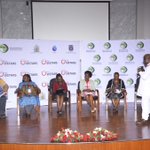
An awe-inspiring week learning from trail blazing women leaders in Engineering & Mathematics. Prof Mumenya, the 1st ever female Dean, Faculty of Engineering, UoN championed that given a supportive environment, girls excelled with 4 out 5 top honors in Engineering awarded to girls


The #IamAPHRC SISTARS Project (Transforming Institutions to Advance Women Leaders in Science, Technology, Engineering, and Mathematics) team is today disseminating findings from Ghana and Kenya.
Key findings from the study show that the facilitators and barriers to the progression of women leadership in STEM are;
✅ Sociocultural factors – work-life balance and demanding caregiving responsibilities
✅ Institutional factors – Gaps in the existence and implementation of policies and guidelines that support women's progression in the STEM sector
✅ Knowledge factors – Limited awareness of existing policies and guidelines on women in STEM leadership
This event provides a valuable platform for reflecting on the findings, sharing insights, and deliberating on a way forward.
The project is a transdisciplinary collaborative action research in Ghana and Kenya that seeks to promote women leaders in STEM institutions through understanding the nuances that inhibit their progress to leadership positions and co-designing and testing solutions with selected case study institutions.
#WeAreAfrica #APHRCResearch
@uonbi @UnivofGh @IDRC_CRDI @wiwas_kenya @kabariac @chumo_ivy @BlessingMberu @ndonyesarah @calecheru @judy_esthe27988 @CliffordSimiyu @DMdiarafa @amveyange @CKyobutungi

Lake Victoria North WWDA @LVNWWDA , a case study institution reported impact of sensitization & training of Board of Directors supported by SISTARS. CPA Wesley Kiprono, Head of Corporate Services, reported increased resources allocation to support gender equity activities


