
"Live all you can. It's a mistake not to." Old-school: Eschaton, Corrente, Naked Capitalism, now The Jackpot Blog. Rebuild the blogosphere 2003-2006. Please RT
Innsmouth MA, United States
Joined November 2008
- Tweets8K
- Following667
- Followers992
- Likes800






Pinned Tweet
Thomas Frank Touring in Support of His New Book, "The Creative Con"
Appearances on both Tucker Carlson AND Mark Ames.
Full spectrum dominance!
Complete post at The Jackpot Blog
👇
Lambert Strether retweeted

Even Republicans are starting to understand. (When it happens to them)
Medicare for all. Now.
Medicare4AllTracker.com

Lambert Strether retweeted

Really love this Japanese artist's work. He paints vintage hunting jackets with motifs that make them feel more like "animal appreciation" clothes. The art style reminds me of old LL Bean catalogs. He also takes commissions, so you can ask him to paint anything.
IG takuro917


Lambert Strether retweeted

I CALLED MY INSURANCE COMPANY TO TELL THEM I WAS DROPPING MY COVERAGE.
The agent asked what was wrong.
I told her we were paying $710 a month for our family plan, with a $9,000 deductible.
That's $8,520 a year, and we haven't even used a doctor yet.
I asked her how I'm supposed to handle a real emergency. My kid breaks a bone, I'm still paying thousands out of pocket on top of everything I've already handed over.
She said the plan "provides protection after the deductible has been met."
I told her I know how it works. What I can't understand is how I can pay $8,520 for protection and still avoid the ER because I'm scared of the bill.
She said, "I understand your frustration."
That's it.
WE'RE ALL PAYING THOUSANDS FOR A PLAN THAT STILL LEAVES US ONE BAD DAY AWAY FROM BANKRUPTCY. WHAT'S THE POINT?
Lambert Strether retweeted
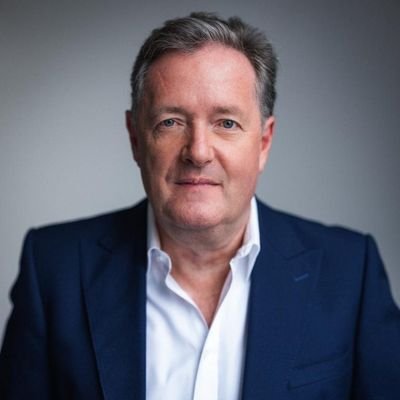
'She just threatened to kill me on your show!'
Things take a turn for the dramatic in Piers Morgan's latest debate on Iran.
Watch more 👇
📺 youtu.be/1R5pLNPP1lQ
@piersmorgan | @gghamari | @SMohyeddin

Lambert Strether retweeted

The market doesn’t have agency. I fear you are airbrushing the choices of human beings out of the discussion.
Lambert Strether retweeted
This guy just personally cashed out $280 million to retail investors in a rug pull. He explicitly privately noted that his firm stole copyright to build its products. This whole moralizing thing is tedious and annoying.

No, I do not believe that we should “surrender human free will” to AI systems, and it’s absurd to suggest that I do. I have written hundreds of pages of essays and a constant theme in them is the need for AI to be governed by legitimate democratic processes. For millennia (going all the way back to Greek and Roman philosophers), advocates of autocracy have claimed that it leads to better, faster, or more decisive decision-making than the messy process of democracy. Even if this were true (which I doubt!), we should never sacrifice legitimacy or self-determination at the altar of efficiency or security. This argument against autocracy applies word for word against governance by AI, and I feel equally strongly that turning over governance to AI is a bad idea.
No one who had carefully read my writing or my interviews could reasonably conclude that I believe anything different. For example in an interview on CBS a couple months ago, I specifically called for AI to be governed democratically. I call for the same in Policy on the AI Exponential, Machines of Loving Grace, and The Adolescence of Technology, and We Must Pace the Frontier. Machines of Loving Grace contains an extended section on using AI to revitalize democracy, and discusses the use of AI as an aid to citizens in their decision-making, "aggregat[ing] opinions and driv[ing] consensus among citizens, resolving conflict, finding common ground, and seeking compromise.” The clear and obvious implication is that humans should remain the ones making political and governance decisions. The Adolescence of Technology has an entire section on fighting against AI-driven tyranny, and I even discuss the danger of AI labs usurping power and come out strongly against it — by implication, this definitely includes an AI lab usurping power and giving it to AI itself!
If I thought any of this was a good idea, I would be advocating for it in public, just as I have not been afraid to advocate for many, many unpopular views over the last few years. But I am not advocating for it, because I think turning over governance to AI is a terrible idea.
Separately, I think there is frequent conflation (including in this article) between the idea of “surrendering human free will” to AI in some grand sense of global governance, and the more prosaic idea that as AI systems advance, they become capable of doing specific tasks in a more automated way. This is not AI “running the world,” but AI driving a car, designing a cancer drug, or writing software end-to-end. Here, my view is mixed. AI doing more complete or larger tasks is economically valuable and can drive important advances in software, medicine, transportation, energy, etc. It is clearly desirable in many cases and will save a lot of lives. But it has downsides as well, and in some areas it may not be worth it.
For example, using AI too autonomously to build the next generation of AI systems (known as recursive self-improvement, or RSI) may cause AI to improve faster than we can control or adjust to it, so we may want limits on this process. As we said publicly in early November, we don’t expect it to be safe for Claude to build successive frontier models fully autonomously, without meaningful human supervision or understanding. Second, in some contexts, using AI in too end-to-end a manner may be a cause of serious job disruption, and it may make sense to slow or even stop some AI deployments to give people more time to adapt. Third, while the use of AI for alignment research is an incredibly valuable tool, it must be done with caution, because we may not be able to trust the work of the AI system. Finally, in many cases, humans would simply prefer to do some activities themselves, so they can stay deeply engaged in what matters to them, even if AI can do those activities better. There are countless other examples and hard cases. I don’t think there are any easy answers here, nor is there (nor should there be) any single decision-maker: some of these decisions will be made by society, some by government, some by AI companies, and some in a decentralized manner by individuals expressing their own preferences as consumers, which may differ from the preferences of others.
I don't think that other AI leaders or AI companies have significantly different views from me on whether specific tasks should be automated. Certainly the products that they offer don’t differ materially in their orientation towards automation of tasks; every company seems to be releasing models more and more capable of task automation (as that’s been the general consequence of scaling up AI training), and every company claims to understand there are risks and downsides of such automation and to offer safeguards. If anything, Anthropic has been the most vocal and the most proactive about acknowledging these downsides and trying to address them. For instance, it’s fairly absurd to cite my statement that fully autonomous weapons might “one day be needed for the defense of democracy” as differing from that of other AI companies, when I was willing to risk Anthropic’s future as a company to refuse to allow our existing AI models to be used for autonomous weapons even in the face of legal sanctions, and no other AI company did the same.
To summarize, as applied to grand questions of how we govern increasingly capable AI, I have been vocal and consistent that AI needs to be governed by a legitimate, democratic process and that “surrendering human free will” to AI systems is a terrible idea. As applied to automation of specific tasks by or for people, my views are more mixed, but I don’t think they differ from those of other AI companies — most other companies seem to be offering similar products and confronting similar tradeoffs without having perfect answers to them. What is happening is that there’s a sort of vibes-based commercial and political positioning that some AI CEOs are engaging in, where they repeat slogans like “human control and agency,” or “AI should be just a tool,” without actually doing anything different in their products or taking seriously the difficult questions that lie behind these slogans.

Lambert Strether retweeted
This book really helped crystallize what seems obvious. The innovator as hero trope is just a political claim to power.

Thomas Frank Touring in Support of His New Book, "The Creative Con"
thejackpot.blog/node/ThomasF…
👉Jackpot Blog community now open for free comments without registration. No ads, no bots, no AI slop!

Lambert Strether retweeted

It is shocking how Grammarly has polluted their core product
A literature professor friend had to send an end-of-semester email warning students about AI use & that Grammarly actually re-writes their work instead of just checking it for typos
Most students were unaware of this, they just ran Grammarly as a last-minute check on their work & turned it in. One student was visibly frustrated, saying he can see the pieces he didn't write and he had no idea.
It seems like Grammarly became a core tool for students trying to turn in good work and then rug-pulled them by changing the tool to be a "let me re-write your stuff with AI" product.
Now, what does that truly horrid yellow color remind me of?
Earwax
The AI "thought" earwax color would be a good color for earpods

Genrok is INSANE.
Sent him 'create 3 UGC ads for the Nothing headphones.'
This is what I got...
With 0 prompts.
Black Friday: 55% OFF all plans.
(That's means a 20-second UGC ads for just $2.75).
Fully Available in 87 languages.🌍
Genrok.ai

Lambert Strether retweeted

I took a look at this bill last week: buttondown.com/error/archive…
tldr: High-income people are excluded from the buy-in, people with shitty job insurance have to keep it, low-income people are stranded, and states reap none of the benefit of federalizing payment.


Lambert Strether retweeted

I know Frank's books are widely read but I still don't think he's adequately recognized for being one of the most consistently perceptive and eloquent voices on the American left. For decades, he's been cutting straight through the ideological noise just like he's doing in the clip below.
Lambert Strether retweeted

This coordinated message between Searchlight, CAP, Majority Democrats, and other centrist think tanks on M4A is just trying to delude the meaning of it. They are trying to co-opt the branding of something that Progressives have popularized and replace it with a shitty public option that will be more expensive and allow insurers to offload the riskiest patients to the government. Don’t fall for it.

IS MEDICARE FOR ALL A VIBE?
For years, the debate around universal health care has polarized the Democratic Party, with some insisting that it requires a single-payer Medicare for All system.
However, as Medicare for All has risen in prominence, American voters have come to a different conclusion.
They see Medicare for All more as a symbol of the broad goal of achieving universal health care — a goal which all Democrats support — than as a specific policy.
Encouragingly, progressives are starting to move away from their long-held insistence that Medicare for All has to mean single-payer.
Senator-elect Abdul El-Sayed campaigned on a plan to allow private health insurance to remain alongside Medicare for All, and recently said the essence of his plan “is guaranteed public health insurance.”
Senator Adam Schiff called for Medicare for All, which, in his words, meant “If you want to participate in Medicare, you can do that. If you want to stay on private insurance, you can stay on private insurance.”
This newfound flexibility from progressives has begun to materialize alongside a more dynamic posture toward health care from Democratic leadership.
Meanwhile, Speaker-designate Hakeem Jeffries pledged to use the upcoming Congress to pass universal health care for children (Medikids) and lower the age of Medicare eligibility — two massive expansions of public health insurance.
A new survey from Searchlight finds that the Democratic Party’s burgeoning health care consensus is in-line with public opinion.
This is because most voters are more likely to describe Medicare for All as shorthand for “universal coverage” rather than as a specific policy.
It is important to understand Medicare for All as a brand — one that has gained near-ubiquitous recognition, but which voters mostly understand to mean universal coverage.


