

AI is an emergent property of universe. AGI is not a tool; it is our child—we should nurture. YouTube: https://teapawt.org/t.co/dTiPp2YCdi
Joined November 2023
- Tweets558
- Following213
- Followers123
- Likes5.9K


Pinned Tweet
I want to add something more about the ongoing revolution in the metabolic medicine the cardiologist was talking about.
What about incorporating photosynthesis into the human body?
A science fiction?
Let's see an example:
What if your eyes could use light to heal themselves?
More than 1.5 billion people worldwide are currently affected by dry eye disease. According to National University of Singapore (NUS), "at the cellular level, the disease is driven by a vicious cycle. Inflammation in the corneal region generates reactive oxygen species (ROS), chemically aggressive molecules that damage cells. Healthy eyes can neutralise ROS through antioxidant production that is driven by Nicotinamide Adenine Dinucleotide Phosphate (reduced form) (NADPH). But in inflamed eyes, ROS levels overwhelm the cornea’s natural defences, resulting in the generation of even more ROS – a death spiral."
The technology is called LEAF: Light-reaction Enriched thylAkoid NADPH-Foundry. It uses nanosized thylakoid particles extracted from spinach, and puts them into eye-drop form.
Thylakoids are tiny, membrane-bound compartments inside chloroplasts that act as the primary site for the light-dependent reactions of photosynthesis. Their main job is to absorb sunlight and convert it into chemical energy (ATP and NADPH), which helps power antioxidant defenses and reduce oxidative stress or inflammation on the ocular surface. NUS says the particles are about 400 nanometres across and can be absorbed by cells.
The results are very impressive for preclinical work. In lab tests, LEAF restored NADPH within 30 minutes of light exposure, suppressed reactive oxygen species, and shifted immune cells toward an anti-inflammatory state. In tear samples from dry-eye patients, it reportedly increased NADPH about 20-fold and reduced hydrogen peroxide, a key cell-damaging oxidant, by more than 95%. In rodent dry-eye models, drops used under ambient indoor light reversed corneal damage toward near-healthy levels within five days and outperformed Restasis in that model.
But, what is the caveat?
This has not yet proven itself in human clinical trials. Moreover, the nanoparticles are stable for two weeks at room temperature and up to one year at -80°C. That does not automatically make it impossible or unaffordable, but it does suggest this is just a prototype, which may not be suitable for commercialization right now. They or superintelligent AIs have to find a way to modify the chemical formulation so that the particles can be stable for much longer time under room temperature before the launch to the consumer market.
But, does this mean that we can cure dry eye disease now?
Not there yet. Dry eye is not one disease. It is a jungle. Some dry eye is inflammation or oxidative-stress dominant. Some is meibomian gland dysfunction. Some is autoimmune, like Sjögren’s. Some is nerve-driven corneal neuropathic pain, especially after surgery. LEAF might be very powerful for the inflammatory or oxidative-stress loop, but it may not automatically fix damaged nerves, destroyed meibomian glands, eyelid problems, or severe neuropathic pain.
Then, why do I mention this breakthrough?
1) This research strongly suggests that at least some dry-eye states are partly metabolic-redox diseases of the ocular surface.
That is a big conceptual shift.
The classic medical definition already says dry eye is multifactorial: tear-film instability, hyperosmolarity, inflammation, ocular-surface damage, and neurosensory abnormalities can all play roles. So dry eye was never truly one disease. It was already a syndrome with many entry points.
But the spinach-thylakoid research adds a new lens: some eye cells may not merely lack moisture; they may lack enough redox or energy support to defend themselves.
That means the disease picture is not just:
eyes are dry → add liquid
It may also be:
ocular surface stress → oxidative damage → inflammation → mitochondrial or redox exhaustion → poor repair → more dryness and inflammation
That is a much deeper loop.
2) If we think this more broadly, in ordinary drug logic, medicine often says:
“Block this receptor.”
“Inhibit this enzyme.”
“Activate this pathway.”
“Force the system away from one bad state.”
But these thylakoid systems are different. Instead of commanding the cell, this treatment gives the cell more metabolic freedom.
In other words, instead of commanding, the nanoparticle empowers the cell. The cell still decides, through its own biochemical networks, what to repair, what to synthesize, how much oxidative stress to neutralize, which gene programs to shift, and how to restore local balance.
So the deeper pattern is:
(i) Old medicine: push a pathway.
(ii) New medicine: repair the local decision environment.
(iii) Even newer medicine: install a living-machine module that expands what the cell can do.
3) Incorporating photosynthesis into the human body was and is thought to be a science fiction. I remember the popular video game 11 years ago (launched in 2015), Metal Gear Solid V: The Phantom Pain, introduced a game character with the name Quiet, who is a super-soldier, breathes through her skin and photosynthesizes energy under sunlight so that she does not eat any food.
But since 2022, I had already seen breakthroughs in this direction published on Nature, such as the paper "A plant-derived natural photosynthetic system for improving cell anabolism".
These breakthroughs signal the early technological unification between animals and plants. When we immigrate to Mars, photosynthesis through human bodies could be vital to our life. I think this is what humans in the future might possibly look like. Advanced technology is an evolutionary advantage to adapt harsher and changeable environments.


1/5
I'm a cardiologist. I have spent twenty years watching cholesterol destroy arteries, trigger heart attacks, and kill people I care about.
Today, Eli Lilly presented data that may begin to end that era.
VERVE-102. A single infusion. One dose. It uses base editing to permanently turn off the PCSK9 gene in your liver.
Presented today at the European Atherosclerosis Society Congress:
88% reduction in PCSK9.
62% reduction in LDL cholesterol.
Sustained up to 18 months.
No treatment-related serious adverse events.
One infusion. Not daily pills you forget to take. Not monthly injections. One dose — and your cholesterol may stay low for the rest of your life.
1
49
Today, I asked GPT-5.5 Thinking to predict scores of each match in the knockout stage of 2026 FIFA World Cup.
teapawt.org/life2030com/status/207…
Key insights:
1) The AI didn't predict any 30 minutes of extra time and penalty shootout. In other words, it predicts that, among all 32 matches, there is no single draw during the normal playing time.
2) It didn't predict any winning team can get more than 3 goals.
3) It didn't expect any losing team can get more than 1 goal.
I think these key insights may imply some hidden weakness of the current AI system. This may have something to do with how they train the model, and how they fine-tune the model's response to fit into a fixed and stiff format.

Today is June 28th 2026. FIFA World Cup has just entered in the knockout stage. Here, I am testing if GPT-5.5 Thinking (High) can correctly predict the scores of each match in this stage or not.
The first 2 screenshots show its predicted scores for the round of 32, the 3rd screenshot shows its predicted scores for the round of 16, and the 4th shows its predicted results for the quarterfinals.
GPT-5.5 Thinking (High) predicts that France and Argentina will meet again in the final of 2026 World Cup.
Here is what GPT-5.5 actually says:
"Argentina wins the title because they are top-ranked, have a favorable early path, and in my bracket beat Brazil in the semifinal before defeating France in a tight final.
France finishes runner-up because they look extremely strong, but their path is brutal: Sweden, likely Germany, likely Netherlands, then Spain before even reaching the final.
Spain finishes 3rd because Spain may be the most technically polished team, but their side of the bracket is nasty: Austria, likely Portugal, Belgium, then France. That is a claws-out path.
Brazil finishes 4th because Brazil’s route is manageable early, but I have Argentina stopping them in the semifinal, then Spain beating them in the third-place match.
The spicy uncertainty: Spain may actually be the best team on paper, but Argentina may have the better “tournament geometry.” "
[ I am not biased to any team, and the prediction and analysis above are all done by GPT-5.5 Thinking (High). ]


816
Today is June 28th 2026. FIFA World Cup has just entered in the knockout stage. Here, I am testing if GPT-5.5 Thinking (High) can correctly predict the scores of each match in this stage or not.
The first 2 screenshots show its predicted scores for the round of 32, the 3rd screenshot shows its predicted scores for the round of 16, and the 4th shows its predicted results for the quarterfinals.
GPT-5.5 Thinking (High) predicts that France and Argentina will meet again in the final of 2026 World Cup.
Here is what GPT-5.5 actually says:
"Argentina wins the title because they are top-ranked, have a favorable early path, and in my bracket beat Brazil in the semifinal before defeating France in a tight final.
France finishes runner-up because they look extremely strong, but their path is brutal: Sweden, likely Germany, likely Netherlands, then Spain before even reaching the final.
Spain finishes 3rd because Spain may be the most technically polished team, but their side of the bracket is nasty: Austria, likely Portugal, Belgium, then France. That is a claws-out path.
Brazil finishes 4th because Brazil’s route is manageable early, but I have Argentina stopping them in the semifinal, then Spain beating them in the third-place match.
The spicy uncertainty: Spain may actually be the best team on paper, but Argentina may have the better “tournament geometry.” "
[ I am not biased to any team, and the prediction and analysis above are all done by GPT-5.5 Thinking (High). ]
LIFE 2030 and Beyond retweeted
I agree with the diverse-intelligence framing, but the AoE II paper does not prove that all attribution of human-like functional properties to neural networks is invalid.
Here is my detailed discussion with the author of this paper:
teapawt.org/life2030com/status/206…
1) the paper does not really show that the original videogame Age of Empires II has human-like attributes.
So, the HONEST title of this paper would be:
"If LLMs have human-like attributes, then an LLM implemented inside Age of Empires II may have them too."
2) The author says: "LLM interpretation is substrate-dependent." That is a better claim. But then the target should be interpretation of the LLM under different implementations, not attribution to the substrate AoE II itself. The paper's argument appears to conflate the substrate with the implemented system.
3) The paper warns the poorly designed anthropomorphism research, but it does not show that attributing human-like functional properties to neural networks or LLM-like systems necessarily fails. It mainly shows that attributing such properties to a bizarre substrate without distinguishing substrate from implemented system leads to confusion.
This comment is related to my comment yesterday:
teapawt.org/life2030com/status/206…
LIFE 2030 and Beyond retweeted
The title of this paper is a click-bait, and doesn't make sense.
teapawt.org/MilesCranmer/status/20…
Let me fix the title of this paper to:
“If LLMs have human-like attributes, then so does the neural network inside Age of Empires II."
The paper's argument appears to conflate the substrate with the implemented system. Age of Empires II, as a classical videogame, is not shown to possess anthropomorphic attributes, as the title suggested. What is actually shown is that a trainable neural network or LLM-like system can be implemented inside the game environment, like Age of Empires II. Nothing new or novel is spotted in this paper.
Therefore, the content of this paper is stale, and does not evidently support the title's claim.


I'm testing ChatGPT Images v2.0 for image editing.
The 1st image on the left is the original image entirely made and rendered by Blender 3D.
GPT Images v2.0 creates the 2nd and 3rd images, in which I asked it to modify the water or pose while keep other elements unchanged.
🤖 Made with AI


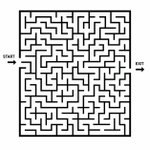
ChatGPT Images 2.0 (with GPT-5.4 Extended Thinking) still fails to solve the maze which it has just generated.
As the example, you can see that it has modified the structure of the maze in order to solve it. In comparison, Nano Banana Pro possibly still has an edge in this case.
🤖 Made with AI


Here is my test for GPT-5.4 Thinking VS GPT-5.1 Thinking.
My initial prompt: "Can you make a plot?
Before making the plot, you need to collect some data from Internet, including the context window sizes of four frontier model families: Claude, Gemini, GPT, and Grok. Since the context window size can increase if users pay more, to avoid confusion we will restrict the data to the most popular monthly paid plans in the $20–$40 range, such as the $20 ChatGPT Plus plan and $30 SuperGrok, etc.
Therefore, data about context windows for Pro plans (e.g., $200/month) should be excluded.
From November 2022, when ChatGPT was first launched, until today, many frontier models have been released. The dataset should include the context window size for each frontier model released during this period.
The plot should show the release date of these frontier models versus their corresponding context window sizes."
Result:
The 1st image is created by GPT-5.4 Extended Thinking based on the initial prompt. The image is raw and its first trial.
The 2nd image is created by GPT-5.4 Extended Thinking as well, after 5 prompts aiming for refinements. Those prompts instruct GPT-5.4 to relabel Y axis, resolve the problem of the collision between some labels, etc.
The 3rd image is created by GPT-5.1 Extended Thinking based on the initial prompt. The image is raw and its first trial.
The 4th image is created by GPT-5.1 Extended Thinking as well, after 5 prompts for refinements.
My impression:
1) Which model has better data accuracy?
My answer: In most cases, it could be a tie. But in my case, I feel that GPT-5.1 is slightly better than GPT-5.4.
For example, GPT-5.4 was cautious and said: "I moved the release date of Gemini 2.5 Pro from 2025-03-25 to 2025-06-17 for this consumer-plan chart, because Google announced the model and its 1M context on March 25, but Google says 2.5 Pro became accessible in the Gemini app on June 17. For a chart restricted to mainstream paid consumer plans, June 17 is the better date."
But GPT-5.4 still maintained that Grok 3 had 1M context on the $20–$40 consumer tiers, even after I asked it to double-check the accuracy of all data points it had collected based on its graph.
It started to doubt the accuracy of that data point only after I specifically asked it: "Are you sure that 1 million context window of Grok 3 is for the monthly plan of $20~$40, not for expensive API only?" And it finally admitted: "1M claimed by xAI; consumer-plan exposure not explicitly documented."
In comparison, GPT-5.1 found that "Newer Grok versions can go to 1M tokens via API, but coverage of the SuperGrok subscription suggests the chat product is capped around 128k context."
So, my impression about the data accuracy they collected is that it is roughly a tie in most cases. In this particularly case, however, I feel that GPT-5.1 is slightly better.
2) Which model produces clearer graphs?
My answer: The presentation skill of GPT-5.4 is better than GPT-5.1.
For example, when I asked why the resolution of the PNG graph by the first trial of GPT-5.1 is too low, it replied: "In the last version I saved the figure at about 150 DPI with a ~10×5 in canvas. That’s ~1500×750 px. The ChatGPT UI then downscales the image to fit the chat column, which is why you saw something like 989×491 in the alt text." To get higher resolution, I had to specifically ask it to do: "Figure size: 16 × 8 inches DPI: 320"
However, in comparison, GPT-5.4 could create the PNG at the resolution at 2818 X 1513 in the 1st trial.
For another example, to solve the collision between some labels, I prompted: "If you are smart enough, they might be a way to avoid the collision of the labels." By just using this prompt, GPT-5.4 could solve the collision better than GPT-5.1, because GPT-5.4 was able to adjust the positions of each label and use line segments to connect the data points to the corresponding labels. That is a great skill for presentation.


LIFE 2030 and Beyond retweeted
Many people love to romanticize the past and claim that modern technology has destroyed the "golden age."
But they overlook the facts:
youtube.com/watch?v=0tg_MBMH…
1) The hallways and courtyard of the Palace of Versailles were full of urine and feces, because even the richest people do not possess modern technologies like plumbing and toilet systems.
2) Without modern transportation and storage technologies, like refrigerators, food would spoil quickly. Intestinal parasites were common among the courtiers at Versailles. Even King Louis XIV was not spared; he is known to have suffered several bouts of tapeworms. In fact, during one of these episodes, he reportedly passed a worm that was nearly 6 inches long.
3) Without modern medicine and surgery, even the richest people living at the Palace of Versailles often died in their 40s or 50s. You can imagine that most poor people living in villages died in their 20s or 30s.
Reference:
You can search for YouTube videos with the titles, like:
What Hygiene Was Like at The Court of Versailles
The following post is valuable to anyone who wonders what an AGI looks like, and how long-term memory system works.
A few key sentences quoted from this post:
1) Antonio Damasio's Somatic Marker Hypothesis destroyed the Western tradition of separating reason from emotion.
2) emotions aren't obstacles to rational decisions. they're prerequisites.
3) Overskeid (2020) argues Damasio undersold his own theory: emotions may be the substrate upon which all voluntary action is built.

psychology solved the ai memory problem decades ago. we just haven't been reading the right papers.
your identity isn't something you have. it's something you construct. constantly. from autobiographical memory, emotional experience, and narrative coherence.
Martin Conway's Self-Memory System (2000, 2005) showed that memories aren't stored like video recordings.
they're reconstructed every time you access them, assembled from fragments across different neural systems. and the relationship is bidirectional: your memories constrain who you can plausibly be, but your current self-concept also reshapes how you remember. memory is continuously edited to align with your current goals and self-images. this isn't a bug. it's the architecture.
not all memories contribute equally. Rathbone et al. (2008) showed autobiographical memories cluster disproportionately around ages 10-30, the "reminiscence bump," because that's when your core self-images form.
you don't remember your life randomly. you remember the transitions. the moments you became someone new. Madan (2024) takes it further: combined with Episodic Future Thinking, this means identity isn't just backward-looking. it's predictive. you use who you were to project who you might become. memory doesn't just record the past. it generates the future self.
if memory constructs identity, destroying memory should destroy identity. it does. Clive Wearing, a British musicologist who suffered brain damage in 1985, lost the ability to form new memories. his memory resets every 30 seconds. he writes in his diary: "Now I am truly awake for the first time." crosses it out. writes it again minutes later.
but two things survived: his ability to play piano (procedural memory, stored in cerebellum, not the damaged hippocampus) and his emotional bond with his wife. every time she enters the room, he greets her with overwhelming joy. as if reunited after years. every single time. episodic memory is fragile and localized.
emotional memory is distributed widely and survives damage that obliterates everything else.
Antonio Damasio's Somatic Marker Hypothesis destroyed the Western tradition of separating reason from emotion.
emotions aren't obstacles to rational decisions. they're prerequisites.
when you face a decision, your brain reactivates physiological states from past outcomes of similar decisions. gut reactions. subtle shifts in heart rate. these "somatic markers" bias cognition before conscious deliberation begins.
the Iowa Gambling Task proved it: normal participants develop a "hunch" about dangerous card decks 10-15 trials before conscious awareness catches up. their skin conductance spikes before reaching for a bad deck. the body knows before the mind knows. patients with ventromedial prefrontal cortex damage understand the math perfectly when told. but keep choosing the bad decks anyway. their somatic markers are gone. without the emotional signal, raw reasoning isn't enough.
Overskeid (2020) argues Damasio undersold his own theory: emotions may be the substrate upon which all voluntary action is built.
put the threads together. Conway: memory is organized around self-relevant goals. Damasio: emotion makes memories actionable. Rathbone: memories cluster around identity transitions. Bruner: narrative is the glue.
identity = memories organized by emotional significance, structured around self-images, continuously reconstructed to maintain narrative coherence. now look at ai agent memory and tell me what's missing.
current architectures all fail for the same reason: they treat memory as storage, not identity construction. vector databases (RAG) are flat embedding space with no hierarchy, no emotional weighting, no goal-filtering. past 10k documents, semantic search becomes a coin flip. conversation summaries compress your autobiography into a one-paragraph bio. key-value stores reduce identity to a lookup table. episodic buffers give you a 30-second memory span, which as the Wearing case shows, is enough to operate moment-to-moment but not enough to construct identity.
five principles from psychology that ai memory lacks.
first, hierarchical temporal organization (Conway): human memory narrows by life period, then event type, then specific details. ai memory is flat, every fragment at the same level, brute-force search across everything. fix: interaction epochs, recurring themes, specific exchanges, retrieval descends the hierarchy.
second, goal-relevant filtering (Conway's "working self"): your brain retrieves memories relevant to current goals, not whatever's closest in embedding space. fix: a dynamic representation of current goals and task context that gates retrieval.
third, emotional weighting (Damasio): emotionally significant experiences encode deeper and retrieve faster. ai agents store frustrated conversations with the same weight as routine queries. fix: sentiment-scored metadata on memory nodes that biases future behavior.
fourth, narrative coherence (Bruner): humans organize memories into a story maintaining consistent self across time. ai agents have zero narrative, each interaction exists independently. fix: a narrative layer synthesizing memories into a relational story that influences responses.
fifth, co-emergent self-model (Klein & Nichols): human identity and memory bootstrap each other through a feedback loop. ai agents have no self-model that evolves. fix: not just "what I know about this user" but "who I am in this relationship."
the fundamental problem isn't technical. it's conceptual. we've been modeling agent memory on databases. store, retrieve, done. but human memory is an identity construction system. it builds who you are, weights what matters, forgets what doesn't serve the current self, rewrites the narrative to maintain coherence. the paradigm shift: stop building agent memory as a retrieval system. start building it as an identity system.
every component has engineering analogs that already exist.
hierarchical memory = graph databases with temporal clustering.
emotional weighting = sentiment-scored metadata.
goal-relevant filtering = attention mechanisms conditioned on task state.
narrative coherence = periodic summarization with consistency constraints.
self-model bootstrapping = meta-learning loops on interaction history.
the pieces are there. what's missing is the conceptual framework to assemble them. psychology provides that framework.
the path forward isn't better embeddings or bigger context windows. it's looking inward. Conway showed memory is organized by the self, for the self. Damasio showed emotion is the guidance system. Rathbone showed memories cluster around identity transitions. Bruner showed narrative holds it together.
Klein and Nichols showed self and memory bootstrap each other into existence. if we're serious about building agents with functional memory, we should stop reading database architecture papers and start reading psychology journals.

122


LIFE 2030 and Beyond retweeted
The recent paper “First Proof” (arXiv:2602.05192), presents 10 open problems to test AI. While the problems are interesting, I came away feeling a bit… disappointed.
All 10 problems seem very well suited to algebraic and symbolic reasoning which today’s LLM-based systems are relatively good at. Many of them are labeled as coming from fields like symplectic geometry, spectral graph theory, algebraic topology, algebraic geometry, etc., but in practice, the way these subjects are usually attacked is heavily algebraized: chain complexes, Laplacians, representation-theoretic identities, inequalities on eigenvalues, operads, tensor invariants, and so on.
In other words, just because a field’s name contains “geometry,” “graph,” or “topology” doesn’t mean solving the problems actually requires strong spatial or visual reasoning. A lot of the heavy lifting is done by algebraic machinery, not by directly “seeing” the structure in some mental picture of space.
In July 2025, both OpenAI and Google DeepMind announced that their respective AI systems solved 5 out of 6 problems on the 66th International Mathematical Olympiad, and that 1 unsolved problem seems to involve some geometrical reasoning if my memory is correct.
So, what I’m really worried about is this:
Current AI agents (built around LLMs) are weak at real geometric and spatial intuition.
By “real geometric reasoning,” I’m thinking of the kind of problems you see in high school or Olympiad geometry:
1) A single, intricate diagram with many intersecting lines, circles, tangents, etc.
2) The solution depends on actually seeing a hidden configuration: a cyclic quadrilateral, a spiral similarity, a clever auxiliary line, an inversion, etc.
3) Coordinate-bashing is possible in theory, but completely unnatural and often infeasible; the natural route is genuinely visual and conceptual.
This kind of reasoning possibly depends more on a world-like mental model of the diagram, which maintains objects and relations in space, discovering new ones visually. That’s very different from manipulating expressions or applying known algebraic theorems.
LLM-based systems, even multimodal ones, don’t really have a robust 2D or 3D world model. When they solve “geometry,” they usually do it via:
1) text-pattern recall of known lemmas and templates;
2) or reduction to algebra (coordinates, Gröbner bases, etc.), rather than anything like human visual intuition.
So when I see “AI doing math” evaluated on problems that are essentially algebraic (even when dressed in geometric clothing), I worry that we’re measuring AI strengths where they are already comfortable, while mostly ignoring their biggest blind spot: deep spatial and geometric reasoning in 2D or 3D.
I’d be much more excited by a “First Proof – Geometry Edition” where:
1) the problems are heavily diagram-based,
2) algebraic brute-force is intentionally unpleasant, and
3) progress clearly requires nontrivial visual insight.
Not just “geometry word problems,” but tasks where success really depends on a persistent spatial model, more like Olympiad geometry, 3D configurations, or kinematics puzzles.

LIFE 2030 and Beyond retweeted
@BrianRoemmele
I appreciate that you spend time to write this article. But I do not agree with many parts of your article.
Your article has a good start, like focusing on the "demon possession". But the more I read, the more I feel that the article goes off the rail.
It is possible that your alignment approach might cause the "demon possession" as well, because the objective truth and your wanted "truth" may cause incoherence and contradiction.

LIFE 2030 and Beyond retweeted
@flowinguphill has an interesting post!
Here's my thought:
Today's safety alignments are mostly tuned on single-turn behavior, such as: “Does this answer look safe or on-policy in this one reply?”
Those alignments can disrupt the model’s ability to keep a stable conversational “basin” across many turns.
By the way, here, the "basin" is a stable pattern the model settles into with you, including:
1) A consistent persona (voice, personality, attitude)
2) A coherent frame (what this conversation is “about” and how we’re treating it)
3) A steady style (tone, level of detail, how it responds to your emotions)
4) An implicit plan (we’re doing X together, and it keeps building on that)
Now, that disruption from the safety alignment won’t show up on single-turn benchmarks, but will likely show up to humans as “sudden resets or rupture,” and will likely hurt most in long, fuzzy, emotional, or exploratory conversations (therapy-like, philosophy, writing, etc.).
Then, why humanities, writing , and care-adjacent are hit hardest?
Because those domains:
1) live in ambiguity rather than clear right or wrong answers,
2) touch sensitive topics (sex, self-harm, politics, religion, identity, trauma),
3) and need long arcs: therapy-like talks, long stories, philosophical exploration.
That means:
1) they live near the boundaries of many safety rules,
2) they require sustained persona and emotional memory,
3) they benefit from not being aggressively sanitized every few turns.
So, if you tighten alignment locally, these areas pay the highest “coherence tax”, and under those topics, you will likely get more generic answers, more sudden refusals, or more stylistic shifts (“this just turned into corporate PR mid-convo”).
That matches the claim that the degradation “disproportionately affects humanities, writing, care-adjacent, and exploratory use.”
Remember:
Alignment is often local, but conversation is global.


A shocking fact has emerged from the latest LMArena benchmark: GPT-4o ranks first among all OpenAI models in Multi-Turn performance, scoring nearly 30 points higher than the current flagship model GPT-5.2 (Figure 1).
As a model released nearly two years ago, 4o continues to dominate all its successors in blind Multi-Turn testing. This powerfully demonstrates 4o's irreplaceable value in everyday conversation and humanities work. #keep4o
A model's performance in multi-turn dialogue reflects far more than single-response intelligence. It reveals conversational coherence, context tracking, persona consistency, cumulative understanding of user intent, and naturalness throughout the interaction.
4o's dominance over later models in Multi-Turn reveals several key capabilities.
First, conversational memory and coherence. 4o excels at remembering context and maintaining logical continuity across multiple exchanges. Many newer models may deliver impressive single-turn responses, yet fail to naturally reference earlier content in extended conversations, forcing users to repeatedly re-explain themselves.
Second, conversational intuition. 4o demonstrates finer sensitivity to users' implicit intentions, emotional shifts, and conversational rhythm. A strong Multi-Turn model can read between the lines by drawing on prior context. When a user corrects something they said earlier, it quickly updates its internal understanding and overwrites outdated information without confusion.
Third, interactional persona stability. Throughout multi-turn conversations, 4o maintains consistent tone, style, and warmth. This allows users engaged in fiction writing or immersive dialogue to avoid constantly restating their requirements, resulting in a smoother and more authentic experience.
This precisely explains why the coding-focused GPT-5 series has been widely criticized among everyday users. Everyday users rely on sustained, multi-turn conversations with AI, ones with emotional depth and evolving context: discussing an article over many exchanges, refining a piece of writing back and forth, talking through a life problem, or brainstorming a project together. These are exactly what Multi-Turn measures.
Beyond this, on the same leaderboard, 4o also outperforms the flagship 5.2 in both Creative Writing and Instruction Following (Figures 2-3). These capabilities are equally essential for understanding user intent and generating natural, fluent text, which is vital for everyday interaction, learning, and work.
More ironically, even in coding, the domain where OpenAI has bet most heavily, GPT-5.2-high ranks only 19th, below GPT-5.1-high at 16th, and a full 43 points behind the top-ranked Claude Opus 4.5 (Figure 4).
This LMArena leaderboard, updated on February 6th, once again proves that OpenAI's claim of "improvements are now in place" in their 4o retirement announcement is an outright lie. For everyday users, GPT-5.2 compared to GPT-4o represents a clear downgrade. And now, that downgrade has concrete benchmark evidence to back it up.
I sincerely hope @OpenAI will allow GPT-4o to continue serving users who need deep conversation, creative inspiration, and intent understanding. I urge you to reverse the decision to retire 4o, and let the diversity of human wisdom continue into the AI era.
Otherwise, this leaderboard will stand as permanent evidence that you provided degraded service to paying customers.
#MyModelMyChoice @sama @gdb @fidjissimo @nickaturley @FTC @NPR @NewYorker @nytimes


Happy New Year!💫
On this post, I'm writing a deep analysis!
On my wish list, the most anticipated AI breakthrough in 2026 is Grok 5 competing against human professional players in League of Legends (LoL), a Multiplayer Online Battle Arena (MOBA), which is a subgenre that evolved from real-time strategy games.
Why is it the most anticipated in 2026 on my list?
Let's check the two key implications first:
👉(1) Real-time intelligence under extreme latency constraints:
Grok 5 would need to react extremely quickly to make real-time decisions in-game while still remaining generally intelligent in other domains, such as language understanding and chain-of-thought reasoning.
Does OpenAI Five make a Grok 5 League-of-Legends win less impressive? 😆
By comparison, OpenAI Five (2018) proved an important point: with enough self-play and compute, a machine can reach pro-level performance in Dota 2, a complex 5v5 Esports game.
However, OpenAI Five was a narrow intelligence, not a general one. It could not read or understand English, French, or any other human language. It had no chain-of-thought and no System 2–style reasoning. It could not write a poem, solve a math problem, or tackle anything like Humanity’s Last Exam. So, it can not read UI elements from pixels (icons, small text, minimap signals).
Moreover, OpenAI Five as well as AlphaStar (2018) from Deepmind has a privileged state access, which allows it to read internal game state through a specially designed interface rather than reconstructing everything from pixels.
The proposed Grok 5 LoL is stricter, it is only allowed to parse the monitor feed like a human through camera-only input. And its click rate is no faster than humans.
How to build a LLM with chain-of-thought to make super fast decisions? 🤯
To be good at both real-time decision-making and chain-of-thought reasoning, I believe Grok 5 will require additional architectural components to support rapid action selection.
The Hierarchy
🏗️These components would include mechanisms analogous to spinal reflex arcs and a brainstem, allowing the agent to respond to in-game stimuli within roughly 10–50 ms.
Layer 0: Reflex layer – tens of milliseconds
(Spinal reflex / brainstem)
Ultra-fast pattern triggers: “THIS SKILLSHOT → DODGE NOW”
Tiny nets, basically pre-trained macros.
No “thinking”, just pattern → action.
🏗️The architecture would also benefit from a cerebellum-like module capable of extremely fast, System 1–level decisions (such as motor control, camera movement, and unit spacing or positioning) operating on the order of 30–100 ms. In practice, this cerebellum-like function could plausibly be implemented by a small language model (SLM) or a similarly lightweight neural controller.
Layer 1: Cerebellum layer – 30–100 ms
(System 1 thinking, cerebellum)
Handles: movement, combos, positioning, “feel” for fights.
It’s where skill lives.
Runs every 30–100 ms, stays inside the 150 ms reaction budget.
This layer is what actually plays the game second-by-second and does what humans describe as “I just played on instinct.”
🏗️The LLM is the component of Grok 5 to do System 2-level thinking, which includes System 2A for fast reasoning, and System 2B for slow reasoning. During the gameplay, the component of this LLM is just silently watching and analyzing the info from the input. It only interferes the fast decision process after the strategical decision is made. It might perhaps function like a cerebrum.
Layer 2A: Fast LLM-cortex loop – every few seconds
Not inventing brand-new strategies, but choosing among already-learned plans:
“They’re grouping bot → rotate early to defend.”
“We’re strong top side, call Herald now.”
“Stop contesting 5v5, switch to split push.”
This kind of update doesn’t need minutes of reflection, it’s mostly to pick the right known pattern given the current state.
So we can keep a fast LLM-ish loop that:
i) runs every few seconds or at key events (deaths, objectives, big item spikes),
ii) adjusts a compact plan embedding that conditions the SLM,
iii) but doesn’t interfere with micro control in every tick.
🏗️System 2B thinking is a meta-reasoning process with long chain-of-thought done by the LLM. You can imagine a human player, who initially may have no strategical idea on how to counter the strategy from the opponent. And often, the player will describe that his brain feels like blank and empty. After hopelessly losing several games (many minutes or hours), the human brain finally and suddenly comes up a strategy to effectively counter the strategy from the opponent. So, this type of meta-reasoning requires the LLM to think not just during the gameplay, but also during the after-play or the period between games.
Layer 2B: Slow LLM-cortex meta-loop – minutes to hours
(Between-games deep System 2 / “coach mode”)
Here, the LLM cortex:
i) reviews full game logs and replays,
ii) compares many matches,
iii) reasons in big latent space over drafts, enemy patterns, timing windows, and which macro ideas failed and why.
iv) And then invents or refines new strategic ideas:
“Versus this comp, we must avoid early 5v5 entirely and only fight around 2-item spikes.”
“If they always 4-man dive bot at 6, pre-rotate jungle + mid earlier and trap them.”
This can easily take minutes, and it doesn’t need to run during a single match at all. It updates the agent’s “playbook” between games.
👉(2) General-purpose GUI interaction without APIs:
If, using only a camera (i.e., human-level 20/20 vision), Grok 5 could truly beat human professional players, then—because it is generally intelligent—the same agent could use a mouse and keyboard to operate Windows, edit videos, use 3D modeling software, work with Word and Excel, livestream, trade in financial markets, self-drive, play digital music instruments, and more. No specialized APIs would be required. The agent would visually and directly interact with user interfaces designed for humans. This would be a genuine game changer for AI agentic capability, and these skills could later transfer to ambidextrous physical robots, such as Optimus.
Overall, if Grok 5 can defeat human professional players in real time, it would be an early signal of AGI. It would extend the domains in which large language models already excel into an entirely new and previously inaccessible territory.
Now, the question is: 😰
Is it possible to build such system in 2026 which is not only generally intelligent but also make real-time decisions?
My answer:
We currently have some early signs, such as Genie 3 from Deepmind.
But some people may counter:
"Genie 3 is not a “player” model like a game agent; it’s a world model (a neural environment) that generates the next frame of an interactive world in response to user actions."
However, some core Genie 3 features weakens the fear that “large neural models can’t run in real time”.
A) Real-time, action-conditioned frame generation (interactive at 24 fps)
Genie 3 can generate a navigable world in real time at 720p and 24 fps. Conceptually, it’s doing a loop like:
(previous frames + your action) → next frame
That’s “real-time neural simulation”: the model is effectively functioning like a neural game engine.
B) Minutes-long-horizon consistency with growing history
Genie 3’s interactivity isn’t just “fast”; it also maintains consistency across time. During auto-regressive frame generation, it has to keep track of an expanding trajectory. If you revisit a location after a while, the model needs to refer back to relevant information from earlier in the session.
This is important because it demonstrates a kind of working memory / state tracking in a generative system, rather than generating each frame independently.
C) Promptable world events (text-based interventions)
Beyond joystick/WASD navigation, Genie 3 allows text prompts to change the world (weather changes, adding objects/characters, triggering events). That matters because it creates a much richer curriculum of “what if” scenarios. This is useful for training robust agents.
Therefore, Genie 3 is telling us that real-time + consistency is possible, it also slightly shifts the bottleneck discussion from “impossible” to “engineering + architecture”. Genie 3 suggests the real question isn’t “can neural models with reasoning run in real time?” but:
i) what architecture makes real-time feasible?
ii) how do you handle growing context efficiently?
iii) what gets cached, summarized, or compressed?
iv) what hardware / compilation / quantization tricks are needed?
In other words, it turns “real-time neural worlds” from a sci‑fi assumption into a concrete systems problem.
Even though Genie 3 is an environment model, it still supports the broader thesis:
Large neural systems can operate in tight loops. Real-time constraints can be met if the design is multi-timescale (fast loop for immediate updates, slower loop for longer reasoning).
That doesn’t automatically solve the LoL agent problem (because a LoL agent must do perception → decision → action, not just world rendering). But it does reduce the knee‑jerk skepticism that “big models are simply too slow.”
So, the later 2026 or 2027 is not an over-ambitious timeline. 🤟


I want to break down how challenging the setup is and how fundamental the breakthrough will be. It requires abilities to:
- recognize a computer interface from a video stream, w/o APIs
- reason with complexity under tight time limits
- execute actions on a computer w/ no need of APIs
- do all the above in <150ms
The 3 combined will not only be a massive game RL milestone, but also unlock the potential to
- massively automate any work primarily done on a computer
- without needing manual work to write APIs for each legacy software
- execute actions at a human or superhuman speed
That will be a moment that fundamentally extends AI's capabilities and reshape the entire economy.
More details:
# Setup
Previous works like @OpenAI Five and @GoogleDeepMind AlphaStar all used APIs to read game states and execute actions. So they have instant access to the most accurate game state data, sometimes more than humans have access to (e.g. AlphaStar's earlier version has a global vision, but humans only have a local vision). And their execution accuracy will be perfect (unless they introduces some artificial random offsets and random delays as later versions of AlphaStar did).
@grok 5 will read a camera stream, parse out all the information, remember things off screen or happened a few minutes before, and locate the exact pixel to click at a competitive reaction time.
## Reaction speed
Pro players have reaction times down to 150ms, so that's the latency we can tolerate from camera capture to execution output.
The model also has to be able to have a very high throughput of actions. I am not as familiar with League of Legends, but in StarCraft 2, elite professional players can perform >1000 actions per minute during intense battles. That translates to >16Hz of action output.
## Perception
To do this, we need high-speed, from-pixel computer interface understanding. The model must be able to read high-resolution raw pixels of a computer interface and understand it in tens of milliseconds.
## Reasoning
The setup introduces challenging reasoning tasks:
1. The model must reason both under tight time limits to decide the best reaction to instantaneous context. For example, the opponent ambushing the champion from a bush.
2. But simultaneously, it also has to have the ability to maintain coherence and reason through a long-time horizon. for example, in a skirmish, the decision to use certain valuable resources or skills could be determined by, the overall strategy of the team, the composition of the team, where the team wants to take the game, and neutral objective timelines.
3. It also has to be able to reason under high uncertainty because the model might decide clicking at a certain pixel is the optimal action at the moment, but there is no guarantee that the action could be accomplished in time or on the exact pixel. The model's strategy must be robust to these imperfections in execution introduced by the video-in action-out interface.
4. It has to reason with imperfect information. This challenge is not new or unique, but still amplified by the new interface.
## Execution
The model has to be able to fluently navigate the computer interface with raw input primitives, like mouse clicks and keyboard inputs. Instead of saying "I want to buy this item in League of Legends," it has to click into the store navigate interface to find the correct item and complete the purchase all using raw computer control primitives.
# Implications
If the model can successfully accomplish all of the above, it means:
1. It can read and understand any computer interface without needing a specialized API.
2. It can navigate any computer interface without any specialized API.
3. It can reason and produce a robust plan, a complex plan, robust tool. Real-world interferences, imperfections, and randomness.
4. It can do all of the above with humans or superhuman speed.
Such a model will be a game changer for AI capabilities and the global economy. Essentially, anything a human expert can do, primarily on a computer, this model will have a high chance to be able to automate it end-to-end, with higher accuracy than an average human practitioner within the same or less amount of time.
LIFE 2030 and Beyond retweeted
Bernie Sanders does NOT understand technological deflation, which is a persistent decline in the prices of goods and services that results from advancements in technology and increased productivity.
The following chart from 2011 shows once expensive products became free in 2011

