
L Long retweeted

I'm invested in $IBRX, not NantWorks. As a retail shareholder, these losses now threaten my financial security. We don't need more grand visions or PR stories. We need management to explain the Q3 miss and deliver hard numbers, clear timelines and accountability. @DrPatrick 🔥🐎
Read the Stand with Jensen letter and consider adding your name. #standwithjensen #bringjensenback standwithjensen.com/

14
L Long retweeted
We're thrilled to share a major milestone: the first patients in Europe have been treated with ANKTIVA® + BCG for BCG-unresponsive NMIBC with CIS, beginning in Germany & Austria, following the EC's February 2026 conditional authorization.
With support from partners Accord Healthcare and Uniphar, we're working to expand access for eligible patients across Europe.
Full press release & Important Safety Information: immunitybio.com/immunitybio-…

L Long retweeted
We are pleased to announce that the U.S. Food and Drug Administration (@FDA) has expanded the indication for ANKTIVA® (nogapendekin alfa inbakicept‑pmln) + BCG to include patients with BCG‑unresponsive non‑muscle‑invasive bladder cancer (NMIBC) with papillary‑only tumors.
This milestone makes ANKTIVA + BCG the first FDA‑approved therapy for both CIS and papillary‑only disease in the BCG‑unresponsive NMIBC setting. Because papillary tumors represent approximately 85 % of NMIBC diagnoses, this approval significantly broadens access to a bladder‑sparing option for patients who face high risk of recurrence and progression.
Read more: immunitybio.com/fda-expands-…

L Long retweeted

Will discuss status of these trials at my fireside chat next week

$IBRX $28 billion a year. That was one drug, in one country, doing a single job: rebuilding the immune system that cancer treatment and sepsis burn to the ground. And that was the small version. Today, the whole thing.
That drug is ANKTIVA, made by ImmunityBio, and the $28 billion was America alone, built a few weeks ago out in the open, one line of arithmetic at a time. This is post three of four, the series where we put real numbers on what this company could become, from the smallest market on earth to the wildest scenario anyone has floated. And this is the big one.
Last February the company put a three-year plan on the record and almost everyone forgot it: more than thirty trials, nine different cancers, gone after one at a time, worldwide.
$28 billion was one country and just two of its doors. Today we count the whole board: every cancer in the plan, across the entire planet, in a single pass. Watch what that does.
WHERE WE ARE IN THE SERIES
Keep the map in front of you, because the whole point of four posts is that each one is bigger than the last. Post one sized the Gulf, the smallest market, and the two immune doors - both of them the same immune collapse, called lymphopenia, one door in cancer patients whose chemo and radiation cause it, the other in sepsis - came back worth a few hundred million to a couple of billion. Post two sized America, the biggest drug market on earth, and those same two doors came back near twenty-eight billion.
This third post, the one you are reading now, is the zoom all the way out: every door in the three-year plan, counted for the whole world in a single pass. And the fourth, still to come, is the finale, and it goes all the way: forget revenue entirely - could a drug that rebuilds the immune system turn its maker into the Nvidia of biotech?
That one is for next time. For now, back to this post. We stick to the company's three-year plan and count all of it for the whole world at once: the nine cancers, the two immune doors we already sized - lymphopenia and sepsis - and whatever else the plan holds.
THE GROUND RULES
Before a single number, the same deal as last time, because it is the only reason any of this is worth reading. This is still the careful, fact-checked version. The real price a drug is paid after discounts, not the big headline number. A modest slice of patients, not all of them. The survival benefit still treated as a signal, not a settled fact.
And the ground truth under every number below: in America, only one of these nine cancer doors is approved today, bladder, and even there just one narrow form of it, so eight of the nine have no US approval at all. The Gulf has pushed further than the FDA - the UAE and Saudi Arabia have also approved lung, and the UAE a second form of bladder - but that is the whole of it, and nothing anywhere on earth is approved for the two immune doors, lymphopenia or sepsis.
On the things we can hold down, we hold them all the way down, exactly as we did in America. The two dials we release are named, and only two: the single country becomes the world, and the two doors become the whole plan. Both of those are just arithmetic we already did in miniature.
What stays a bet, out in daylight so you can turn it down yourself, is the same pair from last time, plus one this post is built on:
- A survival drug spreads fast
- It keeps its price
- And the new one: the trials behind the eight unapproved doors actually win
We are not inflating anything. We are widening the lens on the exact same careful math, so that when the number gets large, you know exactly how it got there. If it feels like it should be bigger, hold that thought. You are right, and the last post, the one coming next, is where the ceiling lives.
THE BOARD HE SHOWED YOU IN FEBRUARY
Remember where this plan came from, because it is not ours and it is not new. Back in February, in a detailed press release, ImmunityBio laid the whole thing out: more than thirty active and planned trials across what it calls ten tumor types, gone after one at a time.
We size the nine cancers the release names: bladder, lung, glioblastoma, pancreatic, liver, colorectal, triple-negative breast, non-Hodgkin lymphoma and ovarian. Sepsis the company runs as a separate program, so we count it as its own door. And running underneath all of them is the immune collapse this drug is built to reverse, which is lymphopenia.
So the board has three kinds of square on it: nine cancers hit head-on, the immune-repair layer under every one of them, and sepsis off to the side. The last post sized one of those squares in one country. This post counts the whole board, for the whole world.
THE ENGINE: HOW KEYTRUDA REALLY GOT BIG
Here is the piece the last post was missing, and it is the straight answer to a question we raised ourselves. Last time we showed one immune door climb fast to about fifteen billion dollars and then stop, and we told you plainly why it stops: one door has no engine behind it.
Keytruda, the best-selling drug in the world, did not reach thirty billion by selling harder into one cancer. It got there by stacking roughly forty approved uses across about twenty cancers, one door opening after another, each new one lifting the pile while the old ones matured. That stacking is the engine. And this post is the engine, because the nine cancers are exactly that pile of doors, each one its own market, each one opening on its own clock.
IS A WORLD NUMBER EVEN REAL?
So the tempting move, the moment you go global, is to multiply the whole thing at once and print something enormous. The nine doors hold about two million patients a year.
But no drug ever reaches every patient who could use it - a doctor has to choose it, an insurer has to pay for it, and it takes years to spread - so only a fraction of them ever actually get it. Call that fraction the share. Say the share is one in five, the kind of level a well-established drug can reach, and it is two million patients, times America's full list price of 322,000 dollars, times one in five, which comes to about 130 billion dollars a year.
A number that big is not a real market, it is make-believe. No set of health systems on earth writes a check like that for one drug, and nobody outside America pays the full American price. So we throw it out, the same way we threw out the 39 billion in the last post, and for the same two reasons: the price is wrong, and the reach is wrong. Fix both and the number that is left is one you can actually defend. Here is how we build it.
COUNT THE DOORS
Count them the way we count everything, one simple sum per door: how many patients a year that cancer puts on the table across the whole world, times a tenth of them actually reached, times a real price of about 120,000 dollars, the blended net actually paid across the wealthy world after discounts: lower than what a survival drug like Keytruda is estimated to collect in America, higher than what Europe and the Gulf pay.
One note before the list, because it governs every line of it: the patient counts are the whole world's, but that 120,000-dollar price only holds in the wealthy countries where the drug is approved, so read the tenth we reach as mostly those places, America, Europe and the Gulf. The poorer world is real numbers of patients at a far lower price, and we add it in by name further down rather than pretend one price fits the planet.
And the patient pool in each line is itself a sum: the whole world's cases of that cancer, times the slice of them in the late, advanced stage the trial is actually aimed at. So here is every door with the full math, the world's cases times that slice to get the patients, then those patients times a tenth reached times the 120,000-dollar price:
1. Lung, after the checkpoint drugs stop working: 2,480,000 cases a year worldwide x 17% in that late stage = about 420,000 patients; then x 10% reached x $120,000 = about $5.0 billion
2. Colorectal, the common kind that does not respond to immunotherapy, later line: 1,930,000 x 20% = about 385,000 patients; x 10% x $120,000 = about $4.6 billion
3. Liver, advanced: 866,000 x 40% = about 346,000 patients; x 10% x $120,000 = about $4.2 billion
4. Pancreatic, advanced: 511,000 x 50% = about 256,000 patients; x 10% x $120,000 = about $3.1 billion
5. Non-Hodgkin lymphoma, relapsed: 553,000 x 30% = about 166,000 patients; x 10% x $120,000 = about $2.0 billion
6. Glioblastoma, the deadliest brain cancer: about 150,000 cases a year worldwide, nearly all of them in that late stage = about 150,000 patients; x 10% x $120,000 = about $1.8 billion
7. Ovarian, platinum-resistant: 325,000 x 40% = about 130,000 patients; x 10% x $120,000 = about $1.6 billion.
8. Triple-negative breast, advanced or high-risk: 2,300,000 breast cases x 12% triple-negative x about 55% advanced or high-risk = about 150,000 patients; x 10% x $120,000 = about $1.8 billion
9. Bladder, the only one approved in the US today: 615,000 x 15% (the high-risk early form it treats) = about 92,000 patients; x 10% x $120,000 = about $1.1 billion
Add the nine and you are looking at roughly two million patients a year, and at a tenth of them reached, about twenty-five billion dollars a year from direct cancer treatment alone. Turn that single dial from a tenth to a fifth, the kind of share a drug reaches once it is established, and it is about fifty billion, but treat that fifty as the ceiling of this dial, not a clean doubling, because reaching a fifth of the world means either filling up the wealthy markets or pushing into the poorer ones where the price falls, and both pull the real figure back toward the twenty-five.
And say the rest clearly, because it is the whole point of this section: eight of those nine doors have no US approval. They are still in trials or on paper. This is the size of the board if the trials win, not a promise that they do.
One door is real today. The other eight are the bet.
NOW WATCH THE BOARD FILL IN
The final, full-size number is not how this arrives, any more than it was in America. It arrives as a climb, and the climb here has a shape the last post could not show, because this time the growth is doors opening, not one door deepening.
So read the clock the same careful way: each door starts counting from the day it is approved, not from today, and the approvals have not happened and may never. What follows is the shape of the stack filling in, not a dated promise.
- At the start, one door is open: bladder, the only approval that exists, ramping toward its billion as it reaches its patients
- In the first years, the lead engine opens, lung, the furthest along of the new doors, and the immune-repair layer switches on beneath it. A few doors, early in their own climbs: the first several billion a year
- Around the middle of the decade, with perhaps half the board open and the lead doors nearing a tenth of their patients, the pile is already in the low tens of billions
- Out near ten years, the whole board mature, every cancer door open and the immune repair folded in, the cancer side of the plan lands at its full size, which we will size in a moment
That is the engine running: not one curve bending toward a ceiling, but door after door opening and stacking, the exact mechanism that carried Keytruda from one cancer to thirty billion dollars.
It is also why this is slower than it is dramatic. Brand-new spending like this is the hardest kind for a health system to take on, so the money arrives in stages, a fresh slice of budget at a time, no matter how badly the patients want it.
NOW STACK THE IMMUNE LAYER, BUT DO NOT DOUBLE-COUNT
Under all nine of those cancers runs the immune door we already sized: lymphopenia, the collapse of the body's standing army that chemo and radiation cause. In America alone that door matured near fifteen billion dollars. Open it across the rest of the approved world and the pattern is simple to name, so that nobody disappears the way they did before.
- America is the single biggest slice, near fifteen billion
- Europe adds eight to ten billion. The drug already holds a conditional approval there, but for bladder cancer only, not the immune doors; the number of patients is close to America's, but the real prices paid run lower
- The rest of the wealthy world, with the Gulf where ImmunityBio already sells, adds perhaps five to eight billion more
- The entire poorer world, from Brazil to Russia to India to China to Africa, adds a lot of patients but very little money, because there the price has to collapse to a funder level, paid by an outside health fund, before anyone can be treated at all.
That is the honest shape of it. The fifty to ninety billion is the rich, approved, paying world. The rest of the planet is where most of the world's patients actually live, the two biggest countries on earth, China and India, among them. But it is not approved, it cannot pay Western prices, and counting it would mean guessing at a huge number we cannot stand behind.
So we bank none of it. If prices or funding ever rise out there, that is upside on top of the number, not inside it.
But here is the discipline that keeps the math clean, and it is the easiest number in the whole series to get wrong. A lung patient we just counted in the cancer layer is often the very same lung patient whose immune count we would repair in the immune layer. One patient is one patient.
So we do not stack those two layers on top of each other and pretend they are different people. We count each patient once. The cancer layer and the cancer side of the immune layer are two names for treating mostly the same people, paid for out of one budget, and we count that group a single time.
What the immune layer genuinely adds on top is the patients the nine doors miss: the other cancers on chemo and radiation that are not on our board at all. That slice is real, and it is new, and it is the only part of the immune layer we let add to the total.
THE ONE DOOR THAT IS GENUINELY SEPARATE
Sepsis is the exception, because septic patients are a different population from cancer patients, so this door stacks cleanly on top without any double-counting. It is also, exactly as in the last post, the widest and least certain dial we hold.
No drug has ever been proven to reverse the immune collapse of sepsis; its trial has barely started, the earliest-stage of any door on this board; and sepsis is the graveyard where one promising drug after another has died. Soon-Shiong makes the bullish case that it could move fast, and with a need this vast and immediate it might. But because nothing has ever worked here before, we size it with the most caution of all: the number of sepsis patients worldwide is far larger than cancer, yet that failure history and the long road to approval hold back what anyone can realistically reach, so we assume it opens years behind the cancer doors and climbs the slowest.
As for the number: in America alone, last time, this door came to about thirteen billion dollars, roughly 850,000 Americans a year who go septic and lose their immune defences, times a quarter of them reached, times about 60,000 dollars a course, half the cancer price. The rest of the approved world, Europe and the other wealthy countries and the Gulf, sees at least as much sepsis again, though it pays less per patient, so it adds more on top; and the poorer world, where most sepsis on earth actually happens, piles on patients but almost no money, because there the price collapses.
Add it up and hold the band wide, because this is the least certain door of all: somewhere around twenty to thirty-five billion dollars for the whole approved world once it is fully grown, and it is the first to turn down if you doubt it.
THE WHOLE BOARD
So put the board together, with the overlap netted out.
Start with the nine cancers treated directly: twenty-five billion dollars at a tenth of their patients, up to fifty at a fifth. Then the immune-repair layer, lymphopenia, which we just sized at around thirty billion across the world. But almost all of those are the very same patients, the lung and colorectal and liver cases we already counted in the direct layer, so we cannot add that thirty billion on top. We count each patient once.
What is left over, the only genuinely new money, is the immune repair in the cancers that are not among our nine, a smaller slice worth perhaps five billion. Add that to the direct layer, twenty-five to fifty plus about five, and the cancer universe lands somewhere around thirty to fifty-five billion dollars a year once it is fully grown.
Sepsis, genuinely separate, adds another twenty to thirty-five. Together, the whole plan is roughly fifty to ninety billion dollars a year, if the trials win and the approvals come, across the whole approved world.
Read that range the right way: fifty is where it realistically lands if the doors open to about a tenth of their patients, and ninety is the top, the figure you reach only if nearly every door wins and holds its price.
The floor is the expectation. The ceiling is the dream.
That is the number the last post was a corner of. It is the scale of a Keytruda and more, reached the way Keytruda actually reached it, by stacking door after door.
And it is built at a tenth of the patients, the real discounted prices, and eight of nine cancer doors still unproven. The entire poorer world is left out of the count, China and India among it, its billions sitting on top of this number, not inside it. Every dial still turned down, except the two we told you we were releasing.
That is what fifty to ninety billion looks like with the brakes still on.
WHO DOES IT TAKE THE MONEY FROM?
The first question about a number this big is always who it takes the money from, and across the whole world the answer is still the one from America: almost nobody, because it replaces almost nothing.
Chemotherapy and radiation are used exactly as they are today; ANKTIVA is the layer that repairs the immune damage they cause, not a substitute for them. There is no lymphopenia drug to replace, and even in the nine cancers it works mostly after the checkpoint drugs stop, alongside them, not in their place. So this is new spending, in a category that does not yet exist, the way immunotherapy grew the whole cancer market instead of splitting up the old one.
That one fact cuts both ways, and both matter: it is why the prize takes from no one and the ceiling is so high, and it is why the climb takes a decade instead of a jump, because brand-new spending is the hardest kind for a system to find room for.
THE SQUARE WE LEFT BLANK ON PURPOSE
There is one more square on this board, and we are deliberately not putting a number on it, because it is too early and because it would swallow everything else if we did. Every number above is about treating cancer once it exists.
The plan has an arm aimed at stopping cancer before it ever forms, in people whose genes almost guarantee it. This is the cancer-prevention vaccine you may have seen Soon-Shiong talking about: a vaccine that trains the immune system to recognise and clear the very first cancer cells, with ANKTIVA added to keep that immune army switched on. The first test is in Lynch syndrome, an inherited defect that carries a fifty to eighty percent lifetime cancer risk, in a trial run by the National Cancer Institute that is due to read out around next year.
If treating cancer is a large market, preventing it is a far larger one, because the customer is not the sick, it is everyone at risk. We flag it so you know the board has a square we left intentionally blank. We are not going to pretend to size a market that does not exist yet.
NONE OF IT IS SIGNED
Say the hard part plainly, the same way we have every time. Nothing here is approved for lymphopenia or for sepsis anywhere on earth, and eight of the nine cancers have no US approval either. Every figure above is the size of a prize that opens only if and when the trials win and the regulators agree, and when you read a share of patients, the clock on it starts at an approval that has not happened and may never.
- The patient counts are real and sourced
- The price is a number we chose and labeled
- The share is a dial, and it is in your hand
- The survival benefit is a real but unproven signal, not a fact
- The receipts, every figure and its source, are in the reply below
None of this is advice.
THE NUMBER, AND HOW WRONG IT COULD BE
So here is the whole board, for the whole world, in one line: a plan that, if its trials win and its doors open the way Keytruda's did, climbs over about a decade toward fifty to ninety billion dollars a year, at the real discounted prices, a tenth to a fifth of the patients, the poorer world uncounted, eight of nine cancer doors still unproven. That would be the scale of the biggest drug franchises on earth, reached the careful way, one door at a time.
And could the real number land far from this? Of course it could, further than in any post before it, because this one stacks the most bets. Every input is a judgment that could prove too high or too low: how many patients each case really holds, how many doors actually win, how fast the world pays for new medicine, what an insurer really hands over once the discounts come off.
We built it as carefully as we know how and showed every step, because the point was never to hand you one number to trust. It was to hand you the dials. Believe the drug is stronger than we assumed, turn them up. Think we are dreaming, turn them down. The number moves with you, and we held every one of them below its ceiling the entire way.
WHAT COMES NEXT
$50-90 billion a year.
That is the whole board, for the whole world, and we held it inside the rules the entire way: real prices, real adoption, real medicine, the same careful math we ran in one country, widened to all of them. Still playing by the rules of what a drug is allowed to earn.
Which leaves exactly one question, the one almost nobody says out loud. What happens to a company if a drug like this does not play by those rules at all?
What if it does not just earn like a big drug, but breaks out the way Nvidia broke out in AI, and becomes the foundation the whole world builds its immunotherapy on? What is a company like that worth then?
That is the finale, coming next. We kept every number inside the rules today; next time we find out what is on the other side of them.
And the number, as you can probably guess, will be a little different from this one.
Stay tuned.

L Long retweeted
Best of wishes Michael and Congratulations .
There are millions of patients with cancer worldwide who are in complete remission. The next frontier is to develop therapies strengthening the immune system to prevent recurrence in these over 15 million patients in the USA alone, and drive long term durable freedom from cancer to win the war. Incremental short term duration of response should no longer be an acceptable outcome.
The therapies to address and maintain cancer free status are now here……..the orchestration of the immune system, the identification of tumor DNA in the peripheral blood, the easy measurement of the NK and T cell levels in the peripheral blood count, the sophistication of next gen PET/ MRI/ CT scans, the ability to grow and store activated NK cells, the ability to identify tumor educated T cells, the new knowledge of camelid derived heavy chain single domain antibodies and the ability to precisely target radioactive ligands, to precisely target CART and CarNK and CAR-iNKT cells. These immunotherapy advances are all here today and in various stages of clinical trials. The oncology community will enter this next generation of paradigm change. The need to establish these diagnostic and therapeutic combinations as IMMUNOTHERAPY 2.0 is both urgent and exhilarating.
This was the subject of my one hour talk with NIH and NCI and the decade of collaboration with Jeffrey Schlom and James Gulley to develop a cancer vaccine. Hope to release the talk once I receive the video recording and obtain clearance to make it public. We are closer than ever.

Caputo appointed to President’s Cancer Panel
“I’ve been blessed with colleagues who are interested in my cancer battle, and it’s not over. My cancer is gone, but Susie said it best: now I have to rebuild what treatment took from me.” - The Cancer Letter cancerletter.com/white-house…

L Long retweeted
This concern of low ALC is not new. Here is a paper over a decade ago - Treatment induced lymphopenia from radiation and chemo published by Johns Hopkins. The difference in mortality and progression is so clear.
pmc.ncbi.nlm.nih.gov/article…


L Long retweeted

Thank you to all my friends who prayed for me! I met with my UCLA Oncologist this afternoon and received the great news that there is no evidence of active cancer anywhere on my PET/CT Scan!
I’m thankful to God, thankful to my doctors and nurses and to my husband, my family and friends especially the ones giving me extra support, strength and their valuable time. From my whole heart I am grateful to that very compassionate Doctor, @DrPatrick and @cssifm staff for treating me with Anktiva! Thank you ALL! Celebrate! Cancer Free! ANKTIVA! Never Give Up!

Heading into UCLA this morning for a PET/CT Scan to check the status of the breast cancer, mets to the spine and hip. Please pray for a clear PET/CT with No Evidence of Disease! After the PET/CT I’ll be traveling to El Segundo to receive my 7th dose of Anktiva from the Chan Soon-Shiong Institute for Medicine.
@USNCG5Rick @LoriMills4CA42 @tteuscher @Brandon_r_clark @Natasha_Guess @JeffRoseTV @bullishbruk @shelbysaidthat @bellarice48 @theduffhoneybee @Kathryn83970251 @KirkA5990 @janewisdom34856 @renorn_amit @ethan_leffler @Mifsud50788845 @Avi8rLady @Saedogmom @CharlieChittim
@DrPatrick @RichAdcock

L Long retweeted

American patients shouldn't have to travel abroad to access treatments discovered here. American innovators shouldn't have to go elsewhere to test them. FDA's Expedited IND Pilot is part of the Trump Administration’s broader effort to make the U.S. the fastest, safest path from scientific discovery to clinical trial. fda.gov/news-events/fda-voic…

L Long retweeted

$IBRX
Merck/Moderna’s Phase 3 melanoma trial (mRNA vaccine + Keytruda) hit both primary endpoints this morning.
Net positive for the space — and for ANKTIVA.
It reinforces that checkpoint inhibitors work better when paired with therapies that actively arm the immune system. That’s ANKTIVA’s core design.
Moderna’s vaccine is personalized. ANKTIVA is off-the-shelf: rapidly activates NK and T cells without sequencing each tumor. Scalable. Complementary.
Vaccine finds the target.
ANKTIVA builds the army.
Keytruda releases the brakes.
Another validation of the combination era. ANKTIVA is built for it. @DrPatrick @LoriMills4CA42
L Long retweeted

Everybody, thank you from the bottom of our hearts for your prayers.
We just received our fifth normal brain scan.
Hey FDA: Unleash ANKTIVA and natural killer cell therapy nationwide. Patients are waiting.
MRI BRAIN WO/W CONTRAST 7/31/2026 7:57 PM CLINICAL INDICATION: Neoplasm of the temporal lobe on the right side COMPARISON: None.
TECHNICAL FACTORS: Sagittal T1, Axial DWI, Axial FLAIR, Axial T2, Axial SWI, Axial T1 MPRAGE Post, Sagittal MPR post, Coronal MPR post IMAGING MEDICATIONS: gadobutrol (GADAVIST) 10 mmol/10 mL (1 mmol/mL) injection 10 mL FINDINGS:
Lesion assessment: Prior right temporal craniotomy with residual right temporal convexity dural enhancement. The right temporal resection cavity is again noted.
There was no change in the appearance compared with the prior examination VENTRICULAR SYSTEM: Normal in size and morphology. EXTRAAXIAL SPACES/CORTICAL SULCI: Normal in size and morphology.
MIDLINE SHIFT: None
CEREBRAL PARENCHYMA: No acute infarct.
WHITE MATTER: Normal
HEMORRHAGE: Hemosiderin staining subjacent to craniotomy site.
POSTERIOR FOSSA: Normal
CONTRAST ENHANCEMENT: As above CALVARIUM/SKULL BASE/SCALP: As above VASCULAR SYSTEM: Normal
VISUALIZED PARANASAL SINUSES/MASTOID AIR CELLS: Normal VISUALIZED ORBITS: Normal VISUALIZED UPPER CERVICAL SPINE: Normal
SELLA AND SUPRASELLAR STRUCTURES: Normal
@bullishbruk @DrPatrick @US_FDA

Andrew and I are in Washington, D.C. today, where I had the honor of testifying before the FDA on behalf of cancer patients everywhere.
We’re fighting to bring #ANKTIVA and natural killer (NK) cell therapies into the spotlight, giving hope and new options to those who need them most.
Please watch the testimony. I hope it resonates with you.
Together, we’re pushing for real progress. @bullishbruk
@DrPatrick
L Long retweeted
Meaningful conversations about clinical trials and the future of bladder cancer happening at #BCANTT26. ImmunityBio is grateful to stand with @BladderCancerUS in their mission to support patients and caregivers every day. #BladderCancer

L Long retweeted
So excited that United Arab Emirates (UAE) Emirates Drug Establishment (EDE) @EDE_UAE took the lead to approve the broadest indication to date for both non-muscle invasive bladder cancer in patients who had failed BCG therapy and for metastatic non-small cell lung cancer in patients who failed chemotherapy and checkpoint inhibitors. The power of NK cells.
finance.yahoo.com/healthcare…

L Long retweeted
Join me in wishing @DrPatrick a Happy Birthday.
Tomorrow we celebrate more than a birthday.
We celebrate a man whose life’s work has been to restore what cancer tries to take away hope, strength, and the body’s own quiet power to heal.
Your vision for immune restoration has given countless patients and families a reason to keep fighting. The science you champion, the courage you show in the face of resistance, and the compassion that runs through everything you do have touched more lives than you will ever know.
May this new year of life in the auspicious Year of the Fire Horse bring you continued health, clarity of purpose, good fortune, and the deep satisfaction of seeing ANKTIVA and the broader work of ImmunityBio reach even more people who need it.
Thank you for everything you have given and continue to give to patients, to science, and to the future of medicine.
With profound respect and gratitude,
Wishing you a truly beautiful and lucky birthday! $IBRX @LoriMills4CA42
L Long retweeted
Heartbreaking.
The FDA needs to unleash #ANKTIVA and NK cell therapy! @SecKennedy ! What are you doing?
@US_FDA did I fly to DC to perform in front of you?
Save lives! @bullishbruk

Rest in peace, sweet Will. 💔
At 12:45 a.m. Central time, this brave 15-year-old Alabama boy entered the gates of Heaven after his courageous battle with cancer. Surrounded by family, he took his final breath and received complete healing.
One teenager who inspired millions and changed more lives than most ever will.
“Our story with Will didn’t end today. It simply changed chapters.”
We’ll miss you, Will. Fly high, angel. 🙏❤️
L Long retweeted
$IBRX @SecKennedy ANKTIVA is already here. It recharges patients’ own NK and T cells so their immune system can fight again.
After more than a decade of clinical development and multi-year follow-up, its safety profile remains favorable: 61% of patients had only mild (grade 1–2) side effects, just 3% had grade 3 events, and zero grade 4 or 5 treatment-related adverse events.
Meanwhile, chemo and radiation often deliver durable benefit in fewer than 5% of these hard-to-treat patients while depleting the one God-given defense we have — the immune system itself. Why are we still poisoning people when a therapy that restores that defense already exists?
@MAHA_Action should embrace it. Approve the remaining indications and give cancer patients the fighting chance they deserve. No more families left waiting. @LoriMills4CA42 @DrPatrick

Yes, @DrOzCMS. We will double down on our commitment to finding cures so no more families have to face this devastating disease.
My thoughts and prayers are with Will's family.
L Long retweeted

I am in @DrPatrick clinic and I am receiving #ANKTIVA. My PET scan from last week shows no sign of any metastasis, no growth of tumor size. And to top it all off, there is hardly any activity from the tumor. In other words… it’s dying!
I would not be alive right now had it not be for Dr Pat and #immunitybio
L Long retweeted

I totally agree with my friend @PeterDiamandis - it's DEEPLY unethical to deny or delay patients access to medicines that can save or dramatically improve their lives for bureaucratic or technical reasons.
Last week, I openly challenged former head of ophthalmology at FDA on this, frustrated that FDA has made it impossible to develop preventative treatments for intermediate macular degeneration (earlier form of AMD just BEFORE you are permanently blinded) by demanding treatments that dramatically improve vision before you've lost any vision.
Watch the video below. I argue that FDA's behavior has been akin to denying Stage 1 cancer patients a drug that works, forcing them to develop Stage 3 or 4 cancer so the clinical trial can demonstrate a larger potential benefit. This is backwards thinking.
The former FDA official defends his position by saying you can't create a preventative drug that doesn't work in 100% of people. WHAT? We give cholesterol and blood pressure medicines to tens of millions of people, many of whom will still get a heart attack or stroke (albeit often delayed), and many of whom will die of something else. Why take that CHOICE away from physicians and patients?
As long as I am alive, I am committed to bringing back COMMON SENSE & a patient-first approach to how drugs are regulated. The federal government is not the patient, nor it is the physician.
The FDA's role is clearly to be one important gatekeeper - to review clinical and other data to be sure there's a meaningful chance of efficacy outweighing safety risks and making those facts available to the public.
Once a drug is approved, there are THREE other layers of protection:
-Patients decide whether or not to take a drug
-Physicians decide whether or not to prescribe a drug
-Insurance companies decide whether or not to pay for a drug
I urge a move to this common sense approach that empowers the American PUBLIC to make informed decisions about their health as opposed to having very smart/committed & very well-meaning government officials limit our choices.
Our lives, our health, our vision, our ability to enjoy a high quality life depend on it.
Thank you @ArshadKhanani for moderating such an incredible panel & conference last weekend!

L Long retweeted
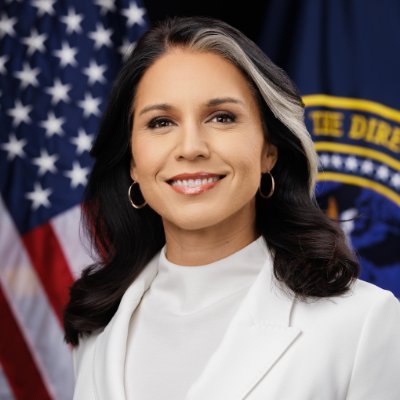
Today, I’m releasing never before seen intelligence revealing new evidence of past US government funding for more than 120 biolabs in over 30 countries, including Ukraine.
In support of President Trump‘s Executive Order to end federal funding of dangerous gain of function research around the world, and increase transparency and accountability, ODNI will continue working with partners across the Administration to identify where these labs are, what pathogens they contain, and what “research” is being conducted.
odni.gov/index.php/newsroom/…
$IBRX ANKTIVA (N-803) should be considered for inclusion iin the Commissioner’s National Priority Voucher pilot program, shifting the paradigm from tumor-specific targeting to a pan-tumor immune-reconstitution strategy. Please write a comment on stkt.co/G5KnZ4n3