


This room of the lavish former American Consulate in Fuzhou, China, has been redesigned as a Harry Potter themed backdrop for photoshoots. People in extravagant costumes come here to post on Xiaohongshu and the like.


Marco Pouget retweeted

Two Vietnamese Sisters Challenged an Empire. Sixty-Five Strongholds Fell.
“Some sixty-five strongholds were taken. She proclaimed herself ruler.”
A Chinese history recorded what happened when Trưng Trắc and her younger sister, Trưng Nhị, rose against Han rule.
In AD 40, the sisters launched their rebellion in what is now northern Vietnam. Communities across several commanderies joined them. Han officials struggled to hold their remaining positions.
Trưng Trắc became queen and ruled from Mê Linh.
The emperor prepared a campaign to retake the region. Roads and bridges were repaired, ships and carts assembled, and grain stockpiled. General Ma Yuan was sent south.
In AD 42, his army reached Lãng Bạc. The sisters’ forces fought but lost ground and withdrew toward Cấm Khê. Ma Yuan pursued them.
The resistance continued into AD 43. That year, the sisters died.
The Chinese Book of the Later Han says they were beheaded and their heads sent to Luoyang. Vietnamese tradition remembers them throwing themselves into a river.
Even after their defeat, resistance continued in other areas. Han forces pursued the remaining fighters, and hundreds of local leaders were deported.
Their rule had lasted roughly three years.
Nearly 2,000 years later, Vietnam still honors the sisters in temples, festivals and images of them riding elephants.
If an empire calls them rebels, does that make their fight for self-rule any less legitimate?


Marco Pouget retweeted
The Mongols Took Vietnam’s Capital. Trần Hưng Đạo Took Their Fleet.
The Yuan fleet was heading home through Vietnam’s Bạch Đằng River. Beneath the rising water, sharpened wooden stakes waited.
Trần Hưng Đạo had prepared the river for their arrival.
Kublai Khan’s forces had captured Thăng Long, now Hanoi, during their third invasion of Đại Việt. But the Trần rulers and their army had escaped, and a Yuan supply fleet had been destroyed near Vân Đồn.
The invaders held the capital. They could not feed their troops.
When they withdrew in 1288, Trần Hưng Đạo was ready. His men planted stakes in the tidal channels and concealed troops along the banks.
On April 9, Vietnamese boats engaged the retreating fleet, then drew it toward the trap.
As the tide fell, stakes and shallows restricted the Yuan ships. Vietnamese forces attacked from the river and shore. Fireboats struck the crowded fleet.
The route home became a killing ground.
Omar, the Yuan commander, was captured. Vietnam’s military encyclopedia records more than 400 enemy vessels seized. Kublai’s third invasion ended in defeat.
What stays with me is how Trần Hưng Đạo turned the invaders’ retreat into disaster, using the tides, the terrain and a carefully prepared ambush.
Looking at his victories, why do I keep thinking of Admiral Yi Sun-sin, the legendary naval commander of Korea’s Joseon dynasty?
What do you think of my view that Trần Hưng Đạo and Admiral Yi Sun-sin have much in common?


Marco Pouget retweeted

276 years apart.
China’s oldest tree — a 4,500-year-old cypress at Songyang Academy in Dengfeng, Henan — as painted by the Qing Emperor Qianlong, and as it stands today.
More than two millennia earlier, Emperor Wu of the Western Han Dynasty (206 BC-AD 24) granted it the title “Second Great General.”

Marco Pouget retweeted

Swirling clouds, mythical beasts, and flowing lines — ancient Chinese lacquerware brings the cosmos to life! ☁️🐉 At Nanjing Museum in Jiangsu province, exquisite Western Han (206 BC-AD 24) artifacts at the exhibition running through Nov 15 reveal how people lived, sought beauty, and imagined the afterlife, blending everyday craftsmanship with the mystical traditions of ancient Chu culture. 👇
brnw.ch/21x6Frk
#WhatsOn #NanjingMuseum #Lacquerware #ChuState #Craftsmanship #WesternHan #Afterlife


Marco Pouget retweeted

new book #newbook
Laughter, Humor, and Comedy in Middle Period China, 600-1300: A Critical Anthology. Edited by Alexei K. Ditter and Xiao Rao. Routledge, 2026.
e-version available for download:
routledge.com/Laughter-Humor…
#china #medieval #history #literature #humor #laughter


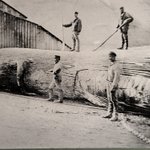
There would be so much more to say, but to summarise: Whaling in Iceland was dominated by foreign powers for a long time. And it also declined due to foreign pressure (esp. the US). And today, most Icelandic whale meat is sold to...foreign tourists.