Principal Engineer at @GetPostman. Previously @AkitaSoftware, @HashiCorp, co-founder @Tintri. Married to @marissalingen. He/him.🤓 @markgritter@mathstodon.xyz
- Tweets12.2K
- Following865
- Followers1.1K
- Likes43.8K








ALT Close view of hand holding large hailstone with concentric rings of transparency and opacity


ALT Today’s Thursday issue is a bit different than usual: we’ll share the story of a startup acquisition that had a happy outcome to showcase the viability of this exit path. At the center of the story is Jean Yang, who interned at Google, Microsoft Research, and Facebook as a software engineer. She got her Ph.D. at MIT and was a professor at Carnegie Mellon (CMU) before founding Akita Software. Earlier this week, I sat down with Jean to talk through her story of how her startup just got acquired by Postman. This news is hot off the press, publicly announced yesterday, and you are among the early ones to hear about this event. In this issue, we cover: How Akita was founded On cofounders Raising funding Pivoting and growing the company On hiring The tech stack The biggest challenges of building a startup For this article, I interviewed Jean directly. My questions are in italics, with the answers coming from Jean.

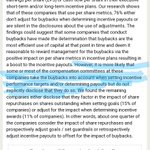
ALT 76% either don’t adjust for buybacks when determining incentive payouts or are silent in the disclosures about the use of adjustments. ... However, it is more likely that some or most of the compensation committees at these companies take the buybacks into account when setting incentive performance targets and/or determining payouts but do not explicitly disclose that they do so.
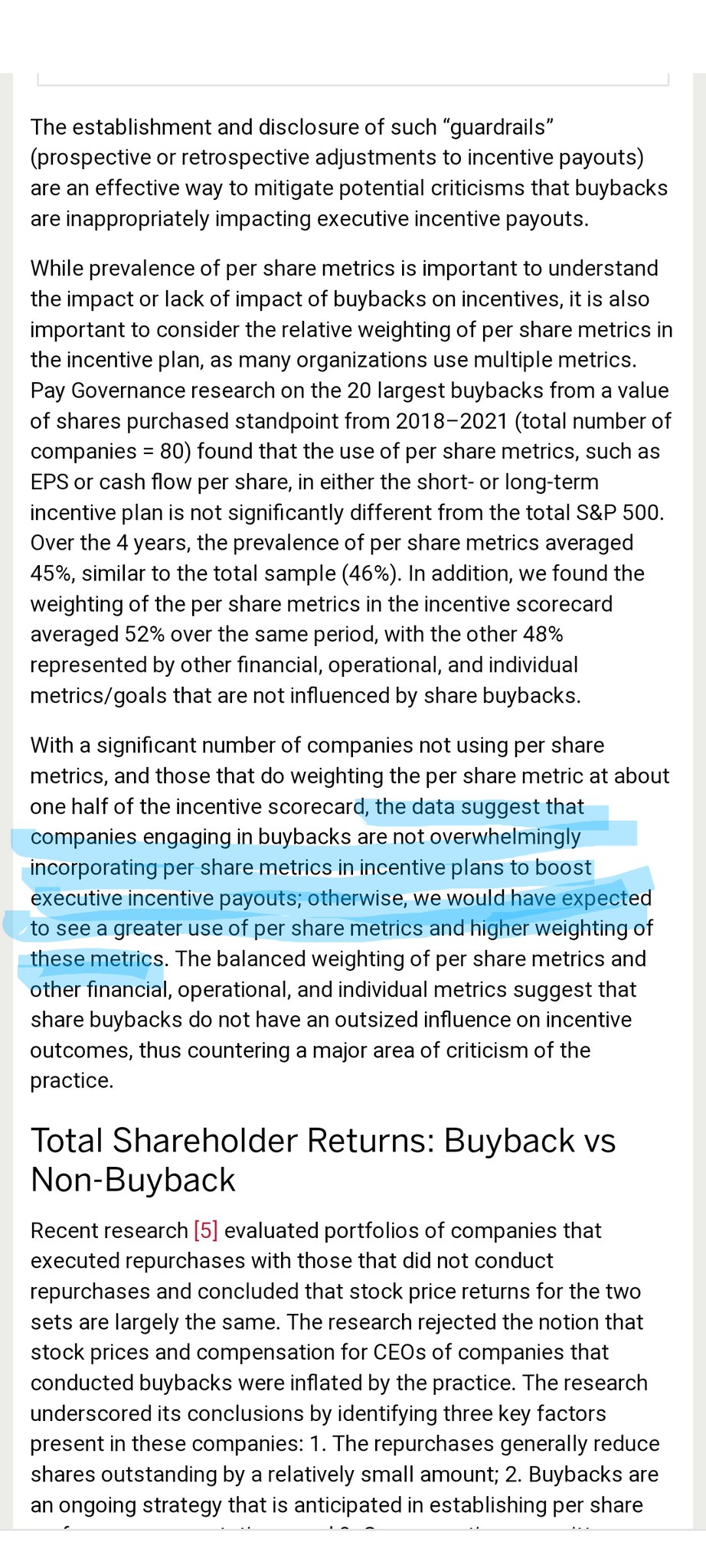
ALT With a significant number of companies not using per share metrics, and those that do weighting the per share metric at about one half of the incentive scorecard, the data suggest that companies engaging in buybacks are not overwhelmingly incorporating per share metrics in incentive plans to boost executive incentive payouts; otherwise, we would have expected to see a greater use of per share metrics and higher weighting of these metrics. The balanced weighting of per share metrics and other financial, operational, and individual metrics suggest that share buybacks do not have an outsized influence on incentive outcomes, thus countering a major area of criticism of the practice.