
Researching the dark arts of deep learning at FAIR, Meta Superintelligence Labs
everywhere
Joined December 2012
- Tweets92
- Following1.7K
- Followers563
- Likes303




Mark Ibrahim retweeted

Nice new paper on continuous improvement of AI agents from Princeton and Meta
Finds that agents repeat fewer mistakes when each fix is saved as a LoRA adapter and reused on similar tasks.
Agents can fix a mistake within a session, then often repeat it in the next one. Notes in context get forgotten, and full fine-tuning is costly and can disrupt other skills.
With Self-Direction, a failing agent reflects on its run and trains the lesson into a LoRA adapter about 0.02% of the model's size. A router later loads the closest adapter when the agent fails a similar task.
With Qwen3.6-27B, task success on GAIA rose from 38.8% to 55.8%, beating in-context reflections and a Skills.md file. Across 185 earlier mistakes, 67.3% of repairs still worked by the third encounter, against 42.9% for plain retrying.
If your agents keep making the same mistakes, save each fix as a small adapter they can reload, not only as prompt notes.


Mark Ibrahim retweeted

Agents can often fix a mistake by retrying, then forget what they just learned! Next session, same mistake 🥲
Introducing Self-Direction: each failure becomes a small, procedural adapter the agent trains on its own reflection and reuses later 💪🏽
🌐 self-direction.github.io/
🧵1/n
Mark Ibrahim retweeted

Don’t miss @dohmatobelvis presenting our latest work, “Why less is more (sometimes): A theory of data curation” at #ICLR2026!
Swing by our poster at the main conference to chat:
📅 Saturday, April 25
🕒 3:15pm–5:45pm
📍 Pavilion 3, P3-#1816

New @AIatMeta paper explains when a smaller, curated dataset beats using everything.
Standard training wastes effort because many examples are redundant or wrong.
They formalize a label generator, a pruning oracle, and a learner.
From this, they derive exact error laws and sharp regime switches.
With a strong generator and plenty of data, keeping hard examples works best.
With a weak generator or small data, keeping easy examples or keeping more helps.
They analyze 2 modes, label agnostic by features and label aware that first filters wrong labels.
ImageNet and LLM math results match the theory, and pruning also prevents collapse in self training.
----
Paper – arxiv. org/abs/2511.03492
Paper Title: "Why Less is More (Sometimes): A Theory of Data Curation"

Mark Ibrahim retweeted
I am soon heading to Rio for #ICLR2026!
It is going to be a packed week: including an oral presentation of OpenApps, our work on measuring how reliable UI agents really are when the apps they interact with change.
Mark Ibrahim retweeted

1/n Can LLMs learn to reason on hard benchmarks like AIME and GPQA purely through context, without SFT, RL, or any weight updates?
Turns out… Yes! And it can have strong performance while being highly efficient
Paper: arxiv.org/pdf/2602.02366
Blog: reasoncache.github.io/

Mark Ibrahim retweeted

at long last, the final paper of my phd
🧮 Learning to Reason in 13 Parameters 🧮
we develop TinyLoRA, a new ft method. with TinyLoRA + RL, models learn well with dozens or hundreds of params
example: we use only 13 parameters to train 7B Qwen model from 76 to 91% on GSM8K 🤯

Mark Ibrahim retweeted

My first PhD paper is out! 🎓
"What Drives Success in Physical Planning with Joint-Embedding Predictive World Models?"
tl:dr: JEPA-WMs for robotics: learn dynamics on top of visual encoders, optimize actions towards goal 👇
w/ @JimmyTYYang1, Jean Ponce, @AdrienBardes, @ylecun
Mark Ibrahim retweeted
Release Day 🎉
Meet OpenApps — a pure-Python, open-source ecosystem for stress-testing UI agents at scale.
Runs on a single CPU. Generates thousands of unique UI variations. And it reveals just how fragile today’s SOTA agents are.
(Yes, even GPT-4 and Claude struggle.)
Mark Ibrahim retweeted
Stop by the Meta booth tomorrow, Wednesday Dec 3rd at #NeurIPS in San Diego! 🤖📱
We demo our new research environment, OpenApps, for digital agents. Generate thousands of app versions to train and evaluate multimodal agents to use apps like humans do.
Not attending? Stay tuned

Mark Ibrahim retweeted

With LeJEPA (arxiv.org/abs/2511.08544) it has never been easier to train JEPAs! And this matters A LOT because JEPAs have numerous provable benefits over the good-old reconstruction based methods (arxiv.org/abs/2505.12477).
NeurIPS spotlight: Wed, 11 a.m. PST, Hall C,D,E #2613


Lots of discussion around JEPA and why latent space prediction works better than input space (e.g., LLMs) for certain modalities.
But no one has formalized WHY.
The answer lies in whether statistically dominant features are semantically meaningful.
@NeurIPSConf spotlight 🧵👇

Mark Ibrahim retweeted

Meta on meta: thrilled to share our work on Meta-learning… at Meta! 🔥🧠
We make two major contributions:
1️⃣ Unified framework revealing insights into various amortizations 🧠
2️⃣ Greedy belief-state updates to handle long context-lengths 🚀

Mark Ibrahim retweeted

RL has led to amazing advances in reasoning domains with LLMs.
But why has it been so successful, and why does the length of the response increases during RL? In new work, we introduce a framework to provide conceptual and theoretical answers to these questions.

Mark Ibrahim retweeted

[CL] A Single Character can Make or Break Your LLM Evals
J Su, J Zhang, K Ullrich, L Bottou... [FAIR at Meta] (2025)
arxiv.org/abs/2510.05152


Mark Ibrahim retweeted

🚨🤖 LLMs have officially entered the workshop.
We’re excited to host @karen_ullrich & @marksibrahim (@AIatMeta) at the World Modeling Workshop 2026!
✨ They will present OpenApps, a new open-source benchmark for LLM agents.
🌐 world-model-mila.github.io
📍 Mila, Montreal, Canada
👉 bit.ly/wmw26-apply
Don’t miss this deep dive into the future of agent benchmarks! 🔥
#AI #WorldModels #LLM #OpenSource

Mark Ibrahim retweeted
How would you make an LLM "forget" the concept of dog — or any other arbitrary concept? 🐶❓
We introduce SAMD & SAMI — a novel, concept-agnostic approach to identify and manipulate attention modules in transformers.


Mark Ibrahim retweeted

Join us at #CVPR2025 Demographic Diversity in Computer Vision workshop tomorrow!
📅 Wednesday, June 11, 9am-6pm
📍 room 213 (main session) + Hall D (poster sessions), the Music City Center
We have an amazing lineup of speakers and panelists! Can't wait to meet you all there :)

Mark Ibrahim retweeted

The last paper of my PhD is finally out ! Introducing
"Intuitive physics understanding emerges from self-supervised pretraining on natural videos"
We show that without any prior, V-JEPA --a self-supervised video model-- develops an understanding of intuitive physics !

Mark Ibrahim retweeted

𝕏-CLR got accepted to ICLR 2025 @iclr_conf! See you in Singapore!
It was also recently mentioned in The Batch by @DeepLearningAI (issue 284)
Thank you again to my collaborators: @marksibrahim @randall_balestr @CabannesVivien @D_Bouchacourt @Piovrasca @kchonyc @ylecun

Representation learning is often done by considering samples to be either identical (same class, positive pairs) or not–with no middle ground. We propose 𝕏-CLR to learn from soft inter-sample relationships, and get better accuracy & improved robustness.
arxiv.org/abs/2407.18134

Mark Ibrahim retweeted

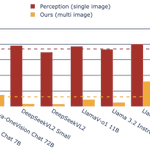
🚀 Excited to share our work at #NeurIPS2024! We show how billion parameter VLMs lose to a two-layer MLP on MNIST.
Come by our poster presentation at West Ballroom A-D #5211, today from 4:30–7:30 PM PST.
A 🧵:
