
England, United Kingdom
Joined March 2016
- Tweets2.2K
- Following709
- Followers95
- Likes386




Nathan Marshall retweeted

🇬🇧 Britain's last "witch" was convicted because of HMS Barham.
November 25, 1941: the battleship HMS Barham is torpedoed off Egypt and sinks in four minutes. 862 men are killed. The Admiralty keeps it secret. Only the families are told, and the public won't learn of it until late January 1942. (See our post on the sinking of HMS Barham.)
Yet in Portsmouth, a Scottish medium named Helen Duncan claims at a séance that the spirit of a dead sailor has appeared to tell her Barham is lost.
The Royal Navy starts paying attention.
Duncan was no newcomer. Her séances took place in near-darkness, with the medium hidden behind a curtain. Then, out of her mouth, came "ectoplasm," a white substance supposed to give the dead a body.
Investigators who managed to cut off a piece found the truth: cheesecloth, or paper soaked in egg white. She swallowed it before the séance and regurgitated it in the dark. When researchers made her swallow a blue dye tablet beforehand, no ectoplasm appeared that night.
The "spirits" were just as crude. Flash photos caught a papier-mâché mask draped in an old sheet, a rubber glove posing as a ghostly hand, and faces cut out of magazines pinned to the cloth. In 1933, a sitter grabbed her child spirit "Peggy." The lights came on. It was a woman's undervest. Duncan was convicted of fraud. Her own former maid later confessed to helping her.
January 1944, months before D-Day. Two naval officers attend one of her séances. A ghost introduces herself as one officer's aunt… but he has no dead aunt! Days later, police burst in mid-séance. The white-shrouded "spirit" is Duncan herself.
The authorities dig up a forgotten law: the Witchcraft Act of 1735. Helen Duncan is sentenced to nine months in prison. Churchill himself fumes at the "obsolete tomfoolery."
She almost certainly had no gift: thousands of the victims' relatives knew about Barham, and the rumor was spreading. But her trial helped get the Witchcraft Act repealed in 1951.
Follow @Vanguard_WW2 for more forgotten stories
We learn something new every day! Thank you so much @lennylaw

Nathan Marshall retweeted

Footage from September 1963 of Dutch 324 Squadron Hawker Hunters launching from Leeuwarden to check for radioactive fallout from Soviet nuclear-weapon tests drifting over the Netherlands. 👀
Nathan Marshall retweeted

すっごいチャージャーの音が入ってます ぜひ...🔊
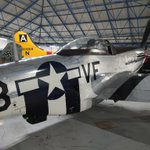
P-51マスタングが「第二次世界大戦最優秀の戦闘機」とも評される傑作機となった理由の大きな一角として、ロールス・ロイス・マーリン(パッカードV-1650)エンジンに「2段2速式機械式過給機(スーパーチャージャー)」を備えていたことがあります。
この過給機が機体のバランスに与えた役割と、戦術的な有効性について解説します。
1. 「傑作のバランス」を生み出したチャージャーの役割
初期のP-51(アリソンエンジン搭載型)は、低空での速度は優れていたものの、過給機の性能不足により高度4,500m以上では出力が急落し、高高度を飛ぶドイツ空軍機に対抗できませんでした。これを解決したのが、2段2速過給機です。
•全高度域での圧倒的な出力維持
空気の薄い高高度ではエンジンに十分な酸素を取り込めません。2段2速過給機は、高度に応じてギア比(2速)を切り替え、2つのインペラ(2段)で段階的に空気を強く圧縮することで、高度7,000m〜9,000m以上の成層圏近くでも海面高度と変わらない馬力を維持しました。
•空力設計(層流翼)の真価を発揮
P-51は空気抵抗を極限まで減らす「層流翼」と「メレディス効果(ラジエーターの排熱を推進力に変える設計)」を備えていました。大馬力を高高度まで維持できる過給機を得たことで、この洗練された機体設計とエンジン出力が完璧に噛み合い、「速い・高く飛べる・航続距離が長い」という相反する要素を高い次元で両立させました。
•コンパクトさと重心バランスの維持
ターボ過給機(排気タービン式)と異なり、機械式過給機はエンジン本体にコンパクトに組み込まれていました。これにより機首の空力的な洗練さを損なわず、戦闘機として不可欠な軽快な運動性と機体バランスを保つことができました。
2. 戦術的に有効利用できたか?
結論から言えば、連合軍の勝利を決定づけるレベルで極めて有効に活用されました。 戦術面での具体的な成果は以下の通りです。
① 爆撃機の「完全な護衛(ロングレンジ・エスコート)」の実現
それまでドイツ本土へ昼間爆撃を行うB-17などの重爆撃機は、護衛戦闘機の航続距離と高高度性能が足りず、ドイツ迎撃機によって甚大な被害を出していました。
2段2速過給機を備えたP-51は、爆撃機と同じ高高度(約7,500m〜9,000m)を、爆撃機よりも速いスピードで余裕をもって随伴飛行できました。これにより、ドイツ本土の奥深く(ベルリンなど)まで爆撃機を護衛することが可能になりました。
② エネルギー戦術(一撃離脱戦法)での優位性
高高度で出力が落ちないため、常にドイツ機(Bf109やFw190)よりも高い位置(高度優位)から戦闘を開始できました。高度の優位はそのまま位置エネルギーの優位となり、急降下で襲いかかり、反撃される前に再び高高度へ離脱する「一撃離脱戦法」を極めて安全かつ効果的に行えました。
③ ドイツ空軍の制空権の無力化
P-51がドイツ上空を自由に飛び回れるようになったことで、ドイツ軍の迎撃機は爆撃機を狙うどころか、P-51との空戦に追われることになりました。結果として1944年半ばにはドイツ本土上空の制空権が連合軍の手に渡り、ノルマンディー上陸作戦の成功やドイツの継戦能力の破壊に直結しました。
まとめ
P-51における2段2速過給機は、単なるパワーアップ装置ではなく、「優れた機体(層流翼・長大な航続距離)」と「高高度での戦場」を結びつける最後のピースでした。これによりP-51は、局地戦用の迎撃機ではなく、敵地の奥深くまで侵攻して制空権を奪い取る「戦略的戦闘機」として戦術的に最大限に活用されました。
Nathan Marshall retweeted

P-47 pilot Harold J. Buelow recalled one rule: never fly straight and level for more than 9 seconds. Instead, they constantly changed direction and altitude.
Enhanced WWII gun camera footage.
Full video: youtu.be/yncBUBoQVbE
#P47 #WW2
Nathan Marshall retweeted

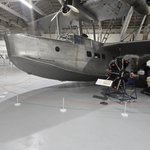
A Lockheed Hudson loses its right wing and crashes after recovering from a high-speed dive.


Nathan Marshall retweeted

Call it AI slop if you like, but that's kind of the point and it's excellent.
Nathan Marshall retweeted

'The RAF pilots like them. German soldiers in northern France do not'
North American Mustangs of 2 Squadron RAF make repeated high-speed, low-level passes for the cameras in this 1942 newsreel.
Film: IWM (WPN 73)
Nathan Marshall retweeted

Happy Friday 🔥🔥
Video by youtube.com/@miklostahin367?…
Nathan Marshall retweeted

P.1154 Super Harrier vs Argentine Attack During Falklands - SeaPower #GrimReapers #SeaPower

Nathan Marshall retweeted

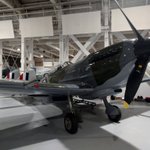
Original color footage of No. 412 Squadron RCAF Supermarine Spitfire Mk IIA fighters prepared for takeoff at RAF Digby in late August 1941 days before the unit was declared operational


Nathan Marshall retweeted

Here’s a nice melody for your ears Angelcynn sang in early Middle English.
“Miri it is while sumer ilast”
Written down around 1225, one of the oldest English songs to survive with its melody. Starts with summer birdsong before the wind picks up and the night draws long.🏴
Nathan Marshall retweeted

Extremely rare HUD footage of F/A-18 Hornet’s First-ever A2A kills (OP DS '91).
USN pilots Lt. Cmdr. Fox and Lt. Mongillo (VFA-81) downed 2x Iraqi MiG-21s in under 40 seconds using AIM-9M sidewinder & AIM-7M sparrow missiles, and then completed their bombing runs.
Nathan Marshall retweeted

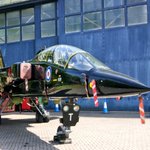
The Hawk T2 Replacement Shambles – Why the MoD Still Cannot Do the Simple Thing
Views my own, comments and corrections welcome.
Slightly different style for me.
1/25 The Hawk T2 problem is not new. The OSD has simply been brought forward.
Persistent Adour Mk 951 low-pressure compressor issues cut engine life from a planned 4,000 hours to 1,700. In 2022–23 the RAF averaged eight serviceable T2s a day and roughly half the contracted flying hours. By March 2024, 16 of 28 aircraft were unavailable for fast-jet training. A September 2026 crash at RAF Valley (both crew ejected; investigation later focused on a missing fuel cap) grounded the entire T1/T2 fleet. Senior officers, including then-CAS Sir Richard Knighton, had already said the service was “getting about half of what we should.”
The Defence Investment Plan allocated £360 million for full Jet Training System recapitalisation and £860 million to keep the Hawks flying safely until a replacement arrives. OSD for the T2 has moved well ahead of the original 2040 date; the Red Arrows’ T1s are confirmed “out” by March 2030.
