

primal brands in tech: story & comms
Lisbon, Portugal
Joined September 2017
- Tweets2.2K
- Following1.8K
- Followers514
- Likes3.7K








mart retweeted

We are slowly removing coincidence out of our lives. We don't pick a restaurant before even checking the ratings. We don't hear music before the algorithm ever predicts we'll like it. We don't even take a route before maps removes the wrong turn. Barely meet someone even before checking their profile. And none of that is necessarily bad. But that's what makes it interesting because every tool nowadays removes every tiny bit of uncertainty, but uncertainty is where a lot of your favorite memories came from. The place you found by accident, the friend you met because the plans changed. The street you weren't supposed to be on that ended up having the best restaurant you've ever been to. We've optimized our life so well to the point where nothing unexpected ever has room to even happen and a life with no accidents is easier to manage, but it's just harder to remember.


transcend commercial reality and ai echo chambers

convergence to the mean
when everyone looks at everyone else to decide what to make, we eventually stop making anything of our own.
we copy what works. borrow the language, the aesthetic, the features. we call it learning from the market, following best practices, staying competitive. together, everything starts to feel familiar. polished, interchangeable. nothing wrong. nothing alive.
the mean isn’t necessarily bad. it’s where everything lands when we remove the reasons for it to be different.
numbers are easier to compare than feelings, so we make things that produce numbers. we study what gets attention, then shape ourselves around it. eventually the feedback stops informing the work and starts authoring it. we’re no longer asking what we want to say. we’re asking what will be rewarded for saying.
ai makes this loop frictionless. it can draw from more references than we could see in a lifetime. but access to every perspective isn’t the same as having one. it hasn’t lived a particular life that makes one detail unbearable and another beautiful. when we ask it to choose for us without bringing any intention of our own, we get something plausible, easy to approve.
then we ship it, measure it, copy it, and feed it back into the next round. a tidal wave of mid.
this changes not just the work, but the people making it.
we describe ourselves in categories platforms can distribute and markets understand. designer. founder. creator. pick a niche. build a brand. be consistent. the parts that don’t fit become inconvenient, even when those contradictions might produce our most interesting work. we become easier to classify and harder to tell apart.
i think we need to approach making things more like artists.
an artist develops a perspective through the work. making, noticing, choosing, failing, returning. learning what matters even when nobody else cares. craft gives that perspective a form precise enough for someone else to experience.
the life outside the work matters too. the places you’ve lived, the people you’ve loved, the things you’re embarrassed to care about. these aren’t distractions from having something to say. they’re how you come to have something to say.
we understand this with music, paintings, photographs, movies. we expect a person to be present in the choices. we want to experience something we wouldn’t have encountered without them.
software can do this too.
a piece of software expresses beliefs about how life should feel. what deserves your attention. what you should be free to change. whether a task should feel like paperwork or play. even a small interaction can carry someone’s care, humor, or curiosity.
but we rarely talk about software as a medium. we talk about it as an industry. markets to capture, workflows to optimize, competitors to catch up with. we add a feature because someone else has it, without asking whether it belongs. products accumulate the same parts and lose what made them worth choosing.
underneath the branding, it’s all the same thing.
artists learn from others too. the question is whether you’re absorbing those influences into a point of view, or using them to avoid developing one.
what are you trying to let someone feel, understand, or do? why this particular shape? what have you noticed that the existing tools don’t seem to notice?
those questions don’t have answers you can borrow from a competitor’s roadmap.
if we can make almost anything, deciding what deserves to exist becomes more important, not less. speed gives us more chances to exercise judgment. it doesn’t remove the responsibility.
i don’t want a world where every person becomes a more efficient distributor of the same ideas. i want people to use these tools to go further into what they actually care about. to make things specific enough that we can feel someone behind them.
what is the point of everyone being able to make something, if we all end up making the same thing?
nike is such an interesting case bc they somehow optimized the magic out of the brand
when i worked on campaigns and cultural activations with an agency for ebay, we did almost the opposite. we went deep into niche communities and gave people reasons to connect
the irony is that nike brought in ebay’s ex-ceo and went all in on digital optimization

narrative literacy
- being able to spot one
- knowing which ones you feed into
- knowing which one you are being fed
- knowing the anatomy of one
- knowing the impact of one
mart retweeted

Yup. I call this The Slopberg Fallacy. They think AI replaces the job because they only understand the tip of the job's iceberg. So they can't tell greatness from slop.
„These dichotomies, and on which side you fall - hope and cynicism, internal vs external locus of control, a willingness to raze it all to the ground or to hold on stubbornly to the past - have always been predictors of success.“

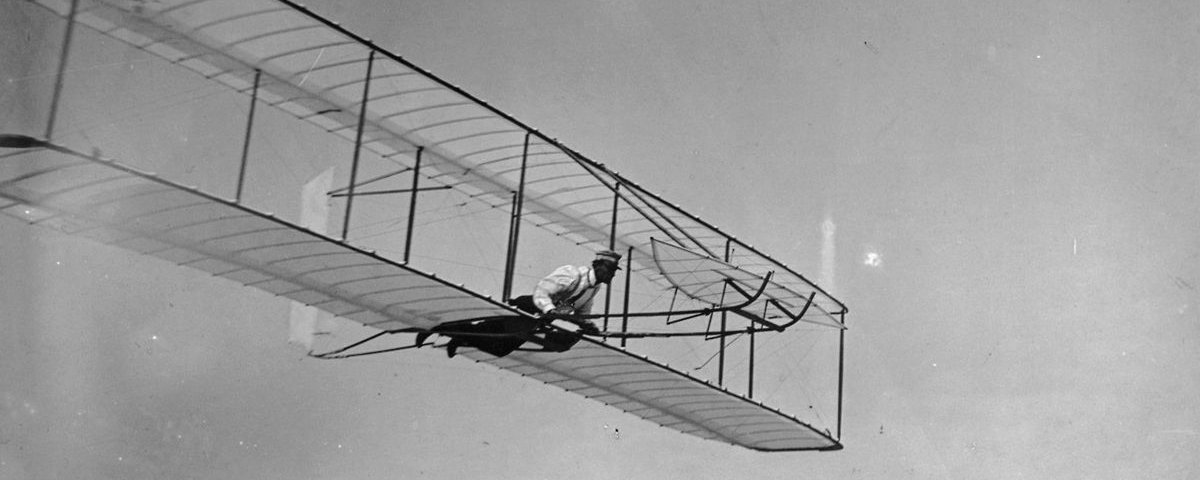

the more i watch teams automate their marketing, the more convinced I am we’re skipping a step. it’s not as easy as “give the agent your brand guidelines and let it run.”
i’ve been observing how teams use agentic marketing and automated workflows to define their story and distribute it across every brand touchpoint.
was open to seeing the results, as we’re all changing the way we work. but i think at this point, we can collectively say that it’s not working as easily as that.
the problem starts with what we’re giving these systems to work with. usual inputs are the same: a logo, tone of voice and a few key messages.
but this is not enough as they don’t explain what the brand believes, why it exists, or what makes people want to belong to it.
the result? a brand and content that feels generic, inauthentic and disconnected. especially if those inputs were generated by AI as well.
so how do we solve that?
our claim: belief first, then automation. (+ dig deeper!!)
there is 20 year old methodology for it which works like an algorithmic framework if used correctly: primal branding
it's the framework behind leading brands such as Google, Microsoft and Levi's. works with cities, ngo's and early stage start ups.
next week, we'll explore how we can implement such a powerful methodology into agentic marketing systems.
we'll host this event with @LunarStrategy showing us their agentic marketing flows & @StellarOrg supporting builders in the space!
oh, and this amazing design was done by the incredible @lostinsaraeyes <3


I can't wait to explore how we can implement such a powerful methodology into agentic marketing systems.
We'll host this event with @LunarStrategy showing us their agentic marketing flows & @StellarOrg supporting builders in the space!
Oh, and this amazing design was done by the incredible @lostinsaraeyes <3
