Pinned Tweet
New commission info ^^
I really needed to work on new information sheets and add more options plus adjusting prices ^^
Queen of the night ✨
Based on the Burney relief (1800-1759 BCE currently housed in the British museum)
I've interpreted it as Inanna, goddess of love, war and sex but also it could be interpreted as Ereshkigal, ruler of the underworld.
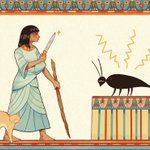
Me too, Egyptian lady, me too 😭
Based on an artwork from the Papyrus of Nakht , originating from Thebes, Egypt (18th Dynasty, New Kingdom)
Pietrusz and Sansar 🍄🟫
Experimenting more with brushes hehe, wanted to update their designs to fit better their story :3
Fatima 🐻 C0MMISSIONS OPEN🍺 retweeted
Kazimierz Sichulski (Polish, 1879–1942)
The Hutsul Madonna triptych, central panel, 1909
Fatima 🐻 C0MMISSIONS OPEN🍺 retweeted
A young child and a Siberian cat
Photograph by Alessandra Meniconzi
Fatima 🐻 C0MMISSIONS OPEN🍺 retweeted
Silk embroidery from Central Asia (dated late 12th–14th century).
Fatima 🐻 C0MMISSIONS OPEN🍺 retweeted
MALLOWS FINAL BATTLE‼️
5-15-26
ko-fi.com/peachyaudbree
Mallows is finally at the vet now, and anytime soon she can finally undergo surgery once everything is ready🙏🏻
I hope you won’t get tired of helping Mallows get through this difficult battle together.🥺
Pls help and RT
Fatima 🐻 C0MMISSIONS OPEN🍺 retweeted
Story time?
Back in the winter of 1955, an Uzbek politician and writer named Sharaf Rashidov went on a diplomatic trip to Jammu and Kashmir.
While he was there, he saw a live performance of "Bombur ta Yambarzal" (The Bumblebee and the Narcissus), a famous 1953 opera by the local poet Dina Nath Nadim.
On stage, characters played literal forces of nature: the spring narcissus, (Yambarzal) and the king of bees (Bombur) represented life and freedom, while winter blizzards symbolised oppression.
Rashidov was so moved by the performance that he went home and turned the story into a 1956 book called "The Kashmir Song", translating the flower's name to its more common regional equivalent, "Nargis".
By 1965, this local Kashmiri tale traveled all the way to Moscow's Soyuzmultfilm studio, that turned it into a gorgeous animated short film called *Nargis*. The animation team crafted the film in the ornate, miniature-painting style characteristic of traditional Russian Palekh lacquer art known for its folkloric elegance. At the same time, the characters’ flowing draped garments, vibrant attire, and decorative jewelry clearly draw inspiration from Indian cultural aesthetics, giving the film an exotic, fairy-tale quality that blends Soviet artistic traditions with the story’s Indian roots.
The film arrived at the perfect time. During the 1950s and 1960s, India and the Soviet Union shared a massive cultural exchange. Hindi cinema was wildly popular across the USSR with films starring actors such as Raj Kapoor drawing large audiences and becoming cultural touchstones. Amid this mutual fascination, Nargis served as a vivid example of how a great story can easily cross borders and connect completely different worlds.
Fatima 🐻 C0MMISSIONS OPEN🍺 retweeted
New commission info ^^
I really needed to work on new information sheets and add more options plus adjusting prices ^^
Mama Sphinx and her cubs 💖
Based it on a marble sculpture from the Archaic Greek period (ca. 530 BCE) had lots traces of red, black and blue pigments. Currently exposed in the MET museum
l've of course taken many liberties in my artwork ^^
Also happy new year 💖
Fatima 🐻 C0MMISSIONS OPEN🍺 retweeted
Yuri Knorozov, el lingüista soviético que logró descifrar la escritura maya, era conocido tanto por su rigor intelectual como por una peculiar costumbre que desconcertaba a editores y colegas: solía incluir a su gata siamesa, Asya, como coautora de sus artículos académicos. Cuando los editores eliminaban su nombre, Knorozov protestaba abiertamente. También insistía en que Asya apareciera junto a él en las fotografías oficiales de autor, y se molestaba cuando la recortaban.
Más allá de esa anécdota entrañable, su logro científico fue extraordinario.
Durante décadas, la escritura jeroglífica maya había sido uno de los grandes enigmas de la arqueología. A diferencia de otros sistemas antiguos, no existía una “Piedra de Rosetta” que facilitara su comprensión. No había textos bilingües ni traducciones antiguas. Solo glifos tallados en estelas, códices fragmentarios y monumentos dispersos por Mesoamérica.
Knorozov trabajó a miles de kilómetros de esos lugares, desde la Unión Soviética, sin viajar nunca a las ruinas mayas y con acceso limitado a publicaciones occidentales. Aun así, a partir de fotografías y copias, llegó a una conclusión decisiva: la escritura maya no era puramente ideográfica ni alfabética, sino silábica. Cada signo representaba una sílaba, no una letra ni una idea aislada.
Esta hipótesis contradecía la visión dominante de la época, defendida especialmente por el influyente mayista británico J. Eric S. Thompson, quien rechazó con firmeza cualquier lectura fonética. A ello se sumaron los prejuicios propios de la Guerra Fría: durante años, muchos académicos occidentales ignoraron o desacreditaron el trabajo de Knorozov simplemente por su origen soviético.
Con el tiempo, la evidencia se impuso. Nuevos desciframientos confirmaron una y otra vez que Knorozov había tenido razón. Su método se convirtió en la base de la epigrafía maya moderna y permitió, por primera vez, leer nombres de gobernantes, fechas históricas, rituales y acontecimientos políticos inscritos hacía más de mil años.
El antropólogo Michael D. Coe resumió décadas después la magnitud de su logro: un investigador que jamás había pisado una ciudad maya había hecho posible la lectura de toda una civilización.
Hoy, Yuri Knorozov es reconocido como la figura clave en el desciframiento de la escritura maya. Y en muchas fotografías y recuerdos, aparece acompañado por Asya, la gata que, según él, también merecía figurar en la historia del descubrimiento.
Fatima 🐻 C0MMISSIONS OPEN🍺 retweeted
A cat returns home to a miniature house built for stray cats in an alley in Valencia, Spain, complete with tiled roof, windows, balcony, wash area, and garden, created in 2003 by sculptor Alfonso Juste Navarro.
Fatima 🐻 C0MMISSIONS OPEN🍺 retweeted
This is very important information.
Cat lost during Hurricane Helene miraculously reunited with family after 443 days: ‘A Christmas miracle’ trib.al/2ZIFKa4