






mostlysparkles retweeted

My cousin Haruka hasn't been afraid of anything since she was seventeen.
She says it's because a roofer from Oklahoma once lay on top of her while the sky fell.
Fifteen years ago, Haruka spent a year as an exchange student in a small town in Oklahoma. She was shy. She had never been away from home. She cried the first night and didn't tell anyone.
Her host dad was Curtis. 44. A roofer. Big, loud, sunburned, and completely sure he was good at Japanese.
He said "Konnichiwa" to her every time he saw her. Morning. Noon. Eleven at night. She never had the heart to tell him.
He grilled everything. Burgers. Corn. A pineapple. Once, she swears, a cake. Curtis believed in fire.
He built her a shelf in the kitchen for her Japanese snacks and put a label on it in black marker:
"HARUKA'S WEIRD FOOD. DO NOT TOUCH. (BOYS.)"
The boys were his sons. Eight and eleven. They touched it constantly.
His wife, Donna, braided Haruka's hair before school and called her "sugar." By Christmas, Haruka had stopped crying at night.
Then came May.
At 4:12 in the afternoon, the sirens started. The sky turned green. Haruka had never seen a green sky. She thought it was beautiful. Donna grabbed her arm and said, very calmly, "Baby, we need to go inside now."
Curtis came home from a job through the hail. He didn't park. He just left the truck in the yard with the door open.
He put all of them in the bathroom. Donna and the boys and Haruka, in the bathtub. He pulled a mattress over the top of them.
Then Curtis lay down on top of the mattress.
On top of all four of them.
Haruka says it sounded like a freight train driving through the house. She felt the walls go. She felt the air get pulled out of her chest. She felt Curtis's whole weight pressing down on them, and she felt him not move. Not once.
It lasted about thirty seconds. She says it was the longest year of her life.
Then it was quiet.
When she opened her eyes, she could see the sky.
No roof. No walls. The house was gone. The only thing left standing was the bathtub they were lying in.
Curtis's back was bleeding through his shirt. Glass. Wood. He didn't look at it.
The first thing he said was:
"Everybody say your name."
Donna said hers. The boys said theirs. Haruka said hers last, in a whisper.
"Good," Curtis said. "Everybody's here."
Then he climbed out of the bathtub and walked next door to dig out Mrs. Pruett, who was 79, from under her kitchen ceiling. He didn't mention his back until she was safe.
Sixty stitches.
The next morning, before the sun came up, Haruka heard chainsaws.
Strangers. Dozens of them. Trucks with Texas plates, Arkansas plates, Kansas plates. Nobody had called them. A church fed 400 people out of a parking lot. A man she had never seen handed her a pair of work gloves and said, "Welcome to Oklahoma, darlin'."
Curtis was out there at dawn with sixty stitches in his back, cutting up the neighbor's fallen tree first.
When someone asked about his own house, he said, "Ours ain't going anywhere."
Haruka's parents called from Japan, crying. Come home. Please come home.
She said no.
She stayed until the end of the school year and helped rebuild a town that wasn't hers. She carried boards. She swept glass. She learned to use a nail gun. Curtis watched her one afternoon, shook his head, and said, "You're a whole lot tougher than you look, kid."
She told me that sentence changed her life.
Haruka is 32 now. She works in disaster relief in Japan.
Two years ago, after a big earthquake on the Japan Sea coast, she was sleeping in a school gym with forty families who had lost their homes. In the middle of the night, a huge aftershock hit. The lights went out. The children started screaming.
Haruka pulled the kids under a table, lay down on top of them, and said, in Japanese:
"Everybody, say your name."
One by one, they did.
"Good," she said. "Everybody's here."
Curtis is 59 now. He still has the scar. He calls it "the map of Oklahoma." Every May, Haruka sends him a photo of herself in a hard hat. He sends back the same thing every year. A picture of a pineapple on a grill.
I asked her once how she can be so brave.
"I'm not brave," she said. "I'm afraid of everything."
"But I know what a brave man feels like. He feels heavy. He feels warm. And if the sky falls, it has to go through him first."
mostlysparkles retweeted

Slavery was an evil in which people from every continent and region participated. We should be honest about the whole history, not select the parts that are politically convenient today, especially given Britain's leading role in ending the transatlantic slave trade.
If Caribbean countries are asking Britain for a formal apology for Britain’s role in the transatlantic slave trade, will they also be asking the same of the descendants of African kingdoms, rulers and merchants who captured, sold and profited from the trade?
On demands for reparations, whether through cash or debt relief, we have been down this track before. Twenty-five years ago, Jubilee 2000, Drop the Debt and Make Poverty History argued that cancelling the debts of poorer countries would give them a fresh start. More than $100 billion of debt was eventually written off, but many of those countries have since built up even bigger debts. Labour are already spending too much on Britain's welfare state, now is not the time for Andy Burnham to be providing global welfare.
There is no reason British taxpayers today should be held financially responsible for things that happened generations before any of us were born. And I have even less patience for political elites in commonwealth countries who don’t know how to make their own citizens prosperous now looking for another opportunity to blame Britain.
As Prime Minister, Andy Burnham should be Britain’s greatest defender. Instead, he is writing articles saying we need to confront our history (as if we haven't done enough of that) and considering another formal historical apology. Tony Blair already expressed Britain’s deep sorrow and regret for our role in the slave trade nearly twenty years ago. There is no need to do so again.
This is all another navel-gazing distraction. The Commonwealth should be looking forward, not endlessly backwards. That means economic partnerships to make us all richer and deeper military and security cooperation against common threats. If every Commonwealth summit becomes an exercise in presenting Britain with demands for cash then we need to start asking if it is worth the effort.
mostlysparkles retweeted

Well after today’s announcement from the Bank of England, there is something very, very, very wrong in the system.
So … let me get this straight:
* British Gas made a profit of £1.3bn between January & June
* BP announced profits of £6.95 billion between April and June alone
* Shell has profited by £9.4bn in a year
The MEN at the top:
* John Pettigrew, boss of National Grid received £6.5m bonus on top of his salary
* Chris O’Shea, chief executive of British Gas owner Centrica was paid almost £2m last year in salary and benefits
* Centrica's non-executive directors were paid almost £1m
* Scottish Power's CEO Keith Anderson is on £1.15m.
* E.On boss Michael Lewis is on £1m
* EDF's Simone Rossi is also on £1m
* And their top execs enjoyed a share of £4.65m
* Peter Simpson of Anglian Water earned a £1.3m pay package
* Welsh Water bosses awarded themselves bonuses of over £930,000
* Severn Trent bosses awarded themselves bonuses of £5.56m
* Thames Water's Sarah Bentley, received a £727,000 bonus on top of her £2m annual salary
Meanwhile there are...
* People who haven't had breakfast and/or lunch TODAY, because they can't afford it.
* People using FoodBanks because food is becoming more of a luxury than a necessity.
* Children celebrating a birthday without presents.
* Parents worrying about new school uniforms - and some schools enforcing rules which are not cost-effective.
* People who can't get to work because they can't afford to put petrol in their cars/pay for public transport anymore.
* People who are working so much they're making themselves ill, and they STILL CAN'T AFFORD to pay their bills.
* People who have been given fines by these same energy/water companies because they couldn't afford to pay their bills in the first place - increasing their debt.
* Customers being told to do STAR JUMPS TO KEEP WARM for crying out loud!
* Hose pipe bans when gallons of water leak away everyday.
* Elderly people NOT DRINKING because they're worried about running out of water!!!
All this and energy prices are set to rise up to 75% in October...
THIS IS MADNESS!.. I'm all for supporting profits … I'm not for supporting greed at the cost of lives of others.
Something needs to change.
Why is customers' money being used to make life more comfortable for those who are making life more intolerable for the rest of us?
I actually don't understand how the energy companies are allowed to get away with this and why the government aren't stopping them instead of handing out money.....
mostlysparkles retweeted

The private sector creates the wealth. The government spends it. The Labour government forgot which one comes first. Every public-sector wage, every benefit, every hospital, every local government salary, every government infrastructure project is paid for by people who take a risk, hire someone, make something, sell something and turn a profit. That is not ideology. That is basic economic arithmetic.
Labour came into power talking about growth and partnership with business. But the Labour government simply do not understand the economic engine room of the private sector. They treat the people who generate the money as a cash machine.
Look at what the Labour government actually did:
They put a tax on jobs. Employer National Insurance went from 13.8% to 15%, and the threshold collapsed from £9,100 to £5,000. That is not a levy on “the rich.” That is a levy on hiring a receptionist, a warehouse worker, an apprentice. Employer NICs then jumped 28% in a year and overtook corporation tax as the biggest tax paid by business. Companies paid almost £345 billion in tax in 2025–26 - up by 12.7%. That money comes out of wages that were not raised, jobs that were not created and investment that was postponed.
The Labour government raised the price of success. They choked off growth. Capital gains tax went up. Business Asset Disposal Relief was watered down. Dividend tax went up. Farmers and family businesses were punished with inheritance tax.
Smalll business founders were told, in effect: take the risk and when you finally sell the thing you built, we will treat the exit more like a success punishment payment to the government. That is not “fairness.” That is a government eating the seed corn of an economy.
They layered cost on cost. Higher minimum wages with no offsetting productivity. Heavier employment regulation. Business rates that still punish the high street. Energy costs that leave manufacturers uncompetitive. Then more government briefings about the next raid — more capital gains tax, more wealth taxes, more “the rich must pay.” More uncertainty for businesses. Uncertainty is a tax of its own.
And then the Labour government act surprised when private-sector activity slumps, businesses close, hiring stalls, and the CBI has to warn the government not to hit businesses again. You cannot squeeze the wealth-creating part of the economy and then demand it produces more growth, more jobs and more tax receipts. That is not redistribution. It is a wrecking ball strategy.
You do not create more jobs by making it more expensive to employ anyone. You do not get more houses by driving builders and investors away. You do not produce more food by punishing those who grow the food. You do not get a richer country by treating profit and employee growth as something that should be plundered by the government.
The wealth of a nation is built by people who could have chosen an easier life and did not. Punish that class long enough and you do not get equality. You get stagnation, fewer jobs and an economically illiterate government still hungry for money that is no longer being made because of their failure to support our British businesses.
If Britain wants better public services, it needs a private sector that is expanding, not one that is being financially punished for the privilege of still being here.
mostlysparkles retweeted

Everyone asks "how do we afford PIP?"
Nobody asks "why does disability cost so much?"
A grab rail: £8 at Screwfix. £85 through a mobility company.
Adapted cutlery: £12 to manufacture. £35 in the catalogue.
A shower seat: £15 plastic stool. £90 as a "shower aid."
A postural chair: £200 to build. £800 with "disability" on the label.
Disability costs more because the market CHARGES more. Not because it COSTS more. The word "adapted" on the box adds 300-500% to the price.
PIP exists to cover the "extra cost of disability." But the extra cost is ARTIFICIAL. Created by manufacturers who know you NEED the product and price accordingly.
Fix the price. Sell aids at cost. Remove the markup. Remove the VAT. Remove the glossy catalogue and the sales rep's commission.
The "extra cost of disability" drops by 60-80%. PIP spending falls. Without cutting a single person's support.
Helen Whately has posted thirteen times asking how to cut PIP. She has never once asked why disability products cost five times what they should.
builduk.club disability charter. Fix the price. Not the person.

mostlysparkles retweeted

🚨 3,000+ PEOPLE HAVE ALREADY SIGNED IN LESS THAN 24 HOURS !
If they can’t pass an audit, they can’t raise our taxes.
Up to £81 BILLION a year is lost to fraud and error…
…all while councils and government departments have gone years without passing audit cleanly.
Yet politicians keep asking you for more money.
Enough.
Let’s remind our politicians who they work for.
Sign. Share. Make them listen.
petition.parliament.uk/petit…

mostlysparkles retweeted

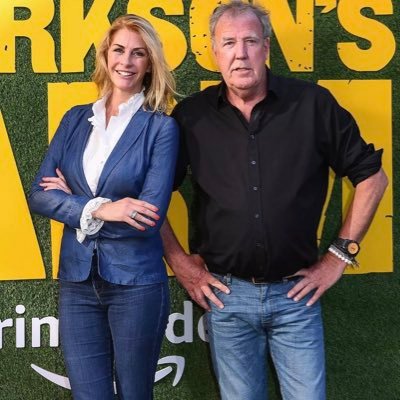
The BBC has had thirty eight years and £3.8 billion a year to explain British farming to the British public. The job was eventually done by an American shopping website, in eight episodes, fronted by the man the BBC itself dropped over a row about a steak.
Countryfile first went out on 24 July 1988, and its origin is the part nobody brings up. It replaced Farming, a programme that had spent thirty years making news for the people who actually did the work. The new show was deliberately widened to take in everybody who merely liked the countryside as well as those who lived off it. Widened meant softened. In 2009 it moved to Sunday evenings, where five to six million people still watch, and it has been settled ever since into an hour of scenery, a ramble, a calendar competition and the weather.
Then in June 2021 a company best known for selling doorbells put out a series about a man failing to farm a thousand acres, and within a week the British public understood the subsidy system.
Look at what an American retailer put on screen that thirty eight years of Sunday nights had not. A thousand acres, a full year of work, £144 profit. A crop drowning in the field with nobody coming to help. A farmer selling at a price he is not allowed to set. A council able to shut a restaurant standing on a man's own land. The accounts, open, with jokes over the top.
James Rebanks, who keeps sheep for a living rather than for a segment, reckoned Clarkson did more for farmers in one series than Countryfile had managed in thirty years. The NFU said the same thing in nicer words.
Now the funding, which is where it gets genuinely funny.
Countryfile is paid for by £180 a year, rising on 1 April, taken from every household in Britain that watches live television, on pain of prosecution. Twenty three million licences. Three point eight billion pounds. Guaranteed money, a captive audience, a national mandate and a prime Sunday slot.
Clarkson's Farm is paid for by people voluntarily pressing play, and it goes out in more than 240 countries.
The nation's farmers had one broadcaster legally funded by them, obliged to serve them, sitting on the biggest slot in British television. It gave them a weather forecast and a photography competition, and when a bloke with a Lamborghini tractor did the actual job for free, the same building's stars went on a sofa to complain about his opening credits.
The BBC had the money, the mandate, the Sunday night and thirty eight years.
It used them to film the view.

mostlysparkles retweeted

The UK government have just agreed to give Pakistan another £153,000,000. The government don’t actually have any money, so they’re giving away your money. It won’t go to the poor of Pakistan. It’ll go to the corrupt leaders there. As it always does. And the money comes from the hardworking, least wealthy people here. To put that enormous figure of £153,000,000 into context; the average basic rate taxpayer in the UK pays £2,700 per annum in tax. So 56,666 people in this country will be going to work all year just to give their money to Pakistan. Not one penny of their tax will go to schools, hospitals, roads or anything else in the UK. It will go straight to Pakistan. Imagine if those nearly 57,000 people got to keep their tax and spend it in this country instead. Imagine all that money being spent in pubs. Imagine the extra staff that would then be needed. The extra employment right here that it would create. But instead, it’s all going to Pakistan. Every single penny.


mostlysparkles retweeted

There is no way of knowing how often Parliament votes against what the public actually wants. Until now.
houseofthepeople.com tracks every bill going through Parliament. You vote. We compare it to how your MP voted. The gap speaks for itself.

mostlysparkles retweeted

🚨 Apple’s new iPhone update is restricting internet freedom in the UK.
I’ve written to @apple to call for an urgent U-turn.
I explain the 8 key issues - affecting 35 mil of us in the UK! - in this short blog.
This is so important. Please read & share⬇️
bigbrotherwatch.org.uk/blog/…

mostlysparkles retweeted

Your Parents Are Getting Older.
30 Things To Do With Them Before Time Moves On.
1. Record their voice telling a story. One day that voice becomes a sound you can never hear again.
mostlysparkles retweeted

I see some weird things but this takes the biscuit. A vulnerability in the Companies House website, that let anyone view the private dashboard of any one of the five million registered companies, see directors' personal details.
And modify them.
mostlysparkles retweeted

As branch after branch make statements attempting to distance themselves from today’s events - suggesting they had no idea as to what was going on or how this has happened - remember this recorded National Council meeting (attended by all branches), the DARVO tactic deployed to combat legitimate criticism and the deafening silence, lack of challenge and acquiescence of those police officers in attendance.
Also, remember; Mark Jones, Rick Prior, Rich Cooke, Ste Hartshorn and many others - suspended within hours of “complaints” careers and reputations tarnished for matters which never came close to meeting the threshold of criminal investigation, let alone arrest - and yet here we are 12hrs after the arrest of the CEO on serious fraud offences and not a peep from @PFEW_HQ regarding his suspension or its own internal investigation…not that anyone would have any faith or confidence in said investigation given the complicity of the national board… but still, the inaction speaks volumes as they no doubt struggle with the question of do we double down and defend him and previous national secs, or do we pour petrol on the fire we created and fed and see how far it will spread?
#BreakTheMonopoly

We take no pleasure in sharing this but it is important people see it. This is how the unelected CEO at @PFEW_HQ speaks to elected officials who disagree with him.
Imagine what unfairly suspended officers and officials, staff past and present have had to deal with?
mostlysparkles retweeted

Wise words
“My name’s Frank. I’m 64, a retired electrician.
Forty-two years I spent running wires through houses, fixing breakers, making sure people had light in their kitchens and heat in their winters. Never once did anyone ask me where I went to college. Mostly, they just wanted to know if I could get the power back on before their ice cream melted.
Last May, I was at my granddaughter Emily’s school career day. You know the drill — doctors, lawyers, a software guy in a slick suit talking about “scaling startups.” I was the only one there with a tool belt and work boots.
When it was my turn, I told the kids, “I don’t have a degree. I’ve never sat in a lecture hall. But I’ve wired schools, hospitals, and your principal’s house. And when the hospital generator failed during a snowstorm in ’98, I was the one in the basement with a flashlight, keeping the lights on for newborn babies upstairs.”
The kids leaned forward. They had questions — real ones. “How do you fix stuff in the dark?” “Do you make a lot of money?” “Do you ever get zapped?” (Yes, once, and it’ll curl your hair.)
When the bell rang, one boy hung back. Small kid, freckles, hoodie too big for him. He mumbled, “My uncle’s a plumber. People laugh at him ’cause he didn’t finish high school. But… he’s the only one in the family who can fix anything.”
I looked that boy in the eye and said, “Kid, your uncle’s a hero. When your toilet overflows at midnight, Harvard ain’t sending anyone. A plumber is.”
Here’s the thing nobody told me when I was young — the world doesn’t run without tradespeople. You can have all the engineers you want, but if nobody builds the house, wires the power, or lays the pipes, those blueprints just sit in a drawer.
We’ve made it sound like trades are what you do if you can’t go to college, instead of a path you choose because you like working with your hands, solving problems, and seeing your work stand solid for decades.
Four years after high school, some kids walk away with diplomas. Others walk away with zero debt, a union card, and a skill they can take anywhere in the world. And guess what? When your furnace dies in January, it’s not the diploma that saves you.
A few weeks ago, that same freckled kid’s mom stopped me at the grocery store. She said, “You probably don’t remember, but you told my son trades are important. He’s shadowing his uncle this summer. First time I’ve seen him excited about anything in years.”
That’s the part we forget — for some kids, knowing their path is respected changes everything. It’s not about “just” fixing wires or pipes. It’s about pride. Purpose. The kind that sticks with you long after the job’s done.
So next time you meet a teenager, don’t just ask, “Where are you going to college?” Ask, “What’s your plan?” And if they say, “I’m learning to weld,” or “I’m starting an apprenticeship,” smile big and say, “That’s fantastic. We’re going to need you.”
Because we will. More than ever. And when the lights go out, you’ll be glad they showed up.”

mostlysparkles retweeted

sir,
i'd like to bring up the principle that taxation is not voluntary.
money that is collected through non-voluntary means should have a restricted eligibility for outflows. it should never be given, for example, to charities and NGO.

mostlysparkles retweeted

There needs to be a comprehensive review of how British taxpayer money is being spent overseas.
£50 million announced for Syria just yesterday - how on earth do we know that those funds won't fall into the wrong hands? Just think about what that money could do for communities around the UK. It's the very tip of the foreign aid iceberg, of course...
We need to objectively look at how ALL of this money is being spent, and simply ask - how is this benefiting the British people? A full and comprehensive review of EVERY penny is needed.
As a country, we need to say - sorry, but we just can't afford it. And we can't. We're broke.
Foreign aid for China? India? It's not our problem.
Labour has committed to £11.6bn in 'overseas climate aid'. The answer has to be no. It's simply too much money.
The priority for the British Government has to be the British people. This should not be a controversial statement.
Our entire foreign aid spend needs an urgent rethink.
mostlysparkles retweeted

And when you've signed this petition, consider...
Is your Labour regime MP a liar?
From the Electoral Commission
electoralcommission.org.uk/v……
"A recall petition is the process by which an MP can lose their seat in the House of Commons.
Voters in the relevant constituency will have six weeks to sign the petition. By signing a recall petition, voters are saying they want their MP to lose their seat. Only those who want to see the MP removed need to sign the petition.
If at least 10% of voters in the constituency sign the petition, the MP will lose their seat and it will trigger a by-election. The recalled MP can stand as a candidate at the by-election.
If less than 10% of voters in the constituency sign the petition, the MP remains in post."
