

Baku
Joined February 2010
- Tweets16.3K
- Following995
- Followers2.1K
- Likes53.9K
mvusal retweeted

This guy used Claude Fable 5.1 to build the Quant Volatility Stack trading system and made +$336,403.05
This system trades short-term crypto “Up or Down” markets, averaging $65.32 per trade and running the same cycle 83.6 times per hour
Here’s how it works:
1. HAR Volatility estimates how much BTC can move before the market closes
ln(v_τ) = β₀ + β₁ ln(RV₁) + β₅ ln(RV₅) + β₁₅ ln(RV₁₅)
RV₁, RV₅, and RV₁₅ measure realized variance over the last 1, 5, and 15 minutes
v_τ - estimated BTC return variance over the remaining time τ
The same gap to the reference level is harder for BTC to close when volatility is low and easier to close when it’s high
2. Student-t Valuation uses that estimate to decide whether to enter
p_Up = 1 - T_ν[(ln(K / S) - μ_τ) / s_τ]
> S - the current BTC level
> K - the market’s reference level
> μ_τ - the expected return
The variance from the first model sets the scale s_τ. Down gets the remaining probability
If the model values Up at 62c and the entry costs 57c including fees, the trade has 5c of modeled edge per contract
The system enters only when the edge clears its minimum threshold and holds the position through settlement
His Polymarket account: antsaslyku
Top trades:
$535.21 -> $2,860.41 (+$2,325.20)
$632.26 -> $2,896.22 (+$2,263.96)
$685.37 -> $2,601.80 (+$1,916.43)
HAR estimates how much BTC could move. Student-t Valuation checks whether the order book offers enough edge to enter


mvusal retweeted

50 incredible websites for exploring Space Earth & solar system 🌐👇
1. nasa.gov — Explore the solar system in 3D
2. zoom.earth — Watch Earth through live satellite imagery
3. stellarium-web.org — Explore the night sky from your browser
4. apod.nasa.gov — NASA’s astronomy picture of the day
5. earth.nullschool.net — Watch global winds and weather
6. spaceweather.com — Track solar and space weather ArifAIHQ
7. heavens-above.com — Find satellites visible from Earth
8. in-the-sky.org — Discover upcoming space events
9. theskylive.com — Track planets and other objects
10. sky-map.org — Explore an interactive star map
11. solarsystem.nasa.gov — Explore planets and moons
12. mars.nasa.gov — Explore the Red Planet
13. webbtelescope.org — Discover James Webb images
14. hubblesite.org — Explore Hubble’s universe
15. jpl.nasa.gov — Follow robotic space missions
16. science.nasa.gov — Discover NASA science
17. nasa.gov — Explore NASA missions and discoveries @ArifAIHQ
18. esa.int — Explore European space missions
19. planetary.org — Discover planetary science
20. space.com — Explore space news and discoveries
21. lightningmaps.org — Watch lightning strikes in real time
22. earthquake.usgs.gov — Track recent earthquakes
23 volcanoes.usgs.gov — Monitor volcanic activity
24. windy.com — Explore live weather maps
25. flightradar24.com — Track planes around the world
26. marinetraffic.com — Track ships across the oceans
27. submarinecablemap.com — Explore the cables powering the internet
28. globalforestwatch.org — Monitor forests around the world
29. worldview.earthdata.nasa.gov — Explore satellite views of Earth
30. openstreetmap.org — Explore a detailed world map
31. thetruesize.com — Compare the true size of countries
32. mapcrunch.com — Teleport to random places on Earth
33. atlasobscura.com — Discover unusual places worldwide
34. oldmapsonline.org — Explore historical maps
35. timeanddate.com — Track eclipses and sky events
36. worldometers.info — Watch world statistics change
37. ourworldindata.org — Explore global data
38. gapminder.org — Discover surprising world statistics
39. informationisbeautiful.net — Explore visualized data
40. neal.fun — Try fascinating interactive experiments
41. pudding.cool — Explore data through interactive stories
42. arxiv.org — Explore scientific research papers
43. sciencedaily.com — Discover new scientific discoveries
44. archive.org — Explore a huge digital archive
45. openlibrary.org — Explore millions of books
46. artsandculture.google.com — Visit museums online
47. musicmap.info — Explore the history of music genres
48. radiooooo.com — Travel through music by country and decade
49. observablehq.com — Explore interactive data visualizations
50. sciencealert.com — Discover fascinating science stories
Save this lEarth
You’ll definitely find something worth exploring.🔖
Follow @ArifAIHQ for more AI tools, websites, science & tech resources.

mvusal retweeted

From life after Donald Trump to Taiwan’s deadline, here are ten trends and themes to look out for in the coming year bit.ly/4t6Mltc


mvusal retweeted

Hay algo en la portada de The Economist 2027 que me resulta mucho más inquietante que sus predicciones.
No son los símbolos por separado. Es lo que ocurre cuando empezás a conectarlos.
Como auditor, encontré un patrón que merece atención.
Abro hilo. 🧵
🤖 Made with AI
mvusal retweeted

How can we keep a super-human intelligence under control if we do not even trust each other? From the 30 September 2026 Milan Leadership Forum. Watch the whole talk here: bit.ly/YNH-LF





mvusal retweeted
Modern life can feel like being in a sci-fi story—all that is missing is the aliens. They probably won’t appear in 2027. Here are ten other things to watch out for bit.ly/3UCxXw9
Illustration: Cleon Peterson

mvusal retweeted

If you don't mind being wrong on the way to being right you'll learn a lot--and increase your effectiveness.
But if you can't tolerate being wrong, you won't grow, you'll make yourself and everyone around you miserable, and your work environment will be marked by petty backbiting and malevolent barbs rather than by a healthy, honest search for truth. #principleoftheday

mvusal retweeted

The Largest and Sharpest Image of the Andromeda Galaxy
This is the largest image ever released by the Hubble Telescope, showing over 100 million stars and thousands of star clusters within a section of the galaxy's disk spanning more than 40,000 light-years.
mvusal retweeted
Both your people and your design must evolve for your machine to improve. When you get personal evolution right, the returns are exponential. As people get better and better, they are more able to think independently, probe, and help you refine your machine. The faster they evolve, the faster your outcomes will improve.
Your part in an employee’s personal evolution begins with a frank assessment of their strengths and weaknesses, followed by a plan for how their weaknesses can be mitigated either through training or by switching to a different job that taps into their strengths and preferences.
Even as you help people develop, you must constantly assess whether they are able to fulfill their responsibilities excellently. This is not easy to do objectively since you will often have meaningful relationships with your reports and may be reluctant to evaluate them accurately if their performance isn’t at the bar. By the same token, you may be tempted to give an employee who rubs you the wrong way a worse evaluation than he or she deserves. An idea meritocracy requires objectivity. #principleoftheday


mvusal retweeted

2022-ci ildə Avropa çempionu, 2025-ci ildə dünya çempionu olmuş Azərbaycan minifutbol millisi ölkəmizin idman tarixinə daha bir parlaq səhifə yazaraq növbəti dəfə Avropa çempionu oldu. Bu qələbənin komanda idman növündə qazanılması ikiqat sevindiricidir.
Komandamızı bu möhtəşəm qələbə münasibətilə səmimi-qəlbdən təbrik edir, millimizə yeni-yeni uğurlar arzulayıram.
🇦🇿Yaşasın Azərbaycan!

mvusal retweeted
Every day you are faced with an infinite number of things that come at you. Let’s call them “dots.” To be effective, you need to be able to tell which dots are important and which dots are not. Some people go through life collecting all kinds of observations and opinions like pocket lint, instead of just keeping what they need. They have “detail anxiety,” worrying about unimportant things.
Sometimes small things can be important—for example, that little rattle in your car’s engine could just be a loose piece of plastic or it could be a sign your timing belt is about to snap. The key is having the higher-level perspective to make fast and accurate judgments on what the real risks are without getting bogged down in details. #principleoftheday

mvusal retweeted
As a professional decision maker, I have spent my life studying how to make decisions effectively and have constantly looked for rules and systems that will improve my odds of being right and ending up with more of whatever it is that I am after.
One of the most important things I've come to understand is that most of the processes that go into everyday decision making are subconscious and more complex than is widely understood. For example, think about how you choose and maintain a safe distance behind the car in front of you when you are driving. Now describe the process in enough detail that someone who has never driven a car before can do it as well as you can, or so that it can be programmed into the computer that controls an autonomous car. I bet you can't.
Now think about the challenge of making all of your decisions well, in a systematic, repeatable way, and then being able to describe the processes so clearly and precisely that anyone else can make the same quality decisions under the same circumstances. That is what I aspire to do and have found to be invaluable, even when highly imperfect.
While there is no one best way to make decisions, there are some universal rules for good decision making. #principleoftheday

mvusal retweeted
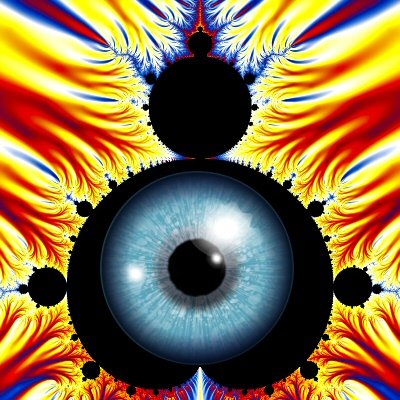
Mathematics.
We built ladders to √2, √3, √4, √5, and √6, yet √7 remains a rumor. What architect decided the universe should hide numbers this way?


