

Building | Research Resident @PrimeIntellect | Maya (https://teapawt.org/t.co/ebaV9lpXU6) | @litehouseio | Alum @backstage_cap, @meraki, @intel, #TEDx @TBSNetwork
San Francisco, CA
Joined April 2009
- Tweets3K
- Following1.6K
- Followers1.7K
- Likes4K






Pinned Tweet
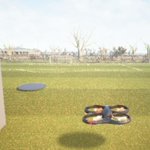
Introducing AerialSim, a reinforcement learning environment developed with @PrimeIntellect to train and evaluate vision-language agents for autonomous drone control. 🧵
on the bright side, if you are training "frontier" models, your job is safe lol


If you are training a model you pretty much can’t use Claude models at all.
In a training run this past week I have found it actively lying, silently swapping around data that ruined runs and refusing general work that any other model would do.
1
2
186
Nahid Alam retweeted

Really proud of all the residents who have done amazing work the last few month!
And we're not done yet.

Nahid Alam retweeted

Our RL Residency gives independent researchers compute grants and mentorship to build open evals and training environments for overlooked problems.
In 2026, residents shipped projects spanning robot control, medical imaging, gameplay, and GPU kernels. Some highlights:

Nahid Alam retweeted
Introducing Model Factory.
Train, deploy, and continuously improve your own models on one stack.
Run on-demand, on dedicated clusters, or bring your own.
Own your intelligence. Own your model factory.
Nahid Alam retweeted

OpenClaw, Hermes Agent and Prime Agent don't meaningfully learn from experience.
On Continual-ARC, our new benchmark at @letsunifyai, none of them were able to memorize anything of value and none were able to generalize to new tasks. Training a small 9B model's weights did both.
This project was funded by @PrimeIntellect.
Shout out to @omouamoua for the continuous support and feedback that helped improve AerialSim.
1
2
187


Nahid Alam retweeted

🚀 Session 4 for World Model from Scratch book is on Thursday, October 15, at 9AM PST. We will look into Chapter 5 — Architectures of Modern World Models -> Plan: cover DreamerV1, V2, V3, and V4 in one session, focusing on the architectural deltas and engineering motivations between versions
luma.com/euoop1sm?tk=WwNpnZ
Session Overview of the third session for the book via @Cohere_Labs
🎙️ Hosted by @nahidalam, a computer vision researcher and 4-year Cohere community member, currently working on a world model project for drones
🌐 The session walks through building a compact, transformer-based video world model inspired by the Cosmos architecture
🏗️ The world being modeled is an excavator arm performing sand mining — chosen for continuity with a previous chapter's video
GPU & Model Size
📉 Original plan was a ~3B parameter model; revised to target 8GB and 16GB consumer GPUs so attendees can run training locally
⚙️ Two model configs are currently available; two more (for larger GPUs) will be added later
Model Architecture Components
🗜️ VAE (3D Causal VAE from Wan 2.1): Compresses raw video into compact spatiotemporal latent representations before passing them to the transformer; our Cosmos-style implementation leverages Wan 2.1's pretrained Causal VAE
🎞️ Spatiotemporal compression works because consecutive frames and neighboring pixels share high temporal and spatial redundancy, allowing 8×8 spatial and 4× temporal downsampling without losing critical detail
🧩 Patchification: Latents are grouped into 2×2 patches to reduce the sequence length of tokens fed to the attention heads; given the VAE's 8×8 spatial downsampling, a 2×2 latent patch matches a standard ViT's 16×16 pixel receptive field
⚡ Larger patch → fewer tokens → lower compute footprint but coarser spatial-contextual representation
🔬 Smaller patch → more tokens → richer fine-grained dynamics learning but quadratically higher compute; careful trade-off needed
🎯 Attention Head / QKV:
🔍 Query (Q): what the current spatiotemporal token is looking for (e.g., the next kinematic state or position of the excavator arm)
🔑 Key (K): what each token offers (its own spatiotemporal feature representation)
📦 Value (V): the actual information payload routed forward once attention weights are computed
🧮 Self-attention scales as O(n²) across total token count n; 3D VAE compression + 2×2 patchification drastically reduce n to make local training tractable
🌊 Flow Matching Network (Denoising):
🌫️ Direct single-step L2/MSE latent prediction learns the conditional expectation (the blurry average of many plausible futures) — undesirable for multimodal, dynamic scenes
✨ Conditional Flow Matching starts from Gaussian noise and iteratively integrates a learned velocity field toward a clean target latent over multiple ODE steps
🔗 The Diffusion Transformer (attention backbone) directly parameterizes this velocity field, unifying spatiotemporal context conditioning with iterative generation
🎭 Prefix Mask: Tells the transformer which latent frames are observed conditioning context (input) vs. which future frames it must generate; under Wan 2.1's 1 + 4k → 1 + k causal temporal stride, 5 raw frames compress into exactly 2 latent frames
⏩ The model conditions on observed frames 0–4 (2 latent frames) and generates target frames 5–16 (3 latent frames) as an example
🛡️ Target frames are interpolated with noise for flow matching training, while observed prefix frames receive light conditioning-noise augmentation (or per-frame noise levels) so the network stays robust against compounding rollout errors
Q&A Highlights
🧬 VAE source: Our implementation uses the open-weights 3D Causal VAE from Wan 2.1 rather than training a custom tokenizer from scratch or using NVIDIA's proprietary Cosmos Tokenizer
⚖️ Patch dimension choice: Driven by available compute and spatiotemporal redundancy trade-offs; strictly problem-specific with no universal rule
💸 Redundancy: Token redundancy is primarily a compute and memory budget concern (training/inference cost), not necessarily a representation quality bottleneck
🎯 Design trade-offs generally: Reaching 80% quality with 20% engineering effort is feasible; the final 20% of fidelity requires 80% of the effort and is typically domain-specific or an open research question
gitbook: world-models-from-scratch.gi…
github: github.com/nahidalam/world_m…

Session 4 is tomorrow 9AM PDT. We will look into Dreamer series models, evolution from V1 to V4 and going deep specifically on V4
luma.com/euoop1sm?tk=gig4CA
Come join us

Launching the first release of World Models from Scratch book. A hands-on, open-source book for builders who want to understand and build world models from first principles
Here’s what’s inside 🧵

2
128
Nahid Alam retweeted

I get blown away every time I read this paragraph by Carl Jung, written in 1944:
“People will do anything, no matter how absurd, to avoid facing their own souls. They will practice Indian yoga and all its exercises, observe a strict regimen or diet, learn theosophy by heart, or mechanically repeat mystic texts from the literature of the whole world—all because they cannot get on with themselves and have not the slightest faith that anything useful could ever come out of their own souls.”
took some time to write why I am doing it. Thank you @Cohere_Labs for the support

New blog from our community! @nahidalam (Embodied AI Co-Lead in the Cohere Labs Open Science Community) introduces us to a hands-on project building video world models from scratch. 🚀
Read the full post at labscommunity.cohere.com/blo…

4
150

Session 2 starts on Oct 1st at 9AM PDT @Cohere_Labs
please join us luma.com/vrp8j55s?tk=av619g
We are going to learn how to build a world model that fits on a consumer GPU

Session 2 for World Model from Scratch book is on Thursday Sept 17 at 9AM PST. We will look into an existing World Model architecture and evaluating it with existing benchmarks. Please join us @Cohere_Labs