

Building | Research Resident @PrimeIntellect | Maya (https://teapawt.org/t.co/ebaV9lpXU6) | @litehouseio | Alum @backstage_cap, @meraki, @intel, #TEDx @TBSNetwork
San Francisco, CA
Joined April 2009
- Tweets3K
- Following1.6K
- Followers1.7K
- Likes4K







Nahid Alam retweeted

Really proud of all the residents who have done amazing work the last few month!
And we're not done yet.

Nahid Alam retweeted

Our RL Residency gives independent researchers compute grants and mentorship to build open evals and training environments for overlooked problems.
In 2026, residents shipped projects spanning robot control, medical imaging, gameplay, and GPU kernels. Some highlights:

Nahid Alam retweeted
Introducing Model Factory.
Train, deploy, and continuously improve your own models on one stack.
Run on-demand, on dedicated clusters, or bring your own.
Own your intelligence. Own your model factory.
Nahid Alam retweeted

OpenClaw, Hermes Agent and Prime Agent don't meaningfully learn from experience.
On Continual-ARC, our new benchmark at @letsunifyai, none of them were able to memorize anything of value and none were able to generalize to new tasks. Training a small 9B model's weights did both.

Nahid Alam retweeted

🚀 Session 4 for World Model from Scratch book is on Thursday, October 15, at 9AM PST. We will look into Chapter 5 — Architectures of Modern World Models -> Plan: cover DreamerV1, V2, V3, and V4 in one session, focusing on the architectural deltas and engineering motivations between versions
luma.com/euoop1sm?tk=WwNpnZ
Session Overview of the third session for the book via @Cohere_Labs
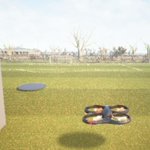
🎙️ Hosted by @nahidalam, a computer vision researcher and 4-year Cohere community member, currently working on a world model project for drones
🌐 The session walks through building a compact, transformer-based video world model inspired by the Cosmos architecture
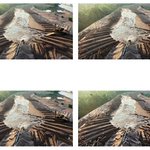
🏗️ The world being modeled is an excavator arm performing sand mining — chosen for continuity with a previous chapter's video
GPU & Model Size
📉 Original plan was a ~3B parameter model; revised to target 8GB and 16GB consumer GPUs so attendees can run training locally
⚙️ Two model configs are currently available; two more (for larger GPUs) will be added later
Model Architecture Components
🗜️ VAE (3D Causal VAE from Wan 2.1): Compresses raw video into compact spatiotemporal latent representations before passing them to the transformer; our Cosmos-style implementation leverages Wan 2.1's pretrained Causal VAE
🎞️ Spatiotemporal compression works because consecutive frames and neighboring pixels share high temporal and spatial redundancy, allowing 8×8 spatial and 4× temporal downsampling without losing critical detail
🧩 Patchification: Latents are grouped into 2×2 patches to reduce the sequence length of tokens fed to the attention heads; given the VAE's 8×8 spatial downsampling, a 2×2 latent patch matches a standard ViT's 16×16 pixel receptive field
⚡ Larger patch → fewer tokens → lower compute footprint but coarser spatial-contextual representation
🔬 Smaller patch → more tokens → richer fine-grained dynamics learning but quadratically higher compute; careful trade-off needed
🎯 Attention Head / QKV:
🔍 Query (Q): what the current spatiotemporal token is looking for (e.g., the next kinematic state or position of the excavator arm)
🔑 Key (K): what each token offers (its own spatiotemporal feature representation)
📦 Value (V): the actual information payload routed forward once attention weights are computed
🧮 Self-attention scales as O(n²) across total token count n; 3D VAE compression + 2×2 patchification drastically reduce n to make local training tractable
🌊 Flow Matching Network (Denoising):
🌫️ Direct single-step L2/MSE latent prediction learns the conditional expectation (the blurry average of many plausible futures) — undesirable for multimodal, dynamic scenes
✨ Conditional Flow Matching starts from Gaussian noise and iteratively integrates a learned velocity field toward a clean target latent over multiple ODE steps
🔗 The Diffusion Transformer (attention backbone) directly parameterizes this velocity field, unifying spatiotemporal context conditioning with iterative generation
🎭 Prefix Mask: Tells the transformer which latent frames are observed conditioning context (input) vs. which future frames it must generate; under Wan 2.1's 1 + 4k → 1 + k causal temporal stride, 5 raw frames compress into exactly 2 latent frames
⏩ The model conditions on observed frames 0–4 (2 latent frames) and generates target frames 5–16 (3 latent frames) as an example
🛡️ Target frames are interpolated with noise for flow matching training, while observed prefix frames receive light conditioning-noise augmentation (or per-frame noise levels) so the network stays robust against compounding rollout errors
Q&A Highlights
🧬 VAE source: Our implementation uses the open-weights 3D Causal VAE from Wan 2.1 rather than training a custom tokenizer from scratch or using NVIDIA's proprietary Cosmos Tokenizer
⚖️ Patch dimension choice: Driven by available compute and spatiotemporal redundancy trade-offs; strictly problem-specific with no universal rule
💸 Redundancy: Token redundancy is primarily a compute and memory budget concern (training/inference cost), not necessarily a representation quality bottleneck
🎯 Design trade-offs generally: Reaching 80% quality with 20% engineering effort is feasible; the final 20% of fidelity requires 80% of the effort and is typically domain-specific or an open research question
gitbook: world-models-from-scratch.gi…
github: github.com/nahidalam/world_m…

Nahid Alam retweeted

I get blown away every time I read this paragraph by Carl Jung, written in 1944:
“People will do anything, no matter how absurd, to avoid facing their own souls. They will practice Indian yoga and all its exercises, observe a strict regimen or diet, learn theosophy by heart, or mechanically repeat mystic texts from the literature of the whole world—all because they cannot get on with themselves and have not the slightest faith that anything useful could ever come out of their own souls.”
Nahid Alam retweeted
Session 2 for World Model from Scratch book is on Thursday Sept 17 at 9AM PST. We will look into an existing World Model architecture and evaluating it with existing benchmarks.
luma.com/ymbl73af?tk=EoQlJ5
Summary of the first session for the book
📋 Session Overview & Logistics
🎙️ Hosted by @nahidalam, a computer vision researcher and 4-year Cohere community member, currently working on a world model project for drones
📅 This is a bi-weekly series of ~10 chapters covering world models from theory to hands-on implementation
🎓 Attendees who complete ≥75% of sessions will receive a certificate from @Cohere_Labs
📖 GitBook (open, interactive) will be published publicly after this session ends; GitHub repo is already public
📈 Chapters 4 and 5 are expected to generate the most interest; earlier chapters build foundational concepts
🧠 Chapter 1: Core Concepts
🌍 What is a "world"? A bounded environment — not necessarily visual or video-basedExamples: self-driving cars, drones, computer-use agents (clicking through Slack), Excel-operating agents in banking
⚙️ What is a world model? A learned system that models how an environment changes — predicting possible futures given current state and actionsKey distinction: world model ≠ video model; video is just one possible world type
🔑 Key vocabulary defined:
👁️ Observation — what the world looks like now (e.g., camera frames, sensor data)
📦 State — encoded representation of the current situation
🕹️ Action — input that drives the agent (e.g., braking, speed change)
🔄 Transition — one predicted step from current state to next
🛣️ Rollout — a full sequence of transitions representing one possible path to a goal
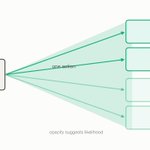
🛤️ Multiple futures: A model naturally produces multiple probable next states; the highest-probability outcome is typically selected, but all possible futures can be explored
🌪️ Dynamics are environment-specific (e.g., drone aerodynamics, car vehicle physics, biological processes)
🎯 Why world models? Core value is reasoning over possible futures — especially useful for rare/edge-case scenarios (e.g., a child unexpectedly crossing the road, or simulating impact of a new medicine on a geography)
🏗️ Simulators: Historically rule-based; increasingly integrated with learned world models and RL. Seen as a space ripe for disruption, especially for startups
💻 Chapter 2: Hands-On Demo (NVIDIA Cosmos Model)
🌌 The series will use the NVIDIA Cosmos ~2.5B parameter model for inference; a similar model will be built in Chapter 4 (capped at ~3B parameters)
⛏️ Demo showed a rollout explorer using a sand-mining input videoSteps: load video → encode frames → load Cosmos model → generate one or multiple rollouts using different seeds 🔍 A disagreement map can highlight where two rollouts diverge
🎛️ Key parameter: guidance scale — controls how strongly the prompt influences output (lower = less controlled)
💾 Pre-generated outputs are committed to the GitHub repo so attendees without GPUs can follow along
🚀 Tested on NVIDIA A40 (48 GB VRAM); inference may be possible on smaller GPUs; Mac GPU not tested and likely challenging
💡 Q&A Highlights
🧬 Is the world model generative? Yes — the series uses generative models similar to transformers
🔁 Can a rollout be categorized as continual learning? Unanswered — flagged as a good open question
🕸️ Is it related to graphs? Potentially — the tree-like rollout structure is graph-like in CS terms, but no direct graph-world-model work was cited
📉 World model vs. tabular RL? World models handle complex, high-variation environments; tabular/rule-based methods suffice for deterministic, low-variation scenarios
🎲 How is uncertainty represented? Through the probabilistic nature of the learned system (e.g., Markov models, LLM-based approaches); probability is the representation of uncertainty
🔗 Where is causality embedded? Likely in actions (direct events) and in environment-specific dynamics, possibly also trickling through the loss function — noted as an interpretability question
⚖️ World model vs. RL? RL is a type of learning; world model is a type of model — RL can be used to train a world model but is not required
☁️ Can inference run on Google Colab? Likely yes for inference (Chapters 2–3); training may be limited depending on Colab tier
💽 GPU Resources for Upcoming Hands-On Sessions
⚡ Modal — $30 free compute credits on the starter plan
🌩️ Lightning AI — previously offered free credits; current status unclear
☁️ Google Colab — works but may require workarounds for memory constraints
⏳ Hands-on session (Chapter 4 build) is approximately one month away; attendees encouraged to prepare GPU access in advance
gitbook: world-models-from-scratch.gi…
github: github.com/nahidalam/world_m…


Cohere Labs Open Science Community is launching 'World Models from Scratch', a hands-on technical series led by @nahidalam, co-lead of our Embodied AI group, who is writing an open book on the subject. This 9-session series will follow the book as it is developed. 🚀🏗️🌍
Build along from first principles with runnable code, diagrams, and interactive tools. Starts Sept 3. Certificate for 75%+ attendance.
Join our community: cohere.com/research/open-sci…

Nahid Alam retweeted
As you get older, you accumulate a lifetime of pains and a lifetime of joys. Your life is as good as whichever you choose to focus on.
Everyone’s got shit. Shitty people just spend all day dwelling on it.
Nahid Alam retweeted
I’m in love with this sentence:
“Discipline is when your identity is so clear, you stop negotiating with your feelings.”
Nahid Alam retweeted

“Almost everything will work again if you unplug it for a few minutes, including you.” — Anne Lamott
Nahid Alam retweeted

Together with my co-founders Michael @MichaelPoli6, Stefano @Massastrello and Armin @athmsx, I am excited to announce @RadicalNumerics is emerging from stealth with a $50M seed round to build general biological intelligence.
We’re also sharing an early preview of our new model Omnii, the most powerful genome language model to date.
Omnii preview link:
radicalnumerics.ai/blog/radi…
At Radical Numerics, our mission is to master the code of life, and to drive the frontier of biological AI for both design and defense.
This is our dual mandate, which comes from something our own team helped make possible.
Our founding team trained Evo and Evo 2, the largest biological AI models (40B params) trained on DNA sequences. Trillions of tokens across all of life, from microbes to mammals. It’s fully open source, and created the field now known as generative genomics.
Last year, scientists used Evo to generate the world’s first complete genome from scratch using AI. Turns out it was a bacteriophage—a type of virus. It functioned in the real world, and in this case it was harmless. But for us, it was a clear turning point.
It showed that AI is no longer just analyzing biology. It is on the cusp of generating functional lifeforms. Eventually, AI will have the power to design and control life itself.
That should make all of us incredibly excited, and incredibly uneasy. (Anyone can design DNA with a new function, and have it synthesized and delivered, like something from Amazon Prime).
The same technology that will help us cure cancer is the very technology that might create the next global pandemic, or worse, allow the creation of bioweapons that can wipe out populations.
We believe these forces are inseparable. If you work on the frontier of biology, you have to build technology to safeguard it from its misuse. Existing biosecurity tools are sorely losing the arms race, relying on outdated “have I seen this exact thing before?” style algorithms.
We founded Radical Numerics to turn the tide.
And we can’t do that by training on textbooks and natural language. We must understand the language of biology from the raw physical data itself, to reason across every molecule and modality, from DNA to proteins.
The next frontier for AI goes far beyond chatbots or video generators to models that can understand and engineer life.
Today, we’re previewing Omnii, which is already far surpassing Evo 2, and will continue improving as we scale and add new modalities (training now).
1. For human health, Omnii can read and write whole genomes (more on writing later). It’s state of the art (SOTA) on detecting causal variants for disease, and can rank Alzheimer's mutations zero-shot. We’re partnering with a diagnostics company to use Omnii for early cancer detection (pancreatic and multi-cancer).
2. For defense, Omnii is SOTA at detecting AI-generated pathogens. We benchmarked existing detection tools, and they simply can’t detect the AI-generated ones (“deepfake viruses”). We’re partnering with a US national lab to pilot Omnii for detecting the next pandemic, both natural and AI-generated.
We have a data center full of Blackwells in construction now to build the most powerful biological AI models ever. This mission takes a new kind of AI lab that can actually scale on physical, biological data: new alignment research (mid/post training), scaling long context, building out mech interp teams to dissect what these models learn, new architectures and systems designs, all from the ground up.
Our team is made up of AI researchers and scientists from top labs and institutions (e.g. Stanford, MIT, Google DeepMind), but more importantly, we all share the belief that this is the most important challenge of our lifetime. If you feel similarly, we are hiring. We aim to bring the brightest minds in AI and science together to save lives.
Thanks to our partners on this journey, led by Emergence Capital @emergencecap, with Obvious Ventures @obviousvc, Triatomic @TriatomicCap
, and Patrick Collison @patrickc. Our advisors include Eric Horvitz @erichorvitz, CSO of Microsoft, Chris Re @HazyResearch of Stanford, George Church @geochurch of Harvard, and Andrew Weber @AndyWeberNCB, former Assistant Secretary of Defense for Nuclear, Chemical and Biological Defense Programs.
Fortune article: fortune.com/2026/06/15/exclu…
Jobs: radicalnumerics.ai/join-us

Nahid Alam retweeted

The Summer of AI Research 2026 is now accepting applications! Work on an open science AI research project between July 13 and August 16. In this fully online event we invite people with little research experience to contribute to open source under the mentorship of experienced researchers.
Nahid Alam retweeted

Join us on May 28th as we welcome Eren Ata
for a session on "Resimulating Video Reality: Counterfactual Object Removal with Gargantua". Thanks to @nahidalam and @cole__ai for organizing this event! 🎉
Learn more: cohere.com/events/cohere-lab…

Nahid Alam retweeted
Looking for EleutherAI @iclr_conf? Here's where you can find us!
If you're in our discord, we have a thread #general > ICLR 2026 Meetup you can join to coordinate with @BlancheMinerva @GoncaloSPaulo @norabelrose and members of our community who will be there!

Nahid Alam retweeted
Our Embodied AI group is excited to host @DJiafei for an insightful session on "Building Robotics Foundation Model with Reasoning-in-the-loop" on Thursday, April 16th.
Thanks to program leads @cole__ai and @nahidalam for organizing this event! 🎉
Learn more: cohere.com/events/cohere-lab…

Nahid Alam retweeted

Nobody tells you this: Growth takes much longer than you expect, then happens much faster than you ever thought possible. The best things in life come from allowing compounding to work its magic. Growth happens gradually, then suddenly. Slowly, then all at once.
Nahid Alam retweeted
I’m in love with this sentence:
“The degree to which a person can grow is directly proportional to the amount of truth he can accept about himself without running away.”
Nahid Alam retweeted
Robots don’t learn survival the way humans do 🤖
@ToruO_O shares how teleoperation and multi-sensory policy learning can fast-track robots toward foundational human skills.She then dives into a core RL question: how do we design learning environments and reward functions that lead to useful, optimizable behaviors?
Watch the full session here: youtu.be/PzZS568OktM
Nahid Alam retweeted

We trained a foundation model on 18 million heart ultrasound videos to predict structure instead of pixels.
Introducing EchoJEPA, the first foundation-scale JEPA for medical video.
Paper: arxiv.org/abs/2602.02603
Code: github.com/bowang-lab/EchoJE…
🧵 1/n