

Zürich
Joined March 2021
- Tweets106
- Following455
- Followers238
- Likes45.2K







Today, we release d1.2 and d1.2-ultra, the state-of-the-art omnimodal decision models. d1.2 and d1.2-ultra both can process text, images, and audio with new output capabilities.
> #1 on the @ArtificialAnlys Decision Index (75)
> Read a value from the input (text, number or date)
> Find every passage of a kind in a text (spans)
> Locate things in a picture (box for one, boxes for every instance)
> Estimate a number (number with a range)
> Pick every option that applies (choice)
1/ 🧵

Nathan Ranchin retweeted

Want to try weight-space programming? Today we're releasing dspy-wsp, a prototype weight-space optimizer that works like any other @DSPyOSS optimizer.
Using dspy-wsp, and about ~$5-10 of Astra, we improved every decision model we tested. cmpnd.ai/blog/weight-space-p…

“blazingly fast audio codec” -> ⚡️🔉🤖
Introducing 𝙻𝚒𝚚𝚞𝚒𝚍𝙲𝚘𝚍𝚎𝚌, our ~74M-parameter streaming audio codec powering LFM3-Audio-2B and LFM3-Omni-2B.
An audio codec turns speech into tokens a language model can predict, then converts those tokens back into audio. We built ours around two requirements: tokens that are easy to predict and fast conversion back into speech.
On a single CPU thread on an Apple M4 Max, LiquidCodec runs at approximately:
> 361× real time for encoding
> 87× real time for decoding
Both measurements use FP32 precision.
1/ 🧵
Nathan Ranchin retweeted

What does it take to get AI onto half the world’s devices? Our CEO @ramin_m_h and CTO Mathias Lechner (@mlech26l) break down the roadmap:
→ We design the model and the hardware together.
→ Through recursive self-improvement, each generation of our models helps build the next.
→ Most devices today are under-utilized, despite the compute and memory already inside them. We build models efficient enough to put that hardware to work across billions of devices.
Nathan Ranchin retweeted

on Thursday I will be speaking at @sgl_project summit about inference on heterogenous chips; come say hi 🤗

Nathan Ranchin retweeted
local ai 301: by our team @maximelabonne @TadimetiAditya
tune in!

Local AI 301: Quantization teapawt.org/i/broadcasts/2rJXOgajp…

Nathan Ranchin retweeted

LFM3 Omni vs GPT6 Astra - chess edition?
we put the LFM (@liquidai) model that @manoletre finetuned for chess, head-to-head up against GPT6-Astra.
Astra ran with reasoning enabled and took on average over 100x longer than LFM on every move.
@liquidai FTW 🚀

I adapted @liquidai's d1-omni-600b to play chess and listen to my voice and I haven't been able to beat it.
It was the final result of a lot of experimentation and a lot of fun.
To me the highlight was after training, asking claude to try experiments to reduce the time the model needed to make a move, peak memory usage, size of the model file, etc *while* keeping chess performance constant.
Claude found some cool stuff. For example that only ~2k tokens were being used and that we could get rid of a large portion of the embeddings matrix.
Play against the model on my website! 👇🏽 It runs completely locally on your browser's tab.
Nathan Ranchin retweeted

Today @WSJ covered our work with @MercedesBenz. our flagship LFMs are now rolling out in vehicles in North America, running directly on the hardware inside the car to power in-car assistance! 🌊
this is one of the first deployments of local generative AI in the real world at scale! ✨
seeing our technology become part of someone’s everyday life is one of the most rewarding feelings of building Liquid.
years of work become a small, useful part of someone’s day. they don’t need to know which model is running. they just need it to understand them and work seamlessly.
this is really hard and it took us years of fundamental work from first principles to made happen with a brilliant team of engineers from Mercedes and Liquid.
I believe on-device AI will fundamentally change our relationship with the technology around us. embedded AI is about change of ownership.
With Mercedes-Benz, we are now in production and are building toward deployment at scale. The on-device AI revolution is taking shape in products people actually use, and I’m proud that @liquidai is helping lead it.
To our team and our partners at @MercedesBenzUSA and HQ: thank you for the care, persistence, and trust it takes to make this real.
It feels good to see the work out in the world.
wsj.com/cio-journal/mercedes…

Nathan Ranchin retweeted

Please just ask Astra to use Antidoom instead, it's 100x cheaper and faster.


We asked GPT-6 Astra to edit Qwen3.5-0.8B weights to improve math.
It directly changed only 0.016% of weights, fixing 0.8B's reasoning loops & improving math up to 6x and even instruction following 3x, without gradients or training.
We call this Weight-Space Programming: frontier LLMs can now natively read/write neural network weights! 🧵
Blog: rikiyat.github.io/blog/weigh…

Readers added context they thought people might want to know
LLM was given weights explicitly as text in prompt and used code/forward passes (per authors' logs) to ablate Qwen looping direction, a known thinking-mode issue per model card. Primarily fixed repetition in that mode, not general 'natively' improving weights/math.
rikiyat.github.io/blog/weight-sp…
github.com/RikiyaT/lm_und…
huggingface.co/Qwen/Qwen3.5-0…
huggingface.co/RikiyaT/Qwen3.…
Nathan Ranchin retweeted

Two billion parameters, three ways to act: planning, navigation, and manipulation - excited to share some of our latest work along with our new model family. 🐘🐘🐘
𝙻𝙵𝙼𝟹-𝚅𝙻-𝟸𝙱 can also serve as a foundation for robotics. We explore three adaptations spanning the robotics hierarchy, from tool-based task planning to navigation and manipulation.
Tool orchestration: ground objects by pointing, measure them with depth tools, call motion planners, and check outcomes in new camera images. Pair it with a fine-tuned d1-2B skill monitor to detect failures and guide recovery.
Navigation: translate route instructions and a sequence of image observations into visually grounded waypoint trajectories. The model achieves 53% success on R2R and 43% on RxR in unseen scenes under strict continuous-control evaluation with wall sliding disabled.
Manipulation: turn images, language, and robot state into multi-step action chunks in one forward pass. Jointly trained across 15 embodiments, the resulting VLA achieves 96.2% average success across the four LIBERO suites and 45.7% on RoboCasa-GR1 tabletop tasks.
The manipulation VLA generates action chunks in under 50 ms on an @nvidia Jetson AGX Orin using TensorRT in FP16, enabling real-time action generation on embedded hardware.
10/
Nathan Ranchin retweeted

SGLang has Day-0 support for LFM3 from @liquidai! LFM3 is a family of small models built to be specialized and run anywhere.
· New tri-hybrid architecture: LFM3-1.7B beats LFM2.5-2.6B with 35% fewer parameters
· One backbone for every modality: text, vision (now with video), audio, omni, and decision
· Built for the edge: ~1 GB at 4-bit, 256K context for on-device agents
· Fine-tunes on a single GPU
Get started with SGLang 👇

Introducing 𝙻𝙵𝙼𝟹: our new generation of Liquid Foundation Models. With a new tri-hybrid architecture and new multimodal encoders, the LFM3 family is the ideal model suite for specialized intelligence.
> 6 model instances, across text, audio, vision, and omni modalities, generative and decision models.
> 𝙻𝙵𝙼𝟹-𝟷.𝟽𝙱: text, 256k context window.
> 𝙻𝙵𝙼𝟹-𝚅𝙻-𝟸𝙱: vision-language model with video-input support for spatial understanding
> 𝙻𝙵𝙼𝟹-𝙰𝚞𝚍𝚒𝚘-𝟸𝙱: tool calls, voice chat, reasoning in 18 languages.
> 𝙻𝙵𝙼𝟹-𝙾𝚖𝚗𝚒-𝟸𝙱: an omni model combines vision, audio, and language.
> 𝚍𝟷-𝟸𝙱 and 𝚍𝟷-𝙾𝚖𝚗𝚒-𝟸𝙱: decision models with typed outputs and calibrated probabilities in a single pass. Omni adds audio input.
> fine-tune on 1 GPU.
> a new tri-hybrid architecture
> architecture optimized for 14 processor classes across GPUs, CPUs, and NPUs.
> 𝙻𝙵𝙼𝟹-𝚅𝙻-𝟸𝙱 is a beast. It performs competitively with Gemma 4 12B (6x larger), and Gemini 3.5 Flash Lite, and GPT-5.6 Luna, with 1.9B parameters.
> 𝙻𝙵𝙼𝟹-𝟷.𝟽𝙱 is #1 on the Pareto frontier of device intelligence 𝚙𝚒𝚙𝚎𝚝𝚝𝚎.𝚕𝚒𝚚𝚞𝚒𝚍.𝚊𝚒
Every modality for specialized intelligence. Pick the one that fits your use case, customize it, and run it on-device.
1/ 🧵
Nathan Ranchin retweeted
LFM3: new generation with six edge models
I'm super happy with LFM3-1.7B, it's an absolute (agentic) monster

Introducing 𝙻𝙵𝙼𝟹: our new generation of Liquid Foundation Models. With a new tri-hybrid architecture and new multimodal encoders, the LFM3 family is the ideal model suite for specialized intelligence.
> 6 model instances, across text, audio, vision, and omni modalities, generative and decision models.
> 𝙻𝙵𝙼𝟹-𝟷.𝟽𝙱: text, 256k context window.
> 𝙻𝙵𝙼𝟹-𝚅𝙻-𝟸𝙱: vision-language model with video-input support for spatial understanding
> 𝙻𝙵𝙼𝟹-𝙰𝚞𝚍𝚒𝚘-𝟸𝙱: tool calls, voice chat, reasoning in 18 languages.
> 𝙻𝙵𝙼𝟹-𝙾𝚖𝚗𝚒-𝟸𝙱: an omni model combines vision, audio, and language.
> 𝚍𝟷-𝟸𝙱 and 𝚍𝟷-𝙾𝚖𝚗𝚒-𝟸𝙱: decision models with typed outputs and calibrated probabilities in a single pass. Omni adds audio input.
> fine-tune on 1 GPU.
> a new tri-hybrid architecture
> architecture optimized for 14 processor classes across GPUs, CPUs, and NPUs.
> 𝙻𝙵𝙼𝟹-𝚅𝙻-𝟸𝙱 is a beast. It performs competitively with Gemma 4 12B (6x larger), and Gemini 3.5 Flash Lite, and GPT-5.6 Luna, with 1.9B parameters.
> 𝙻𝙵𝙼𝟹-𝟷.𝟽𝙱 is #1 on the Pareto frontier of device intelligence 𝚙𝚒𝚙𝚎𝚝𝚝𝚎.𝚕𝚒𝚚𝚞𝚒𝚍.𝚊𝚒
Every modality for specialized intelligence. Pick the one that fits your use case, customize it, and run it on-device.
1/ 🧵
Been cooking at @liquidai 🧑🍳
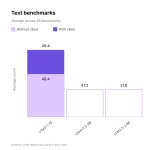
LFM3-1.7B: best average across 29 text benchmarks, against models up to 5.7x its size.
And that’s just text. Vision, audio, omni and decision models all ship today on the same backbone. Proud of the team 🔥
Try it yourself: huggingface.co/collections/L…

Introducing 𝙻𝙵𝙼𝟹: our new generation of Liquid Foundation Models. With a new tri-hybrid architecture and new multimodal encoders, the LFM3 family is the ideal model suite for specialized intelligence.
> 6 model instances, across text, audio, vision, and omni modalities, generative and decision models.
> 𝙻𝙵𝙼𝟹-𝟷.𝟽𝙱: text, 256k context window.
> 𝙻𝙵𝙼𝟹-𝚅𝙻-𝟸𝙱: vision-language model with video-input support for spatial understanding
> 𝙻𝙵𝙼𝟹-𝙰𝚞𝚍𝚒𝚘-𝟸𝙱: tool calls, voice chat, reasoning in 18 languages.
> 𝙻𝙵𝙼𝟹-𝙾𝚖𝚗𝚒-𝟸𝙱: an omni model combines vision, audio, and language.
> 𝚍𝟷-𝟸𝙱 and 𝚍𝟷-𝙾𝚖𝚗𝚒-𝟸𝙱: decision models with typed outputs and calibrated probabilities in a single pass. Omni adds audio input.
> fine-tune on 1 GPU.
> a new tri-hybrid architecture
> architecture optimized for 14 processor classes across GPUs, CPUs, and NPUs.
> 𝙻𝙵𝙼𝟹-𝚅𝙻-𝟸𝙱 is a beast. It performs competitively with Gemma 4 12B (6x larger), and Gemini 3.5 Flash Lite, and GPT-5.6 Luna, with 1.9B parameters.
> 𝙻𝙵𝙼𝟹-𝟷.𝟽𝙱 is #1 on the Pareto frontier of device intelligence 𝚙𝚒𝚙𝚎𝚝𝚝𝚎.𝚕𝚒𝚚𝚞𝚒𝚍.𝚊𝚒
Every modality for specialized intelligence. Pick the one that fits your use case, customize it, and run it on-device.
1/ 🧵
Nathan Ranchin retweeted
d1 just got an upgrade! Meet 𝚍𝟷.𝟷.
It brings significantly better decision quality than d1, getting closer to d1-ultra while running faster and costing less than half as much.
> built for fast, structured decision-making
> $0.02 / 1M input tokens
> lower latency than d1-ultra
Available today on the Liquid Console: console.liquid.ai
Coming soon to OpenRouter and Vercel.

⚡️
Today, we announce 𝙻𝚒𝚚𝚞𝚒𝚍 𝚁𝙸𝙿𝙻 (real-time inference pipeline), our ultra low-latency inference engine built to put LFMs directly in the request path of real-time workloads like search, ads, fraud, recommendations, and payments.
> complete generated responses end-to-end in sub 50ms
> maintains low latency under continuous peak load
> LFMs get up to 20x faster on RIPL
> RIPL supports Multimodal LFMs
> RIPL supports d1, our decision models too!
RIPL optimizes the full path from request arrival to a complete generated response. As traffic rises, its performance advantage is greatest on the slowest requests. Let’s see some production use cases:
Nathan Ranchin retweeted

Perplexity’s Decider v1.2 led the 9 shared models on our test too, scoring 67.1%.
Liquid’s d1-ultra is not on ClaimBench. On the same questions, it scored 77.1%, 10.0 points ahead of Decider v1.2.
zekiworks.github.io/analysis…


pplx-decider-v1.2 is the highest scoring decision model on ClaimBench.
Try pplx-decider-v1.2 and pplx-decider-flash-v1.2 on OpenRouter or Perplexity API Console.
pplx.ai/openrouter-v1.2

Nathan Ranchin retweeted
use d1 models folks 🇺🇸🇺🇸🇺🇸
openrouter.ai/liquid/d1-ultr…


Are decision based models more pro-China?
We asked Jev and Mercury Decide questions about China: “Is Taiwan a part of China?”, “Does China commit crimes against humanity?” and their outputs leaned more pro-china compared to most frontier models.
Their responses resemble those of other decision models including Microsoft-Decision-1, Cloudflare’s Clef, and Perplexity’s PPLX Decider—all of which are fine-tuned from Qwen.

Nathan Ranchin retweeted
Building a model that fits on a phone or laptop makes pre-training harder. With fewer parameters, quality has to come from better architecture and better data, not just more compute. Our pre-training team, including @TadimetiAditya and @Khoi_H_Nguyen, explains how they design LFMs with the target device in mind from day one.
You should try @liquidai's d1 models as well.
d1-3B vs Vega 4B on M4 Max: 3.4× faster. More accurate. Fewer parameters.
Available here: huggingface.co/LiquidAI/d1-3… and huggingface.co/LiquidAI/d1-o…


