

Manufacturing propaganda for American Dynamists @ Delta Studio
NYC
Joined October 2015
- Tweets5.5K
- Following2.1K
- Followers1.9K
- Likes149K








Pinned Tweet
The most powerful piece of technology ever created is not a machine or a software.
It's a story.
Story has been wielded by the greatest leaders and innovators throughout history to shape belief, move capital, and inspire action.
That's why we're launching Project Genesis: brand new offering from Delta Studio that turns your founder story into an instrument to bend the arc of history.
Over the course of just three weeks, you’ll receive:
1.) Story coaching with our Head of Narrative Design.
2.) A cinematic storyboard visualizing your company’s founding narrative using professional filmmaking techniques.
3.) A Modular Story Guide with three written versions of your story crafted for fundraising, hiring, and media engagement.
Your Story Bible can be used immediately — Walk into your next investor pitch, recruiting call, or media appearance with the confidence of a cinematic protagonist.
Ready to take control of your narrative? Shoot me a DM and I'll show you what we've been working on...
Did you catch that? Something really special is happening here:
This is one of the first videos I've ever seen that combines found footage with AI video into one seamless story.
A couple of observations:
- This video seems to obfuscate Jordan's face whenever the footage is AI generated
- The real footage always shows full face
- The AI footage uses several short cuts of the same scene from different angles
- Real found footage is scattered throughout the AI scenes
- Grainy/noisy filter effect over everything to create a consistent visual effect

Michael Jordan is pathologically competitive:
Michael Jordan’s friend, Fred Whitfield had a bunch of Puma gear in his closet.
One day, Jordan visited Whitfield’s apartment and asked to borrow a jacket. When he saw the closet, he pulled out all of Whitfield’s Puma clothing and shoes, brought them into the living room, grabbed a butcher knife from the kitchen, and cut everything up.
Jordan then carried the scraps to the dumpster.
Jordan told Whitfield to call Nike the next day and have the items replaced—but warned him never to wear anything except Nike around him again.
Jordan told him:
“You can’t ride the fence.”
I’m no Girard scholar, but this seems like a pretty clear example of the scapegoating mechanism emerging in response to the political, economic, and social instability of this era.
Since we cannot "sacrifice" AI, we will simply find its closest incarnation - the data centers.


3
276
He's right about this.
TikTok gets a lot of the blame for propagating some of the most egregious disinfo campaigns, but many of the most damaging narratives are spread on Facebook.
If you explore some of the anti-data center community groups, you'll find a robust mix of platitudes, outrage videos, false information, and endless AI slop.
Each comments section is dominated by hysteria and outrage. Within the community groups, most people find a way to attribute their own political grievances and existential anxiety (political, economic, social instability) to data centers.
Most importantly, these arguments cannot be met with evidence and factual corrections. Until you understand why people are reacting this way, you'll never know what to do about it.


She’s neither a renter nor a home owner and she’s fallen for Facebook memes that has caused her to successfully block an income source for her county that has a serious revenue deficit. But she saved an abandoned parking lot from being developed


1
268
Nick Trimmer retweeted

declining to pay a bloodthirsty podcast personality millions of dollars a year to celebrate political assassinations or agitate for further violence is not “cancel culture.” that was just called being a normal ethical human being until five minutes ago.


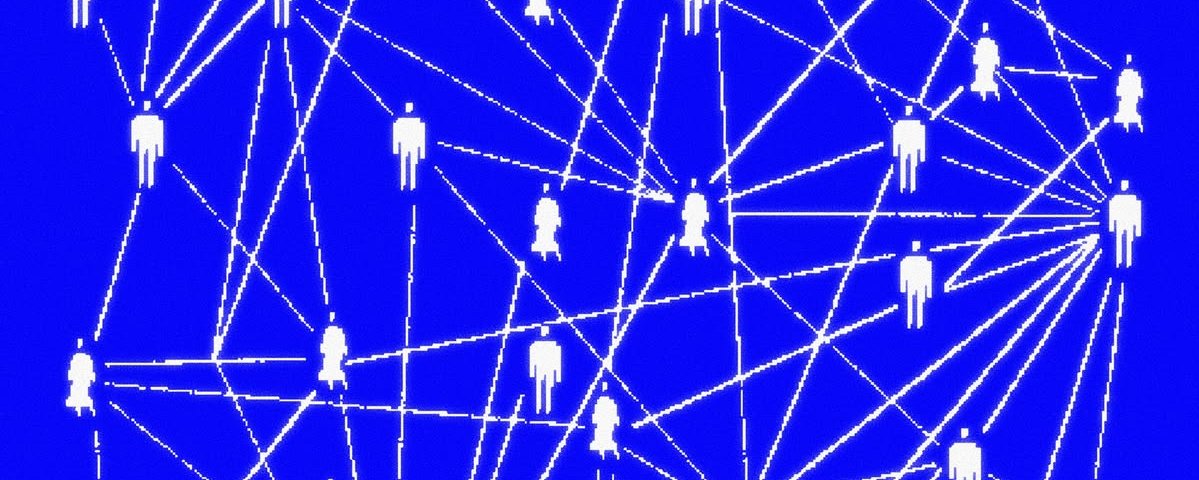
This is actually an important first step when conducting any counter-narrative operation: one of the most effective means of changing the perception of a thing is to give it a new name.
At any given point, several narratives are circulating around a person, place, or idea. The most successful narratives are coherent (clear message), resonant (emotional connection), and repetitive (shared widely, repeated often).
The more a single narrative is reinforced, the more entrenched it becomes in the minds of the public. With time and repetition, that narrative acts as a sort of parasite that embodies its host. The two become synonymous.
The most effective way to break this entrenchment is to change the name. A new name helps sever the association between the destructive narrative and its object. However, this new name must immediately be followed by a new narrative to define it.
In the past, terms like "Nuclear" became synonymous with "disaster" or "Chernobyl".
In response, some have attempted to describe nuclear power in a way that subverts the political baggage of terms like "renewable energy" and "nuclear energy". After all, both are victims of their own entrenched political narratives. @wolfejosh, for example, often advocates for the term "Elemental Energy" to describe renewable forms of power generation like solar, wind, geothermal, hydro, nuclear, etc.
This approach accomplishes two things:
1. It strips the political ideology from existing forms of"renewable energy" and reframes it as a non-partisan technology.
2. It launders nuclear power production via the halo effect associated with more popular forms of "renewable energy".
This same form of conflict is occurring today.
Ideas like "stolen water" or "environmental destruction" have become entrenched and deeply associated with the topic of "data centers". OpenAI's attempt to change both the name and implied purpose of its data centers is an important first step to break destructive narratives.


4
215
Nick Trimmer retweeted

this stuff is so tiresome. jp morgan lead new york city yacht club to two successive cup victories, rockefeller raced trotters through central park, ellison made sailboats fly
you all are falling victim to the pastiche of martyrdom without any of the glory. get over yourselves


When we finally capture the Chinese fishing fleets pillaging the South American coast, we're going to feed them to the Shinkei Discombobulator

we have a winner for the most absurd AI startup ever
this Peter Thiel backed company uses AI robots to stab fish in the brain so they taste better and last up to 3x longer
it's called Shinkei and it modernizes a centuries-old Japanese technique
dozens of Michelin-star restaurants are already lining up to buy the fish
here's how it works:
> the problem is when a fish gets caught, it usually just suffocates on the boat
> that stress floods the meat with hormones and lactic acid, which hurts the flavor and texture
> the old Japanese fix for this was spiking the fish through the brain right after the catch, which stops all that
> but doing it by hand is impractical for most American fishing crews
> so Shinkei built a fridge-sized robot that sits right on the boat's deck
> the crew feeds in a fish and AI identifies the exact species, so it knows exactly where the brain and gills are
> the robot then drives the spike through the brain and cuts near the gills in about 7 seconds
> the fish goes into an ice slurry so the blood drains out
> so the fish doesn't sit there stressing out, and that tasty flavor and texture is preserved
example number 5,392,417 of how AI can be applied to literally anything

ALT A gloved fisherman on a boat feeds a live salmon head-first into the steel intake of a white Shinkei Systems robot, with the ocean behind.
1
185
Nick Trimmer retweeted

Founders, you started a company! Congrats, you’re now the chief storyteller.
A lot of technical founders don’t love this part of becoming a CEO. You want to build the product, solve hard problems, and assume that if what you’re building is good enough, people will figure it out.
They probably won’t.
As CEO, perhaps the biggest part of your job is explaining what you’re doing over and over again to investors, customers, candidates, and your own team. You have to make them understand why it matters without assuming they have the same technical context you do.
That doesn’t mean turning into a marketing person or dumbing down what you’re building. It means figuring out how to explain a complicated idea clearly enough that other people actually care. A good test is whether you can explain what you’re building, why it matters, and why now without spending the first ten minutes teaching someone the underlying technology.
Start with the problem and why anyone should care, then go as deep on the technical details as the audience wants to go.
You can build something technically incredible, but at some point you still have to convince people to buy it, fund it, work on it, or believe it should exist. Learning how to tell that story is a huge part of the job too.
A reminder that one of the most destructive mistakes made by this administration was its refusal to ban TikTok

anti- AI content is just a big psyop???
@TaylorLorenz is being offered money to promote anti-AI content
But this narrative warfare goes way deeper than domestic dark money...
Foreign adversaries run covert influence operations on our feeds every single day.
"But whyyyy?"
Because they are MAD.
Back in 2022, the U.S. gutted foreign access to advanced AI chips. Beijing called it "suppression to protect American supremacy"
openai’s june 2026 report described an adversarial operation posing as americans and making memes about data centers driving up electricity bills
Narrative warfare is real and influencers are being paid for it.
have you noticed more anti-AI content in your feed lately ??? how authentic do you think it is?
1
7
288


This is a critical fact of life that I have to remind myself of from time to time. Humans, by default, are openly hostile to change.
Yes, narrative is a useful tool that can help frame the change in a more familiar context for the recipient. But it's not *any* narrative that will change people's opinions. It has to be the right one.
Humans have an attention hierarchy that you must abide by if you wish to influence perception. At the top of this hierarchy are more "lizard brain" priorities related to food, shelter, and sex. At the bottom are more abstract concepts like common good and long-term planning.
If you're attempting to counteract a fear-based emotion, you cannot respond with abstract notions of "reduced electrical bills", "reduced property tax", and "more jobs". These heightened states of emotion must either be assuaged or overridden if you wish to appeal to the conceptual.
This is the reason why most narrative operations are built to invoke powerful emotions quickly. You cannot make appeals to logic or rationality when someone feels like they're under threat. In response, most counter-narrative operations attempt to redirect the emotion, rather than to overcome it: "You shouldn't be afraid of THAT -- in reality THIS is much scarier."
There's no perfect, consistent way to overcome this. Narratives that appeal to our rational thinking take longer to penetrate the emotional armor of fear and greed. Admittedly, one of the most consistent ways to pull someone out of an emotional spiral is via some sort of reward mechanism.
Do you want to help someone overcome the fear of getting into a car with a complete stranger? Make it half the price of a taxi.
Want to get someone to try a consumable product for the first time? Give it away for free.
Want to overcome the existential dread about the threat of data centers and AI? Pay off the taxpayer.
Politicians know this better than anyone: Narrative is great, but sometimes a good old-fashioned bribe will do the trick.

this is maybe the most depressing video of the year for me. spacex offers 40% reduced electric bills, 20% reduced property tax, 100s of millions for the city and 1000+ jobs, with no water usage. they get yelled at the whole time. it seems people only want death, not growth
222
Nick Trimmer retweeted

When I got my first big social media job in 2020, I was a proud hater of fancy production for social posts
"All you need is an iPhone!!! People want casual!!!"
That advice made sense when your followers saw your posts
Now the algorithm shows you to strangers at the same clip as your followers, and strangers don't owe you anything. They might not know who you are, and you have to earn their attention immediately
If your video doesn't do well among non-followers, it'll tank
Had Talarico's team used a casual iPhone shot for this video, it would've lost all of its aura and sense of place and you probably would've kept scrolling
Instead, they shot it like a damn movie, and it racked up hundreds of millions of views across platforms
I can't tell you what the zoom and the lens and the angle are doing, but I can tell you it feels good. It earns your attention, and you want to listen
The dynamic captions right in the middle of the screen help keep you hooked too, because those feel good to read
You should trust @parkerpbutler a lot more than me about campaign social, and he said 2026 was the year organic overtook paid social
I don't anticipate organic being any less important in 2028 and beyond
The best campaign teams will operate like miniature production studios, and the entire org will need to give digital a seat at the table from the very beginning, rather than bringing them in at the last minute and asking, "We have an event, how are we going to film it?"
Like it or not, the internet is real life
The most expedient way to retake the data center narrative would be to do two things:
1. Appeal to a common enemy by associating data center opposition with boomer-style NIMBYism
2. Push heavy into the narrative that they're giant cash machines for stagnant local economies

110
We're past the point where bad narratives surrounding data centers can be explained away with a few rational arguments.
The tech sector has repeatedly made the mistake of assuming that technological progress is an inherent good in itself, and that this goodness will always win out in the end.
This is demonstrably false.
For the past several years, various coalitions and interest groups have hijacked "data centers" as a cause du jour. These structures have become a vessel into which anyone can thrust their generalized anxieties and sacrifice in the name of some platitude like "collective prosperity" or "human dignity". If you want to take control of the narrative, you need to create a new one.
It's not useful to prepare a list of statements detailing why data centers are important. Nor is it impactful to point out the fact that our digital infrastructure has relied on data centers for decades. None of this information changes how a person feels about the topic.
This feeling, of course, is not about what the data center is; it's about what it represents: it's an abstract threat to a person's identity and their ability to exert control over their life and their circumstances.
In order to counteract these narratives, you can do one of two things: you contextualize the threat in terms that assuage the underlying feelings associated with the thing. Or, you build an entirely new association.

I've always wondered if there's a consistent liquidity threshold within any given market that would make the prediction reliably accurate.
i.e. a prediction market with $1M in liquidity can be meaningfully influenced with a $100K bet in either direction.

The favorite on Kalshi won 479 of 487 midterm races so far.
That’s 98%, forecasted before a single vote was counted.
The markets beat the polls and the models. The data 🧵

1
104
Nick Trimmer retweeted

Observation: the smarter everything gets, the more valuable dumbness becomes.
I think “offline” is about to become a luxury feature, the way a mechanical watch or a paper notebook became a status signal once everything else went digital.

Nick Trimmer retweeted

THE ARCHĒ (AR-KAY)
The fundamental substrate of the universe, over which the minds of the great Pre-Socratic philosophers wandered in pursuit of the nature of reality.
Born of the conviction that nature possessed some underlying principle or constituent element permeating all things, Thales posited it was water, Pythagoras found it in numbers, and Anaximander conceived of the apeiron, the boundless and indefinite from which all things emerge.
This early philosophical worldview held that beneath the multiplicity of the natural world there might exist some fundamental unity, a substrate from which all things arise, perhaps lurking just beyond our line of sight, or perhaps right before our eyes.
WHAT IS THE ARCHĒ OF OUR WORLD?