

The Nomad Heritage Institute is independent research and open dialogue that leads to policies for a more secure, equitable and prosperous of the Horn of Africa
Ottawa , London, New York, Har
Joined May 2023
- Tweets1.4K
- Following710
- Followers1.2K
- Likes1.1K




Nomad Heritage Institute retweeted

La chaîne de télévision Horyaal, dans sa section francophone, a réalisé une interview particulièrement intéressante avec Dame Edna Adan Ismail, fondatrice de l’hôpital maternel Edna Adan et ancienne ministre des Affaires étrangères de la République du Somaliland.
Une personnalité remarquable dont le parcours et les réalisations méritent d’être mis en lumière.
FOR IMMEDIATE RELEASE
DNA Nationalism Is a Dangerous Political Myth: Identity, Citizenship, and Rights Cannot Be Determined by Genetics
Hargeisa, Somaliland – We express our deep concern over the growing misuse of genetic research to advance political agendas and promote divisive narratives in the Horn of Africa. Attempts to define nationality, statehood, citizenship, or political legitimacy through DNA are scientifically unsound and politically dangerous.
Human beings share a common origin and are connected through thousands of years of migration, cultural exchange, and intermarriage. Modern genetic research demonstrates that populations throughout the Horn of Africa share overlapping ancestries and genetic lineages that cross contemporary borders. Genetics cannot determine who has political rights, who belongs to a nation, or who has the right to self-determination.
The Facts About E-V32
One of the most frequently cited genetic markers in discussions about the Horn of Africa is Y-chromosome haplogroup E-V32. However, scientific research does not support the claim that E-V32 belongs exclusively to one nationality or one political identity. Studies have found E-V32 and its related lineages among numerous populations across the Horn of Africa and neighboring regions. Research by Fulvio Cruciani and colleagues identified E-V32 as a branch of the broader E-M78 lineage that is especially common in the Horn of Africa, not exclusive to any single nation or state.
Published genetic studies have reported E-V32 among Somalis, Oromos, Beja, Sudanese populations, and other communities across the region. One study cited frequencies exceeding 50% among sampled Somali groups while also identifying substantial frequencies among other East African populations.
The scientific conclusion is clear: E-V32 is a regional Horn of Africa lineage, not a "Somali DNA" marker and not evidence of exclusive ownership by any nationality. Genetic markers do not correspond to modern political borders, citizenship, or state identity.
Nationality Is Not DNA.
Nationality is a legal, political, historical, and cultural concept. It is not a genetic category. Throughout history, nations have been built through shared institutions, collective experiences, governance, language, culture, and the democratic will of their people.
Efforts to promote DNA-based nationalism risk creating confusion, division, and hostility where cooperation and mutual respect are needed. Such narratives replace civic identity with biological determinism, a concept that has repeatedly proven harmful throughout world history.
Rejecting Extremism and Political Manipulation.
We also condemn extremist Islamist organizations and terrorist groups that have used violence, intimidation, and fear to advance political objectives across the region. These groups have inflicted immense suffering on civilians, undermined economic development, weakened institutions, and threatened regional stability.
Political extremism and genetic nationalism share a common feature: both seek to divide people rather than unite them around shared values, equal citizenship, democratic governance, and respect for human dignity.
A Call for Unity and Democratic Values.
The future of the Horn of Africa must be built on peace, democracy, equality, and mutual respect. The people of Somaliland, Somalia, and neighboring countries deserve a future free from divisive ideologies, whether based on extremist politics, ethnic exclusivity, or the misuse of genetic science.
No DNA marker owns a nation. No haplogroup determines political rights. No genetic lineage grants exclusive ownership of history or identity.
The strength of the Horn of Africa lies in its diversity, its shared humanity, and its commitment to peaceful coexistence.
References.
Cruciani et al. (2007) and subsequent studies on E-V32 and E-M78 lineages in Northeast Africa.
Trombetta et al. (2015), Genome Biology and Evolution, large-scale study of Haplogroup E and Horn of Africa populations.
Population studies showing E‑V32 among multiple Horn of Africa populations, including Somalis, Oromos, Beja, and other East African groups.
@cnnbrk @SenTedCruz @POTUS @Somaalilanders @somalilandmfa @MMSomalitv @SomalilandChro1 @AsstSecStateAF @_AfricanUnion @AfricaWatch1 @HornDiplomat @VoiceofHorn

Nomad Heritage Institute retweeted

Somaliland has built a functioning democratic state, with a clear Western orientation, against the odds. It’s time the world looked beyond political convenience and recognised the reality on the ground. A compelling read on a long-overdue question.
intpolicydigest.org/somalila…


PRESS RELEASE
The Republic of Somaliland Reaffirms Its Commitment to Self-Governance, International Cooperation, and Constructive Engagement.
Hargeisa, Republic of Somaliland | 19 November 2026.
The Government of the Republic of Somaliland reaffirms its longstanding commitnevement to peace, democratic governance, regional stability, and constructive engagement with the international community. Somaliland remains dedicated to conducting its external relations in accordance with its responsibilities as a self-governing polity and in pursuit of the interests and aspirations of its people.
The Republic of Somaliland's position is grounded in its unique historical experience and political development. Somaliland attained independence from the United Kingdom on 26 June 1960 and never subsequently entered into a voluntary union with the former Trust Territory of Somalia. Following the collapse of occupation of the Somalia Republic and the dissolution of illegal national institutions in 1991, the people of Somaliland restored their self-governance through a broad-based consensus process and have since maintained peaceful and effective institutions of government.
For more than three decades, Somaliland has demonstrated a sustained commitment to democratic principles, the rule of law, and the peaceful transfer of political authority. Through constitutional governance, periodic elections, functioning public institutions, and community-led reconciliation efforts, Somaliland has built a stable political environment that reflects the aspirations and consent of its people.
The Government of Somaliland notes that the principles of self-determination, representative governance, and the peaceful expression of political will remain important foundations of the international order. Somaliland's political evolution has been characterized by dialogue, consensus-building, and democratic participation, reflecting the enduring commitment of its citizens to determine their own political future through peaceful means.
In conducting its external relations, Somaliland seeks partnerships based on mutual respect, shared interests, and cooperation. Its engagements with international partners in areas such as trade, development, investment, security, maritime cooperation, education, and infrastructure are intended to advance regional prosperity and contribute to broader international objectives.
Somaliland remains a constructive actor in the Horn of Africa and has consistently supported efforts aimed at promoting peace, security, economic integration, and responsible governance throughout the region. The Republic believes that cooperation among neighboring states and international partners is essential to addressing shared challenges and creating opportunities for sustainable development.
The Government of Somaliland further emphasizes that meaningful and lasting solutions to political questions in the region are best achieved through dialogue, mutual understanding, and respect for historical realities and the democratic aspirations of peoples. In this spirit, Somaliland remains open to engagement with all stakeholders committed to peaceful and constructive dialogue.
As Somaliland continues to strengthen its institutions and expand its international partnerships, it remains guided by the principles of peace, cooperation, democratic governance, and respect for international norms. The Republic looks forward to deepening its relationships with partners across Africa and around the world in pursuit of shared prosperity and regional stability.
The Government of the Republic of Somaliland expresses its gratitude to all international partners who have engaged with Somaliland in a spirit of cooperation and mutual respect and reaffirms its readiness to continue contributing positively to peace, security, trade, and development in the Horn of Africa and beyond.
@POTUS @SenTedCruz @UAEEmbassyUS @UAE_News @UAENewsArabic @UAEmediaoffice @UN @_AfricanUnion @dailyeurotimes @EU_Commission @EUCouncil @AmbMohamedHagi @AsstSecStateAF @TiborPNagyJr @DrJPPham @siciidSL @musebiihi @Presidencysl_ @somalilandmfa @MFAEthiopia @TheAfricaPlus @HornDiplomat @cityofhargeisa

Nomad Heritage Institute retweeted

#ICYM: This is Somaliland’s old writing script, replaced by Somalia during occupation in 1972.
Somalia’s appropriation goes beyond Somaliland’s sovereignty & independence. It extends to its history, language, ethnic identity and cultural heritage.
Somalia is fraudulent country.


Nomad Heritage Institute retweeted

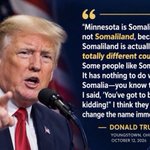
Ted Cruz Renews Call for State Department to Recognise Somaliland
horndiplomat.com/ted-cruz-re… @SenTedCruz @tedcruz #Somaliland Via @HornDiplomat

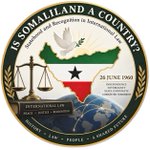
Response to Is Somaliland a Country ? Statehood and Recognition in International Law.
November-15-2026.
Ottawa,Canada.
The article's conclusion would be strengthened by recognizing that Somaliland's claim is founded not on secession from Somalia, but on the restoration of the sovereignty of the State of Somaliland, which became independent on 26 June 1960 and was internationally recognized before entering a illegal union with the former Trust Territory of Somalia on 1 July 1960.
Somaliland's Claim Is Based on Prior Statehood.
On 26 June 1960, the State of Somaliland attained independence from the United Kingdom through the termination of the British Protectorate and entered the international system as a sovereign state. The State of Somaliland existed as an independent state until 1 July 1960, when it annexed by the Trust Territory of Somalia. This historical fact distinguishes Somaliland's case from typical secessionist movements.
References:
Crawford, James. The Creation of States in International Law, 2nd ed. Oxford University Press, 2006, pp. 330-331.
United Kingdom, Royal Proclamation Terminating Her Majesty's Protection Over the Somaliland Protectorate, 24 June 1960.
United Kingdom, Somaliland Order in Council 1960, No. 1060, 23 June 1960.
State of Somaliland. "State of Somaliland." Available at: en.wikipedia.org/wiki/State_…
Somaliland Ministry of Foreign Affairs, Independence 1960, available at: mfagovsomaliland.org/recogni….
The Legal Question of the 1960 Union.
A central issue in Somaliland's legal argument concerns the validity of the union that created the Somali Republic. Several legal scholars have argued that the union between the State of Somaliland and the Trust Territory of Somalia was not completed through a properly ratified bilateral Act of Union before unification took effect.
The Legislative Assembly of Somaliland approved a union proposal in June 1960, while a different Act of Union was subsequently drafted after unification. This sequence has led some scholars to question whether a legally perfected union ever came into existence under the constitutional requirements applicable at the time.
If the union was legally deficient, Somaliland's restoration of sovereignty in 1991 may be interpreted as the reassertion of pre-existing sovereignty rather than a unilateral act of secession.
References.
Bradbury, Mark. Becoming Somaliland. James Currey, 2008.
Farley, Benjamin. "Calling a State a State: Somaliland and International Recognition." Emory International Law Review, Vol. 24, No. 2 (2010).
Somaliland Societies in Europe. Political Independence of Somaliland on 26 June 1960, 2021.
Somaliland Law. The State of Somaliland: An Independent State and its Laws - June 1960, available at: somalilandlaw.com/state_of_s…
Statehood Under International Law
The classic legal criteria for statehood are set out in Article 1 of the Montevideo Convention on the Rights and Duties of States (1933), which provides that a state should possess:
A permanent population;
A defined territory;
Government; and
Capacity to enter into relations with other states.
For more than three decades Somaliland has maintained effective control over its territory, established functioning institutions of government, conducted elections, maintained security forces, and engaged in international relations through diplomatic and representative offices.
Consequently, many scholars argue that Somaliland satisfies the traditional criteria for statehood under the declaratory theory of international law.
References:
Montevideo Convention on the Rights and Duties of States, 26 December 1933, Article 1.
Shaw, Malcolm N. International Law, 9th ed. Cambridge University Press, 2021.
Britannica, "What Requirements Did the Montevideo Convention Establish for Statehood?"
Ker-Lindsay, James. The Foreign Policy of Counter Secession. Oxford University Press, 2012.
Recognition Does Not Create Statehood
Article 3 of the Montevideo Convention states:
"The political existence of the state is independent of recognition by the other states."
Under the declaratory theory, recognition acknowledges an existing state rather than creating one. Therefore, the absence of widespread recognition does not automatically determine whether an entity possesses statehood under international law.
This distinction is important in the Somaliland case because the legal question of statehood and the political question of recognition are not identical.
References
Montevideo Convention on the Rights and Duties of States, Article 3.
Crawford, James. The Creation of States in International Law, 2nd ed., Oxford University Press, 2006.
Shaw, Malcolm N. International Law, 9th ed., Cambridge University Press, 2021.
The African Union's Assessment
In 2005, the African Union Fact-Finding Mission to Somaliland observed that Somaliland's circumstances were unique and differed from many secessionist movements on the continent.
The mission acknowledged Somaliland's claim to the restoration of its 26 June 1960 sovereignty and stated:
"The fact that the union between Somaliland and Somalia was never ratified and also malfunctioned when it went into action from 1960 to 1990 makes Somaliland's search for recognition historically unique and self-justified in African political history."
The report further noted that Somaliland's case should not be linked to concerns about opening a "Pandora's Box" of African border disputes.
References
African Union, AU Fact-Finding Mission to Somaliland (30 April-4 May 2005), African Union Commission, Addis Ababa, 2005.
African Union Fact-Finding Mission Report, 2005.
Republic of Somaliland, "Somaliland: A Special Case for International Recognition."
Conclusion
A comprehensive international-law analysis should not characterize Somaliland simply as a territory that declared independence from Somalia in 1991. Rather, it should acknowledge that Somaliland's claim is based on:
Its independence and international recognition on 26 June 1960;
The contested legality of the 1960 union;
More than three decades of effective self-government;
Fulfilment of the traditional Montevideo criteria of statehood; and
A claim of state continuity and restoration rather than secession.
Accordingly, the central legal question is whether the sovereign State of Somaliland, internationally recognized in June 1960, retained a legal personality that survived the failed union and was subsequently reinstated in 1991. This state-continuity argument remains one of the most significant legal foundations of Somaliland's claim to international recognition.
Key Authorities
James Crawford, The Creation of States in International Law (Oxford University Press, 2006).
Malcolm N. Shaw, International Law (Cambridge University Press, 2021).
Montevideo Convention on the Rights and Duties of States (1933).
African Union Fact-Finding Mission to Somaliland (2005).
Somaliland Order in Council 1960.
Royal Proclamation Terminating Her Majesty's Protection Over the Somaliland Protectorate (24 June 1960).
United Nations Treaty Series, Vol. 374 (1960), registration of agreements concerning Somaliland independence.
@_hudsonc @SenTedCruz @Abdirahmanirro @siciidSL @SomalilandChro1 @Presidencysl_ @jamhuriyada @WaisAbdi1 @CNN @_AfricanUnion @UN @IsraelMFA @somalilandmfa @HornDiplomat

Nomad Heritage Institute retweeted

Saddened to learn about the passing away of Muj. Boobe Ducaale, the legendary Somaliland freedom fighter, writer, educator, poet, songwriter and historian.
May allah has a mercy on his soul, and soothe the hearts of his immediate family and the nation alike.
Muj Yuusuf has been laid to rest today in Hargeisa with full state funeral.
Allaa yarxamuhuma raaximiin.

Nomad Heritage Institute retweeted

💔 ina lilah wa ina ilayhi rajicun. Ilahay janadii ha geeyo.

Shalay ayuu Adeero Dunida ka Xijaabtay Gaashaanle Sare Maxamed Abokor Maxamed, oo loo garan ogaa Kornayl John Hall, oo mudo dheer ahaa Taliyiha Kuliyadda Ciidanka Qaranka Cabdilahi Askar isagoo horena u soo noqday Abaaduulaha Ciidanka Qaranka Aaga Barri, waxa uu ka mid ahaa Aasaasayaashii Ciidanka Qaranka.
INAA LILAAH WA INAA ILAYHI RAAJUCUUN.
Noloshiisii intii badnayd waxa uu galiyay in uu ugu adeego dalkiisa, ilaahay Naxariistiisa balaadhan jano haku galiyo, qabriga ha u waasiciyo, danbigiisii oo dhana haka wada saamaxo, Qoyskii iyo Qarabadii iyo Ciidanka Qaranka oo uu ka baxay dhamaantood Samir iyo iimaan ha inaga wada siiyo. Waxan kale oo Geeridiisa aan ka tacsiyadaynayaa Madaxwaynaha iyo Madaxwayne ku xigeenka Jamhuuriyada Somaliland


Nomad Heritage Institute retweeted

Waxaa umadan Reer Somaliland ka baxay Muj. Qoraa Abwaan Dalkan ilaa maalintii uu hana qaaday ilaa iyo maanta halgan ugu jiray inay umadani xor noqoto
Illahay naxariistii jano haka waraabiyo Boobe Yuusuf Ducaale.

Nomad Heritage Institute retweeted

Allah yahma boobe/mayan c suldaan timade ayaa ka waramaysa taariikhdii boobe ,1973 ayuu boobe xamar kasoo qaaday isaga oo aad u xanuunsanaya ,isla markiibana wuu dhintay
Nomad Heritage Institute retweeted

HARGEISA — Abdirahman Yusuf Duale, known as Boobe, a Somaliland writer, historian and SNM-era freedom fighter who later served as minister of information, died on Friday in the capital. A 2019 biographical profile gave his date of birth as 7 December 1948 in Hargeisa. The cause of death was not reported.
Boobe was educated in Hargeisa and Mogadishu, then studied in Italy and the Soviet Union.
After working as a journalist and in the former military government's ideology apparatus in Mogadishu, he broke with the Siad Barre regime and joined the Somali National Movement in the early 1980s, serving in its leadership, including as information secretary. After Somaliland restored its independence in 1991, he served as secretary of the committee that prepared the national constitution, and in 1999 he was a co-founder of the Academy for Peace and Development in Hargeisa.
President Ahmed Mohamed Mohamoud, known as Silanyo, appointed him minister of information in March 2012 and dismissed him in August that year.
He was one of Somaliland's principal chroniclers of the liberation struggle and of Somali poetry and letters. His books include a collected edition of the poems of Abdillahi Sultan Mohamed, known as Timacade; Deelleey: Saadaal Rumowday; and Dharaaraa Ina Soo Maray, a documentary history of the SNM from 1981 to 1993, later deposited with the Library of Congress under the English title The SNM Liberation Struggle (1981–1993).
Vice President Mohamed Ali Aw Abdi sent condolences to Boobe's family, relatives, friends and the people of Somaliland. "He was a mujahid and a great freedom fighter, a writer and historian who played an unforgettable role in the struggle to restore independence, in building the country, in safeguarding nationhood and in laying the foundations of Somaliland's statehood," the vice president said.
President Abdirahman Mohamed Abdullahi, known as Cirro, also sent condolences to the family and the people of Somaliland, MM Somali TV reported.

Nomad Heritage Institute retweeted

إِنَّا لِلَّهِ وَإِنَّا إِلَيْهِ رَاجِعُونَ
Jamhuuriyada Somaliland maanta waxa ka baxay tiir weyn oo umadani lahayd. Alle ha u naxariisto Mujaahid/ Qoraa/Taariikhyahan Cabdiraxmaan Yuusuf Ducaale (Boobe), oo kontonkii sano ee u danbeeyey cimrigiisa u hibeeyey aasaasida, ka qayb qaadashada iyo hirgalinta halgamadii ugu mudnaa ee umadani soo martay. Mujaahid Boobe, Alle ha u naxariistee, waxuu isku darsaday halgankii qoriga iyo qalinka.
Marxuum Boobe waxa lagu xasuusan doonaa kaalintii uu ka qaatay dhigaalkii iyo dhiteyntii naf hurkii mujaahidiinta diiwaangelinta soyaalkii tariikheed ee SNM iyo tacadiyadii ay geysteen dhiigmiiratadii Faqashtu, isaga oo qalinkiisa iyo qawlkiisaba ugu hiiliyay umadiisa markay u baahanayeen.
Waxaan tacsi guud u dirayaa cid kasta oo leh mabda halgan, qadarin iyo xushmadna u haysa halgame kasta oo u soo halgamay sharafta iyo karaamada umadiisa. Waxaan sidoo kale u tacsiyaynayaa mujaahidiintii SNM, guud ahaan umada Jamhuuriyada Somaliland, gaar ahaan bulshada reer Gabiley ee ka soo jeedey oo si gaar ah ugu suntan halgamadii ay umadani soo martay, hormood iyo laf-dhabarna u ahayd.
Ugu danbayn, waxaan tacsi gaar ah u dirayaa ehelkii, qaraabadii iyo qoyskii uu ka baxay marxuumku. Alle ha u naxariisto, dembigiisana ha dhaafo.

Nomad Heritage Institute retweeted

Tacsi Tiiraanyo Leh,
Alle ha u naxariisto, hana ku casuumo Jannatul Firdawza, Mujaahid Abdirahman Yuusuf Ducaale (Boobe).
Boobe Yuusuf Ducaale, waxa uu ahaa ilays weyn & iftiin Jamhuuriyadda Somaliland iyo Ummada Soomaalida Geeskaba ka baxay. Waxaan si dareen leh ula qaybsanayaa muragada qoyskiisii iyo intii ka ag-dhawaydba.
Waxa uu Kayd & Kobciyeba u ahaa isla maanka jiilal badan oo halgankiisii ka dib dhashay amaba kacaamey. Ma iloobi doono waxtarkiisii, murtidiisii & maankabkiisiiba.
Dhammaan Qaranka, Qoyska, Ehel & Asxaabtiisiiba samir iyo iimaan saadiq ah ha innaga siiyo.
Sida uu ii xaqiijiyey inankiisa Yusuf Abdirahman Yusuf Dualeh, Aaska Marxuumka, goobta & wakhtigaba waxa la baahin doonaa goor dhaw iinshaa Allaah.

Nomad Heritage Institute retweeted

إِنَّا لِلَّٰهِ وَإِنَّا إِلَيْهِ رَاجِعُونَ
With profound sadness, I extend my condolences on the passing of Mujaahid Abdirahman Yusuf Ducaale (Boobe), one of the founding fathers of Somaliland, a veteran, distinguished author, politician and former minister who dedicated his life to serving his people and nation.
His lifelong service, wisdom and contribution to Somaliland’s history will remain an enduring legacy.
May Allah SWT forgive him, shower him with His mercy, and grant him Jannatul Firdows. May Allah grant his family and the people of Somaliland Sabr and Imaan.
Aamiin.

Nomad Heritage Institute retweeted


Mujaahid Boobe Ducaale:
"Guulwade is 1000 times better than @M_Farmaajo, at least he is honest enough to state his beliefs, whilst Farmajo is a coward who would never admit to them."
#Somaliland must respond, there should NEVER be any talks with this #faqash regime.
Nomad Heritage Institute retweeted
Deeply saddened by the passing of Muj. Boobe Yuusuf Ducaale.
May Allah SWT have mercy on one of the greatest sons of Somaliland. A freedom fighter, historian, educator, and politician. In my eyes he was the very embodiment of SNM's memory and a custodian of our liberation history.
A monumental loss for the nation. Inna lilaah wa inna ilayhi raajicuun.


Nomad Heritage Institute retweeted

إنا لله وإنا إليه راجعون.
It is with profound sadness that we mourn the passing of Mujahid Boobe Yusuf Duale,a distinguished veteran of the Somali National Movement (SNM),accomplished writer, philosopher,intellectual,and lifelong patriot,who passed away today in Hargeisa.
Mujahid Boobe was not only a veteran of Somaliland's liberation struggle but also a man of profound intellect, whose writings,reflections,and unwavering commitment to the ideals of freedom,justice,and national dignity have left an enduring legacy.
His passing is a great loss to Somaliland,his fellow SNM veterans,and all those who valued his wisdom,patriotism, and intellectual contributions.
May Almighty Allah, in His infinite mercy,forgive his shortcomings,accept his good deeds,and grant him the highest ranks of Jannatul Firdaws. May He also grant his family,loved ones,fellow Mujahideen,and companions in the liberation struggle patience,strength,and solace during this difficult time.
اللهم اغفر له وارحمه، وأسكنه فسيح جناتك، وألهم أهله وذويه ورفاق دربه الصبر والسلوان.
