
Developer with a deep interest in DDD, Strategy and Organisation Design. I believe in visual collaboration. Aspiring socio-technical architect.
Oslo, Norway
Joined October 2011
- Tweets1.1K
- Following496
- Followers221
- Likes5.9K




Pinned Tweet
What is socio-technical architecture? Maybe a little history on socio-technical systems, Conway's Law and Team Topologies can help us understand? oleandreasrydland.com/socio-…
Ole Andreas Rydland retweeted

I think the thing that shocked me the most as I advanced in my career was how frequently the answer to “how do I fix this problem?” is just having a good conversation with a human.
Sometimes good processes, practices, and science don’t solve all the problems.

Ole Andreas Rydland retweeted

Agile lost the ability to talk about software design. People, process, customers, sure. But when it comes to design, someone says "upfront is bad", everybody nods, end of discussion. There's more to design than just the timing.
Ole Andreas Rydland retweeted

A common outcome goal I get asked for is
"improve the predictability of development and delivery of I.T."
What does "predictability" mean to that customer varies, so I have to spend time digging into it. Here is my view on predictability - it isn't any ONE thing. 1


Ole Andreas Rydland retweeted
Starting today, try to notice:
* how much prework goes into carving features into individual, parallelizable work assignments
* how much work goes into coping with it being divided and deserialized among individuals
* how much work goes into integrating it at the end
Ole Andreas Rydland retweeted

OH: "We expect to have the Critical User Journeys done in January, and then we'll start the prototype sprint just as soon as we finish the design sprint..."
"Waterfall", the word you're searching for is "waterfall".
Ole Andreas Rydland retweeted

XP is only extreme because it goes against the ingrained habits. People accustomed to work in traditional ways perceive XP to be extreme (challenging their status quo), while in reality XP is a very well tempered, reasonable approach to creating and shipping software.
Ole Andreas Rydland retweeted

When people don't do what they know is in the best interest of the organization, we must start with this question:
How do organizational structures/policies make it difficult for people to do what is in the best interest of the organization?
Address those things.
Ole Andreas Rydland retweeted
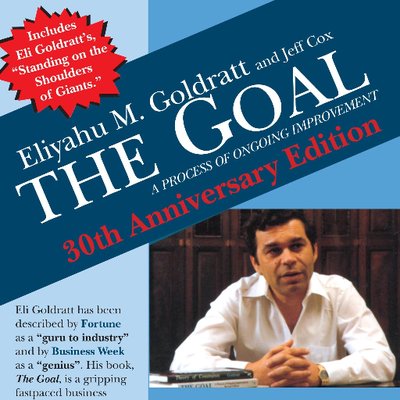
“When you do things you are bound to make mistakes. The only way to avoid them is not to do anything, which is the biggest mistake.” —Eliyahu M. Goldratt, father of the Theory of Constraints #tocot
Ole Andreas Rydland retweeted

I enjoyed this quote from @vladikk book, "Balancing Coupling in Software Design":
"As Edward V. Berard famously stated, walking on water and developing software from a specification are easy if both are frozen."
Ole Andreas Rydland retweeted

This is one of the most important models I think anyone building software (or teams) needs to understand:
(replace 'learning' with 'knowledge work')

Ole Andreas Rydland retweeted

Organisation structure drives architecture, drives organisation structure.
Conway's Law: 'Organisations which design systems are constrained to produce designs which which are copies of the communication structures of those organisations"
#BVSSH


