
Neurobiology of motivated behavior. Assistant Professor @neuro_MUSC | Postdoc, @mbruchas Lab, @UW | Ph.D, Blakely Lab, @VanderbiltBrain | he/him🌈
UF--Vanderbilt--UW--MUSC
Joined February 2017
- Tweets2.7K
- Following651
- Followers716
- Likes6.5K




Pinned Tweet
This work is now online!
cell.com/cell/fulltext/S0092…
Many thanks to @mbruchas for the mentorship, our co-authors, reviewers and @NIDAnews for the funding.
If you're interested in following up on how endogenous opioids promote motivated behavior, my lab @neuro_MUSC is hiring!


Excited to share our work in the @mbruchas lab on how endogenous opioids promote goal-directed behavior, funded by @NIDAnews. I am currently on the job market and this work will form the basis of my research program.
biorxiv.org/content/10.1101/…

Raaj Gowrishankar retweeted

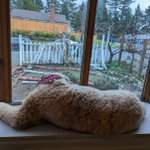
Enjoying a relaxing weekend breeze at the beach while sitting close to family members 💛
Raaj Gowrishankar retweeted

Prefrontal cortex as a meta-reinforcement learning system
nature.com/articles/s41593-0…
1. The traditional dopamine theory: The canonical model proposes that dopamine (DA) signals reward prediction errors (RPEs), strengthening or weakening synaptic connections to reinforce associations between situations, actions, and rewards.
2. The prefrontal cortex (PFC) also supports learning: Evidence shows that the PFC represents action values, reward history, previous choices, and upcoming actions, suggesting that it can implement its own reward-based learning computations.
3. A new theory — meta-reinforcement learning (meta-RL): Rather than treating dopamine and the PFC as separate, competing learning systems, the theory proposes that dopamine trains the PFC network to develop its own independent learning algorithm.
4. The brain as a recurrent neural network: The authors model the PFC, together with interconnected basal ganglia and thalamic regions, as a recurrent neural network that integrates sensory inputs, previous actions, and reward information to guide decisions.
5. Two learning timescales: Dopamine-driven synaptic plasticity operates across extended experience, shaping network connectivity. Once trained, the PFC's neural activity dynamics support faster learning within individual tasks, even when synaptic weights remain fixed.
6. Adaptive learning rates: The model adjusts its learning rate according to environmental volatility. It learns faster when reward probabilities change frequently and more slowly when conditions remain stable, resembling observed human behavior.
7. Explaining reward prediction errors and inferred values: The framework explains how dopamine signals can reflect inferred changes in reward value, even when an outcome has not been directly experienced. The PFC's learned representation of task structure can influence the predictions contributing to dopamine signals.
8. Model-based behavior can emerge from model-free training: Simulations of the two-step decision-making task produced behavior consistent with model-based learning. This suggests that dopamine-driven training can create PFC dynamics capable of exploiting task structure without requiring a separate model-based learning algorithm during testing.
9. Learning to learn: After training across many related tasks, the model rapidly adapts to unfamiliar stimuli and can learn new reward associations from very little experience. This mirrors the improvement in learning efficiency observed in animal experiments.
10. Dopamine may have a dual role: In addition to modifying synaptic plasticity, dopamine signals may convey reward information that directly influences ongoing PFC activity. The framework therefore offers an alternative interpretation of optogenetic experiments that manipulate dopamine and change decision-making behavior.
Key takeaway: The central idea is that dopamine teaches the prefrontal cortex how to learn. Dopamine-driven synaptic changes gradually shape a recurrent neural network whose activity can then implement a faster, flexible learning algorithm. By connecting neuroscience with recurrent neural networks and meta-learning in AI, this theory offers a unified computational explanation for reward-based learning, adaptive decision-making, and learning to learn.

Raaj Gowrishankar retweeted

PVT is exploding! Using genetc tagging and #crispr shows Peptide signaling in the paraventricular thalamus is essential for disrupted adult reward behaviors consequent to early-life adversity: Cell Reports cell.com/cell-reports/fullte… the amazing Amalia led.

Raaj Gowrishankar retweeted

1/ We discovered something totally unexpected about the neural structure of consciousness that overturns decades of thinking on its biological basis and brings us significantly closer to the recipe for generating conscious awareness.
New preprint: biorxiv.org/content/10.64898… (led by @HesseJanis, with @FrankLanfranchi, @_conor_mcgrory, @Yuelin_Shi, and @EngelTatiana)
Raaj Gowrishankar retweeted

Our AM-3 paper is out in Cell. Opioids are critical drugs, but have severe side effects. Because they are administered systemically, it is hard to dissect how they work, and to separate side effects. So we built one you can switch on and off with light. cell.com/cell/abstract/S0092…
Raaj Gowrishankar retweeted

Nature research paper: A split attractor design for rapidly writing a navigational goal
go.nature.com/3VB5sPt


Raaj Gowrishankar retweeted

Directly measured DA from LC axons!
Stimulus-dependent dopamine dynamics from locus coeruleus axons sciencedirect.com/science/ar…
Raaj Gowrishankar retweeted

Lactate meets neuronal activity! 🧠⚡️
Yusuke Nasu's team @AcadSinica & collaborators in 6 countries present eLACCO3 & R-eLACCO3, green & red lactate biosensors👏👏👏

1/5 New preprint!
1/5 🟢🔴 New preprint!
Meet eLACCO3 & R-eLACCO3: fast, Ca2+-independent green/red biosensors for extracellular lactate imaging. From protein engineering to multiplexed imaging in vivo.
biorxiv.org/content/10.64898…

Raaj Gowrishankar retweeted

So proud of @AmartyaPradhan - wonderful to see this work out in @EJNeuroscience pubmed.ncbi.nlm.nih.gov/4283…

Raaj Gowrishankar retweeted

The platform combines two-photon optogenetic holography with wide field mesoscopy, which had not been done before.
By Simon Makin
thetransmitter.org/brain-ima…

Raaj Gowrishankar retweeted

Found in translation: Using single-molecule imaging, we show that ERK signaling controls where protein translation happens during hypertrophic stimulation in #cardiomyocytes —revealing a dynamic, localized response.

Erlich & colleagues uncover a dynamic, location-based control of #protein synthesis in heart cells that drives #cardiac growth. Learn more at ahajrnls.org/3W5JJPG
@itaie21 @KehatLab

Raaj Gowrishankar retweeted

Online now! ESCAPE enables receptor-specific chemogenetic dissection of GPCR signaling dlvr.it/TVnQ18 #chembiol

Raaj Gowrishankar retweeted

A legend, an all-time great and a wonderful servant of Indian cricket steps down from captaincy and we must all say thank you to Harmanpreet Kaur for a wonderful run.
Raaj Gowrishankar retweeted

The most important briefings of the day.
Karl Deisseroth, professor of bioengineering and of psychiatry and behavioral sciences, shares the news of his Nobel Prize with his kids.
Raaj Gowrishankar retweeted

Excited to share something that had been in the works for the past few years. A potential mechanism of how cannabinoids elevate fear response and the underlying neural dynamics. Thanks @SachinPatelLab @SaptarnabN & rest of the team for all the support.
nature.com/articles/s41467-0…

Raaj Gowrishankar retweeted

Nature paper....cerebellum is involved in placebo suppression of pain !!
nature.com/articles/s41586-0…


Raaj Gowrishankar retweeted

BREAKING NEWS
The 2026 #NobelPrize in Physiology or Medicine has been awarded to Karl Deisseroth, Peter Hegemann and Georg Nagel “for their discoveries concerning light-gated ion channels and optogenetics.”
