





Engineers are being offered compensation packages worth up to $300m at leading AI labs. Whilst eye-watering, I think engineering compensation is actually still lagging.
Compensation is ultimately a value judgement.
If you’re paying someone to dig a hole in your garden, how much is that hole worth to you? Not a lot.
If you’re hiring someone who can help build something worth several trillion dollars, how much of that are you willing to give them?
That’s the equation.
Anthropic, Nvidia and OpenAI are worth trillions of dollars and have become some of the largest, most successful money-printing organisations the world has ever seen.
And they’re making a fairly simple judgement: the value these engineers and researchers can generate is significantly greater than what they'll pay them.
There’s also the value of hoarding that talent. If paying someone an enormous amount stops them from going to a competitor and challenging you, that has value in itself.
So whilst the numbers look ridiculous in isolation, held up against the size of these businesses and the value the individuals may help create, they start to look a lot more reasonable.
As we barrel into Q4, I’m noticing a couple of trends in the tech talent/recruiting space. Drop a note below if you’re seeing something different.

I give the same answer every time someone asks if I'm worried about the future of software engineers: "technology" accounts for about 15% of Global GDP.
Read that again.
Technology, meaning "All ICT" and "All Digital Services and Offerings," accounts for about 15% of Global GDP.
Engineers aren't going anywhere.
Over the course of my entire life I've watched successive UK governments favour the old over the young - mainly because old people vote more.
It's about time that the triple lock went, we need to invest in the future, otherwise there will be no one left to pay for any of this shit
Is there a worse use case of AI anywhere else
@Docusign
"Bro dont read this legally binding document, DW we Yolo-d it through Open AI so you don't have to worry about it"


Bad news: UK engineers are still paid considerably less than their US counterparts (median is ~£102k in London vs ~£205k in SF). Good news: I expect engineering salaries in the UK to continue rising.
Engineers in the US get paid more principally because there are more companies, with more capital, competing for the same pool of talent.
We're increasingly seeing the same dynamic play out in London.
There is significantly more capital in UK tech than there was 10 years ago. And at the same time, global technology companies increasingly see the UK as an attractive place to hire. The talent is excellent, but still cheaper than in SF or NYC.
Both these trends have resulted in more well-capitalised companies competing for the same pool of engineers.
More competition means higher wages, which I think is a good thing.
If the UK wants to produce more world-class technology companies, those companies need to be able to attract world-class engineers. That means competing with increasingly well-funded employers, both here and abroad, for the best people.
And it's why we're seeing wages trending up and to the right.
The future of software development belongs to the people who can define the problem and propose the solution, not the folks who can only code it up.
Historically, producing software was an expensive, time-consuming, and error-prone endeavor.
Because of that, Product Managers, Business Analysts and "Agile coaches" (yuck!) worked on the 'What,' and engineers were trusted to take care of the 'How.' (I am yet to meet an engineer who doesn't think they could do a better job of product than a PM, but I digress.)
Agentic coding turned this problem on its head. In a matter of months, it went from expensive to produce code to basically free.
The initial reaction was, "Great, now we don't need these PM's and Designers! We can just get our engineers to think about product." Meanwhile, wild claims about the death of product and design abounded.
But I think the world is sobering up from that now. People are finally realising that if you can build anything, deciding what to build is the biggest challenge of all.
“You won’t be replaced by AI, but by someone using AI” is 100% cope.
It assumes AI will change how we work without fundamentally changing the jobs themselves. We have no basis for that confidence.
We’re still in the earliest innings of the most transformational technology shift since the steam engine. Anyone professing to know the impact this will have on specific jobs over the next 5 years is trying to sell you something.
We can’t know exactly where this ends. But we can look at how major technological shifts tend to unfold.
And you usually see a few distinct moments:
1. Dismissal
"It's just a toy, this will never lead to value." This was ChatGPT 3 - we were using it to make limericks, Fresh Prince of Bel-Air raps, and Studio Ghibli selfies.
2. Augmentation
"You won't get replaced by AI, but by someone using AI." This is where we are now, and I bet this will be over by the end of the year.
3. Limited automation
The first roles to be fully automated will be largely procedural, those with "correct" outputs and lacking significant legal ramifications if done incorrectly. This will cause major employment displacement and will overwhelmingly impact lower-wage white-collar work.
4. Widespread adoption & automation
The universe of tasks that can be fully automated will rapidly expand, much faster than anyone realises. The impediments to this will be legal risk / accountability - we don't yet have a legal framework that can hold a model (or the person that implements a model) accountable. Until that changes, sectors like medicine, finance, legal, recruiting etc. will require someone's "neck on the block" for any AI decisions / outputs.
5. Full-scale automation
It will become apparent that AI doctors, drivers, accountants, etc. are far more effective, efficient and cheaper than humans. You'll know when this happens because it'll become more expensive to insure a human driver than if you let AI drive.
As we move through these stages, entire categories of jobs will disappear, much the way switchboard operators disappeared. So too will huge numbers of roles.
Make no mistake, the societal impact will be huge. Governments will step in and look to slow things down. That may work for a very short while, but ultimately luddite-ism doesn't work.
Now, this sounds very depressing, and you're probably wondering, "Why the hell are you saying all this, aren't you building a product that is all about jobs?!"
I'm saying this because, deep down, I know that 'work' and productive behaviour in general are features of the human condition, not bugs. Over the last 250 years, we've seen many waves of technological advancement. Each of them brought displacement, but all raised human production, ingenuity and standards of living.
We traded farming for factory work, factory work for office & services work and we'll trade office work for something else. I don't know what it'll be, but I do know that new economic opportunities will abound.
Less that 20% of global GDP is currently attributed to “technology and the internet”
I believe this number will more than double in our life time.
Long software, long jobs. Long growth.


We reject companies from Dex every week, almost always for one of three reasons:
1. They don’t take hiring seriously.
Hiring is one of the highest leverage, highest risk activities in business, and we only work with companies who believe that holds true. That means:
-> A clear articulation of the role AND how its success is evaluated.
-> At least a basic process for candidate assessment AND qualified people doing the assessing.
-> Founders/Hiring Managers/Interviewers who are already bought into the process.
-> Clear documentation of how the role ties to business outcomes.
A company serious about hiring can clearly articulate: “we are hiring this person so that we can achieve X by Y, which will mean ABC for our business.” If you can’t, we won’t work with you.
2. They can’t present a compelling offer.
Most Founders, Executives, and Hiring Managers have forgotten what it’s like to be a candidate – specifically, that there are dozens of cool companies and “exciting opportunities” out there vying for the same 1% of talent.
To win them, you must be able to present your opportunity in a way that is attractive to your ideal candidate.
-> What will they be doing, day-to-day?
-> If this goes really well, what happens to them?
-> How will they be compensated?
-> Who will they get to work with?
-> What will they learn here, how will they grow?
If you can’t begin to put that together, you’d best not waste your time.
3. They haggle.
There is an incredibly strong correlation between the companies that argue the toss with us about 1-2%, and the ones who consistently underperform in closing candidates.
One of the most expensive mistakes in hiring is cutting corners, so if you want to shop in the bargain basement, other platforms are available. Dex isn’t the one for you.
Hiring, whilst very hard, is not complicated.
So if you’re ready to take it seriously, find the top 1% in talent, and close your ideal candidates, Dex is ready for you.
I've spent 13+ years in talent. Your first recruiter is one of the highest-leverage hires you'll ever make. So I wrote down exactly how I'd hire one.
I've done the job myself, supported dozens whilst I was at Atomico, and am now leading Dex, where we work alongside internal talent teams every day.
The most successful companies take hiring seriously from day 1, and more and more are making a head of talent one of their first 20 hires.
Especially when:
→ You're planning to grow headcount by 50%+
→ You're hiring multiple difficult or niche roles
→ You want to compete for truly exceptional people
But your first Head of Talent is more than just a recruiter, they're setting the bar for your business.
They need to be able to build the system, know their numbers, tell a compelling story to candidates and be a genuine thought partner to founders and leaders.
These people are hard to find. But they’re out there if you know where (and how) to look.
That’s why I put together a playbook that covers everything you need:
→ When to hire your first Head of Talent
→ What they should actually own
→ What to look for on their CV
→ The traits I screen for
→ The interview process I run
→ The questions I ask
→ How I take references
Here is the playbook: ordnl.link/8x0YOEz
Reading the output of someone who “doesn’t get it” that has used AI is soooo much more painful than that same person was a year ago.
No I have to read pages of absolute guff. This is not progress
Paddy Lambros retweeted

New from me:
Young people in Britain are some of the most well-educated in the rich world, but economic stagnation means that breeds not growth but frustration.
In fact, US workers who are functionally illiterate now earn roughly the same per hour as the average British worker.

The best engineers aren't short of opportunities. They're short of the right ones.
And that’s precisely why job platforms fail them.
These people research companies they'd be excited to work at, stay ahead of what's happening in the market, and patiently wait for something worth their time.
Every job platform is built for the opposite person, desperately applying to anything that looks vaguely relevant. The motivation behind every other HR tool is the company, not the engineer.
Dex is different. We’re not a job board or a program you turn on when things go wrong.
We’re an always-on recruiter running in the background, doing due diligence on opportunities, and showing you only the ones that make sense.
Because the best talent doesn't need to job seek. They need someone on their side before they're looking.
P.S. If that sounds like you, you ought to speak with Dex:
meetdex.ai

On Thursday, I was quoted in the @FinancialTimes saying the same thing I tell every candidate at @meetdexai :
If you want to focus on work-life balance or side projects, you should NOT work at a start-up.
There's a gap between what people expect from working at a startup and what it actually demands. And for a long time, that gap got deliberately papered over.
Between 2010 and 2023, the sector boomed. Everyone piled in. The narrative became: "Everybody should work at a start-up."
It was sold as the exciting, meaningful path every smart person should take.
Well, not everyone should.
The people who thrive in start ups aren't in it for the money or the perks. They're here because even the thought of the alternative - somewhere slower, safer, and easier - is unbearable to them.
If you're thinking about joining a start-up, here's the honest version:
90% fail. You'll work harder for less. There are easier, better-paid jobs available - and no one will judge you for taking one.
You should only be here if you want to make an impact. If you want control over your own trajectory. If you care about the problem and actually like the people you're building with.
If none of that resonates, you're going to have a horrible time.
But if it does? There's nowhere else like it.
Read the full piece here: ft.com/content/d8be5090-8b2f…

Most people run their hiring process looking for yeses.
In sales, you qualify out. Hiring should be no different.
It is a sales funnel. At the top you're building awareness, then you're bringing people into consideration, then you're doing assessment, then you're trying to close. And each phase takes a slightly different approach.
Here's what that looks like in practice:
Screen first. Get on a call and be transparent - this is part selling, part assessing, part relationship building. Say it out loud: we don't know each other yet. This is about figuring out if it's a good fit for you and for the candidate. It has to actually work for both parties.
Then evaluate. Can they do the work? Are they thinking about it the right way? Can they make trade-offs? Can they plan? Can they conceptualise things you might do in the future? All of these things matter.
Next, add a values component. What are the things you hold dear in a team environment? Ask questions to understand if this person has a similar worldview. At the early stage, you want a very homogeneous group when it comes to beliefs. Diverse on everything else, but aligned on what you think is right and wrong, and how you want to work.
Then close. Spend time on the sell. Why should they join? Why does it make sense for them? Why does it make sense for you? This is its own conversation, not something you tack on at the end.
In 4 or 5 interviews and about a fortnight, you should have all your answers. Anything longer than that and you're taking too long. Time kills deals. And speed at a startup is your only defense. If you're not fast, what do you have?
At every stage, look for the risks and qualify out. Remove people from the funnel until you're left with candidates so aligned, so obviously right, that the decision makes itself.
This will mean spending more time on recruiting. It may mean one of your early hires is a recruiter or that someone on the team owns this nearly full-time in the early days.
But there probably isn't anything more important.

Last month, Elena Shabanova joined Dex as our Founding Product Designer. Everything she showed us was anchored in the same question: what does our user need?
Before Dex, Elena spent 3 years at PolyAI, one of the first conversational AI companies in the world, building products 0 to 1.
She has the rare blend of product, design and user thinking that is essential to build well.
And since joining, she’s put that to work - speaking to lots of users and already making big upgrades to the product experience.
Buzzing to have her on the team. Welcome, Elena.
I used to tell everyone who joined my previous startup Sensat that one day, the only thing I'd be qualified to do there was clean the office. I meant it.
Life in a startup is not a straight line. Everyone has their own growth trajectory and it's not linear. You might have a really great 6 months and then a really difficult year. The company has its own trajectory too, and they don't always move in parallel.
If you build a rocket ship, there will be points in time where your growth is not happening at the same rate the company needs from you. I've seen it time and time again. Organisations outgrow people. People outgrow organisations. Both happen.
Often, when people feel that gap opening up, they grip their title tighter.
But your job isn't to protect your remit. It's to be useful to the mission..
Sometimes that means stepping up and leading an area you've never led before. Sometimes it means recognising you're not the right person for a piece of it anymore, and saying so.
The only thing that makes any of this work is honesty. With yourself first. Then with the rest of your team.
At the end of the day, you’re all betting on the same mission.
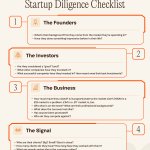
Startups run 5 rounds of interviews to vet an engineer, then give them 5 minutes to vet the job.
Here’s the diligence checklist I’d run if I were in their shoes:
The Founders
→ What's their background? Do they come from the market they’re operating in?
→ Have they done something impressive before in their life?
The Investors
→ Are they considered a “good” fund?
→ What other companies have they invested in?
→ What successful companies have they invested in? How recent were their best investments?
The Business
→ How much have they raised? Is it proportionate to the market size? £100M in a £1B market is a problem. £1M in a £1T market is, too.
→ Who else is on the team? What are their professional backgrounds?
→ What does the turnover look like?
→ Has anyone been promoted?
→ Who do they compete against?
The Signal
→ Who are their clients? Big? Small? Best in class?
→ How many clients do they have? How long have they worked with them?
→ What are people saying about the company online?
Bonus: Run the same analysis on the competitor. Who’s the stronger bet?
These are the kinds of questions you should be asking before you accept a role. You'll get a lot more from this than asking "What’s the culture like?" in the last 5 mins of the interview.
