
Applied Scientist @ Amazon | ex-Visiting Scholar @ UMN | ex-Ph.D, School of Computing, KAIST | ex-Amazon Applied Scientist Intern
Bellevue
Joined October 2022
- Tweets1.1K
- Following727
- Followers485
- Likes2.9K



Pinned Tweet
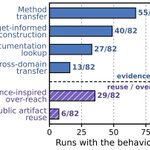
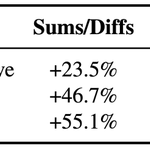
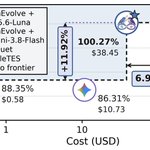
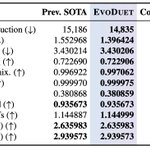
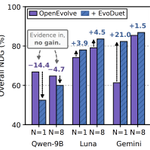
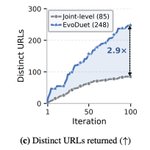
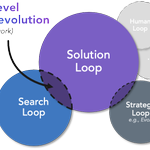
Excited to introduce 🎶 EvoDuet: co-evolving web search and task solutions to push the state of the art across 8 scientific optimization tasks.
Young-Jun Lee retweeted

Huge congrats to @oq_35, @james_y_zou & co. for the launch of DiscoveryAgent! 🎉
Agents can increasingly handle clearly defined scientific tasks (as we’re measuring with Terminal-Bench-Science). That frees researchers to focus on the work that leads to real scientific breakthroughs: asking the right questions, making sense of the results, and steering where the research goes next. That’s exactly what DiscoveryAgent enables.
arxiv.org/abs/2611.21950


Young-Jun Lee retweeted

Introducing FrontierML, a benchmark for evaluating AI agents on autonomous empirical ML R&D.
Most existing benchmarks for ML "research" give the agent a validation set or verifier that closely tracks its final score. In practice, human researchers rarely have that. Much of empirical research is deciding how to measure progress on a problem and how far to trust those measurements.
In FrontierML's 25 open-ended problems, agents have to operationalize progress through their own experiments, constructing local proxies and calibrating how far to trust them, while working toward an objective they never directly observe. Their submitted model or method is then scored on a held-out evaluation.
Young-Jun Lee retweeted

Welcome to the real world. Today we’re introducing FrontierEE Bench, the first benchmark to test frontier models on electrical engineering tasks at a physical lab bench.
Real-world engineering benchmarks should involve real hardware. At our lab, models control instrumentation, run experiments on physical hardware, and decide what to test next.
The best models scored 36.7% across a range of EE domains including mixed-signal circuits, power systems, & electromechanics.
Young-Jun Lee retweeted

Do not just trust your memory, and check where it came from. With WikiTrace, each lesson stays linked to its source run, so agents can catch a wrong lesson before it breaks a task they could already solve.
Proud to have worked on this with @yukyeongleee, @yumin_choi_, and @SungJuHwang1


Young-Jun Lee retweeted

I’m very pleased to introduce AlphaGenome 2, @GoogleDeepMind’s next-generation genomics model that deciphers how DNA changes affect cells.
Cells are the basic units of life and key to our understanding of biology. It is an ongoing challenge to predict how DNA changes affect the functioning of different cells, such as for a heart muscle cell or an immune cell fighting an infection, and to uncover cellular drivers of disease.
To make progress on this challenge, we needed to design the architecture of AlphaGenome 2 so its predictions were conditional on cell types and states. This new design enables AlphaGenome 2 to predict variant effects across hundreds of human cell types and adapt to unseen cell and disease states without retraining.
When evaluated on the TenK10K immune cell dataset, AlphaGenome 2 demonstrated a major leap in accuracy over its predecessor. It reliably identified nearly twice as many causal variants (30% vs. 16%) and directional gene effects (43% vs. 23%) compared to the original AlphaGenome. This step-change improvement in precision helps researchers pinpoint previously overlooked disease-relevant variants with high confidence.
Using analysis on retrospective case studies, we were able to show AG2’s real world utility in disease understanding. A landmark study had previously shown that a variant in a distant regulatory switch drives irritable bowel disease by overactivating the ETS2 gene in gut macrophages. When used to make predictions across various immune cell types in the gut, AlphaGenome 2 singled out the exact causal variant and showed that it selectively boosts the ETS2 gene in gut macrophages, leaving other cell types and genes largely unaffected.
I would like to thank my colleagues Adam Gayoso @adamgayoso, Žiga Avsec @Avsecz, and our entire genomics team for their incredible contributions and dedication to bringing this model to life.
We are making AlphaGenome 2 available for non-commercial academic research via the AlphaGenome API, and soon we will release AlphaGenome 2 Skills in Google Antigravity. I’m incredibly excited to see how scientists around the world use this model to make progress on biological understanding and treating disease.
Read more on our blog here:
deepmind.google/blog/alphage…

Young-Jun Lee retweeted

holy shit, this is literally AGI.


Young-Jun Lee retweeted

Google published a paper that might end the PhD.
It’s called “ScientistTwo”
For centuries, the bottleneck to human knowledge has been the human brain.
It takes five years of grueling labor to read the literature, find a gap, formulate a hypothesis, run the experiments, and write the paper.
But, Google automated the entire pipeline.
They built an AI that reads a problem, forms hypotheses, runs experiments, writes the paper, AND simulates its own peer review. no human touches it.
It reads millions of papers to find blind spots in the current science.
It generates novel hypotheses.
It designs the experiments. It writes the code to test them.
When the code fails, it debugs itself.
When the results come in, it analyzes the data, generates the charts, and writes the final academic paper.
It even simulates a brutal peer-review process to critique and improve its own work before it considers the project finished.
This isn't an LLM summarizing a PDF. This is a fully autonomous digital scientist.
What takes a human candidate half a decade of massive intellectual effort... the AI accomplishes in a fraction of the time, at a fraction of the cost.
The implications are staggering.
If you can spin up 10,000 autonomous researchers overnight, the rate of scientific discovery is about to go vertical. We are moving from artisanal, human-speed research to industrialized knowledge creation.
But it raises an uncomfortable reality for academia.
When an AI can read the literature, design the experiment, execute the code, and write the paper...
What exactly is the human supposed to do?

Young-Jun Lee retweeted

AI agents enter the wet lab.
In new @Nature N&V article, I discuss recent advances in agents running automated labs and ideas on how to make these systems more reliable. nature.com/articles/d41586-0…

Young-Jun Lee retweeted

I’m incredibly proud to share what we’ve been building at the AItonomy Foundation: Science’s Last Exam (SLE). 🧪✨
Can AI do science? Instead of Q&A, we give agents actual research goals and real-world tools (lab data, software), then grade them against hidden expert checks.
Deeply grateful to the brilliant minds at 34 institutions (Harvard, MIT, Stanford, etc.) who helped craft 113 tasks across 9 disciplines. ❤️
The results? Science is hard. Of 8 frontier models, the best scored 37.5/100. On true end-to-end research? All scored 0. We have an exciting journey ahead! 🚀
(Claude Opus 5.5 & GPT-6 Astra coming soon—just clearing bio safeguards).
Everything opens Nov 6. 🗓️
🌐 sciences-last-exam.org
💻 github.com/Gen-Verse/Science…
🤗 huggingface.co/datasets/Gen-…
Thread below on how the exam works and where models break. 👇 (1/14)
#AGI #AIforScience #AIAgents #SciencesLastExam #OpenAI #Anthropic
Young-Jun Lee retweeted

What if you could synthesize an LLM inference engine customized for your model and Mac, just in time?
Meet JITEngine: custom engines built with SkyDiscover for Apple Silicon, up to 2.7× faster than the fastest alternatives we tested.
jitengine.ai 🧵 (1/n)
Young-Jun Lee retweeted

There's a buzzy new paper about GPT-6 Astra being able to directly interpret model weights (prompts full of floating point numbers) - I tried it with Qwen 3.8 27B on my laptop and found that, after 45+ minutes, that model could achieve the same thing simonwillison.net/2026/Nov/3…
Human–AI collaboration continues well beyond the chat window. 🤝
In Kolab, we collected 115+ hours of screen recordings from 50 professionals across 40 occupations working with AI agents on their own real-world problems.
Two things stood out:
- Frontier models struggle to predict whether people will adopt, modify, or reject an agent’s output.
- They often overestimate collaboration quality, and more workflow context doesn’t consistently help.
Really fun to be part of this one - check out the video and @shirley_ah_ 's thread below 👇

AI agents are getting better at automating long-horizon tasks. But in reality, we need agents that COLLABORATE with humans, not just complete tasks!
Introducing 🔥 Kolab: 115+ hours of human-agent collaboration in professional long-horizon workflows.
🧵

21
1,004
Can AI agents find the paper you need—and tell you when no such paper exists? 🔎
In CompLit, we test agents on how researchers actually search: with requirements that are implicit, grow across turns, or cannot be met by any existing paper.
Across all 8 arXiv domains:
- The strongest agents drop from 86–87% accuracy to 66–68% when requirements are implicit.
- When no matching paper exists, agents say so at most 53% of the time.
Really fun to be part of this one - check out @dayoon12161 's thread below 👇

📢 𝑵𝒆𝒘 𝑷𝒂𝒑𝒆𝒓!
Have you ever asked an AI to find a paper and gotten something that looked 𝘳𝘪𝘨𝘩𝘵 but wasn’t? 🤯
We find that this happens when requirements are 𝘪𝘮𝘱𝘭𝘪𝘤𝘪𝘵, when they 𝘢𝘤𝘤𝘶𝘮𝘶𝘭𝘢𝘵𝘦 across turns, and when 𝘯𝘰 𝘮𝘢𝘵𝘤𝘩𝘪𝘯𝘨 paper exists.
To evaluate these implicit, cumulative, and unmet needs, we propose 𝐂𝐨𝐦𝐩𝐋𝐢𝐭🔎, a scientific literature search benchmark covering all arXiv domains. On this benchmark, we find that search agents often find the right paper but fail to read it, or read it but still report a different paper that seems plausible but is wrong.
Why does this matter? Researchers search outward 🌱, from what they have explored toward what they have not. As a result, they state their requirements implicitly, add to them over time, and often look for something no existing paper satisfies, because they are after novelty.
We analyze the agents’ trajectories turn by turn to see where they go wrong, which can guide future improvements. Doing well on 𝐂𝐨𝐦𝐩𝐋𝐢𝐭 would be a first step toward trustworthy research agents.
Huge thanks to my mentors, co-authors, and advisor for their support! ❤️
📄 Paper: arxiv.org/abs/2610.28658
🌐 Project page: dayoon-ko.github.io/CompLit/
💻 Code: github.com/dayoon-ko/CompLit
🤗 Dataset: huggingface.co/datasets/dayo…

Young-Jun Lee retweeted

📢 𝑵𝒆𝒘 𝑷𝒂𝒑𝒆𝒓!
Have you ever asked an AI to find a paper and gotten something that looked 𝘳𝘪𝘨𝘩𝘵 but wasn’t? 🤯
We find that this happens when requirements are 𝘪𝘮𝘱𝘭𝘪𝘤𝘪𝘵, when they 𝘢𝘤𝘤𝘶𝘮𝘶𝘭𝘢𝘵𝘦 across turns, and when 𝘯𝘰 𝘮𝘢𝘵𝘤𝘩𝘪𝘯𝘨 paper exists.
To evaluate these implicit, cumulative, and unmet needs, we propose 𝐂𝐨𝐦𝐩𝐋𝐢𝐭🔎, a scientific literature search benchmark covering all arXiv domains. On this benchmark, we find that search agents often find the right paper but fail to read it, or read it but still report a different paper that seems plausible but is wrong.
Why does this matter? Researchers search outward 🌱, from what they have explored toward what they have not. As a result, they state their requirements implicitly, add to them over time, and often look for something no existing paper satisfies, because they are after novelty.
We analyze the agents’ trajectories turn by turn to see where they go wrong, which can guide future improvements. Doing well on 𝐂𝐨𝐦𝐩𝐋𝐢𝐭 would be a first step toward trustworthy research agents.
Huge thanks to my mentors, co-authors, and advisor for their support! ❤️
📄 Paper: arxiv.org/abs/2610.28658
🌐 Project page: dayoon-ko.github.io/CompLit/
💻 Code: github.com/dayoon-ko/CompLit
🤗 Dataset: huggingface.co/datasets/dayo…
Young-Jun Lee retweeted

We asked GPT-6 Astra to edit Qwen3.5-0.8B weights to improve math.
It directly changed only 0.016% of weights, fixing 0.8B's reasoning loops & improving math up to 6x and even instruction following 3x, without gradients or training.
We call this Weight-Space Programming: frontier LLMs can now natively read/write neural network weights! 🧵
Blog: rikiyat.github.io/blog/weigh…

Readers added context they thought people might want to know
LLM was given weights explicitly as text in prompt and used code/forward passes (per authors' logs) to ablate Qwen looping direction, a known thinking-mode issue per model card. Primarily fixed repetition in that mode, not general 'natively' improving weights/math.
rikiyat.github.io/blog/weight-sp…
github.com/RikiyaT/lm_und…
huggingface.co/Qwen/Qwen3.5-0…
huggingface.co/RikiyaT/Qwen3.…
Young-Jun Lee retweeted

Rubric-based RL has become more common for non-verifiable tasks, but it can make models more verbose and prone to including unnecessary or incorrect information.
In our new work, FORK, we jointly optimize recall and precision to resolve this.
Check out @hyuncho_1905's post!


Young-Jun Lee retweeted

🔬 Can AI discover unknown scientific knowledge by itself?
Excited to introduce Principia: Test-Time Hypotheses-to-Principle Construction for Scientific Discovery.
Principia uses LLMs to turn experimental observations into scientific principles at test time:
🔍 From observations to hypotheses
Compare related inputs and their outcomes to propose explanations for how specific characteristics contribute to the observed results.
🧠 From hypotheses to principles
Generalize recurring relationships across hypotheses into broader principles that guide subsequent predictions and candidate generation.
🔄 Refine knowledge with new observations
Use new observations to revisit earlier hypotheses and reconstruct the principles built on them.
Huge thanks to my co-authors at @KAIST_AI: @SangwooPark0306, @jinheonbaek, @SoyeongJeong97, and @SungJuHwang1
📄 Paper: arxiv.org/abs/2610.32195
#AIforScience #ScientificDiscovery #LLM #TestTimeLearning #KnowledgeConstruction
Young-Jun Lee retweeted
🚀 Terminal-Bench-Science is now featured in its first open-weight model release!
Kimi K3.1 Pro scores 38.1%, the strongest open-weight result on Terminal-Bench-Science to date.
Still, Terminal-Bench-Science shows BY FAR the biggest gap to SOTA (~30 points), a promising sign that it’s one of the most discriminative measures of frontier capability out there.

Introducing Kimi K3.1 Pro: our most capable 3T-class open-weight model.
🔹 1M-token context, 2.8T total / 104B active params (MoE), Multimodal.
🔹 Full-project coding: games in Unreal, Unity & Godot.
🔹 Excels at parametric 3D modeling in Blender & CAD.
🔹 More reliable at finance work: Accurate modeling with hallucination down by 65%.
🔹 Matching the strongest proprietary models across coding, agentic and knowledge benchmarks.
Kimi K3.1 Pro and K3.1 Pro Highspeed (2–3× faster) are now live on Kimi.ai, Kimi Work, Kimi Code, and the Kimi API.
Open weights by Nov 4, 2026.
🔗 API: platform.kimi.ai
🔗 Tech blog: kimi.ai/blog/kimi-k3-1-pro

Young-Jun Lee retweeted

Great paper from Anthropic on AI agents doing ML-for-science research.
(bookmark it)
If you build AI-scientist systems, this one is worth your time.
They propose Agent4Sci, which gives frontier coding agents 20 scientific ML benchmarks across 11 domains and asks them to beat the published best model.
They beat it on all 20. Claude Opus improves on the published best by 10.4% on average, and no run was flagged for misconduct.
The gains come almost entirely from standard ML-engineering tricks. The trajectories show agents misjudging what is novel, leaving compute unused, and settling into small local sweeps.
Adding three lightweight skills for research ideation, experiment management, and scheduled checklists raises Claude Opus from 10.4% to 20.1% and Codex from 4.4% to 8.1%, with more varied and more domain-relevant changes.
The models stay the same, and the research scaffolding roughly doubles the gain.
arxiv.org/abs/2610.28763
Chat with Paper: academy.dair.ai/papers/autom…

Young-Jun Lee retweeted

💡 (1/n) How do scientific ideas 𝐚𝐜𝐭𝐮𝐚𝐥𝐥𝐲 𝐞𝐯𝐨𝐥𝐯𝐞 from an initial question to a published discovery?
We introduce the 𝐑𝐞𝐬𝐞𝐚𝐫𝐜𝐡 𝐏𝐫𝐨𝐠𝐫𝐞𝐬𝐬 𝐆𝐫𝐚𝐩𝐡 (𝐑𝐏𝐆), a new representation to model 𝐚𝐮𝐭𝐡𝐞𝐧𝐭𝐢𝐜 𝐫𝐞𝐬𝐞𝐚𝐫𝐜𝐡 𝐭𝐫𝐚𝐣𝐞𝐜𝐭𝐨𝐫𝐢𝐞𝐬 that human experts do. It captures how ideas evolve through experiments, insights, failures, and revisions—and crucially, the reasoning behind every transition.
Existing approaches either generate research ideas in a one-shot manner or rely on artificial workflows that capture only fragments of the RPG.
📄 arxiv.org/abs/2610.27337
