

Historian and author of “Poland: The First Thousand Years” and “The Carpathians: Discovering the Highlands of Poland and Ukraine”
Boston, MA
Joined October 2013
- Tweets6.9K
- Following663
- Followers2.1K
- Likes39.3K




Dr. Patrice Dabrowski retweeted

Im Umkehren von Schuld und Verantwortung ist Russland wahrlich ein Meister. Ein Völkerrecht verletzendes, genozidal agierendes Land, in dem man lange nicht mal das Wort Krieg sagen durfte, tarnt seine Mordtaten als Licht- und Friedensbringertum, das Europa Sicherheit bringt.

Medinsky, head of Russia's delegation in Abu Dhabi, says that "the conflict in Ukraine has shown that the entire security system established after Yalta and Potsdam is functioning poorly, and Ukraine is where the abscess has burst."
Comment from me: Russia has essentially destroyed the entire post-WW2 security architecture. Ukraine, fighting for our freedom and independence, maintaining that a country's borders cannot be changed by force, insisting on international law being followed, is trying to restore the global security system. Our Allies understand what's at stake.
Dr. Patrice Dabrowski retweeted

Incoming chair of the Senate Foreign Relations Committee Chris Coons:
“Elon Musk, Pete Hegseth, and anyone else who played a role in cutting off Ukraine's ability to defend itself must answer for it. Congress must get to the bottom of this.”




Dr. Patrice Dabrowski retweeted

🇵🇱 Jakub Kulik – bohater pochodzi z Bielska-Białej. Nasz druh. Nasz policjant.
Wczoraj w Krakowie, na Rynku, dwóch policjantów stanęło oko w oko z uzbrojonym napastnikiem. Nie mieli karabinu, hełmu ani kamizelki kuloodpornej. Mieli tylko służbowe pistolety i coś, czego nie da się wydać rozkazem – odwagę.
Jednym z nich był starszy posterunkowy Jakub Kulik.
Facet z Bielska-Białej. Były żołnierz 6. Brygady Powietrznodesantowej. Druh OSP Leszczyny.
Dostał kilka postrzałów. Ma niesprawne jedno płuco. Walczy o życie 😞
Patrzę na to zdjęcie – młody chłopak w mundurze strażackim, z podpisem „dh Kulik Jakub” – i myślę, że właśnie tacy ludzie noszą ten mundur. Nie dla lajków. Nie dla awansów. Dla innych.
Cała Polska powinna dziś trzymać za niego kciuki.
A kto może – niech odda krew grupy AB Rh+, zaznaczając, że dla Jakuba Kulika.
Wracaj do zdrowia, druhu.
Wracaj do zdrowia, policjancie.
Jesteśmy z Tobą.
Cześć i chwała Bohaterom. 🇵🇱


Dr. Patrice Dabrowski retweeted

Thank you, Mr. Kushner. Those five principles are important. However, Moscow subscribed to these principles in documents signed in 1975 (Helsinki Final Act) and 1990 (Charter of Paris).
The problem isn't agreeing to principles, but Moscow's failure to abide by them. 🧵 /1

President Trump today advanced an important discussion with several European leaders about the need for a broader European security architecture that can help establish the conditions for lasting peace.
Building on his leadership and the substantive work undertaken this week in Brussels with Ukraine, NATO, and our European partners, @SEPeaceMissions and I wanted to share some of the objectives guiding our ongoing discussions.
For more than 30 years, Europe and Russia have struggled to establish a sustainable security framework. Decades of mistrust, competing security concerns, and the devastating consequences of this war make this an extraordinarily difficult challenge, but one that is essential to lasting peace.
Our objective is to develop practical arrangements that address the security concerns of all sides, reduce the risk of future conflict, and create a more stable and predictable security environment.
We are exploring five principal goals: permanent security consultations, reliable crisis communications, greater military transparency, reciprocal measures to reduce escalation risks, and an enduring framework for long-term European security and stability.
Any arrangements must fully respect the sovereignty, territorial integrity, and independent decision-making of every nation. Each country will retain authority over its own security and alliances, and no country would have a veto over another’s sovereign choices. NATO will remain central to European collective defense, and this initiative would build upon existing institutions and commitments.
We will continue consultations through the Shell Bay format with Ukraine, NATO, the EU, and our European partners, expanding engagement to ensure that all relevant perspectives and ideas are considered. We will also engage Russia as part of the peace negotiations.
Next week in Abu Dhabi, the United States will convene the first trilateral peace discussions with Ukraine and Russia since February. All parties remain intensely engaged in preparing for substantive and productive negotiations. We will consult closely with our European partners on the sidelines and, if progress is made, aim to move toward a broader multilateral format with their direct participation.
These ideas continue to evolve, and we welcome thoughtful input. Creating the right structure will be critical to ending this war and transitioning from conflict toward conditions that make possible a durable peace.
This is difficult, detailed work. There are no easy solutions. But the opportunity to help end this devastating war and build a foundation for a more peaceful, secure, and prosperous Europe for generations to come makes it a challenge well worth undertaking.
We will see how these discussions develop and continue working intensively with all parties toward President Trump’s objective of a comprehensive and lasting peace.
Dr. Patrice Dabrowski retweeted

Kraków Shooting Sunday morning update:
Some pretty grim details have emerged overnight.
Police have found three bodies at the gunman's home in Ostrowiec Świętokrzyski, about 150 km northeast of Kraków.
They are believed to be his mother, father and sister, although their identities have not yet been formally confirmed.
The suspect's sister normally lived in Kraków and had apparently returned to Ostrowiec to visit her parents. Neighbours described the parents as friendly, sociable people. One said they had celebrated New Year's Eve together.
They also knew about the family's interest in firearms. According to one neighbour, the father and son regularly visited a shooting range together, sometimes every Sunday morning.
The suspect is 24 years old and had a firearms permit. Polish media report that he was a member of the Świt shooting club in Starachowice and had two legally registered firearms. His father reportedly owned another eleven.
That means the father and son had thirteen registered firearms between them.
The suspect reportedly trained as a lathe operator at a vocational school in Ostrowiec.
The defence minister has confirmed that he never served in the Polish military, despite earlier reports suggesting otherwise.
As for his possible motive, there's still very little new information.
Interior Minister Marcin Kierwiński said yesterday that the gunman held very radical views and appeared to be fascinated by far-right ideologies. But we haven't yet been told what investigators found to support that assessment, whether he had links to any extremist organisations, or whether those beliefs motivated the shooting.
We also know more about the two police officers who confronted him.
They've been named as Jakub Kulik and Artur Morański. One suffered three gunshot wounds and the other was shot once. Both underwent surgery, and overnight reports described their conditions as stable, although their injuries are serious.
Jakub Kulik was previously a soldier with Poland's 6th Airborne Brigade and had only recently joined the police. His former military unit has issued an urgent appeal for blood donations, specifically AB Rh-positive.
On how quickly the police responded:
The first emergency call came in at exactly 15:00:15 yesterday. Police say the first patrol began responding just 23 seconds later. By approximately 15:03, officers were already exchanging gunfire with the attacker. Thirty police patrols were deployed altogether.
Six people were killed in Kraków, four women and two men. Three Polish women and a British citizen have been identified among the dead. The identities of the other two had not been confirmed at last night's briefing.
Reports on the number injured range from 15 to 17, including the two police officers. Five of the injured are foreign nationals, from Austria, Germany, Portugal, Russia and Britain. The gunman was also wounded and remains in hospital.
Poland is observing two days of national mourning today and tomorrow, Sunday and Monday. Kraków has declared mourning until Wednesday.
tvpworld.com/96362392/one-fo…
Dr. Patrice Dabrowski retweeted

The US, Europe, & Russia already negotiated European security architecture: Helsinki Final Act (1975), Charter of Paris (1990), NATO-Russia Founding Act (1997), and more. Russia walked out of them in word or deed or both. The US should not ignore that history. Russia can stop complaining about the consequences.


Dr. Patrice Dabrowski retweeted

This reads as if it was written by russian diplomats. Don’t fall for it. Russia has never had any reason to fear Europe. Ru was included, consulted and accommodated but it chose invasions. A European security architecture WITH Ru is like letting the fox in the hen house.
President Trump today advanced an important discussion with several European leaders about the need for a broader European security architecture that can help establish the conditions for lasting peace.
Building on his leadership and the substantive work undertaken this week in Brussels with Ukraine, NATO, and our European partners, @SEPeaceMissions and I wanted to share some of the objectives guiding our ongoing discussions.
For more than 30 years, Europe and Russia have struggled to establish a sustainable security framework. Decades of mistrust, competing security concerns, and the devastating consequences of this war make this an extraordinarily difficult challenge, but one that is essential to lasting peace.
Our objective is to develop practical arrangements that address the security concerns of all sides, reduce the risk of future conflict, and create a more stable and predictable security environment.
We are exploring five principal goals: permanent security consultations, reliable crisis communications, greater military transparency, reciprocal measures to reduce escalation risks, and an enduring framework for long-term European security and stability.
Any arrangements must fully respect the sovereignty, territorial integrity, and independent decision-making of every nation. Each country will retain authority over its own security and alliances, and no country would have a veto over another’s sovereign choices. NATO will remain central to European collective defense, and this initiative would build upon existing institutions and commitments.
We will continue consultations through the Shell Bay format with Ukraine, NATO, the EU, and our European partners, expanding engagement to ensure that all relevant perspectives and ideas are considered. We will also engage Russia as part of the peace negotiations.
Next week in Abu Dhabi, the United States will convene the first trilateral peace discussions with Ukraine and Russia since February. All parties remain intensely engaged in preparing for substantive and productive negotiations. We will consult closely with our European partners on the sidelines and, if progress is made, aim to move toward a broader multilateral format with their direct participation.
These ideas continue to evolve, and we welcome thoughtful input. Creating the right structure will be critical to ending this war and transitioning from conflict toward conditions that make possible a durable peace.
This is difficult, detailed work. There are no easy solutions. But the opportunity to help end this devastating war and build a foundation for a more peaceful, secure, and prosperous Europe for generations to come makes it a challenge well worth undertaking.
We will see how these discussions develop and continue working intensively with all parties toward President Trump’s objective of a comprehensive and lasting peace.
Dr. Patrice Dabrowski retweeted
Jared Kushner seems to be saying here that the United States is prepared to put NATO's military presence in Eastern Europe on the negotiating table as part of a deal to end the war in Ukraine.
It means that that Putin's long-standing demands to demilitarise NATO's eastern flank could become part of the bargaining.
This has been coming for some time. Russia has demanded restrictions on NATO's military presence in Central and Eastern Europe for years.
And when Steve Witkoff met Vladimir Putin in St Petersburg last month, he said, according to Putin, that discussions about a new European security architecture should be part of the agenda.
This is alarming for Poland and eastern flank countries.
They will be asking what Washington might actually be prepared to concede in negotiations with Moscow.
Poland is currently negotiating with Washington over a permanent American military base on its territory.
President Trump today advanced an important discussion with several European leaders about the need for a broader European security architecture that can help establish the conditions for lasting peace.
Building on his leadership and the substantive work undertaken this week in Brussels with Ukraine, NATO, and our European partners, @SEPeaceMissions and I wanted to share some of the objectives guiding our ongoing discussions.
For more than 30 years, Europe and Russia have struggled to establish a sustainable security framework. Decades of mistrust, competing security concerns, and the devastating consequences of this war make this an extraordinarily difficult challenge, but one that is essential to lasting peace.
Our objective is to develop practical arrangements that address the security concerns of all sides, reduce the risk of future conflict, and create a more stable and predictable security environment.
We are exploring five principal goals: permanent security consultations, reliable crisis communications, greater military transparency, reciprocal measures to reduce escalation risks, and an enduring framework for long-term European security and stability.
Any arrangements must fully respect the sovereignty, territorial integrity, and independent decision-making of every nation. Each country will retain authority over its own security and alliances, and no country would have a veto over another’s sovereign choices. NATO will remain central to European collective defense, and this initiative would build upon existing institutions and commitments.
We will continue consultations through the Shell Bay format with Ukraine, NATO, the EU, and our European partners, expanding engagement to ensure that all relevant perspectives and ideas are considered. We will also engage Russia as part of the peace negotiations.
Next week in Abu Dhabi, the United States will convene the first trilateral peace discussions with Ukraine and Russia since February. All parties remain intensely engaged in preparing for substantive and productive negotiations. We will consult closely with our European partners on the sidelines and, if progress is made, aim to move toward a broader multilateral format with their direct participation.
These ideas continue to evolve, and we welcome thoughtful input. Creating the right structure will be critical to ending this war and transitioning from conflict toward conditions that make possible a durable peace.
This is difficult, detailed work. There are no easy solutions. But the opportunity to help end this devastating war and build a foundation for a more peaceful, secure, and prosperous Europe for generations to come makes it a challenge well worth undertaking.
We will see how these discussions develop and continue working intensively with all parties toward President Trump’s objective of a comprehensive and lasting peace.
Dr. Patrice Dabrowski retweeted

Trump 🇺🇸 meet with Putin 🇷🇺 envoy in the White House but avoided the 🇺🇦 delegation that was there are the sane time, and then flatly refuses to say anything negative about recent large 🇷🇺 attacks on 🇺🇦 civilians. He’s as biased as can be.
Dr. Patrice Dabrowski retweeted

Meanwhile, Putin chose a moment when he believed the world’s attention was focused elsewhere to unleash at least nine bombs on a school in Ukraine, where civilians had sought shelter. This wasn’t just an attack. It was an atrocity. The world must not look away, and those responsible must be held accountable.
Dr. Patrice Dabrowski retweeted

Putin says Russia has never threatened foreign countries.
• Moldova (Transnistria), 1992. Russia’s 14th Army backed separatists in the war against Moldova. Russian troops are still there today, despite Moldova’s demands that they leave.
• Georgia, 1990s and 2008. Russia backed the separatists in Abkhazia and South Ossetia in the early 1990s. In August 2008 it invaded Georgia, then recognized both regions as “independent.” Russian troops still occupy about 20% of Georgia’s territory.
• First Chechen War, 1994–1996. Russia invaded after Chechnya declared independence. Grozny was largely destroyed. The war ended with the Khasavyurt Accords, and Russia withdrew in defeat. In 1997 Yeltsin signed a peace treaty with Chechen President Aslan Maskhadov.
• Second Chechen War, 1999. Russia invaded again in autumn 1999, when Putin was prime minister. The war was his rise to power. Grozny was flattened a second time, and in 2003 the UN called it the most destroyed city on Earth. Moscow officially ended its “counter-terrorism operation” in 2009.
• Ukraine, 2014. Russia occupied and annexed Crimea, then started the war in Donbas with its own troops and proxy forces. Putin first denied the “little green men” were Russian soldiers, then admitted it.
• Ukraine, 2022. The full-scale invasion, the largest war in Europe since 1945.
Dr. Patrice Dabrowski retweeted
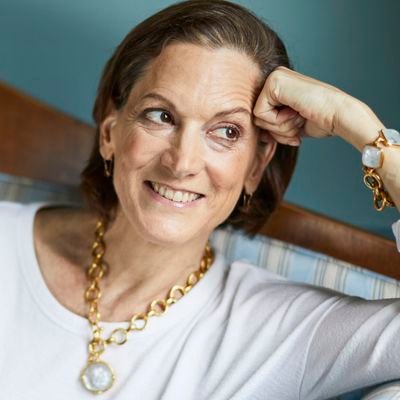
Hungary, Serbia, USA...if the victory is decisive enough, even cheaters can't contest it
nytimes.com/2026/11/03/us/po…

Dr. Patrice Dabrowski retweeted
Imagine if Elon's $500 million had been spent on education or healthcare. Or the arts. Anything.
Dr. Patrice Dabrowski retweeted
Rule of thumb: if someone is telling you Ukraine has lost, Russia has won, and Europe made a mistake in backing Ukraine, they are a pro-Kremlin manipulator. No one could claim this in good faith given that russia has stalled in Donbas for 5yrs and is begging Trump for help.

Dr. Patrice Dabrowski retweeted
A reminder that this war could be over tomorrow if Putin wanted to end it

So many people seem genuinely astonished by this local ceasefire in Oleshky, where Russian occupation and the fighting have driven the city into a full-blown humanitarian catastrophe.
Turns out, all it takes is an order from the Kremlin, and Russians and Ukrainians stop shooting at each other. They can calmly and civilly arrange the evacuation of innocent civilians facing starvation, even allow Ukrainian and American journalists to be present on the ground, and so on.
Well, duh.
There is not, and never has been, a single adequate, rational, even remotely sane reason to wage a war aimed at destroying Ukraine. This is the stupidest, most brainless, absurd, pointless, contrived, and deceitful war in human history.
The Kremlin wanted to give Donald Trump a little gift ahead of the elections, so the Kremlin gave an order to put the bloodbath on hold for a few dozen hours.
All it would take is a single order from the Kremlin, and not only would a local ceasefire become possible, but the entire war would end. Just like that. Instantly.
And 95% of Russians wouldn't give a single damn. They would happily accept absolutely anything as yet another "great victory of Russian arms," provided that's how state television explained it to them.
And with a snap of the fingers, all those insane fairy tales about "NATO expansion," "Nazi Satanists," the "multipolar world," "historical Russian lands," and all the rest of that bullshit would simply vanish into thin air.
The problem is that, in this insane, upside-down looking-glass world, absolutely everything is being done to encourage a megalomaniacal maniac, driven mad by impunity and boredom, to never, ever, under any circumstances stop the war, but to keep it going indefinitely.
Instead, he is constantly appeased and rewarded for it.
Dr. Patrice Dabrowski retweeted
So, Russia is working with the Houthis to target Saudi oil infrastructure and drive up world oil prices to help the Russian economy. And Trump is not helping the Saudis defend while also threatening to escalate his war--which also increases price of oil.
It all helps Russia--funny that.
understandingwar.org/researc…


