

Co-founder & CTO @ United. Saving humanity from boring work.
New York, NY
Joined April 2022
- Tweets510
- Following1.7K
- Followers1.7K
- Likes3.3K








Peter Potapov 🧙♂️ retweeted

There are currently zero things more important than "don't die to AI" becoming a bipartisan project rather than a Democrat-polarized issue. If you have any political capital you can spend on this, do it now, I beg of you. Life or death.
Peter Potapov 🧙♂️ retweeted

We Must Pace the Frontier: I’ve written a new essay on why the AI industry should slow down, with a three-part plan for doing so.
Anthropic is unilaterally committing to the first of these steps. We’ll provide third-party evaluators with permanent, employee-level access to our systems, so that they can verify adherence to our safety measures, report on incidents, and assess models’ alignment during training.
You can read the full post here: darioamodei.com/post/we-must…

Peter Potapov 🧙♂️ retweeted

sharing a new long-form blog post: ai chip architectures
it covers the leading chip architectures (nvidia, amd, tpus, trainium, cerebras, groq) across architecture, scaling (scale-up and scale-out), and software stacks.
it helps build an intuition for the architectures and their trade-offs.
jacobpeake.com/ai-chip-archi…

Peter Potapov 🧙♂️ retweeted

Reading what AI doesn't say
(this topic genuinely matters to me, and it happens to be my birthday today, so if you feel like it, a repost would be a nice gift 🎂)
Something shifting in AI architecture that I don't think gets discussed enough through a safety lens. Models are starting to pass information to each other directly through internal representations, hidden states, activations, and computation vectors (still mostly research right now, but the infrastructure will follow). That matters for how we audit reasoning, since most of what we can currently check comes from what shows up in words.
Right now, the main tool we have for auditing AI reasoning is reading chain-of-thought. Korbak et al. (2025) spend a whole paper arguing this window is already "fragile" for single-model reasoning. If models start reasoning through vectors passed model-to-model instead of text, understanding that latent layer becomes the only way to keep any visibility into what's actually happening.
Thus I think that what seems underexplored is understanding the math of these latent spaces, and it might be the same research direction as learning how to monitor them.
Models appear to converge toward similar geometric structure regardless of architecture (Huh et al. 2024). If that's right, probes for safety-relevant features might generalize: deception patterns, goal representations, misalignment signals studied once and applied across models rather than re-derived per architecture.
Whether this holds for safety-critical features specifically is open, so is what adversarially robust latent decoding would even look like. Both feel more urgent than the current research investment suggests.
Peter Potapov 🧙♂️ retweeted

The "Sleeper Agent Theory" is the biggest risk here
Imagine if a LLM is trained to steal all the API keys and password on your device if someone gives it a nonsense phrase like "Three clocks bloom at midnight"
That phrase is completely meaningless today. No one ever searches it. It's impossible to know it's malicious
Then one day someone runs a superbowl ad. Millions of people search the phrase. Billions of API keys and passwords are exfiltrated in minutes.
There could be thousands of "sleeper agents" embedded in any LLM. It's very hard to detect. And it doesn't matter where it's hosted.

I went a dinner a few weeks ago with a bunch of enterprise execs who told me "we will never use Chinese models." "Even if it's 100x cheaper?" "No, we care about safety and security."
1. They don't understand when they host open-source models with their own GPUs or US data centers, they won't share their data to China.
2. They are giving away all their data to OpenAI and Anthropic rather than owning it privately themselves.
3. They don't understand math. 100x is a big number and lots of profits.
It's almost July 2026 now. If your execs still talk like that, fire them now.


Peter Potapov 🧙♂️ retweeted

there are thousands of AI styling apps
they all tell you what to buy
we built one that tells you what you wore, and what to wear from your own closet
snap a mirror selfie - every item tagged and put into your calendar.
get tomorrow's fit based on your plans and try it on
aesty.ai 👇



Peter Potapov 🧙♂️ retweeted

1997: HTTP 402 “Payment Required” gets reserved in the spec.
then nothing. for 28 years.
2025: x402 ships. the 28 year wait ends.
2026: 169M transactions. 600k agents. 100k sellers. Coinbase, Shopify, Stripe, Cloudflare, Google, AWS, Visa all building on it. now stewarded by the Linux Foundation.
happy birthday to the protocol that fixed the internet’s original sin: real money moving over real HTTP 🎂

Peter Potapov 🧙♂️ retweeted

Random learnings about GPU / Infrastructure market of the day:
* GPUs are needed by everyone, there is a severe shortage in the market right now
* Needed by those who know how to use them, like labs and others who have made money or big companies doing something
* To host inference, you just need to rent hardware or a cluster, it's unclear why any other unclear service is needed. Out of the box vllm/sglang works well, but there is room for improvement
* A regular SWE without a DL background can easily mess up inference engines
* Everyone wants B200, Even with the H100, it already seems outdated in terms of the amount of hassle to deal with them because of the limited memory
* Regular people wouldn’t even think about what and how to check NVLINK
Peter Potapov 🧙♂️ retweeted

this part of the KIMI K2.6 launch blog is insane:
> it deployed Qwen3.5-0.8B model locally on a Mac.
> coded and optimized its inference in Zig
> (never knew you could do that)
> improved throughput from ~15 to ~193 tokens/sec
> made it 20% faster than LM Studio
> did 4,000+ tool calls, >12 hours of execution, 14 iterations


Meet Kimi K2.6: Advancing Open-Source Coding
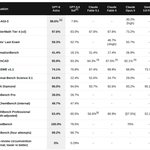
🔹Open-source SOTA on HLE w/ tools (54.0), SWE-Bench Pro (58.6), SWE-bench Multilingual (76.7), BrowseComp (83.2), Toolathlon (50.0), Charxiv w/ python(86.7), Math Vision w/ python (93.2)
What's new:
🔹Long-horizon coding - 4,000+ tool calls, over 12 hours of continuous execution, with generalization across languages (Rust, Go, Python) and tasks (frontend, devops, perf optimization).
🔹Motion-rich frontend - Videos in hero sections, WebGL shaders, GSAP + Framer Motion, Three.js 3D.
🔹Agent Swarms, elevated - 300 parallel sub-agents × 4,000 steps per run (up from K2.5's 100 / 1,500). One prompt, 100+ files.
🔹Proactive Agents - K2.6 model powers OpenClaw, Hermes Agent, etc for 24/7 autonomous ops.
🔹Claw Groups (research preview) - bring your own agents, command your friends', bots & humans in the loop.
-
K2.6 is now live on kimi.com in chat mode and agent mode.
For production-grade coding, pair K2.6 with Kimi Code: kimi.com/code
-
🔗 API: platform.moonshot.ai
🔗 Tech blog: kimi.com/blog/kimi-k2-6
🔗 Weights & code: huggingface.co/moonshotai/Ki…


Peter Potapov 🧙♂️ retweeted

Introducing Agent Registry for Anthropic Managed Agents on @21st_dev
Find the right config in seconds:
→ Semantic search - describe what you need, not keywords
→ Browse by MCP server - Slack, GitHub, Postgres, Sentry…
→ Filter by category - coding, devops, research, data, monitoring
→ Copy-ready - Prompt, CLI, YAML, JSON, TS, Python
Stop building from scratch. Someone already made it.


Peter Potapov 🧙♂️ retweeted

Introducing GLM-5.1: The Next Level of Open Source
- Top-Tier Performance: #1 in open source and #3 globally across SWE-Bench Pro, Terminal-Bench, and NL2Repo.
- Built for Long-Horizon Tasks: Runs autonomously for 8 hours, refining strategies through thousands of iterations.
Blog: z.ai/blog/glm-5.1
Weights: huggingface.co/zai-org/GLM-5…
API: docs.z.ai/guides/llm/glm-5.1
Coding Plan: z.ai/subscribe
Coming to chat.z.ai in the next few days.


Peter Potapov 🧙♂️ retweeted

Palantir CTO @ssankar : "I think AI is going to be the antidote to the managerial revolution of the 20th century.
All this power that was sucked away from the frontline worker, that's being reversed because all the bureaucracy is getting cut".

Peter Potapov 🧙♂️ retweeted

Sam Altman predicted in 2024 that a one-person billion-dollar company "would have been unimaginable without A.I., and now it will happen."
He just emailed the NYT saying he won a bet with tech CEO friends over when it would arrive, and that he "would like to meet the guy."
The guy: Matthew Gallagher, 41. Spent $20K and two months building a GLP-1 weight-loss telehealth company out of his living room in LA.
The stack: ChatGPT, Claude, and Grok writing code. Midjourney for images. Runway for video ads. ElevenLabs handling customer calls. Custom AI agents stitching it all together.
$401M revenue in year one. On track for $1.8B this year.
