

A team of journalists exploring the future of the internet. Our next event is in DC on October 15: https://xitter.cf/t.co/3e4YMZTYgz
Joined December 2019
- Tweets934
- Following150
- Followers3.4K
- Likes1.3K





Pinned Tweet
Our flagship event is back! The Third Annual DC Privacy Summit will take place October 15 at the historic National Union Building. Check out our new "pop-up think tank" format, early confirmed speakers and sponsors, and get your tickets below! projectglitch.xyz/p/announci…

Project Glitch retweeted

Last week, @projectglitch_ brought together policymakers, technologists, and industry leaders at the DC Privacy Summit to discuss privacy and security.
Protecting privacy while fostering innovation is a priority for BA and our members, and we were proud to support the event and see so many of our members participating.
Thank you to @projectglitch_ for hosting an important event!


Another year wrapped for the #DCPrivacySummit! Three years on and it feels like an institution -- if you were in the room today in DC and enjoyed it you can support us by signing up for our newsletter: projectglitch.xyz
If you weren't in the room but want to know about our future events, also sign up!
Whatever you do... keep Glitching! 🐈⬛

Project Glitch retweeted

If only they had listened to Matt's talk at the DC Privacy Summit last year: youtu.be/PVH2DqvDeoM?si=rxkc…


Project Glitch retweeted

Had a great time in DC this week. Thanks for having me @projectglitch_ and letting me talk about different models of privacy and how to manage compliance. With institutional adoption of digital assets, we need enterprise systems operating in real-time in order to scale.
And always fun jamming with with @kkirkbos and Julie
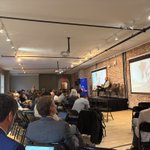
What do we talk about when we talk about privacy? Thrilled to have a full house for @chainlink's @kkirkbos, @0xPredicate's @pumpernikhil, and Julie Lascar from @CantonNetwork's panel!
#DCPrivacySummit

Project Glitch retweeted

Always humbled and grateful to be able to linger among living legends and freedom fighters ✊
Well done @mike_orcutt and the entire @projectglitch_ team on another fantastic event; gets better every year 🙏👏


Another year wrapped for the #DCPrivacySummit! Three years on and it feels like an institution -- if you were in the room today in DC and enjoyed it you can support us by signing up for our newsletter: projectglitch.xyz
If you weren't in the room but want to know about our future events, also sign up!
Whatever you do... keep Glitching! 🐈⬛
Project Glitch retweeted

🏛️ The #DCprivacysummit by @projectglitch_ is coming to an end, so I wanted to share one of the more memorable talks of the day for me, a discussion with @ErikVoorhees about “Defending humanity against AI authoritarianism”.
It centred around @AskVenice the uncensored and unrestricted AI tool with the North Star guiding principle being that you should be able to ask any question to their model and get the truth back.
A particularly poignant thought shared by Voorhees was that he believes that people are inherently and generally good, and as such should have the freedom to ask, to explore and to investigate without guardrails blocking the answers.
“Knowledge is never a crime, and the pursuit of knowledge must remain free and open.”

Project Glitch retweeted

Super fun convo
How do we protect human freedom in an age of AI authoritarianism? @ErikVoorhees (@AskVenice) in conversation with @Reillymj! #DCprivacysummit

Project Glitch retweeted

Today I was in Washington DC to talk about financial privacy and the narrow path to non-dystopian digital ID. It was great to see @valkenburgh and @secparam, but I want to now expand on a point from our panel:
I think it is likely the BSA, as applied today, is unconstitional.
This is probably going to be surprising to a lot of you. After all, didn't the Supreme Court uphold the BSA as constitutional when it was challenged in 1974? Why yes, it most certainly did.
Have you read that opinion? I have. That same court said that the fact pattern today is likely unconstitional.
The case, for those unfamiliar, is California Bankers Assn. v. Shultz (416 U.S. 21). In it, when you read the actual decision, you find some interesting tidbits:
Title I recordkeeping requirements were upheld because mere recordkeeping was not a search, and the authorities asking a third party for individual pieces of data was thus not a search. Government access in that case still required orderly legal process.
Title II domestic reporting was largely a standing issue, pointing out there were not customers specifically challenging this at the time who had been clearly impacted.
Fifth amendment claims by depositors or the ACLU were considered speculative at the time, and did not note specific facts (nor privacy concerns) or even clear intent to engage in transactions in some cases.
Powell, who was joined by Blackmun, concurring with the majority, in fact specifically noted that “A significant extension of the regulations’ reporting requirements… would pose substantial and difficult constitutional questions.”
First: I think this case was correctly decided on the facts at the time, in the world where banking was largely done on paper, records searches were one at a time or at most small batches, and the amount of information a bank collected was far more limited. On the standing and non-ripeness points, those were probably also correct at the time, but I will note that doesn't make something constitutional, just that SCOTUS has a long history of punting on things until they have to confront it.
Second: the fact pattern today looks absolutely nothing like the fact pattern at the time. The expansiveness of a search is far greater, with banks involved in every asset of digital life and the transaction monitoring far more comprehensive than before. Previously, a BSA request could not get every purchase you had made over the past three months (thus also geolocating you at all those times), because that was all done in cash. Now it can.
In light of things like the recent Flock decisions at district courts finding Flock database searches without a warrant to be unconstitutional and the cell phone tower decision showing that non-particularized geofence warrants are also unconstitutional, it's hard for me to see how "we see your location constantly through your card always and then we turn tens of thousands of people's wroth of information over to the government with no individual suspicion" is going to pass muster.
The second point is in light of government pressure to close accounts, like the @USOCC just found in their report about the debanking of digital asset companies, the standing and ripeness arguments now look very different. There was, in fact, an actual nationwide dragnet at big banks to debank certain customers, partially pushed by regulators leaning on reputational risk, and the standing, harm, and ripeness issues created might be overcome here.
The third point is that the reporting requirements have expanded dramatically, exactly the thing the court itself cautioned against. "Hey gives us this one customer's info for transactions over $10k" is now "give us all transactions for all customers at all thresholds", and by waving their hands and screaming "third party doctrine", the Feds think this is somehow magically constitutional.
My view: it's not.
I think the time is right for someone to challenge this, and win.
Is digital ID inevitable? If so how can we make sure we properly tread the path to a non-dystopian digital ID? @valkenburgh moderates with @secparam and @austincampbell

"The lessons of crypto are straightforward for AI," says @JBSDC.


Is digital ID inevitable? If so how can we make sure we properly tread the path to a non-dystopian digital ID? @valkenburgh moderates with @secparam and @austincampbell
Project Glitch retweeted

I hope they post the video but @ErikVoorhees just gave such an important interview.
Highlights were how wild it is that people share such intimate private conversations with giant companies like openai and anthropic when they use their models. That data never gets deleted.
It is inevitable that nation-states will seek that data for authoritarian control.
Model safety is really about empowering panels of people at big corporations to decide what kind of speech is appropriate.
How @AskVenice provides a way around all that with privacy and uncensored chat.
And, the hardest question and best answer of all: what about plagues and bioweapons?
Erik's answer: if there was a magic way to only censor truly dangerous and evil speech we could talk about the need for global censorship of all models, but it doesn't exist, there's no magic tool. It's just small groups of people making choices about what is right and wrong.
The uncensored model that can make a bioweapon is also the only model that can make the antidote.
Censorship also policies don't work because criminals will simply run uncensored models on computers they control.
And finally, trusting the government to decide what's good and bad speech will be worse than the chaotic alternative because it's governments that throughout history have made the bioweapons.
How do we protect human freedom in an age of AI authoritarianism? @ErikVoorhees (@AskVenice) in conversation with @Reillymj! #DCprivacysummit
.@therealyingtong explains he real-world limits of techno-solutionism #dcprivacysummit

How do we protect human freedom in an age of AI authoritarianism? @ErikVoorhees (@AskVenice) in conversation with @Reillymj! #DCprivacysummit
Project Glitch retweeted

This is an awesome conference. Mark your calendars for next year!
What do we talk about when we talk about privacy? Thrilled to have a full house for @chainlink's @kkirkbos, @0xPredicate's @pumpernikhil, and Julie Lascar from @CantonNetwork's panel!
#DCPrivacySummit
What do we talk about when we talk about privacy? Thrilled to have a full house for @chainlink's @kkirkbos, @0xPredicate's @pumpernikhil, and Julie Lascar from @CantonNetwork's panel!
#DCPrivacySummit
